Category: Bowel Obstruction Treatment

  • Bowel Obstruction: Diet & Lifestyle Recommendations

    Bowel Obstruction: Diet & Lifestyle Recommendations

    Small bowel obstruction is a potentially life-threatening condition. Even in relatively less serious cases, bowel obstruction can completely disrupt your daily life. Obstructions are caused by adhesions or internal scars that form in the small intestines (small bowel) and sometimes in the large intestines (colon). Adhesions form as the first step in healing from surgery, infection, inflammation, or trauma. Adhesions are a primary cause of obstruction, or blockage, in the bowel. Regardless of where they form, adhesions join structures with strong glue-like bonds that prevent them from functioning properly.

    The good news is that certain diet changes can serve as an important adjunct to your treatment and help you manage the symptoms of digestive disorders like bowel obstruction, which range from uncomfortable to debilitating.

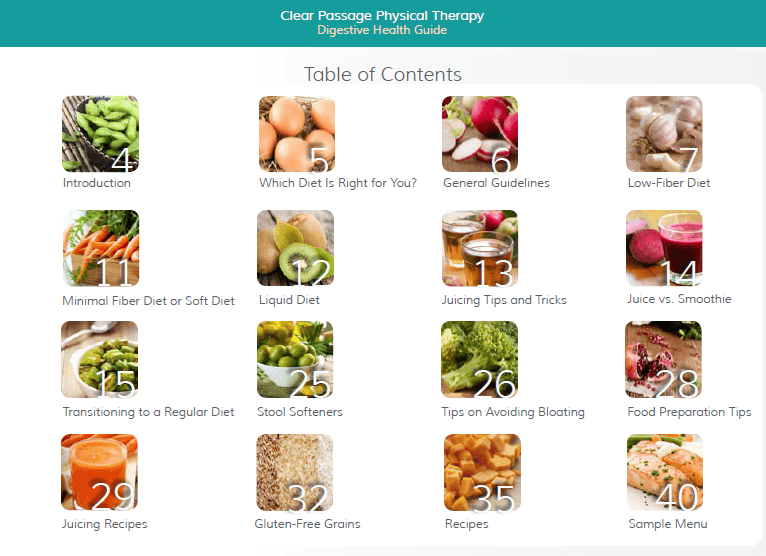
    For a complete overview of these diet recommendations, recipes, and sample menus, download our Bowel Obstruction Diet Guide. Take a peek inside the Digestive Health Guide’s Table of Contents.
    Reducing the amount of fiber in your diet can cause fewer bowel movements and smaller stools. This can reduce gas, abdominal cramps, and pain. As a result, Low or minimal-fiber diets are typically recommended for patients with digestive issues.

    If your symptoms are mild, a Low-Fiber Diet may be appropriate for you. With severe symptoms, you may need to follow a stricter Minimal Fiber Diet or a Liquid Diet. The length of time that you should follow any of these diet options will depend on your individual condition and symptoms.

    It is important that your doctor is aware of any dietary changes you make. Please notify your doctor immediately if you experience changes in bowel movements, such as:

    • constipation
    • nausea
    • vomiting
    • pain

    Remember, digestive disorders affect each person differently. Therefore, finding out which foods your body reacts well to – and doesn’t – may be a process of trial and error. Be patient, and you will find the ideal balance of foods that can help you manage your condition.

    Watch Dr. Oz explain adhesions:

    You may wish to take a look at the clip in which Dr. Oz covers the dangerous condition. In the short video, he takes a visual look at what happens in one’s intestines when an obstruction occurs.

    *Please consult your physician prior to making any diet changes.

    Read our blog post on Bowel Obstruction: High-Profile Cases, Hidden Causes, and What They Teach Us About Intestinal Health

  • Break the Adhesion-Surgery Cycle

    Break the Adhesion-Surgery Cycle

    We received a question from one of our blog readers, and we thought it would be important to share the answer with all of our readers who may suffer or know someone who suffers from the pain and discomfort associated with bowel obstruction:

    Can surgery for bowel obstructions cause adhesions? I know adhesions cause bowel obstructions, but can surgery for bowel obstructions cause adhesions?

    In short, absolutely.

    Surgical lysis of adhesions involves cutting or burning the adhesions under general anesthesia, via laparoscopy or laparotomy (open surgery). In addition, the bowel is generally severed, the obstructed area is removed, and the (now shortened) bowel ends are re-attached.

    While lysis of bowel adhesions can be effective, surgery has some major drawbacks:

    • Risks associated with general anesthesia and infection
    • The body creates more bowel adhesions as it heals from the surgery designed to remove them (even with the skills of the finest surgeon)
    • 90% of patients develop adhesions following open abdominal surgery
    • 55% to 100% of women develop adhesions following pelvic surgery.1 
    • 35% of all open abdominal or pelvic surgery patients were readmitted to the hospital more than twice to treat post-surgical adhesions during the 10 years after their original surgery.2 

    Abdominal surgery itself has been implicated as a major cause of adhesion formation, and many patients become trapped in a cycle of surgery-adhesions-surgery.

    How can I break the surgical cycle?

    Explore the non-surgical treatment options offered by Clear Passage® Physical Therapy. Recognizing that surgery can cause abdominal adhesions to recur is an important step forward in our understanding of bowel obstruction. The benefits of choosing Clear Passage® include:

    • No drugs or surgery
    • 20 years of experience treating bowel obstructions (SBO). Read more about the history of the Wurn Technique®.
    • Results: reducing or eliminating obstructions
    • Decrease in pain
    • Returns mobility to organs that have become adhered.
    1. Liakakos T, Thomakos N, Fine PM, Dervenis C, Young RL. Peritoneal Adhesions: Etiology, Pathophysiology, and Clinical Significance. Dig Surg. 2001; 18: 260-273. PMID 11528133
    2. Ellis H, Moran BJ, Thompson JN, Parker MC, Wilson MS, Menzies D, McGuire A, Lower AM, Hawthorn RJ, O’Brien F, Buchan S, Crowe AM. Adhesion-related hospital readmissions after abdominal and pelvic surgery: a retrospective cohort study. Lancet Br J Med. 1999; 353: 1476-80. PMID 10232313.
  • 3 Ways Adhesions Cause Bowel Obstructions

    3 Ways Adhesions Cause Bowel Obstructions

    Adhesions form as the body’s first response to trauma, surgery, infection, or inflammation. These adhesions are made up of strong, fibrous cross-links that attach to the nearby tissues and organs of the damaged area. When the abdomen or bowel experiences trauma, adhesions can begin to form in the bowels, causing bowel obstructions. These adhesions can cause bowel obstruction in three different ways.

    1. Adhesions can form inside the bowel.

    When the bowel experiences trauma, such as surgery to remove part of the bowel, adhesions can form inside the bowel. These adhesions, made of thick collagen bonds, make it difficult for food to pass and can often cause cramping and pain during the digestion process.

    2. Adhesions can surround and restrict the bowel from the outside.

    After a pelvic or abdominal trauma, adhesions can form outside the bowels. These adhesions can surround the delicate tissues of the bowel, restricting and pinching them from the outside. This causes a decrease in digestive function and often pain and cramping after eating.

    3. Adhesions can surround and kink the bowel like a garden hose.

    When adhesions form on the outside of the bowel, they can surround the bowel, causing it to kink much like a garden hose. This often creates a partial bowel obstruction, which makes the digestion of solid foods difficult.

    Treatment options offered to those who experience bowel obstruction are generally surgery. However, surgical treatment for clearing bowel obstructions is the main cause of repeat obstructions. This can often lead to an endless cycle of obstructions and repeated surgeries.

    A new non-surgical technique, known as the Wurn Technique®,  is now being examined as an alternative treatment for bowel obstruction. This therapy uses hands-on physical therapy techniques to address the underlying adhesions that cause bowel obstruction.

    Don’t let adhesions control your life – take charge with Clear Passage® Physical Therapy’s innovative approach to treating bowel obstructions. Request Information and schedule your Free Consultation today to learn how our expert therapists can help you break free from recurring obstructions, then visit our Apply to Therapy page to start your journey towards lasting relief and improved digestive health.


  • Prior C-Section Can Cause Adhesions

    Prior C-Section Can Cause Adhesions

    Discover hope for post-C-section fertility challenges with Clear Passage® Physical Therapy’s innovative, non-surgical approach – Request Information and schedule your Free Consultation today to learn how our expert therapists can help address adhesions and improve your chances of conception, then visit our Apply to Therapy page to take the first step towards your dream of expanding your family.

    C-section Can Cause Adhesions

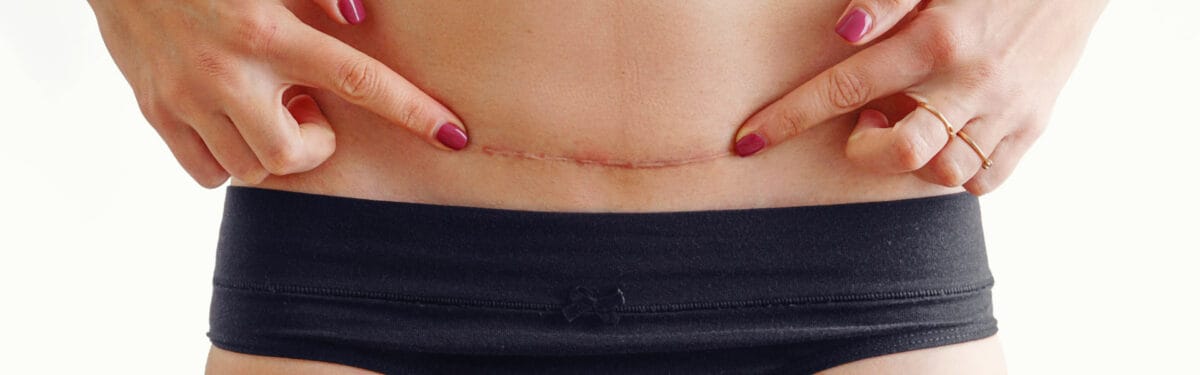
    Cesarean section delivery (C-section) is the most common surgery among women in the US and has been shown to be closely related to adhesion formation. Unfortunately, this invasive surgical procedure requires a great deal of healing to occur. Adhesions are one of the body’s automatic responses to traumas such as a fall, surgery, an infection, or an inflammation. These adhesions are much like thick strands of nylon rope that bind to nearby structures and restrict and cover the traumatized area. Though they are designed to help the body heal, adhesions often cause ongoing pain or dysfunction, long after the surface scars have healed.

    Read “How to Tell if You Have Adhesions After C-Section” for more details on cesarean section scar tissue.

    Adhesions Can Cause Pain

    Because adhesions attach to nearby tissues and organs, they create a pull or restriction in the pelvis, which often results in pain. As the organs, tissues, and muscles attempt to move, a resulting pain occurs.

    Adhesions Can Cause Secondary Infertility

    As adhesions form throughout the pelvis, they can attach to the delicate organs of the female reproductive system. These strong, fibrous bands restrict the mobility and function of these organs, often causing secondary infertility.

    Adhesions Can Cause Digestive Issues

    Adhesions can also affect regular digestion by attaching to the outside or inside of the intestinal wall. As adhesion bonds grow, they restrict the regular function of digestion and can often lead to a partial bowel obstruction.

    Treatment for Adhesions

    Oftentimes, painkillers or infertility drugs are offered as a treatment for those who suffer from post-surgical adhesions. Unfortunately, drugs merely mask the true problem of adhesions and offer no long-term solutions. The next step in treatment is to undergo surgery to cut or burn adhesion bonds throughout the pelvis. However, the trauma of an additional surgery causes additional adhesions to form, which can create an endless cycle of adhesions and surgery.

    A manual physical therapy called the Wurn Technique® has shown excellent results in decreasing pain and increasing function related to adhesions. This therapy feels much like a deep pelvic massage as therapists use their hands to break down the bonds of adhesions throughout the pelvis. This therapy has been endorsed by physicians from Harvard, Northwestern, and Columbia as an alternative treatment to surgery. Click here to learn more about this treatment for scar tissue C-section adhesions.

    “What a much-needed, useful, and safe way to deal with the common, yet mystifying problem of adhesions. You have perfected a technique to treat adhesions, with years of experience, scientific backup, and case studies to prove it.”

    -Dr. Leslie Mendoza Temple, Northwestern University Medical Director

  • Diet Modifications to Help You Handle a Small Bowel Obstruction

    Diet Modifications to Help You Handle a Small Bowel Obstruction

    If you suspect you have a small bowel obstruction, you should immediately see a doctor. A small bowel obstruction occurs when the small intestine becomes cinched, preventing solid food from passing through the intestine. Not only is your body unable to absorb the nutrients it needs, but it is also unable to eliminate toxic material. A blockage can also cause extreme pain and bloating as food and gas back up.

    While you are waiting to see the doctor or trying to select the best treatment option, you can make changes in your diet to help you cope with the pain, bloating, lack of nutrients, and toxic build-up.*

    Severe abdominal pain, persistent bloating, nausea, and the inability to pass gas or stool can be a sign of a blocked bowel that should be evaluated by a medical professional as soon as possible.

    Do not eat solid food. If your small bowel is blocked, there may only be a small passage for food. Solid food may be too large, so it is suggested you drink only liquids. While this may be difficult, remember that these dietary changes are only temporary until you receive treatment.

    Blend and juice vital nutrients. To ensure you are receiving the nutrients you need, blend nutritious food in a food processor or blender until the consistency is as close to a liquid as possible. Do not try blending any type of meat – not only is it difficult to “blend” meat, but it is significantly harder for the intestine to process meat. To get more nutrients, use a juicer. Use as many organic, fresh fruits and vegetables as you can. This is the time to throw in kale, spinach, and other nutritious foods that your body is lacking due to the blockage and the inability to process solid foods. To mask the taste, try mixing in carrots, sweet potatoes, and apples.

    Do not eat or drink any unhealthy food. Because your body is unable to process or eliminate food, it is depleted of nutrients and considerably more toxic. You do not want to add to this by eating or drinking any beverages that will add more unnecessary chemicals or unhealthy additives to your body. This means no soda (which can also be problematic due to the carbonation), no processed food, no fatty foods, etc. You want to do everything you can to provide nutrients for your body.

    Drink Slowly. Drinking too quickly can cause you to swallow air. While the air is obviously harmless, it can add to the build-up of gases and the subsequent pain from bloating.

    Increase your fiber. Fiber helps waste move through the small intestines. Because you can only drink liquids, try mixing in some flaxseed, blended prunes, or other fiber-rich choices.

    Avoid gassy foods. A small blockage can cause gas to build up, creating significant pain. Avoiding food (even in liquid form) that contributes to gas will prevent further pain. Common foods that cause gas are cruciferous vegetables (broccoli, cabbage, etc.), milk products, onions, artichokes, pears, and wheat.

    Avoid foods that promote inflammation. Inflammation causes the tissues of the body to swell, meaning the passage of food to your intestines could become smaller. Common foods that cause inflammation include sugar, refined carbohydrates, and gluten-containing foods (wheat, flour, etc.) To learn more about what you can do to reduce inflammation naturally, please read Anti-Inflammatories and Reducing Inflammation Naturally.

    This diet should only be used as a temporary measure while you are either waiting to speak with a doctor or being treated for a small bowel obstruction. Learn more about treatment for bowel obstruction.

    *These suggestions are not a substitute for medical advice from a doctor or nutritionist.