Category: Hydrosalpinx Treatment

  • Patient Story: From Menopause at 35 to Three Kids

    Patient Story: From Menopause at 35 to Three Kids

    Hormonal Menopause, Only Remaining Tube Blocked with Hydrosalpinx – Jen’s Story

    I’ve always been a healthy, positive person with big dreams. I knew someday I would meet that special someone and start a family.

    From an early age, I always knew I wanted children. I come from a long line of fertility. My grandmother gave birth to 15 children, my mother 4, and my brothers and sister have 7 more kids among them, who I love dearly and who are a big part of my life. My love of children even drew me to my occupation as an early-learning Spanish teacher working with the cutest little students ages three to eight.

    When I was 26, a misdiagnosis of appendicitis left me hospitalized for a week with an infection. I recovered from the ruptured appendix, but 15 months later, I was hospitalized again and had another major abdominal surgery. It almost took my life and left me trying to figure out if I would ever have children. I lost my right ovary, fallopian tube, and parts of my intestine to surgery. My remaining left tube was damaged. The medical diagnosis was that it was blocked and filled with fluid, a hydrosalpinx.

    The doctors said that I had so much infection and disease that my ovary and tube weren’t even recognizable. It was mush. They said I was going to have a lot of scar tissue and adhesions, leaving my insides “like concrete.”

    I was confused and afraid, and while I was thankful to be alive, I had to ask the doctors a simple question . . . “Will I ever be able to have kids?” His answer was, “Not naturally. It would have to be through IVF. You’re young and healthy, and you have your left ovary.”

    Now, flash forward, I’ve met the man of my dreams, we’re in a financial position to afford IVF, and excited to start our family. Everyone advised me to get started with IVF early, since there can always be complications, and it takes longer than you think. My biological clock was ticking, and I wanted to have several shots at this before I turned 35.

    While IVF wasn’t exactly what I had planned when I dreamed of getting pregnant, with all the shots, hormones, and invasive procedures, I was thankful for all the progress in the field because, for me, it was the only way me to get pregnant.

    At our first consultation, the doctor told me I would be a good candidate as long as I had high-quality eggs. She also recommended that before we do IVF, we should remove my remaining unhealthy tube because it had a hydrosalpinx — it was blocked with fluid that could be toxic to the embryo. I thought Sure, whatever it takes because this is my only chance, and every single doctor I asked said the same thing — that there was no way to repair my damaged tube. So, according to all medical sources I checked, IVF would be my only chance, and I had to remove my only tube, which was beyond repair.

    First, I had to do blood work, and then we could get on with it. Another devastating blow came when our nurse called and said my hormone levels of FSH (which help the egg mature) were abnormal. The normal and acceptable range is between 2 to 10. Mine was 26.2, indicating that my body wasn’t producing quality eggs. In fact, I was officially diagnosed as menopausal. I was newly married and ready to start a family, and our doctor was telling my husband and me that if we wanted to have children, we would need a donor egg or to adopt.

    We were crushed. I took the news hard. This wasn’t supposed to be happening to me. I was young and felt healthy, other than the fact that I was “infertile.” I felt so bad; it was my fault we couldn’t have kids. I was mad at the doctors who first misdiagnosed my appendicitis, and I was heartbroken as I watched many friends and family around me get pregnant so easily. “So now what?” I asked myself.

    I was open to new possibilities, and I wasn’t ready to give up on my hope of conceiving naturally, so I did a lot of research, and I found Clear Passage®. While I had my doubts, it seemed like the best fit for me since they said they had shown success in opening blocked fallopian tubes. The therapy didn’t involve surgery; it seemed therapeutic and nurturing, and that made sense to me. I was following through on my instinct to find some alternative to surgery. Basically, I was following my heart.

    With the love and support of my husband, we made plans to drive six hours to their clinic in Florida. We felt we had nothing to lose, and we looked forward to the trip as a chance to get away for the week, where we could be together, and I could concentrate on healing my body.

    I had so much to be thankful for — a loving husband, a supportive family, a great job, and wonderful friends. I wrote in my journal, “I feel empowered because I am doing everything possible to better my chances. If it doesn’t happen, I will know I tried. I’m a believer. I’m also feeling a little vulnerable because tomorrow starts the beginning of a new journey. Whether pregnancy is a result or not, I know Eddie, and I will be able to deal with it.”

    Once I got there, any doubts I had disappeared. I felt good about the staff, their ability, and their professionalism and care. I knew I was being treated by experienced professionals who actually listened to me and what I had to say about my body. I received 20 hours of therapy. Eddie and I left there believing it worked, but the moment of truth would come a month later when I did the HSG dye test to see if my tube had opened.

    The day it was scheduled was an emotional day for me. I was nervous and anxious. Just a few years ago, when I had the same test done, I fell apart in my mother’s arms watching the dye collect in my tube, marking the beginning of infertility. Now I was holding my husband’s hand, watching the dye spill out of my tube — which was now open! We hugged and cried and immediately went home to try to get pregnant, the old-fashioned way!

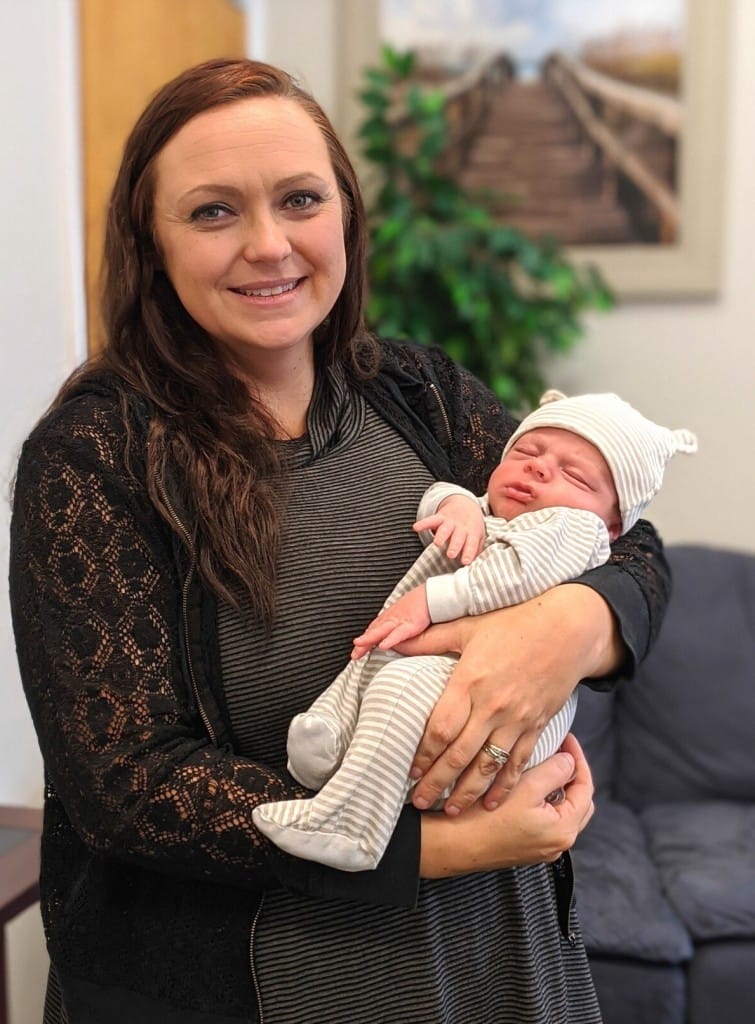
    We got pregnant naturally the next month with our first redheaded miracle, Maria Rose. When Maria was seven months old, we drove down to Clear Passage® again to thank everyone and have everyone meet Maria. I also received four more hours of therapy to address some pain issues from the vaginal delivery I had at Maria’s birth. I have to say that once again, the positive changes from just those few hours were extraordinary! Five months later, I found out we were pregnant again, naturally, this time with twins! I gave birth to two healthy babies, Edward and Katherine, in May 2006. We now have three beautiful redheads completing this miraculous journey.
  • Hydrosalpinx: Your Questions Answered

    Hydrosalpinx: Your Questions Answered

    Hydrosalpinx refers to fluid that collects within the fallopian tubes after an injury or infection and affects a woman’s fertility. We recently received several questions about hydrosalpinx and how to treat this condition. Read on as Clear Passage® Director of Services Belinda Wurn, PT, answers.

    Q: Can I get pregnant if I have hydrosalpinx?

    A: A hydrosalpinx makes getting pregnant naturally extremely difficult, if not impossible. It disrupts the normal function of the fallopian tubes, preventing the delicate finger-like fimbria at the end of the tube from gathering the egg and transporting it toward a meeting with the sperm. In addition, hydrosalpinx can reduce the success rate of fertility treatments such as IVF, because the fluid in the tube may be toxic to a fertilized egg.

    Therefore, resolving hydrosalpinx is considered a necessity, whether you are trying to become pregnant naturally or via fertility-assisted reproductive techniques.

    Q: Should I have surgery to clear my hydrosalpinx?

    A: The problem with clearing hydrosalpinx surgically — a very delicate procedure — is the adhesions, or internal scars, that are likely to form as a result. Adhesions after surgery can complicate fertility further by blocking the tube again, sometimes with a return of the hydrosalpinx.

    A number of physicians we have consulted believe that there is a brief window (three to six months) to conceive after surgery, before the tube blocks again. It is also important to consider the fact that surgery tends to have higher success rates in younger women and those with relatively small hydrosalpinx.

    Some women with hydrosalpinx are advised by infertility specialists to have the blocked tubes completely removed and begin IVF treatments. At Clear Passage®, we believe in trying a natural treatment approach before resorting to this irreversible option, which leaves a woman with no chance for a natural pregnancy from that tube – ever.

    Q: How effective is the Wurn Technique® as a hydrosalpinx treatment?

    A: Our therapists have successfully cleared fallopian tube blockages, including hydrosalpinx, in many women with lasting results.

    The journal Fertility and Sterility published a study on treating hydrosalpinx with the Wurn Technique®. In the study, we saw:

    • 50% (4/8 patients) success rate in opening tubes blocked with hydrosalpinx1
    • 50% (2/4 patients) had a natural post-therapy full-term pregnancy via the tube previously blocked with hydrosalpinx1

    You can hear one of our past patients discuss her journey with hydrosalpinx-related infertility and the results she achieved after receiving the Wurn Technique® in this video.

    If you have any additional questions about hydrosalpinx or how the Wurn Technique® treats blocked fallopian tubes, we encourage you to contact us and schedule a free phone consultation with one of our expert therapists.


    1. Wurn LJ, Wurn BF, Kan M, et al. Treating hydrosalpinx with manual physical therapy. Fertility and Sterility. September 2006 (Volume 86, Issue 3 (Supplement), page S307).

  • Opening Blocked Fallopian Tubes – Surgical vs. Natural

    Opening Blocked Fallopian Tubes – Surgical vs. Natural

    Blocked Tubes and Infertility

    As the place where natural conception occurs, the fallopian tubes are truly the place where life begins. Due to their location and size, fallopian tubes can become blocked by pelvic scars or adhesions. Together, these “mechanical causes” account for about 40% of all female infertility. Tubes can block near the uterus (proximal), by the ovary (distal), or in the middle of the tube (mid-tubal). In some cases, the tube swells with fluid in a condition called hydrosalpinx.  While a single blocked tube impairs fertility, blockage of both tubes causes total infertility.

    Surgery
    Until recently, the only options for women with blocked tubes were to undergo surgery to open one or both tubes, or to remove the blocked tubes and proceed directly to in vitro fertilization (IVF). This is often the recommended course that infertility specialists offer to women with hydrosalpinx.

    Natural Treatment – The Wurn Technique®
    Several medical journals have now examined a manual physical therapy (Wurn Technique®) for its ability to open and return function to totally blocked fallopian tubes, including hydrosalpinx. The “hands-on” treatment opened tubes in most of the study participants, without surgery or drugs. Most of the successes had natural pregnancies and births after therapy. Several reported subsequent pregnancies/births, so the positive results lasted for years for these women. In other published studies, the therapy significantly decreased pelvic and intercourse pain and improved sexual function. The therapy can be used as a stand-alone infertility treatment or in conjunction with regular medical care.

    Surgical Treatment vs. Natural Treatment
    In comparing the treatment options for opening blocked fallopian tubes, we find the following results:

    Pros and cons of the Wurn Technique®, a hands-on physical therapy:

    • Pros of the Wurn Technique®
      • Requires no drugs
      • Requires no surgery
      • Published studies and citations show good results
      • Lower risks and costs than surgery
      • Results can last for years, allowing for several natural pregnancies
      • Success opening blockages throughout the tube (proximal, mid-tubal, distal)
    • Cons of the Wurn Technique®
      • Few US clinic locations (Florida, California, Washington, D.C.)
      • Limited published data

    Pros and cons of surgery to open blocked fallopian tubes:

    • Pros of Surgery
      • Many studies have been published documenting its success
      • Has good success in opening blockages that are near the uterus
    • Cons of Surgery
        • Higher risks and costs than the Wurn Technique®
        • Risk of damaging other tissues or organs during surgery
        • Poor results opening tubes blocked beyond the uterus (mid-tubal or distal)
        • Repair of the blockage near the uterus gives a limited time to conceive
        • Removal of the tube is permanent
        • Possible side effects from anesthesia

    Read about our first scientific test case: Two Blocked Fallopian Tubes, Despite Laparoscopy and Open Surgery – Marsha’s Story

  • Treating Hydrosalpinx Infertility

    Treating Hydrosalpinx Infertility

    What is a hydrosalpinx?

    Hydrosalpinx is a collection of watery fluid within the fallopian tube, usually as a result of damage at the distal (far) end of the tube, near the ovary.

    How does a hydrosalpinx form?

    Just as your knee might swell when it is damaged or inflamed, the fluid pools in the damaged tube, causing it to swell or dilate, as a natural part of healing from inflammation. Whether from a prior surgery, an inflammation, or an infection, the delicate geography of the pelvis responds to these traumas by forming adhesions and often a hydrosalpinx.

    How does a hydrosalpinx cause infertility?

    In most cases, a hydrosalpinx indicates that the fallopian tube is totally blocked at the far end. There, the delicate flower petal-like fimbriae, which are designed to grasp the egg as it exits the ovary, become adhered or clubbed together, closing the tube completely. Hydrosalpinx is a serious threat to fertility. It not only renders the affected tube(s) totally ineffective, but it may also lessen the effectiveness of various infertility treatments (e.g., in vitro fertilization [IVF]).

    How is hydrosalpinx treated?

    Surgery

    Neosalpingostomy (surgery that incises the hydrosalpinx and leaves an opening in the tube) is a surgical treatment option. The tube, however, often closes again, enabling the hydrosalpinx to return. The most positive results are obtained with younger women and women with small hydrosalpinges. For others, the preferred treatment is usually total surgical removal of the tube prior to IVF.

    The Wurn Technique®

    The Wurn Technique® is a non-surgical infertility treatment that uses pelvic physical therapy to decrease the adhesions causing tubal damage and hydrosalpinx. Once mobility is restored, the previously blocked tube(s) often regain normal function, creating a free path for conception to occur. Many women with a diagnosis of hydrosalpinx became pregnant naturally after receiving this hands-on therapy.

  • An HSG May Help You Become Pregnant

    An HSG May Help You Become Pregnant

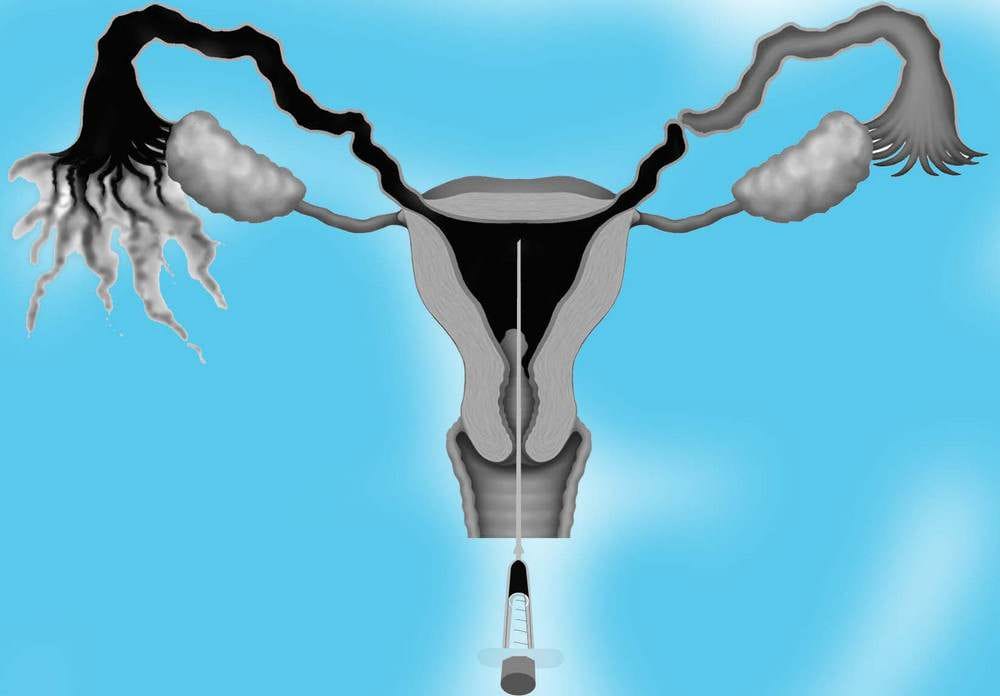
    Women who experience infertility are commonly scheduled for a hysterosalpinogram (HSG) to see if their fallopian tubes are open and functioning properly. What many women don’t know is that the procedure itself can help a woman become pregnant.

    Sometimes, a fallopian tube fills with a small amount of mucus. This mucus can form after infections, inflammation, or similar events. If the mucus forms together in one spot, it can block the tube (a mucus plug) and prevent an egg and sperm from meeting.

    During an HSG, a thin catheter is inserted through the cervix and into the uterus, where radioactive dye is injected into the fallopian tubes. The force of the dye can push any existing mucus out of the tube. If the mucus was completely blocking the tube before, the woman is now able to become pregnant.

    A mucous plug should not be confused with hydrosalpinx or tubal occlusion. Hydrosalpinx occurs when the tube fills with toxic fluid and remains trapped, despite an HSG. A tubal occlusion occurs when a tube is completely blocked, usually due to adhesions.

    At CPT, we treat both hydrosalpinx and blocked fallopian tubes. We frequently recommend that our patients with blocked fallopian tubes or hydrosalpinx schedule a follow-up HSG after treatment with us. The HSG not only allows women to visualize the effects of treatment, but it may also push out any remaining mucus in the tube after treatment.

    To learn more about our treatment for these conditions, please visit our hydrosalpinx page and blocked fallopian tube page.

  • Physical Therapists Open Blocked Fallopian Tubes Without Surgery

    Physical Therapists Open Blocked Fallopian Tubes Without Surgery

    New Orleans, LA, November 2, 2006/PRNewswire/ — Scientists at the Annual Meeting of the American Society for Reproductive Medicine (ASRM) reported that therapists were able to open totally blocked fallopian tubes using a new pelvic physical therapy that feels similar to a deep massage. Previously, surgery was the only treatment option for women with blocked fallopian tubes.

    The manual treatment (Wurn Technique®) opened blocked fallopian tubes in several women, some of whom conceived naturally after the therapy, according to the study abstract published in Fertility and Sterility (9/2006).

    The abstract examined eight women with totally blocked fallopian tubes. One patient had only one tube, and it was blocked, but she had a natural pregnancy and childbirth after receiving the therapy. Half of the women had at least one tube opened by the therapy; half of those became pregnant naturally and gave birth.

    The study cases were further complicated by a condition known as hydrosalpinx. Not only were the tubes blocked, but they were filled with a liquid that is considered toxic to embryos.

    “Hydrosalpinx is generally thought to render a fallopian tube useless and may decrease the chance for successful in vitro fertilization (IVF),” said co-author Mark Kan, MD, a reproductive endocrinologist at the Newport Fertility Center in Newport Beach, CA. “The therapy opened several affected tubes, and apparently returned function to some of them.”

    “While this study was small, the results are clear,” said physical therapist Belinda Wurn, who developed the technique with her husband, massage therapist Larry Wurn. “A diagnostic test clearly shows whether either tube has opened. The full-term pregnancies indicate a return of function.”

    Research gynecologist and former Chief of Staff at North Florida Regional Medical Center, Richard King, MD, called the results remarkable. “The therapy is a natural adjunct to gynecologic care,” King says.

    The therapists began developing the technique in 1987 to treat author Belinda Wurn’s pelvic pain after cancer and surgery. It is now used to treat female infertility, endometriosis pain, and female sexual dysfunction (including painful intercourse). The therapy is available at Clear Passage® Therapies® clinics throughout the United States.