As we eagerly step into a new year, it’s a time of reflection, resolutions, and a fresh start. For many women struggling with the challenges of infertility due to blocked fallopian tubes, endometriosis, or unexplained factors, the prospect of a new life seems like a distant dream. However, in the spirit of new beginnings, there’s hope on the horizon. Let’s delve into the transformative journey that Clear Passage® therapies offer, opening doors to new possibilities and paving the way for the miracle of life.
Unlocking the Pathway: Opening Blocked Fallopian Tubes Naturally
For women facing the roadblock of blocked fallopian tubes, the journey to conception can be particularly challenging. These tubes play a crucial role in facilitating the meeting of egg and sperm, and any obstruction can impede this vital process. Enter Clear Passage® therapies – a beacon of hope for those seeking a natural and non-invasive solution.
Clear Passage® therapies specialize in gently and effectively opening blocked fallopian tubes naturally. Through a combination of manual therapy techniques and a holistic approach, these therapies work to alleviate restrictions, promoting improved blood flow and function in the reproductive organs. The result? A renewed pathway for the possibility of conception, providing the foundation for a new life to blossom.
Harmonizing Hormones: Decreasing FSH Without Drugs
The intricate dance of hormones orchestrates the delicate balance required for successful conception. Elevated levels of Follicle-Stimulating Hormone (FSH) can often pose a hurdle for women attempting to conceive. Traditional treatments often involve medications, but Clear Passage® therapies offer an alternative approach – decreasing FSH naturally, without the use of drugs.
Through targeted manual therapy, these treatments focus on restoring optimal function to the reproductive organs, promoting hormonal balance in a natural and gentle manner. By addressing the root causes of elevated FSH levels, Clear Passage® therapies empower women on their journey towards motherhood, without the need for synthetic interventions.
This ten-year retrospective study shows the efficacy of manual physical therapy to treat female infertility.
Endometriosis, a condition where tissue similar to the lining of the uterus grows outside the womb, can be a formidable barrier to conception. Traditional treatments may involve surgeries or medications with potential side effects. However, Clear Passage® therapies embrace a natural and holistic approach to addressing endometriosis, offering a beacon of hope for women seeking to start a family.
By gently working to clear abdominal adhesions naturally, these therapies aim to restore normal organ mobility and function. This not only alleviates the physical pain associated with endometriosis but also creates an environment conducive to conception. The promise of new life becomes tangible as the body is supported in its natural healing processes.
A Personal Journey: Finding New Life Through Clear Passage® Therapies
To truly understand the impact of Clear Passage® therapies, let’s hear a heartwarming story of a woman who embarked on this transformative journey.
Meet Emily, a resilient soul who has faced years of disappointment and heartache on her quest to become a mother. Diagnosed with blocked fallopian tubes and high FSH levels, she felt defeated by the seemingly insurmountable challenges ahead. Traditional treatments offered limited success and came with their own set of struggles.
In the spirit of a new year and a determination to explore alternative options, Emily discovered Clear Passage® therapies. Skeptical yet hopeful, she embarked on a personalized treatment plan that addressed her unique challenges. The result? A profound transformation.
Through a 20-hour treatment series, Emily experienced the gentle unblocking of her blocked fallopian tubes, a harmonizing of her hormonal levels, and a natural alleviation of endometriosis symptoms. The journey was not just physical but emotional, as she felt the weight of infertility lifting, making room for hope and joy.
As Emily joyfully announced her pregnancy in the following year, the phrase “New Year, New Life” took on a deeply personal meaning. Clear Passage® therapies had become the catalyst for her newfound happiness, proving that sometimes, the most incredible transformations happen when we least expect them.
Embracing the Future: A Tapestry of New Lives
As we stand on the threshold of a new year, let us carry the stories of hope and transformation that Clear Passage® therapies bring into the lives of women grappling with infertility. The prospect of a new life becomes more than just a slogan – it becomes a reality, a testament to the incredible resilience of the human body and spirit.
So, to all the women seeking the miracle of motherhood, consider the possibility of a new life through Clear Passage® therapies. As you step into the future, may it be filled with the promise of new beginnings, the gentle opening of pathways, and the natural harmony of your body’s intricate processes. Here’s to a year of hope, healing, and the joy of welcoming new life into the world.
Unlock the potential for natural conception with Clear Passage®’s groundbreaking, non-surgical therapy that has successfully opened blocked fallopian tubes for 61% of women, offering hope and a 57% pregnancy rate without the risks of surgery.
“Blocked fallopian tubes” is one of the most heartbreaking diagnoses in female infertility. The female reproductive system consists of many delicate organs tasked with the need to transfer a single cell (the egg) across a gap, then into a tiny canal to unite with another single cell (the sperm). All of this must happen in a relatively narrow window of time each month and must be done by a certain age for fertilization to occur.
Two small organs comprise the main transport tunnel for conception, the fallopian tubes. For decades, these tubes have presented significant problems for infertile women and their physicians when they become blocked by internal scars called adhesions.
While reproductive physicians have developed a vast industry to treat female infertility, many medical treatments involve injecting mild to potent hormones or undergoing surgery.
Many women ask their doctors, “Are there any complementary or alternative therapies I can try? Is there anything natural or nonsurgical I can do to improve my chance of becoming a mother?”
The answer is a resounding yes!
Don’t Let the Cost Keep You From Finding Out If Clear Passage® Can Help
You’ve probably already spent money on doctor visits, tests, medications, procedures, and treatments that didn’t give you the answer you were hoping for. The last thing you need is to finally find a treatment worth exploring and then have the cost stop you in your tracks.
Fallopian tubes are tiny, complex, and extraordinary. Found deep within a woman’s pelvis, these two organs are literally the place where life begins. Each fallopian tube is designed to transport fragile single-cell organisms towards each other and help them unite to create a life as they attempt to introduce the mother’s egg to the father’s sperm.
It is unknown why the egg travels down from the ovaries toward the uterus. Some doctors speculate that low pressure in the uterus pulls the egg down with gentle suction, like drinking through a straw. Others believe that the remarkable interior of the tube, an environment that resembles a lush undersea garden with thousands of hair-like cilia, tends to push or coax the egg on its journey toward the uterus. Similarly, scientists do not know what inspires the sperm to swim upstream from the uterus through the tube and toward the ovary to meet and fertilize the egg.
What we do know is that sperm must meet the egg and join inside the fallopian tube for natural fertilization to occur. After that, any disruption to the fertilized egg to continue its journey through the tube for implantation on the uterus wall can cause significant problems for the mother and the fertilized egg.
What causes the Fallopian Tubes to become blocked?
Adhesions (Internal Scars)
Blocked Fallopian Tube
Adhesions (Internal Scars)
A common cause of
fallopian tubes is the formation of internal scars called adhesions. Frequently found in the female reproductive tract, these tiny glue-like bonds can form anywhere in the body. These inner scars form as the first step in healing from infection, inflammation, surgery, or injury. Once started, adhesions remain in the body for life, sometimes spreading to other structures.
They are often the result of an infection such as pelvic inflammatory disease (PID). When these internal scars bind endometrial tissue to the underlying structures, adhesive bonds are commonly found in patients with endometriosis.
Adhesions can be asymptomatic or can cause significant pelvic or intercourse pain (dyspareunia). Studies conducted by Clear Passage® suggest vaginal adhesions cause other sexual dysfunctions, such as decreased desire, lubrication, and orgasm. Because adhesions are primarily composed of collagen, a common substance in the body, they are virtually invisible to diagnostic tests such as X-rays, CTs, or MRIs.
Why are my Tubes Blocked?
Fallopian tubes are often blocked by internal scars called adhesions
If you have fallopian tubes or a hydrosalpinx (swollen tube), it is crucial to understand that this is not your fault. The vagina is located at the core of a woman’s body. Its warm, moist environment is designed to promote life– including bacteria. Because items may enter the vagina during a woman’s lifetime, bacteria can enter the body there, causing a clinical or subclinical (unrecognized) infection — one that can quickly spread into the uterus and the fallopian tubes. The body’s first response to infection is to lay down adhesions to start the healing process. Once formed, these internal scars can remain in the body for a lifetime.
When these glue-like bonds form within the tube, they can cover the delicate cilia or the walls of the tube, causing ectopic pregnancy, a condition in which the fertilized egg (zygote) becomes trapped in the tube. When adhesions are more extensive, they can block a fallopian tube entirely, preventing any chance for natural conception.
What are Natural Remedies for Blocked Fallopian Tubes
While a plethora of ‘natural’ herbs, vitamins, and potions have been proposed to improve fertility, none of these have been shown in published studies to open blocked fallopian tubes—several purport to increase blood flow or energy to the area. No matter how wonderful a natural adjunct might sound, it is useless to improve blood flow or energy if the tiny but powerful adhesions physically block the tubes.
Only one natural treatment has been cited in peer-reviewed journals for its ability to open blocked fallopian tubes (including hydrosalpinx) and return natural fertility to women.
A hands-on physical therapy called the Clear Passage® Approach (CPA) has been cited in numerous medical journals for opening blocked fallopian tubes, with studies that measure the treatment’s effectiveness for various causes of the woman’s infertility.
Wurn BF, Wurn LJ, King CR, Heuer MA, Roscow AS, Scharf ES, Shuster JJ. MedGenMed. 2004 Jun 18;6(2):51. PMCID: PMC1395760
Scientifically Published Success Rates of the Best Natural Treatment for Infertility
Researchers and therapists at Clear Passage® clinics have worked hard to provide accurate success rates for clients considering this therapy. While no legitimate medical technique claims 100% success, CPA results have been consistent and encouraging over the years.
As early as 2002, medical editors at WebMD became intrigued with Clear Passage® results. In 2004, data housed at the U.S. National Institutes of Health cited a study from WebMD’s Medscape General Medicine that showed Clear Passage® opened blocked fallopian tubes in several women who came to therapy with total blockage. Even more exciting, most participants whose tubes opened had a natural full-term pregnancy, and some had a second (or more) pregnancy and birth with no further therapy. A citation in Fertility and Sterility (2006) cited CPA with clearing hydrosalpinx in 50% of women, again followed by post-therapy natural pregnancies.**
61% of women had one or both blocked fallopian tubes cleared by the therapy.
Success rates were higher (69%) for most women who had never undergone fallopian tube surgery.
Only 35% of women had tubes open if their tubes were previously cut or burned during surgery (likely due to post-surgical scarring on the delicate tubes).
In all the above studies, some participants reported subsequent (2nd and 3rd) pregnancies, indicating that (unlike IVF) the CPA results are long-lasting for some women.
Comparing Clear Passage® to Surgery
The 10-year study provided success rates for treating various causes of female infertility. Researchers were surprised to find that rates rivaled and sometimes surpassed conventional medical techniques. Published success rates for treating women who have been diagnosed as infertile with the following conditions:
How Successful has Clear Passage® been in Opening Totally Blocked Fallopian Tubes?
69% open if no prior tubal surgery
35% open on tubes that had prior surgery
61% open overall
57% confirmed pregnancy rate after tubes were opened
(vs. 22% – 34% for surgery)
How Successful has Clear Passage® been in increasing Pregnancy Rates for Various Infertility Causes?
High FSH Nonsurgical treatment – 39% Pregnancy Rate
(no medical technique improves FSH)
Pre-IVF Nonsurgical treatment – 56% IVF Pregnancies with Clear Passage® before transfer
(vs. 37% without CPA)
How did the Clear Passage® Approach Get Here? What is its history?
CPA therapy centers around the Wurn Technique®, a manual physical therapy focused on decreasing adhesions anywhere in the body. The work was developed after physical therapist Belinda Wurn reported severe pelvic pain following surgery and massive radiation therapy to treat her cervical (pelvic) cancer. Told by her doctors that the cause of her pain was post-surgical scarring (adhesions), she and her husband developed a nonsurgical bodywork, often an intense, site-specific therapy designed to reduce or eliminate adhesions.
Research shows therapy opens tubes
Effective Nonsurgical Treatment for Blocked Fallopian Tubes?
“Blocked fallopian tubes” is one of the most heartbreaking diagnoses in female infertility. The female reproductive system consists of many delicate organs tasked with the need to transfer a single cell (the egg) across a gap, then into a tiny canal to unite with another single cell (the sperm). All of this must happen in a relatively narrow window of time each month and must be done by a certain age for fertilization to occur.
“There is not really a word that defines our therapy,” Wurn says. “It is a complex, site-specific full-body system that addresses adhesions that have formed throughout the lifetime of a woman’s body. Certainly, our therapy for infertility involves a focus on the organs of the pelvis. Calling it a massage is like calling the Space Shuttle a plane.”
When the therapy decreased Belinda’s pain and adhesions, the Wurns began treating others with painful post-surgical scarring. They were surprised when infertile women began reporting unexpected pregnancies, some with totally blocked fallopian tubes.
Curiously, the gynecologist, Chief of Staff of a large nearby hospital, called them in to question their results. After viewing several charts of women whose tubes were opened by the Wurns, he said, “You are doing things with your hands that I don’t think I could do surgically, and I am a good surgeon. We need to conduct some research on the work you have developed.”
Where can you Learn More About the Clear Passage® Approach and the Wurn Technique®?
Many women prefer to try a natural approach rather than drugs or surgery. Depending on the location of the tubal blockage, your physician may feel surgery is contraindicated. Many reproductive endocrinologists recommend removing blocked fallopian tubes and proceeding directly to in Vitro fertilization (IVF).
Clearly, this negates the chance to conceive the child of your dreams naturally.
Try a better way with us.
Over 1,000 babies have been born to infertile women after undergoing the Wurn Technique® at Clear Passage® clinics across the U.S.A. and in England. If you prefer a natural approach or are unwilling to forfeit any ability to ever have one or more natural pregnancies on your own, consider contacting Clear Passage®. They will examine your history and goals to advise if you are a good candidate for their therapy. There is no charge for this review.
While new procedures have been added over the years, the basic protocol in all clinics has remained consistent over three-plus decades. Treatment consists of 20 hours of therapy delivered over as few as five days. Patients generally arrive at a Clear Passage® location on Monday morning, receive two 2-hour sessions of therapy daily, and return to their hotel or visit the local town. They will complete treatment by Friday afternoon and are free to return home.
“I thought you might like to know that my FSH (follicle-stimulating hormone) level came down from 12.6 (before I went to you) to 8.1 (after therapy with you). This brings my hormone levels from “unacceptably high” to within a ‘normal’ range. As you know, a high FSH is a sign of diminished ovarian reserve. The FSH levels can fluctuate slightly, but I did not expect that they would go down given my age. I certainly think that CPT helped.” – Sylvie
Pregnant with High FSH
Improving Hormone Levels Naturally
Clear Passage® is a world leader, with over three decades of experience treating female infertility without surgery or drugs. While our focus was originally on mechanical fertility (helping sperm meet egg and helping uterine implantation), a surprising number of infertile women in their upper 30s and 40s were becoming pregnant naturally after therapy, despite diagnoses of high FSH or age-related infertility.
Our attention was further piqued when a peer-reviewed study of 1,392 women conducted over ten years showed hormonal improvement in 49% of women diagnosed as infertile due to high FSH (follicle-stimulating hormone[i]). Over 39% of women diagnosed with FSH levels above 10 conceived after a 5-day Clear Passage® session; most had natural pregnancies.
In a 10-year retrospective study from the National Library of Medicine, both natural and IVF pregnancy rates were high for women diagnosed as sub-fertile or infertile due to high FSH. Over 39% of women treated by Clear Passage® became pregnant despite FSH levels usually considered ‘impossible to conceive.’ Of 48 women in the study, 43 conceived naturally and 5 became pregnant via subsequent IVF.
Success Treating Infertility in Women with High FSH
In the study participants, 39% (48/122) of the women diagnosed as subfertile or infertile due to high FSH became pregnant after receiving the therapy. This is an excellent rate in a group whose expected pregnancy rate was 0%, or close to it. Women in this study had FSH levels of 10 mIU/ml and above, generally so high that they were refused IVF by reproductive physicians.
Complete the online Request Consultation form to receive a phone consultation with a therapist at no cost. Our therapist will review your medical history and goals, answer any questions you have about therapy, and determine if our treatment may be able to help you.
Why High FSH Indicates Subfertility
High FSH is not a cause of infertility. Rather, it is an indicator of subfertility or infertility – often associated with advanced reproductive age. At each menstrual cycle, the ovary (in the pelvis) signals the pituitary (in the cranium) to release follicle-stimulating hormone (FSH) to help follicles mature into eggs suitable for implantation. As a woman’s reproductive system ages, her ovaries require more FSH to produce quality eggs. FSH levels of 10 mIU/ml or higher on days 2-5 of the menstrual cycle generally indicate subfertility or infertility, either due to loss of ovarian function or because menopause has occurred.
Symptoms of FSH or Other Hormonal Issues
Unlike mechanical dysfunction, hormonal issues can sometimes be a little more difficult to diagnose. The symptoms may appear unrelated and spread throughout the body rather than to a single area of discomfort, for example, post-surgical pain.
Absent or irregular periods
Spotting between menstruation
Overly heavy periods
Very painful periods
Hair growth around the face, neck, chest, or back
Weight gain
If you are experiencing any of these symptoms along with infertility, it is quite possible you have a hormonal imbalance. It is important to speak with your doctor and have them check your hormone levels.
Treatments
Clear Passage®️ Treatment
As physical therapists, our first job is to look at biomechanics – the physical bodies our patients bring to us. Clear Passage® uses a “whole body approach” that addresses a patient’s goals along with any structural problems in the body. Focused on the biomechanics of pain, function, and fertility, we initially assumed we could not help reproductive hormone levels. Study of the reproductive system indicated that the communication loop between the ovary and the pituitary was likely blood-borne, thus out of our scope of expertise. Over time, several pregnancies in women we treated, often with quite high FSH, appear to be showing a mechanical aspect to infertility in hormonal conditions, apparently treatable by our manual therapy. Our therapy has helped some women with high FSH to conceive naturally – sometimes more than once.
We continue to see success in this area, as described above and documented in peer-reviewed medical literature. We believe this success is due to our work on the ovaries, the dura, and the cranium. The dura is a fascial sheet that surrounds the spinal cord, from the lowest part of the tailbone (coccyx) to the base of the skull. From there, it enters the skull, then surrounds the brain and all the tissues and the endocrine glands within it. Sheaths of the dura totally surround and infuse with the pituitary, an important regulator of female reproduction.
We have come to believe that tissues within the skull (including the brain and pituitary) react to adhesive pulls similarly to other tissues in the body. Housed within a well-protected cavity of the sphenoid bone in the center of the skull, the pituitary is considered the “master gland” of female reproduction.
Successful reproductive activity and hormone levels depend on a medically recognized communication loop between the ovaries (in the pelvis) and the pituitary and hypothalamus glands (deep within the head). While the exact mechanism of that intricate communication loop remains a mystery, that loop (the pituitary-hypothalamic-ovarian axis, or PHO) is largely responsible for whether or not a woman can create an egg capable of conception. We find that when we treat the ovaries and the dural attachments that reach into the brain and surround the pituitary, we often witness significant improvements in FSH levels – and full-term pregnancies in women diagnosed hormonally infertile.
History: Treating Women with High FSH
We began treating women with diagnoses of high FSH at the urging of a research gynecologic surgeon, former Chief of Staff of North Florida Regional Medical Center, Richard King, M.D. We gathered data by tracking changes in FSH levels for these women before and after therapy. We were encouraged in these early cases when we saw natural pregnancies in older women, including one of whom came to us at age 44 with an FSH of 33.
Because our results in hormonal conditions have been so positive, we now accept women with hormonal infertility, and we actively encourage women with diagnoses that include PCOS and high FSH levels to attend therapy, especially in the case of high FSH. We suggest you call to learn about our most current success rates so we can determine together whether this therapy may help you.
Other Treatments (not Clear Passage®)
We know of no other procedure or pharmaceutical medication that can lower FSH and extend reproductive years for women with high FSH.
Published Success Rates
Following the Scientific Method
In all of our studies, we follow the ‘scientific method’ defined by professional researchers. We start with clinical data. If that indicates safety and efficacy for a group or condition, we create larger pilot studies. If these continue to indicate success, we will begin studying results in larger populations.
When we first began treating infertile women with our manual therapy, the Clear Passage® approach, we learned we could often help the mechanics of sperm meeting egg by decreasing or eliminating mechanical problems such as adhesions, blocked fallopian tubes, tightness or stenosis of the cervix, and endometriosis. Because we had no data at the time showing we could treat hormonal conditions such as high FSH or PCOS, we regularly turned down applicants diagnosed with solely hormonal factors. We didn’t want to waste their money or time, or ours.
Housed within a well-protected cavity of the sphenoid bone in the center of the skull, the pituitary is considered the “master gland” of female reproduction.
We discovered our therapy could successfully treat hormonal conditions after a woman we treated for pelvic pain, who was diagnosed as “menopausal”, became pregnant the month after therapy. She had been refused IVF for the three months prior to coming to us, due to FSH levels of 18, 19, and 28 during those months. Yet, she became pregnant naturally a month after therapy. She had that child, then (with no further therapy) she became pregnant naturally again two years later – and delivered her second child.
First Clinical Trial
After consulting with our gynecologist advisor and a biostatistician, we agreed to accept women with high FSH into our program, with the request that they have their FSH levels measured before and after therapy. In order to create meaningful statistics, the biostatistician required a minimum of 8 participants. We tested more: 16 women diagnosed as infertile with FSH readings over 10 mIU/ml. The women in this trial averaged 39 years of age.
The trial indicated that our therapy was effective for women diagnosed with high FSH, when six of the 16 (38%) became pregnant before they could get their post-therapy FSH checked. Of the remaining ten, nine had decreases in FSH levels, with an average improvement of 11.6 points. Only one woman failed to improve; her FSH increased by one point. Published data from this clinical trial are included in our consumer book, Miracle Moms, Better Sex, Less Pain (Med-Art Press, 2009).
Latest Published Study
In a much larger study, 39% (48/122) of patients with high FSH levels became pregnant after treatment. Of these, 43 had natural pregnancies, and 5 were by IVF. Like so many of our studies, these results closely parallel the 38% success rate of the early clinical trial. It is exciting to see these results in a population of women who were considered hormonally infertile prior to therapy. This is very good news for women wanting to conceive despite being reproductively older, having high FSH, or approaching menopause.
Published success rates for High FSH are stated in the text above. Click here to view all of our infertility success rates.
Clear Passage® – Published Success Rates
A landmark study of over a thousand infertile women treated at Clear Passage® clinics over 10 years examined the therapy’s results in various causes of female infertility. In a subset of 122 women who presented with FSH above the 10 mIU/ml threshold for fertility, 39% (48/122) became pregnant. Remarkably, 90% (43/48) of the successes were natural; five were by follow-up IVF. (Consult our Pre-IVF page for more details if you plan to undergo IVF.)
A large published study showed that 39% of women diagnosed as infertile due to High FSH became pregnant after receiving CP therapy.
Many physicians consider our success with these women remarkable; simply put, they should not have been able to conceive. In fact, few options in medicine exist to help women with high FSH to have their own child.
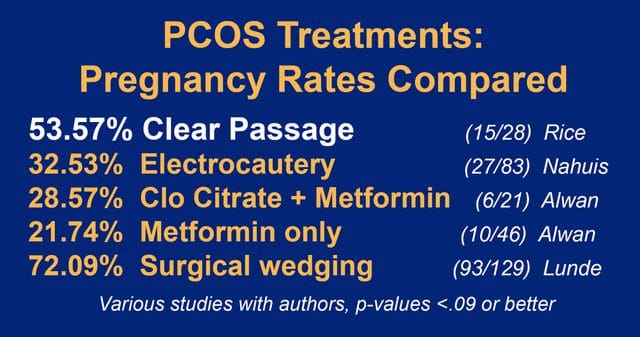
Clear Passage® is a world leader with over three decades of treating female infertility successfully without surgery or drugs. In a landmark 10-year study, our hands-on physical therapy yielded pregnancy rates for women with PCOS at rates similar to standard medical treatments, but without surgery or pharmaceuticals (study chart below).
During three decades of research and development, clinical trials showed numerous natural full-term pregnancies in women diagnosed with a variety of hormonal infertility conditions, including PCOS, endometriosis, and high FSH (advanced reproductive age). Numerous peer-reviewed medical journal citations show these results.
Perhaps the biggest advantage of using Clear Passage® for PCOS was to avoid the drugs and surgeries (e.g., drilling holes in the ovary or cutting wedges from it) that are sometimes used to treat the condition. You can view these surgeries in the videos below:
Complete the online Request Consultation form to receive a free phone consultation with an expert therapist and learn more.
Clear Passage® Success Rates
61%
43%
54%
56%
Opening Blocked Fallopian Tubes
Endometriosis Pregnancy Rate
PCOSPregnancy Rate
IVF Pregnancies After CP Therapy
Causes and Frequency of PCOS Infertility
PCOS is a major cause of female infertility, affecting between 8% and 20% of women worldwide.[i] Most women learn they have PCOS in their 20s or 30s when they consult their doctor about problems getting pregnant. PCOS can happen at any age after puberty.[iii] Women of all races and ethnicities are at risk of PCOS, but the frequency is higher in women who have obesity or have a mother, sister, or aunt with PCOS. As well as problems with fertility, women with PCOS can experience irregular menstrual cycles, changes in physical appearance (acne, weight gain, excessive hair growth), heart problems, and increased risk for diabetes.
Polycystic ovary syndrome (PCOS) is a hormonal disorder that affects as many as 10% of women of childbearing age.
Signs and Symptoms of Polycystic Ovarian Syndrome (PCOS)
Signs are observations by physicians; symptoms are physical features noticed by the patient. PCOS signs and PCOS symptoms can be complicated. It is called a syndrome because PCOS can manifest in a multitude of symptoms or complications. This can make it harder for individuals to be successfully diagnosed with PCOS. These are the most common signs and symptoms:
Hair loss
No periods
Depression
Thinning hair
Irregular periods
Acne and oily skin
Weight gain, overweight, or obesity
Hirsutism (excessive hair growth, commonly on the face, back, or chest)
Infertility (trouble becoming pregnant after 12 months with no contraception)
If you have multiple indications from this list, there is a good chance that you have undiagnosed PCOS. You should make an appointment with your general physician, or you can click here for more information.
Hormonal and Mechanical Aspects
While considered a hormonal disorder, we speculate a mechanical aspect to PCOS in some women when the ovaries become covered with collagen fibers, the building blocks of adhesions. Our thoughts are based on a combination of a) viewing thickened ovarian walls in surgical films, and b) witnessing a high number of infertility reversals in patients with PCOS after we treated them. Because our therapy addresses both the mechanical and the hormonal aspects of female infertility, we feel both aspects may be useful when treating patients with PCOS-related infertility. View success rates at our Calculating My Odds page.
As the name “polycystic” suggests, many cysts typically develop in the ovaries of a woman with this condition. These cysts or follicles (fluid-filled sacs) contain eggs. But in women with PCOS, the ovary does not produce enough hormones for egg maturation. Unable to escape the outer covering, the follicles or cysts remain and build up in the ovaries, preventing ovulation. In addition, the ovaries tend to produce excess levels of androgens (male hormones) in women with PCOS, which can also negatively impact ovulation and fertility.
Addressing Both Aspects of PCOS
Successful reproductive activity depends on medically recognized communication between the ovaries (in the pelvis) and the pituitary/hypothalamus (PH) glands (deep in the cranium). Protected in a cavity within the sphenoid bone in the center of the skull, the pituitary gland is considered the “master gland” of female reproduction and is intimately involved in hormone production and regulation.
While physicians recognize a communication loop between the pituitary/hypothalamus and ovaries, the exact mechanism of that communication remains a mystery. This interplay among glands, called the hypothalamic-pituitary-ovarian (HPO) axis, is largely responsible for whether or not a woman’s eggs can reach maturity during the process of reproduction. Due to the positive results we have documented and published about returning fertility to patients with PCOS and other hormone-related infertility, we believe there is a strong mechanical mechanism in the body’s HPO communication loop that can be improved with our manual therapy.
Symptoms of Polycystic Ovarian Syndrome (PCOS)
PCOS can be a very complicated disorder. It is called a syndrome because PCOS can manifest in a multitude of symptoms or complications. This can make it harder for individuals to be successfully diagnosed with PCOS. These are the most common PCOS symptoms:
Irregular periods
No periods
Infertility (trouble becoming pregnant after 12 months with no contraception)
Hirsutism (excessive hair growth, commonly on the face, back, or chest)
Weight gain, overweight, or obesity
Thinning hair
Hair loss
Depression
Acne and oily skin
If you have multiple symptoms from this list, there is a good chance that you have undiagnosed PCOS. You should make an appointment with your general physician, or you can click here for more information.
Thus, hormonal problems (poor maturation) develop into mechanical problems (ovarian walls thicken and eggs become trapped in the ovary).
In a normal ovary, eggs mature and are released every cycle. In women with PCOS, the ovary does not produce enough hormones for egg maturation. Immature follicles may remain in the ovary, and ovarian walls may thicken.
Treatment Options
Clear Passage®️ Treatment
As physio/physical therapists, we regularly evaluate and treat the functions and mobility of the body’s physical structures, such as muscles, joints, organs, and nerves. It is unusual for us to look at hormonal processes, which are regulated by the endocrine glands. Initially, it never occurred to us that we could affect hormone levels.
We began to question that assumption when women we treated who arrived with hormonal infertility, including PCOS, high FSH, and endometriosis, became pregnant in relatively high numbers after our therapy. As we saw this phenomenon again and again, we realized we had to investigate. In doing so, we found that many of these women had easy, natural pregnancies and delivered healthy, full-term babies. As shown in our landmark 10-year infertility study, pregnancy rates for women with PCOS-related infertility demonstrated a 54% pregnancy rate (15/28).
Our success with women with hormonal disorders is due in large part to our work, which combines therapy in the pelvis, up the spinal cord and dura mater, and into the cranium. This continuum of structures, which connects the pelvic reproductive organs to the pituitary/hypothalamus in the cranium, exactly defines the HPO axis that is so important to reproductive physicians.
A major component of this route is the dura, a fascial sheath that surrounds the spinal cord from the bottom of the tailbone at the coccyx to attachments at the top of the neck and the base of the skull. From there, the dura mater enters the skull through a large opening (foramen magnum), then spreads out to surround the brain and every structure within the cranium. This includes the sphenoid bone and the pituitary-hypothalamus complex embedded in a fossa (depression) within that bone. Strong sheaths of the dura totally surround and infuse the pituitary gland.
During the course of therapy, we treat the full continuum of reproductive structures, including the dura and all of its attachments, from the ovaries, tailbone, and into the head. Surrounding the spinal cord, this sheath can directly influence the central nervous system, responsible for a myriad of complex bodily activities and commands. Any adhesive restriction within that system between the reproductive organs in the pelvis and the pituitary/hypothalamus in the cranium can cause problems with reproduction.
To date, the results of our research treating hormonal conditions in women have been overwhelmingly positive. While we initially discouraged and even refused to treat women with hormonal infertility, experience has taught us that we can help in many cases. After reviewing their medical histories, we now encourage some women with hormonal conditions, including PCOS, endometriosis, amenorrhea (no menstrual cycle), and high FSH levels, to attend treatment. At the same time, we continue our research in these exciting areas.
No medical technique has a 100% success rate. If we are unable to open your tubes, your chances of a successful IVF performed within 15 months after therapy increase by roughly 50%, per published studies. View our success rates.
As mentioned earlier, PCOS may be treated with pharmaceuticals or surgery. Each has its own advantages and disadvantages. Success rates appear to vary widely, depending on the approach, the provider, and the specifics of each patient’s condition. In essence, there are far too many choices for us to examine on this website. We suggest you consult your physician and consult us to get all the information you can in order to make an informed decision on how to move forward.
Physicians may offer two surgical options to help eggs escape from the thickened ovarian walls. In ovarian drilling, the surgeon drills holes in the ovary. In ovarian wedging, the doctor removes a wedge of the ovary, like cutting out a slice of pie.
Published Success Rates
The Clear Passage® Approach (CPA) demonstrated significantly higher rates of pregnancy when compared with metformin alone; the CPA treatment presented no significant differences in rates of pregnancy when compared with clomiphene citrate or the surgical interventions of ovarian wedging or drilling. We found such a variety of success rates in other medicinal and surgical interventions that it was difficult to create a meaningful comparison of Clear Passage® to surgery and pharmaceuticals, other than the above. Taken from the 10-year study, this chart gives some of our findings.
Infertility is defined as the inability to achieve pregnancy after 12 or more months of sexual intercourse without the use of contraceptives. Infertility is a common condition that affects 1 in 8 couples each year in the United States. Many people don’t realize how common fertility issues are. This causes many people to be aware of the risk factors for infertility. Knowing and understanding the risk factors is a critical step in family planning. When individuals take a proactive approach and learn what issues they could face while trying to start a family, they have time to prepare and seek out professional help. Unfortunately, people often wait a year before seeking medical attention. Age is a crucial factor in reproductive health, and every year counts. This guide will help you understand the risk factors that could lead to infertility.
Age
Age is the biggest factor in a woman’s ability to get pregnant and have a healthy baby. A recent study showed that fertility tests can’t reliably predict the fertility of a woman later on in life. Starting at age 32, a woman’s fertility steadily decreases, and by age 40, her fertility has declined by half. A healthy woman at age 30 has a 20% chance each month of getting pregnant, while a woman who is 40 only has a 5% chance.
When a woman ages, her egg quality also declines. Because of this, older women have higher risks of pregnancy complications such as gestational diabetes, placental abruption, and stillbirth. A woman who is over 35 years old is almost 2.5 times more likely to have a stillbirth than a younger woman. Once a woman reaches the age of 40, the chance of a miscarriage is greater than the chance of a live birth. Women who become pregnant at an older age should monitor their pregnancy, as they are more likely to have a child with birth defects or genetic abnormalities.
Reproductive age is often measured by a woman’s levels of follicle-stimulating hormone (FSH). A high FSH (measured on days 2 to 5 of the period) indicates that the ovary is requesting higher levels of FSH, signaling the eventual end of a woman’s reproductive life. A non-surgical therapy to decrease FSH and increase pregnancies in older women has shown promising results.
Body Fat
Low Body Fat
Studies have shown that women with a low body mass index (BMI) often struggle with infertility. Low BMI is the cause of 12% of all infertility cases. Body fat plays a very important role in a woman’s reproductive system. Sex hormones are stored in body fat, and without enough body fat, women can have a reduced amount of estrogen. Too little estrogen can cause amenorrhea, which is the lack of a menstrual cycle.
High Body Fat
A BMI between 25 and 29.9 is considered “overweight,” and a BMI over 30 is considered “obese.” Obesity can cause hormone imbalances that cause problems with ovulation. Obesity increases pregnancy complications and health issues for the baby. Risks associated with obesity are miscarriage, hypertension, pre-eclampsia, gestational diabetes, blood clots, required induction of labor, and stillbirth. Women who are overweight or obese have less of a chance of getting pregnant overall, and they are more likely to take over a year to become pregnant than women at a healthy weight. The risk of pre-eclampsia is 2 times higher in overweight women and 3 times higher in obese women. Overweight women are 2 times more likely to develop gestational diabetes, and obese women are 8 times more likely. A woman who is obese is more than 2 times as likely to have a miscarriage compared to a woman of a healthy weight.
Sexually Transmitted Diseases (STDs)
There are 12,000,000 new cases of STDs each year in the United States. STDs can often be asymptomatic, meaning they don’t produce any symptoms, and people are unaware they have contracted one. STDs can lead to pelvic inflammatory disease. Previous STDs can cause significant complications in a woman’s reproductive system. Some complications include scarring, miscarriage, adhesions, blocked fallopian tubes, and ectopic pregnancy (when a pregnancy occurs outside of the uterus).
Diseased or Blocked Fallopian Tubes
About 20% of all infertility cases are caused by fallopian tube disease. STDs are a major cause of tubal disease. Common causes of fallopian tube disease are gonorrhea, syphilis, and chlamydia. A hydrosalpinx occurs when a fallopian tube is blocked and filled with fluid. Pelvic inflammatory disease or other infections can often cause a hydrosalpinx.
Because fallopian tubes often re-close after surgical repair, many reproductive physicians recommend removing the problem tube(s) and moving directly to in vitro fertilization (IVF). This procedure generally involves pharmaceutical treatment along with minimally invasive surgeries to extract, nurture, and then reintroduce the egg into the woman’s reproductive tract.
A new non-surgical therapy, the Clear Passage® Approach, has been shown to open tubes naturally with a unique therapy designed to detach the adhesions blocking the tube. The therapy, which can feel like a deep massage, opened tubes in 69% of women who had never had surgery on their tubes, and 35% for those who had undergone prior tubal surgery.
Adhesions
Adhesions are internal scars (scar tissue) that can form throughout the body. Adhesions form after surgery, trauma, infection, inflammation, or radiation therapy. A woman with a past medical history including one or more of those events is likely to have adhesions. Adhesions affect the mechanical function of a woman’s reproductive system and are a major cause of blocked fallopian tubes, intercourse pain, and pelvic pain. Many people have adhesions without realizing it. We encourage you to read more about adhesions to find out if you are at risk for infertility.
Endometriosis
Endometriosis is a condition that causes uterine tissue to form outside of the uterus. The tissue can grow on the ovaries, fallopian tubes, bladder, or bowel. The connection between endometriosis and infertility is not clearly understood, but there are indications that adhesions forming at the site of endometrial implants can negatively impact a woman’s fertility. Symptoms of endometriosis include extremely painful menstrual cramps, heavy menstrual flow, diarrhea or painful bowel movements during your period, and painful sexual intercourse. Endometriosis appears to be passed down genetically, so if a woman has relatives with endometriosis, she is at risk.
Overall Health Risk Factors
Chronic diseases, including diabetes, hypothyroidism, hyperthyroidism, arthritis, hypertension, and asthma
Environmental/dietary risks include smoking, alcohol, large amounts of caffeine, or an unhealthy diet
Take Control of Your Fertility
If you fall into one or more of these risk factor categories, now is the time to act. Too often, people take their fertility for granted, and only when they are trying to become pregnant do they find out they are infertile. Get a head start on your fertility. There are natural treatment options that can increase your chances of becoming pregnant before trying surgery, IVF, or fertility drugs.
Talk to your doctor about any risk factors you have and how you can minimize their impact on your fertility or what you can do to prevent them. When it comes to infertility, always remember you are not alone, and you have options.
Even if you are new to the world of fertility treatment, you’ve likely heard others rattle off treatment names such as tubal ligation, IVF, IUI, etc. For those who prefer a natural, more conservative treatment option that does not involve drugs or surgery, there is the Wurn Technique®. The therapists at Clear Passage® Physical Therapy have been using it for over 20 years to successfully treat hormonal and mechanical cases of infertility. The Wurn Technique® has also been shown to be an effective pre-IVF therapy that improves transfer success rates.
How does it work?
Treating mechanical infertility causes
Our therapists use their hands to decrease adhesions, detaching the bonds between their individual cross-links. They do so using a protocol of 200 manual therapy techniques. As part of our infertility program, we focus on adhesions that are on or around the reproductive structures. Adhesions in these areas can prevent sperm from meeting the egg and/or disrupt the normal function of the reproductive organs.
Treating hormonal infertility causes
We use a whole-body approach to treat hormonal infertility, keeping in mind that any dysfunction in the spinal cord, dura (the fibrous membrane that envelops the brain and spinal cord), and all of their attachments, from the head to the tailbone, can affect a woman’s ability to conceive. Our experience has shown us that the tissues within the skull, including the pituitary, react to adhesive pulls similar to other tissues in the body. We found that when we treat adhesions affecting the dura and its attachments all the way into the brain, we see dramatic improvements in FSH levels and numerous full-term pregnancies in women who were previously diagnosed as hormonally infertile.
Pre-IVF therapy
Our Pre-IVF Therapy helps decrease spasm and mechanical factors, namely adhesions, in the uterus, cervix, and fallopian tubes, helping increase implantation rates. For optimal results, you should receive therapy within 15 months before your IVF transfer. Our therapists can treat you up to two weeks before you begin ovarian stimulation (the start of your follicle-stimulating medication) or up to two weeks before transfer for an unstimulated cycle.
What are the results?
Published studies have shown that our therapy improves both natural and IVF pregnancy rates. “Treating female infertility and improving IVF pregnancy rates with a manual physical therapy technique,” published in Medscape General Medicine, reported a 67 percent IVF pregnancy rate for women who received our therapy within 15 months of IVF transfer. It also showed that in the natural fertility segment of the study, 90 percent of women who became pregnant delivered full-term babies.
Visit our Success Rates page for a comprehensive overview of our infertility statistics.