Category: Myofascial Pain

  • Myofascial Pain

    Myofascial Pain

    We Treat Myofascial Pain Naturally

    Clear Passage® has over two decades of experience treating the adhesions that cause myofascial pain, which is closely associated with adhered soft tissue. We use a non-surgical, manual physio/physical therapy to decrease the adhesive pulls on delicate, pain-sensitive tissues, alleviating myofascial pain symptoms significantly. Complete our online Request Consultation form to receive a free consultation with one of our expert therapists. 

    Causes and Frequency of Myofascial Pain

    Millions of Americans have musculoskeletal pain. An estimated 10 million suffer from either myofascial pain syndrome (MPS) or fibromyalgia (FM). While they have much in common, these are now recognized to be two distinct syndromes. MPS is a localized disorder, while FM is a systemic disorder. (Schneider, 1995)

    Because patients with these two distinct conditions have similar symptoms, it is easy for both patients and physicians to be confused about the correct diagnosis. Although there are clear-cut differences between the classic manifestations of the two syndromes, many patients have symptoms that appear to be features of both conditions. Some diagnostic tests do not show abnormalities in either condition. Both MPS and FM are considered diagnoses of exclusion. This means that you must exclude the possibility that the patient’s symptoms are due to some other disorder before you can conclude that the proper diagnosis is MPS or FM.

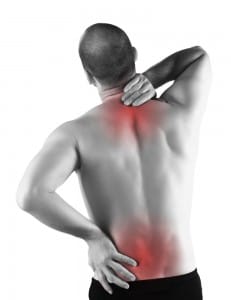
    Adhesions from prior life events can cause persistent pulls or pain in the back, hip or neck – or anywhere in the body.

    Janet Travell, M.D., a pioneering researcher in the field of MPS, describes this syndrome as “a regional muscle pain disorder that is characterized by tender spots in taut bands of muscle that refer pain to areas overlying or distant to the tenderness.” (Travell & Simons, 1983) Some patients develop MPS following trauma, although they may not be aware of the connection since the trauma can precede the onset of pain by weeks or even months.

    Besides trauma, other potential causes or perpetuating factors for MPS include muscle strain and frequent exposure to cold, overwork, and fatigue. Some mechanical problems with the structure of the body are also thought to be possible causes of MPS. These may include a short leg, an asymmetrical pelvis, a long second toe in the foot, and dental abnormalities. Other factors that are thought to lead to MPS are overly tight bra straps, as well as compression of the hamstring muscles on the back of the thigh by the edge of a seat. The typical sitting posture of today’s office worker at a desk or computer terminal, forward head posture, and slumped posture, has also been linked with the increased prevalence of MPS.

    Symptoms

    Symptoms of Myofascial pain include, but are not limited to: 

    • A tender knot in a muscle
    • Pain that persists or worsens
    • Difficulty sleeping due to pain
    • Deep, aching pain in a muscle

    Treatments

    Clear Passage®️ Treatment

    At Clear Passage®, we treat difficult, persistent MPS pain using a “hands-on” approach to alleviate your symptoms and discover the cause of your pain. We have been successful in helping many patients who have been unable to find pain relief through other treatment methods, such as traditional physical therapy and medications.

    We begin by treating tight and dysfunctional areas in your body. A few minutes into your first treatment session, our therapists will be providing a gentle stretch for a sustained period of time to areas of your body where we feel abnormal tensions. This has been very effective in decreasing adhesions and frequently resolving pain symptoms. Goals of treatment include restoring alignment, balance, and mobility to the pelvis, sacrum, thoracic and lumbar spines. We address headaches, neck, back, and hip symptoms. We will treat the affected connective tissues and abdominopelvic organs.

    Our therapists follow soft tissue therapies with a stretching and strengthening program focused on the core of the body as well as areas of prior pain, dysfunction or decreased range of motion.

    Other treatment goals focus on decreasing pain and restoring the range of motion. We work with you to improve your function and your tolerance for physical activity to return you to an active, productive lifestyle

    Other Treatment Options (Surgery, Drugs)

    Other treatment options for myofascial pain can range from self-care to pain medication to needle procedures.

    Self-care treatments can include stretching and relaxing; however, if this does not resolve your pain, you may need to see a doctor. 

    Medications available to alleviate your pain include pain relievers, antidepressants, and sedatives. Pain relievers will treat the symptoms of your condition, making it easier to go about your everyday life, but they do little to effectively treat your condition. A variety of antidepressants can help to relieve pain in some patients and improve sleep if your pain is keeping you awake at night. Sedatives can also help to address the problem of poor sleep from persistent myofascial pain, as well as any anxiety that arises from your condition. However, with sedatives and pain relievers, there is the risk of addiction. It is also important to keep in mind that these medications are rather ineffective in treating your condition as a whole. Instead, they treat your symptoms and problems that arise from your symptoms. 

    Needle procedures aim to inject numbing agents and or steroids into trigger points of your pain. It has been found effective in some patients that the act of inserting the needle into the trigger point helps to break apart the muscle tension. Acupuncture also appears to be helpful in pain relief from myofascial pain syndrome.

    Testimonials

    To read past patient success stories, please visit our Testimonials page.

    Related Content:

    Chronic Pain

  • Migraines/Chronic Headaches

    Migraines/Chronic Headaches

    We Treat Migraine and Headache Pain Without Drugs

    Testimonials from Clear Passage® patients who used to have Chronic Migraines/Headaches.

    Migraine headaches can be caused by ‘mechanical’ factors, which are sometimes overlooked or left untreated by physicians. Clear Passage® therapists have successfully treated severe and recurring migraine headaches without drugs for over 20 years. 

    Our natural migraine headache treatment can decrease or eliminate the mechanical restrictions pulling on the base of the skull, the temples, the sinuses, the jaws, or the top of the head. 

    Complete our online Request Consultation form to receive a free phone consultation with an expert therapist and learn whether our therapy can help you.

    A key part of our therapy is a thorough evaluation of the biomechanics of headache symptoms. We review your history of traumas, infections, and surgeries. Then we look beyond our strong focus on the cranium and evaluate asymmetry and adhered areas in the neck, thoracic spine, shoulders, and throughout the body.

    Causes and Frequency of Chronic Migraines and Headaches

    Nearly 45 million people in the United States live with chronic headaches. About seven million people report debilitating headaches that last for hours at a time, at least every two days. It is estimated that 157 million workdays are lost due to headaches, and two billion dollars are spent on over-the-counter painkillers to treat headache symptoms each year.

    Biomechanics of the head and neck

    The head is comprised of 28 bones that articulate with each other, much like continental shelves on the Earth’s surface. Some bones define the surface of our skull, while others go deep into our head where they articulate with other cranial bones, connective tissue, the brain, and various glands (pituitary, hypothalamus, etc).

    The central nervous system contains the tree-trunk-shaped structure (spinal cord) that connects most of the major nerves of our body to our brain. This entire structure is surrounded by strong connective tissues, which act as a protector and shock absorber, as our spinal cord joins and infuses with the tissues of the brain. From the brain, the spinal cord and its protective fascial sleeve (the dura) travel down through the vertebrae to its anchor at the coccyx.

    Thus, the head is composed of remarkable and complex pain-sensitive structures, all of which are surrounded and infused with very strong connective tissues called fascia. Our body’s fascia is actually a continuous weave — a very strong three-dimensional ‘sweater’ that runs from the top of our head through our neck, shoulders, back, and down to our feet.

    The head rests at the top of the spine within this fascial sweater. Restricted tissues below the head can create unnatural pressures on the delicate structures of our head and neck, creating a straitjacket effect that causes or perpetuates headaches.

    Early on, we found that many of our chronic pain patients suffered migraine headaches. These required multiple drugs, sometimes multiple doctors, and still sent them for regular emergency room visits. Despite success in treating these headaches, some patients reported a persistent problem. We set out to find a more complete resolution for migraine headaches.

    For this reason, we take a full-body approach when evaluating chronic headaches. In doing so, we find that headaches often accompany the stooped, forward head posture common to certain professions, such as dentists, hairdressers, gynecologists, and people who work in front of computers.

    In essence, the head must adapt its position in space according to the position of the much larger structures below it–the spine, back, and pelvis. Thus, chronic or recurring headaches are often the result of sustained muscle contraction, compensatory postures, and fascial pulls or joint restrictions further down the body. For this reason, cranial imbalances that cause recurring headaches may occur from structural imbalance in the neck or torso, or even down into the pelvis, sacrum, lumbosacral junction, or base of the skull.

    We find a major contributory factor to headaches to be mechanical and soft tissue dysfunction of the mid-back, where thick, tight mid-back muscles create a strong pull at the base of the skull and into the head.

    Further down the spine, we find that dysfunctions of the sacral joints (in the pelvis) and surrounding musculature and fascia (connective tissue) may also contribute to chronic headaches. Strong connections from the low and mid-back can pull through the neck to the base of the skull, causing or perpetuating headaches. Unless these tissues are freed from their patterns of spasm and myofascial adhesions, the headaches will continue and eventually worsen.

    In addition, there is very little ‘play’ in the dura, the fascial sleeve that surrounds the spinal cord, with attachments at the head, neck, sacrum, and coccyx. Falls, infections, or surgeries that pulled the tailbone forward often created a significant pull on the tissues at the base of the skull – and into the head.

    Strong attachments of the dura to the tailbone (coccyx) can cause a significant pull up through the spinal cord to its attachment at the base of the skull. Thus, when a person falls onto her/his tailbone or has physical trauma there (auto accident, physical or sexual abuse), the tailbone can be pushed forward. When that happens, the spinal cord can be pulled down sharply, often creating a strong pull on its next attachment at the base of the skull, causing headaches. We see this condition often in our approach to migraine headache treatment.

    Why do I get persistent or chronic headaches or migraines?

    While some headaches are caused by medical conditions such as hormonal or endocrine imbalances, we find that most recurring headaches are caused or exacerbated by mechanical factors. These include muscle tension of the facial, cranial, neck, and chewing muscles, and restricted cranial bone mobility. Muscles in spasm may impair circulation within the head and neck due to their pressure on blood vessels, causing pain. Compression of blood vessels at the base of the skull can cause headaches as blood flow is slowed from leaving the enclosed skull.

    Any of these conditions may be exacerbated by poor work postures. Adhesions caused by inflammation at the head, neck, or related structures can also be a direct cause of headaches, as strong glue-like bonds pull on pain-sensitive structures within the head.

    Patients with mechanical headache pain often report that they feel a place in their head or neck “where the headache starts or resides.” We generally find this patient feedback to be accurate and quite important. It helps us examine the mechanical forces that cause or impact the patient’s chronic headaches and relieve them using hands-on techniques, without surgery or drugs.

    A migraine headache can be severe, with symptoms lasting anywhere between several hours to several days. The associated pain can be pulsating or throbbing on either or both sides of the head. The headache is sometimes accompanied by visual disturbances, sensitivity to light or sound, or digestive symptoms such as nausea, vomiting, or diarrhea.

    In most cases, we have found that the direct cause of, or a major contributor to, migraine headaches is soft tissue tightness at:

    • The base of the skull,
    • One or both temples or eyes
    • The top of the head was the direct cause
    • Areas significantly below the skull (neck, shoulders, back, surgical scars, or the coccyx (tailbone)
    We found that a missing element for these patients was a full body approach. Simply put, adhered tissues in the larger structures of the back, abdomen, pelvis and even legs were pulling on the delicate structures of the neck and head, perpetuating the pain.

    Treatments

    Clear Passage®️ Treatment

    A key part of our therapy is a thorough evaluation that can help identify the biomechanics of headache symptoms. We look beyond the cranium to evaluate tightness and asymmetry at the neck, shoulders, back, and even tailbone — important areas that are often overlooked when treating recurring headaches.

    The primary goals of our manual therapy, the Clear Passage® Approach, are to increase mobility and decrease pain. We are highly skilled in using our hands to palpate tightened areas of the head, neck, and back until the tensions release. Our unique therapy appears to reduce adhesions, decrease pain, and improve mobility.

    Free of the glue-like adhesions, most patients find their cycle of recurring headaches to be significantly improved or completely eliminated after therapy. As pain begins to resolve, we work to restore alignment, balance, and mobility to the entire body, so that headaches do not return.

    In many cases, the base of the skull acts as the anchor – and the place where headaches often start. Treating this area helped, as we found in our early cases. But when we treated adhered tissues in the lower body as well, our most challenging migraine patients started reporting profound, generally permanent relief.

    Other Treatment Options

    Traditional migraine headache treatment methods vary considerably, and many people do not obtain complete pain relief after conservative treatment, such as traditional physical therapy or medications. Chiropractic care may help for a period of time, but unless we address the strong, underlying adhesions that pull the cranial structures out of balance, chronic headache pain tends to persist. Injections such as nerve blocks may address the symptoms but do little to treat the cause of the headaches. Surgery for headaches is extremely rare and considered a last-resort treatment.

    Testimonials

    Read one of our patient testimonials below: 

    “For most of my adult life, I had suffered from chronic headaches. These started in my mid-twenties, and by my early thirties, they were occurring on a daily basis and becoming more severe. I had consulted with a number of different internists and neurologists who estimated that these were essentially muscle-tension headaches, but often of migraine intensity. I had explored almost every treatment available, including medications that ranged from over-the-counter analgesics to narcotic painkillers. I had also investigated non-traditional methods such as acupuncture, biofeedback, and chiropractic adjustments, but none had much effect. By my late thirties, these headaches had become incapacitating to the point where they often limited activities and even resulted in trips to the emergency room. Needless to say, this health condition was having a substantial negative impact on my life.

    In those twenty-some years, I had seen nearly a dozen medical “specialists,” and yet none was able to ascertain the cause of my headaches. Things changed, however, when I met Larry and Belinda Wurn at Clear Passage® Physical Therapy. In simply observing my posture, they could tell that something was not right, essentially that the muscles in my back were contracted in a manner that put excessive pressure on my neck – the basis for the unbearable headaches. It’s difficult to ascertain the initial cause, but a critical car accident in my early twenties, along with many other falls and injuries over the years, most likely played a part. Incredibly, I felt relief after the first treatment, and within a few weeks, the headaches had been reduced to a point where I no longer needed medication. Today, I am nearly headache-free, and when they do occur, nothing more than aspirin is needed to relieve the pain. In all of those years, doctors never suggested such a simple solution to what is a relatively common problem. I’m very thankful to Clear Passage® for their resolution of this debilitating health issue and strongly recommend this very effective alternative to anyone in a similar situation.”

    Related Content:

    Chronic Pain

  • Back & Hip Pain

    Back & Hip Pain

    We Treat Back and Hip Pain Naturally

     “After years of incapacitating back problems, I have now received my first 12 hours of treatment at Clear Passage®. I am amazed that I feel physically so much better in such a short time. It is remarkable to me that I can now bend over, virtually pain-free, for the first time in 14 years! Had I come here sooner, I would have saved myself so many years of pain and misery! Thank you so much.” – Midge

    Back and hip pain are specialties for Clear Passage® clinicians. We have over two decades of experience eliminating back and hip pain, without surgery or drugs. Our therapists decrease the adhesions or internal scars that form in our bodies throughout life, using manual physio/physical therapy. We help clarify the mystery of chronic back and hip pain and eliminate it. 

    Complete the online Request Consultation form to receive a free phone consultation with an expert therapist to learn more.

    Causes and Frequency of Back & Hip Pain

    Chronic back and hip pain can affect all aspects of a person’s life, as well as the lives of their family and friends. Back and hip pain that persists for more than three months is considered chronic. 

    Symptoms may include:

    • Prolonged morning stiffness
    • Concurrent sacroiliac or tailbone pain
    • Back or leg pain when standing, walking, or sitting

    Chronic back or hip pain is often caused by structural or mechanical problems associated with adhesions. Adhesions are tiny glue-like bonds that form in the support structures of the pelvis, back, and hip after a surgery, fall, accident, or other tissue damage. They can pull the structures of the back or hip out of proper alignment.

    Two important factors that contribute to back and hip pain are biomechanical and soft tissue dysfunctions of the sacral joints. The sacrum is the body’s center of gravity and stability, simultaneously negotiating forces transferred from the spine and torso above and the legs below it. A complex series of ligaments attaches the sacrum to the two large pelvic bones (the ilia) at the sacroiliac joints. In doing so, they help provide a stable transition between the upper and lower body. The sacrum also forms a joint with the fifth lumbar vertebra at the base of the spine — the lumbosacral junction.

    The sacroiliac joints contribute significantly to lower back stability, and the lumbosacral junction contributes greatly to low back mobility. Together, these joints and their support ligaments support the entire body above the pelvis. They represent significant structural and functional units when we walk, bend, lift, twist, or perform most activities of daily living.

    We find a strong correlation between dysfunctions of the sacroiliac joints and the lumbosacral junction, and back and hip pain.

    Treatments

    Clear Passage®️ Treatment

    Clear Passage® therapists are experts at decreasing and freeing the excess collagen fibers and adhesions that form during the body’s healing process. As we decrease the collagenous bonds that pull the structures of the sacrum, pelvis, and lower back out of alignment, mobility returns, and pain generally decreases significantly. Free of the glue-like adhesions, most patients find that they can move as they did years ago, before the onset of chronic pain.

    Free of the glue-like adhesions, most of our patients find that they can move as they did years ago, before the onset of their hip or back pain.

    Our goal is to first decrease your pain and then restore your function. As pain begins to resolve, we work to restore alignment, balance, and mobility to the low back, sacrum, sciatic, and hip areas. As symptoms begin to subside, we realign these structures with your legs (below) and your trunk (above) to allow your body to become more balanced, symmetrical, and functional.

    Other Treatment Options (Surgery, Drugs)

    We have found that many patients do not obtain pain resolution after traditional physical therapy or medications. Chiropractic care may help, but only temporarily, as it does not address the underlying adhesions that pull bony structures out of balance. Our work can be a natural complement to expert chiropractic care. 

    Most physicians agree that surgery is a treatment of last resort. While surgery can address adhesions and other mechanical problems, it also causes more adhesions to form. We suspect that new adhesion formation is one reason that surgery does not always result in lasting relief. In fact, some people find their pain worsens after surgery.

    Surgeons may insert rods, cut or replace discs, or shave openings in bones, hoping to relieve back or hip pain. Spinal surgery will not give complete relief if the pain is due to tightness or adhesions in the support ligaments or the muscles of the lower back.
    The cause of back or hip pain can be difficult to diagnose. Most doctors suggest trying the most conservative interventions first. This generally means therapy before drugs, drugs before surgery, and surgery as a last resort.

    Testimonials

    To read past patient success stories, please visit our Testimonials page.

    Related Content:

    Chronic Pain

  • Patient Story: Unexplained Abdominal Pain

    Patient Story: Unexplained Abdominal Pain

    Rae’s story is an excerpt from our book, Overcome Infertility and Pain, Naturally

    My two weeks in Gainesville, Florida, were a turning point for me. I don’t think I will ever be able to put into words what they did for me, my health, my approach to good health, and my outlook on life.

    I have been no stranger to the acronym “ICI” (Invisible Chronic Illnesses), and had a plethora of TLAs (three-letter acronyms) as diagnoses for my various levels of ill health, pain, and inability to “have a life.” What brought me to Clear Passage® was the four years of fighting stomach pain, a pain that made all other pain issues pale in comparison.

    I developed stomach “clutches” that literally doubled me over and brought me to my knees. Having pain issues from FMS (Fibromyalgia Syndrome) and MPS (Myofascial Pain Syndrome) did not prepare me for this sharp and focused wave of pain. It hurt so badly that the pain would make me throw up whatever was in my stomach, and then for the next “n” number of hours (sometimes days) heave pure bile. That was my cue to go to the emergency room.

    After my third visit there, one physician decided that gallstones were the issue. He admitted me, and I waited three days until the surgeon was available. I was afraid of surgery; my health was not the best to begin with, but the knowledge that this would end the cycle of excruciating pain was what kept me strong.

    Recuperating from the surgery was no picnic, but I was free of the stomach issue, or so I was told. All it took was one roughage-filled meal to have me dialing 911 and awaiting the ambulance. It was so frightening and disheartening, but I hadn’t put two and two together yet; even worse, neither had the doctors. They all believed this was all part of the “recovery process” from the surgery, and my system was trying to handle the digestion process without the gallbladder doing its job of breaking food down with enzymes and directing it into my intestines.

    Much later, it became apparent to all of us that my stomach issue was not resolved by surgery. In fact, the surgery had exacerbated my problem (origin still unknown).

    I then went to multiple GI specialists, “la crème de la crème,” who were all adamant that I had an issue, but no one could diagnose it. I soon found myself chasing pain clinics and having tests of pure discomfort. I had MRIs and CT scans with and without dye; I swallowed markers to track my digestive system by X-ray and swallowed other nasty stuff to clean my system the night before. I underwent all of these tests and procedures to show the medical folk how my digestive tract worked, how fast it moved, what path it took, and other arcane data. I had endoscopies and colonoscopies. And still, I had to go to the ER again and again with the pain. The ER doctors took so many X-rays of my entire torso that I am surprised I don’t glow in the dark!

    So between tests, specialists, and pain clinics, I kept having to find relief in the emergency room. They would insert an N/G (nasogastric) tube into my stomach, give me enemas, experiment with intravenous medicines, and inject Atropine… After a while, they’d create any concoction or cocktail they could think of. They, too, were frustrated and also “suspicious” since the relief inevitably came when they finally gave me the injection of a narcotic, along with anti-nausea medicine.

    Sometimes they used an IV, and they’d maybe add something to hydrate me, but inevitably, excruciating pain in my stomach recurred. Depending on what they saw, they would either calm my pain with drugs or admit me due to a bowel obstruction, or “ileus.”

    My ER visits eventually became even more frequent. My primary care physician kept suggesting exploratory surgery as the only way to figure out what was wrong. He put me on narcotics to try to keep me home and help me minimize going to the ER over and over again for pain relief. There were weeks when broth and Jell-O were my only fare — I remember being so excited when I could add some food to my Jell-O. There are not nearly enough Jell-O flavors available!

    As my pain, bloating, and digestion problems continued, along with trips to the ER, including admission to the hospital, my doctor became more insistent on the need for exploratory surgery. He assured me that if there were the expected adhesions from my prior (unnecessary) surgery, the way to eliminate them was more surgery.

    I started to attack the Internet for information. I found Clear Passage®.

    After reading horror stories about adhesions being compounded by multiple surgeries that attempted to release previous adhesions (which sounded both scary and logical to me), I approached my MD about going to Clear Passage®. His feeling was that it would not harm me, and at most, it would only cost me some time and money. He felt it was worth a shot — he was supportive of my efforts. I can’t tell you how warm and welcoming everyone at Clear Passage® was. I filled my form out very, very completely, and I have a long and complicated health history, as I alluded to earlier. I held nothing back. I spoke to a therapist on the phone, and she soon became my new best friend and confidante. Despite my weight, Clear Passage® was willing to work with me, as long as my expectations were realigned to recognize that it might impact the level of my success.

    An image of Deep Tissue Massage to break up surgical adhesions.
    Breaking up Surgical Adhesions

    My therapist did not hold back or “weasel-word” what I was in for and what to expect. She was a professional always, but with such a heart. I went to Florida, where their team of therapists worked together to create a plan for me. Every step of the way, I found caring, smiling people who listened to me and encouraged me while the therapists worked; rather, WE worked together — I had to be actively involved, mind and body. The rest of the staff always smiled, answered questions, suggested places to visit, and accommodated my schedule needs.

    By the end of two weeks, I had made new friends, really more like sisters: a family of my choice. I was so sad to leave them, but it was time to “graduate” and say goodbye. They gave me resources, paperwork, cheat sheets of exercises, and more to continue the process at home.

    After I returned home, it was eleven long, lovely months before I ever hit the ER with a stomach issue again. Now, almost 7 months later, I’ve not gone to the ER since. Compared to my schedule of multiple ER trips every year, this feels like magic (albeit based on their science, intuition, training, and heart). I never imagined this could be my reality!

    I am now on the brink of getting off narcotics, which, at one time, were the only things that kept me from being in the hospital 24/7. I admit I’m anxious about this step, but excited too. This could never have been possible without my time at Clear Passage®.

    Related Content:

    Read more about Abdominal and Pelvic Adhesions.

    • Myofascial Pain Syndrome and Fibromyalgia: What Is the Difference?

      Myofascial Pain Syndrome and Fibromyalgia: What Is the Difference?

      Myofascial Pain Syndrome is sometimes confused with fibromyalgia, or the two terms are used interchangeably. This is incorrect, as they are considered two distinct conditions. If you or someone you know is experiencing symptoms or has recently been diagnosed with one of these disorders, understanding the difference between Myofascial Pain Syndrome (MPS) and fibromyalgia is critical for effective treatment and management.

      Fibromyalgia is a disorder that causes musculoskeletal pain, chronic fatigue, memory, sleep, and mood issues. Some experts believe it is caused by hormonal disturbances and chemical imbalances; others suspect that the deep muscle pain characteristic of fibromyalgia is linked to stress, illness, or trauma. Fibromyalgia affects more women than men.

      With Myofascial Pain Syndrome (MPS), pressure on sensitive points in your muscles causes pain in seemingly unrelated parts of the body. MPS is often caused by muscle overuse or injury. It can occur alongside conditions such as spinal disc disease and inflammatory illnesses.


      The following are key differences between Myofascial Pain Syndrome and fibromyalgia:

      1. MPS patients experience localized or regional pain that is confined to one area of the body, while fibromyalgia involves diffuse pain that affects several areas.

      2. Fibromyalgia patients have “tender points,” while MPS patients have “trigger points.” Tender points are areas of tenderness around joints, but not the joints themselves. They hurt when pressed with a finger. A trigger point is a sore point that, in addition to hurting when pressure is applied, triggers a referred pain in a different area of the body.

      3. In many MPS cases, the pain resolves with treatment of the offending stimulus, while the pain of fibromyalgia has a higher chance of being chronic.

      MPS is often present in fibromyalgia patients, but not all MPS patients also suffer from fibromyalgia. With both MPS and fibromyalgia, fatigue, stress, and depression can exacerbate symptoms.

      Both conditions can be treated and managed successfully. Request a phone consultation with an expert therapist to learn how the Wurn Technique® can decrease pain and dysfunction caused by Myofascial Pain Syndrome and fibromyalgia — without drugs or surgery.

      References