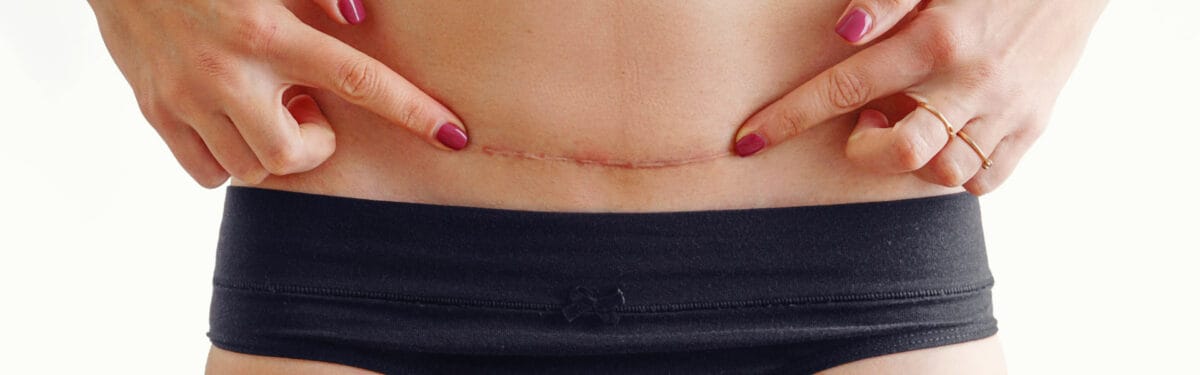
Category: C-Section Pain

  • C-Section Pain

    C-Section Pain

    We Treat C-Section Pain Naturally, Without Surgery or Drugs

    The body forms adhesions after surgical procedures, including C-section. Clear Passage® is a world leader in treating pelvic pain with non-surgical manual physio/physical therapy. We have over three decades of experience treating C-section and intercourse pain. Studies on our work, including success rates, have been published in peer-reviewed U.S. and international medical journals. 

    Complete our online Request Consultation form to receive a free phone consultation with an expert therapist and learn whether this therapy can help you.

    For some women, the pain begins soon after surgery; for others, it may start months or even years after the C-section. For most, the pain never goes away; it remains or gets worse over time.

    C-Section Pain Overview

    Chronic pelvic or intercourse pain can occur in the months or even years after a Cesarean Section (C-section). This is a major surgery that cuts through several layers of sensitive pelvic tissue. The pain is often caused by adhesions, the powerful internal bonds that form when the body heals from the surgical procedure. Corrective surgery can cause more adhesions, exacerbating the problem.

    Adhesions often form after a C-section delivery, causing pain or tightness in the pelvis. (Morales et al., 2007; Hamel, 2007; Lyell et al., 2005) Designed to help the body heal, post-surgical adhesions can cause ongoing pain or dysfunction long after the surface scars have healed. Wherever they form, adhesions bind structures together with strong glue-like bonds that can last a lifetime. This can result in an uncomfortable pulling sensation or pain. 

    When adhesions form in the delicate folds of the bowels, they can cause pain or digestive problems such as diarrhea, constipation, or irritable bowel syndrome. In severe cases, these adhesions can lead to bowel obstruction, a life-threatening condition. Scar tissue c-section adhesions can also form in the delicate tissues of the reproductive tract, causing secondary infertility, pelvic pain, or intercourse pain.

    Read “How to Tell if You Have Adhesions After C-Section” for more details on cesarean section scar tissue.

    C-section is the most common surgery among women in the United States. (Office of Women’s Health, 2009b) During a C-section, the physician cuts through the skin and abdominal walls, then cuts the uterus with an incision large enough to remove the infant(s).

    Complications such as a breech baby or a vaginal birth that is not progressing may lead to a C-section. Many physicians feel that a vaginal birth is safer and healthier for the mother and infant.

    Click here to watch an Internet video of a C-section surgery (graphic).

    C-section is a major surgery in which the physician cuts through several layers of skin, muscles, fascia, and abdominal wall to expose the uterus. The surgeon then slices the uterus open with an incision large enough to remove the infant(s).
    Cutting so deeply into the body can create significant adhesions as the body heals. These can spread into pain-sensitive structures, causing chronic or recurrent pain or dysfunction

    Treatment 

    Clear Passage®️ Treatment

    When patients who have undergone C-sections come to us with pain, dysfunction, or infertility, our physical therapists evaluate the uterus and pelvic and abdominal structures for areas of tension or restricted mobility. They pay particular attention to the areas around and deep to the incisions. Considering the tendency of adhesions to spread, they then examine the entire body for areas of pain, tension, and decreased mobility. As indicated, they examine the whole pelvis and abdomen during evaluation and treatment. The “hands-on” techniques we provide have been shown in peer-reviewed medical journals to reduce adhesions, decrease pain, and improve soft tissue mobility, without the risks of surgery or drugs.

    We know pelvic adhesions well. We faced this situation 20 years ago when our Director of Services, Belinda Wurn, developed severe adhesions after pelvic surgery and radiation therapy. Unable to work due to the pain, and having seen the devastating and debilitating effects of pelvic adhesions in her own patients, she was determined to find a non-surgical way to decrease and eliminate adhesions.

    With her husband, massage therapist Larry Wurn, Belinda took a much deeper look at the etiology and biomechanics of adhesion formation. They found that the chemical bonds that attached each of the tiny collagen fibers to its neighbor to create adhesions appeared to dissolve when placed under sustained pressure or shearing over time. With this knowledge, they developed the Clear Passage® Approach to unravel the bonds between the fibers that comprise adhesions.

    Most patients report significant to profound pain relief and a return to normal life, facts that are reflected in published studies about our work.
    Clear Passage®️ offers a non-surgical choice. Our therapists focus on breaking down the cross-links that comprise adhesions. This allows us to pull apart the adhesions, like pulling apart the run in a three-dimensional sweater. As the adhesive pull is diminished, the pain disappears.

    Other Treatments for C-Section Pain (Surgery, Drugs)

    While lysis of adhesions can be effective, surgery has some major drawbacks:

    • It carries risks from anesthesia and infection
    • Despite the best skills of the finest surgeon, the body creates more abdominal adhesions as it heals from the surgery designed to remove them.

    A huge study in Digestive Surgery showed that more than 90% of patients develop adhesions after C-section treatment following open abdominal surgery (e.g., C-section), and 55% to 100% of women develop adhesions following pelvic surgery. (Liakakos et al., 2001) Another large study reported that 35% of all open abdominal or pelvic surgery patients were readmitted to the hospital more than twice to treat post-surgical adhesions during the 10 years after their original surgery. (Ellis et al., 1999) Thus, abdominal surgery itself has been implicated as a major cause of adhesion formation, and many patients become trapped in a cycle of surgery-adhesions-surgery with no end in sight. Clear Passage® provides the end of that cycle for many patients. 

    Visit our Free Consultation page to learn more.

    Until recently, surgery to cut or burn adhesions was the only choice for treating post-surgical adhesions. Despite excellent surgical skills, the procedure can cause more adhesions (internal scars) to form.

    Published Success Rates

    To view our success rates and published studies, please visit our Success Rates page. 

    Testimonials

    To read past patient success stories, please visit our Testimonials page.

    Related Content:

  • Still Feeling Pain Long After Giving Birth?

    Still Feeling Pain Long After Giving Birth?

    Millions of women are injured during childbirth. You are not alone – and there may be a solution.

    While the joys of motherhood can be great, it is not uncommon for women to sustain pelvic injuries, resulting in pelvic adhesions, during childbirth. Unfortunately, while the body generally heals, the effects of these injuries can sometimes be felt for years postpartum, affecting the quality and comfort of a woman’s life.

    A study in the journal PLOS ONE reported that a staggering 49% of women studied suffered incontinence or pain a full year postpartum. Another study, published in the British Journal of Obstetrics and Gynaecology, reported that many women have pain with sex 18 months after delivery. Some mothers report moderate to severe pain, burning, or stinging with simple day-to-day tasks; others experience changes in the appearance of the genitals. Any of the above symptoms indicates that the muscles, nerves, or connective tissues at the reproductive organs have been injured and that adhesions have likely formed.

    Adhesions are internal scars that form in the soft tissues as the body heals from surgery, infection, or trauma. That also includes trauma to the pelvis caused by childbirth. Learn more about the causes and symptoms of adhesions.

    How can these problems be treated?

    While pain-relieving medications can deaden all feeling in the area and desensitizing gels can numb the area, these solutions are not what many women (or their partners) want. Physicians generally suggest avoiding surgery to treat adhesions whenever possible, due to the recurrence of adhesions — sometimes worse than before — as the body heals from surgery. Many of our patients have found that non-surgical physical therapy involving specially developed massage techniques can deform or detach adhesions. In doing so, it frees nerves and organs from the adhesive bonds that form after childbirth, increasing function and decreasing or eliminating pain. The Clear Passage® Approach and Wurn Technique® are unique in this regard.

    How do I know if this treatment is for me?

    If you (or someone you know) has experienced any of the following, this treatment may be appropriate for you.

    Childbirth-related causes of adhesions

    • C-Section – This common surgery to remove the baby from the womb cuts through a number of layers, from your skin to the deepest part of your reproductive structures. In most cases, the body heals, and the pain from the surgery subsides in a few weeks. But in some cases, the adhesions attach to pain-sensitive areas, causing pain with intercourse, sitting, walking, or certain movements.
    • Episiotomy or perineum tear – Occurring during some vaginal births, symptoms of tearing can range from unnoticeable to extremely painful. Healing from the tissue damage creates scar tissue that can cause vaginal burning or stinging for some women and deeper pain for others.
    • Trauma to the tailbone (coccyx) – Whether pushed out of normal alignment by childbirth or a fall, or pulled out of alignment by surgery, infection, or endometriosis, a forward-flexed tailbone can cause a variety of symptoms. These include pain with deep penetration – feeling like your partner is hitting something during intercourse. Adhesions can hold the tailbone forward, causing deep penetration pain, constipation (as it ‘closes the door’ during bowel movements), and even headaches.

    What if my symptoms are not that extreme?

    Even minor pain or symptoms may be telling of larger underlying problems and should be examined. Small aches and pains that persist or recur have the potential to grow or cause more serious complications later in life. Unfortunately, legitimate symptoms or pain are sometimes ignored due to the aura of taboo that tends to surround discussion of gynecologic health. A patient may feel awkward discussing something as personal as intercourse pain or feel ashamed that they couldn’t “bounce right back” after giving birth, the way a friend or relative might have.

    If you or a woman you know has experienced prolonged pain as a direct effect of a childbirth injury, know that you are not alone and do not need to accept that long-term discomfort is normal. There is an explanation for all pain. It is important to find a diagnosis – the root cause of your symptoms. When you do, you may find that a natural, non-invasive treatment is an appropriate solution.

    How do I learn more?

    Clear Passage® has helped many patients overcome ongoing pain or dysfunction caused by scar tissue or adhesions. Our therapists use the Clear Passage® Approach and Wurn Technique®, applying pressure and shearing to detach the crosslinks that adhesions are made of. We invite you to schedule a phone consult with one of our certified therapists, at no cost to you, and learn if our treatment is a fit for your needs and goals. Contact us via this online form or by calling 1-352-336-1433.

    References:

  • How to Tell if You Have Adhesions After C-Section ( C-Section Scar Tissue)

    How to Tell if You Have Adhesions After C-Section ( C-Section Scar Tissue)

    Discover relief from C-section adhesions with Clear Passage® Physical Therapy’s free consult and request info, offering a non-surgical approach to address symptoms like chronic pain, infertility, and digestive issues that may have been troubling you for years and are caused by these adhesions. To learn more about getting help, visit our Apply to Therapy page.

    C-sections are one of the most common surgeries in the U.S. For many women, a C-section isn’t a choice — it is the only safe way to deliver the baby. Most c-sections are routine and go as planned. However, many women are unaware of the post-surgical complications that can occur months or even years after a C-section. When the body heals from the procedure, it forms bands of internal scar tissue called adhesions. Adhesions can cause a host of problems if left untreated, including chronic pain, female infertility, and life-threatening bowel obstructions. Unfortunately, they are often misdiagnosed because adhesions and pelvic adhesions do not appear on diagnostic tests such as X-rays.

    Many of us know about the scar that is left after a C-section, but you may be surprised to learn that the way your scar looks can be an indication of your internal healing. Research now suggests that there is a strong correlation between the physical characteristics of an external C-section scar and the adhesions underneath it. Women can use researchers’ findings to help determine whether they have adhesions after a C-section.

    What are adhesions?

    C-section scar tissue is strands of collagen that form in the body after surgery, trauma, infection, or inflammation. Unfortunately, they are rarely discussed, and many patients have never heard the term ‘adhesions.’ Because they are part of the body’s natural healing process, there is no way to prevent adhesions from forming, and the surgeries designed to remove them cause more to form.

    Adhesions can look like spider webs covering the organs or like filmy, white strands of nylon rope constricting structures inside the body. These powerful strands of collagen wrap around structures at the healing site and can restrict blood flow or reduce the function of internal organs. They can bind tissues and organs, resulting in mild to excruciating pain.

    Symptoms of Post-C-Section Adhesions and Scar Tissue

    When we talk to patients, they often have an ‘aha moment.’ We begin describing what someone with post-surgical adhesions typically experiences, and the common response is “Wow, you’re describing me!” Women who have had C-sections often know something is wrong – they can feel it, whether it’s a specific pain or a tightness that they have trouble describing. Unfortunately, many physicians will tell them that pain after a C-section is common and that there is nothing to be done about it.

    The following are common symptoms of adhesions after a C-section. If these describe you, you may have adhesions.

    • Non-diagnosable abdominal pain (sometimes years after your c-section)
    • Trouble standing up straight
    • Swollen/bloated abdomen
    • Pain during intercourse
    • Painful bowel movements
    • Secondary infertility
    • Chronic pelvic pain
    • Increased menstrual pain (since c-section)
    • Pain/tenderness at the location of your scar
    • Swelling after c-section
    • C-section scar pain

    Now that you are familiar with the symptoms of post-C-section adhesions, we will look at the different visual characteristics of a C-section scar and what it can tell you about the presence of adhesions.

    How to Tell if You Have C-Section Scar Tissue

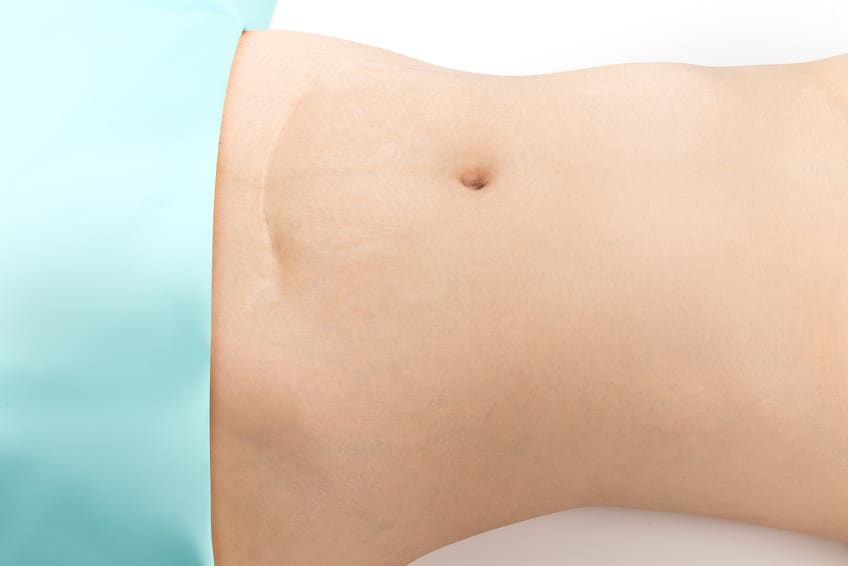
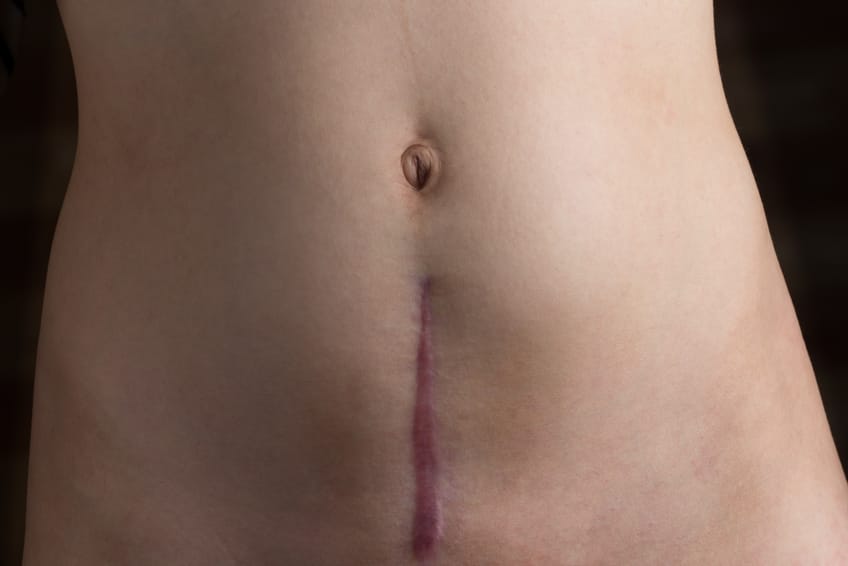
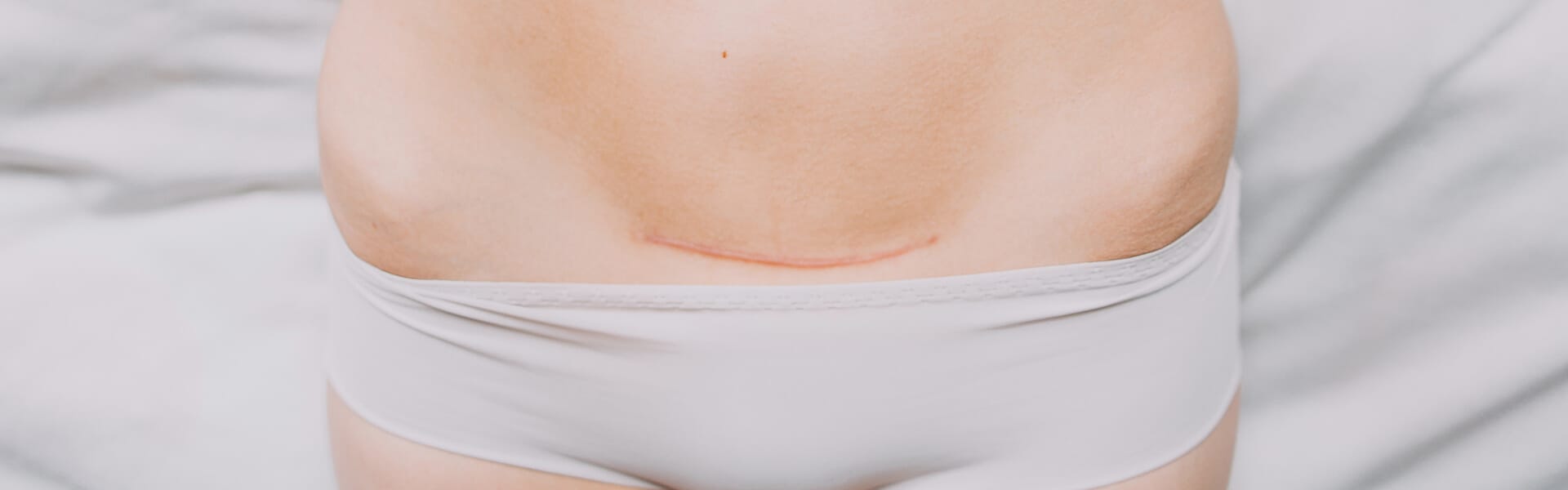
    Lie flat on your back and examine your C-section scar. Women with flat, small scars without significant pigment changes (changes in skin color) are less likely to have adhesions in their pelvis. However, a scar that pulls towards the back (indented) or one that is raised and thick — with or without changes in the color of the skin in that area — suggests the presence of dense adhesions. Additionally, women with scars that are darker in color than the rest of their skin are much more likely to have adhesions, regardless of whether the scar indents, lies flat, or protrudes out.

    If your scar looks like this example — indented without any changes to the pigment — there is a high probability that you have adhesions. Because the skin is indented, women with this type of scar are more likely to have dense adhesions than those whose scar looks similar but is flat, without indentation. If you have c-section scar pain, you most likely also have c-section scar tissue.

    If your scar looks similar to this image (raised with pigment change), you also likely have adhesions. Women with this type of scar are most likely to have dense adhesions, which cause pain and dysfunction, because the scar exhibits characteristics from both risk categories — raised and different pigmentation than the surrounding skin.

    What to Do if You Think You Have Adhesions

    If your symptoms match those described in this article and your scar resembles the examples provided, there is a high probability that you have adhesions. Few options exist for women with abdominal adhesions after a C-section. Surgeons can cut or burn (lyse) adhesions, but the invasive procedure leads to the formation of new adhesions. Some women are able to live without treatment, while others experience recurring, debilitating pain and dysfunction.

    If you or a woman you know is suffering from adhesions after a C-section, we encourage you to fill out a contact form or call us at 1-352-336-1433. You will be able to schedule a phone consultation with one of our certified therapists at no cost, and learn whether our non-surgical treatment is appropriate for you.

    References:

    http://www.ncbi.nlm.nih.gov/pubmed/25304098

    http://www.ncbi.nlm.nih.gov/pubmed/18178195

    http://www.ncbi.nlm.nih.gov/pubmed/21306338

  • Study Points to Link Between C-Section and Adhesions

    Study Points to Link Between C-Section and Adhesions

    Adhesions and C-Sections

    New evidence suggests that pelvic adhesions are present in more than a third of women with a history of previous c-sections and that the adhesions are associated with chronic pelvic pain. “Prevalence of pelvic adhesions on ultrasound examination in women with a history of Caesarean section,” published in the July issue of Ultrasound in Obstetrics & Gynecology, examined 308 women with a history of C-section.

    The results point to a high rate of adhesion formation by ultrasound in women with a previous C-section. Adhesions in the vesico-uterine pouch were the most common in these women. Based on the data, the authors concluded that the likelihood of adhesions increases with each abdominal surgery, including multiple C-sections and incision site infections.

    It’s encouraging to see this type of research about the after-effects of C-sections. Our therapists have treated many women for scar tissue c-section adhesions, helping them overcome pain and/or secondary infertility. They evaluate the uterus and pelvic and abdominal structures for areas of tension or restricted mobility, paying particular attention to the areas around incisions. The therapists then use a protocol of manual techniques to decrease the adhesions, helping women experiencing post-C-section problems return to pain-free, functional lives.

    Learn more about:

  • Why Do I Have Pain After C-Section?

    Why Do I Have Pain After C-Section?

    If you are reading this article in search of an answer as to why you are continuing to experience pain months or even years after you’ve had a C-section, you are not alone. Post-C-section pain is not uncommon and can send women on a seemingly endless quest for relief.

    Jan Kriebs, a certified nurse midwife at the University of Maryland Medical Center, says, “Women really need to understand that a C-section is major abdominal surgery.” According to WebMD, the procedure, which typically lasts three to four hours, including pre- and post-op, involves making an incision through the skin, abdomen, muscle, and then into the uterus. Some experts believe that the prevalence of C-sections — one in three American women have the procedure — causes many to disregard the fact that it has the same risk of complications as other major surgeries.

    One of those complications is the formation of internal scars, called adhesions. They begin to form within the body as soon as the post-surgical healing process begins. The fact is that most patients develop adhesions after pelvic surgery, including C-section. A study in the journal Digestive Surgery showed that 55% to 100% of women develop adhesions after pelvic surgery. In some cases, the adhesions do not cause symptoms, and patients never even know that they have them. For others, adhesions are the source of significant pain and dysfunction, affecting their quality of life.

    Adhesions that form as the body heals from a C-section can cause an uncomfortable pulling sensation or pain. When found in the reproductive tract, they can cause chronic pelvic or intercourse pain as they pull on delicate tissues and structures with a strength approaching 2,000 pounds per square inch. When post-C-section adhesions form in the bowels, they can cause abdominal pain and digestive problems such as diarrhea, constipation, or irritable bowel syndrome.

    Regardless of where they form, post-C-section adhesions can pull on and bind structures together with strong glue-like bonds that can last a lifetime. Unless these post-surgical adhesions are addressed, a woman will likely continue to experience pain and dysfunction. The treatment options for C-section-related adhesions and pain include:

    • Manual physical therapy, the Wurn Technique®, to decrease adhesions without surgery
    • Lysis of adhesions, a procedure in which the surgeon cuts or burns adhesions

    Unfortunately, surgery to remove adhesions almost always leads to more adhesions as the body heals from the latest procedure, leaving patients trapped in a vicious cycle of surgery-adhesions-surgery.

    If you are experiencing chronic pain as a result of a C-section, we encourage you to schedule a free phone consultation with an expert therapist to learn more about the Wurn Technique® and whether we can help you.

    References

  • C-Sections and Pain

    C-Sections and Pain

    Did you know that a C-section is the most common surgery among women in the U.S.? According to data from the National Institutes of Health, one in four U.S. women gives birth via C-section.

    While a C-section generally ensures the safety of both mother and baby during delivery with unexpected complications, it is still a major surgical procedure with potential risks. One of the by-products of a C-section can be the formation of adhesions — internal bonds that rush in to help the body heal from the surgery.

    These adhesions can create an uncomfortable pulling sensation or pain. In more serious cases, post-surgical adhesions that form in the bowels can cause pain or digestive issues such as diarrhea, constipation, or irritable bowel syndrome. In severe cases, these adhesions can result in bowel obstruction, which can become a life-threatening condition.

    C-section adhesions can also affect the reproductive tract, leading to secondary infertility, pelvic pain, or intercourse pain.

  • Prior C-Section Can Cause Adhesions

    Prior C-Section Can Cause Adhesions

    Discover hope for post-C-section fertility challenges with Clear Passage® Physical Therapy’s innovative, non-surgical approach – Request Information and schedule your Free Consultation today to learn how our expert therapists can help address adhesions and improve your chances of conception, then visit our Apply to Therapy page to take the first step towards your dream of expanding your family.

    C-section Can Cause Adhesions

    Cesarean section delivery (C-section) is the most common surgery among women in the US and has been shown to be closely related to adhesion formation. Unfortunately, this invasive surgical procedure requires a great deal of healing to occur. Adhesions are one of the body’s automatic responses to traumas such as a fall, surgery, an infection, or an inflammation. These adhesions are much like thick strands of nylon rope that bind to nearby structures and restrict and cover the traumatized area. Though they are designed to help the body heal, adhesions often cause ongoing pain or dysfunction, long after the surface scars have healed.

    Read “How to Tell if You Have Adhesions After C-Section” for more details on cesarean section scar tissue.

    Adhesions Can Cause Pain

    Because adhesions attach to nearby tissues and organs, they create a pull or restriction in the pelvis, which often results in pain. As the organs, tissues, and muscles attempt to move, a resulting pain occurs.

    Adhesions Can Cause Secondary Infertility

    As adhesions form throughout the pelvis, they can attach to the delicate organs of the female reproductive system. These strong, fibrous bands restrict the mobility and function of these organs, often causing secondary infertility.

    Adhesions Can Cause Digestive Issues

    Adhesions can also affect regular digestion by attaching to the outside or inside of the intestinal wall. As adhesion bonds grow, they restrict the regular function of digestion and can often lead to a partial bowel obstruction.

    Treatment for Adhesions

    Oftentimes, painkillers or infertility drugs are offered as a treatment for those who suffer from post-surgical adhesions. Unfortunately, drugs merely mask the true problem of adhesions and offer no long-term solutions. The next step in treatment is to undergo surgery to cut or burn adhesion bonds throughout the pelvis. However, the trauma of an additional surgery causes additional adhesions to form, which can create an endless cycle of adhesions and surgery.

    A manual physical therapy called the Wurn Technique® has shown excellent results in decreasing pain and increasing function related to adhesions. This therapy feels much like a deep pelvic massage as therapists use their hands to break down the bonds of adhesions throughout the pelvis. This therapy has been endorsed by physicians from Harvard, Northwestern, and Columbia as an alternative treatment to surgery. Click here to learn more about this treatment for scar tissue C-section adhesions.

    “What a much-needed, useful, and safe way to deal with the common, yet mystifying problem of adhesions. You have perfected a technique to treat adhesions, with years of experience, scientific backup, and case studies to prove it.”

    -Dr. Leslie Mendoza Temple, Northwestern University Medical Director

  • The Appearance of a C-Section Scar Can Provide Clues About Abdominal Adhesions

    The Appearance of a C-Section Scar Can Provide Clues About Abdominal Adhesions

    When a woman comes to CPT with secondary infertility, one of the first questions our therapists ask is, “Did you have a C-section?”

    Through years of experience, our therapists have found that C-sections frequently cause adhesion formation within the abdominal and pelvic cavity. Adhesions can impede fertility by blocking the fallopian tubes, restricting the uterus, pulling on the ligaments attached to the uterus, and many other ways.

    Scientific studies have demonstrated the direct link between c-sections and adhesion formation time and time again. A new study released by Fertility and Sterility (Dec 2008) went a step further and found that the appearance of scar tissue c-section adhesion can predict the severity of adhesion formation within the abdomen.

    The study examined 101 women who had previously undergone a C-section. The scientists first examined the C-section scar and noted pertinent characteristics, such as whether the scar was flat or depressed (going into the skin). The scientists then examined intra-abdominal adhesions when the women had a second c-section (all women who enrolled in the study planned to have a second c-section).

    The study found that 43% of the women had adhesions (either filmy or dense). Of these women, the only significant indicator of adhesions was a depressed scar.

    If you are currently struggling with secondary infertility after a c-section, you may find it beneficial to examine your scar to see if it is indented into your abdomen. If it is, you may want to learn more about how adhesions can impact your fertility, or read our article, “How Adhesions Form and Impair Fertility.”

    If your scar is not depressed, you are still not out of the clear. Adhesions can form after a C-section and not cause an indented scar. Learn more about treating adhesions and infertility.