
Category: Abdominal Pain

  • SIBO and Gut Motility

    SIBO and Gut Motility

    What is SIBO (Small Intestinal Bacterial Overgrowth)?

    A person is diagnosed with SIBO when there is an increased number of bacteria or a significant change in the types of bacteria found in the small bowel. A common misconception is that SIBO results from a single type of bacteria. Because a healthy bowel contains a spectrum of bacteria, SIBO occurs when those multiple types of bacteria increase to levels that are no longer considered healthy.

    SIBO can cause malabsorption of nutrients, which results in vitamin deficiencies and weight loss. Persistent SIBO can also lead to IBS, leaky gut, inflammation, and increased sensitivity to food allergies.

    What causes SIBO?

    Pinpointing the exact cause of SIBO can be difficult because of the condition’s complexity. There are several common predictors of SIBO, including Crohn’s disease and diverticulitis, as well as the use of antibiotics, acid-blockers, and other medications that alter the normal gut flora.

    • Irritable bowel syndrome
    • Celiac disease
    • Bowel surgery
    • Bowel obstruction
    • Prior use of antibiotics
    • Decreased stomach acid (can be caused by acid blockers)
    • Abdominal adhesions
    • Decreased gut motility

    If you have one or more of these risk factors and experience any of the following symptoms, you may have SIBO:

    • Abdominal pain
    • Severe bloating
    • Abdominal distension
    • Diarrhea or constipation
    • Frequent gas and belching

    What is gut motility?

    Gut motility is a measure of the ability of food to pass through the digestive tract. Many issues can arise from poor gut motility, particularly malnutrition, which results from the body’s inability to absorb nutrients properly. The body may also have trouble absorbing medications, making it difficult to fully treat and resolve SIBO. Here are a few signs that you may have compromised gut motility:

    • Abdominal distension
    • Recurring obstructions
    • Severe abdominal pain
    • Chronic constipation
    • Previous abdominal surgeries
    • Gastroesophageal reflux disease

    What causes reduced gut motility?

    Gut motility is affected by motility disorders, which hinder the digestive system’s ability to move food through the digestive tract and absorb critical nutrients. The following are some of the more common motility disorders.

    Adhesions

    Adhesions can form in the abdomen after surgery, infection, inflammation, or trauma as the first step in the body’s natural healing process. Once formed, they remain in the body for life. The symptoms of abdominal adhesions can be similar to those of SIBO and, thus, are often confused. These symptoms include abdominal pain, infrequent bowel movements, abdominal distension, severe bloating after eating, reduced gut motility, and painful bowel movements.

    Adhesions can squeeze the bowel, wrapping tightly around it and causing a severe decrease in motility. Abdominal adhesions are also one of the primary causes of bowel obstructions.

    Gastroesophageal Reflux Disease (GERD)

    GERD is associated with heartburn and acid regurgitation. This condition is common and often not associated with a disease. Treatments can range from lifestyle and diet modifications to surgery, in severe cases.

    Intestinal Dysmotility

    Intestinal dysmotility is characterized by abnormal motility in the small intestine due to weak or unsynchronized muscle contractions. The abnormal patterns can cause the symptoms of a bowel obstruction.

    Gastroparesis

    This is a disorder that prevents the stomach from emptying its contents at a normal speed. The most common cause of gastroparesis is diabetes; gastroparesis is also a common complication of some surgeries. Patients with gastroparesis usually have chronic nausea and vomiting; some also experience bloating and early ‘fullness’ when eating.

    How can reduced gut motility cause SIBO?

    SIBO is the result of abnormal motility in the bowel, which can stem from any of the conditions or risk factors listed above. Caused by poor motility, there is a buildup of bacteria in the upper part of the small intestine that is unable to escape. SIBO is normally treated with a combination of medications and dietary changes. Unfortunately, the medication may be ineffective when gut motility is reduced by adhesions. Adhesions can form after trauma, infection, or surgery and significantly reduce bowel motility by wrapping around the bowels and squeezing them.

    When medications are used to treat SIBO, the excess bacteria are killed — a process called “die-off.” When abdominal adhesions prevent the bacteria from exiting the small bowel, it is common for SIBO to return. The “recurring SIBO” persists until the adhesions, which are trapping the die-off, are successfully treated.

    Treatment for adhesions that perpetuate SIBO

    A common method for removing adhesions is a surgical procedure called lysis of adhesions, where the surgeon cuts or burns the scar tissue. Unfortunately, this approach often results in the formation of new adhesions as the body heals from the surgery. Once the adhesions are treated, medications can work better, and intestinal mobility, motility, and absorption can improve significantly.

    Manual physical therapy is an effective alternative for treating SIBO and abdominal adhesions, without the formation of post-surgical adhesions.

    References
  • Endometriosis Staging – The Four Stages of Endometriosis

    Endometriosis Staging – The Four Stages of Endometriosis

    Different Stages of Endometriosis 

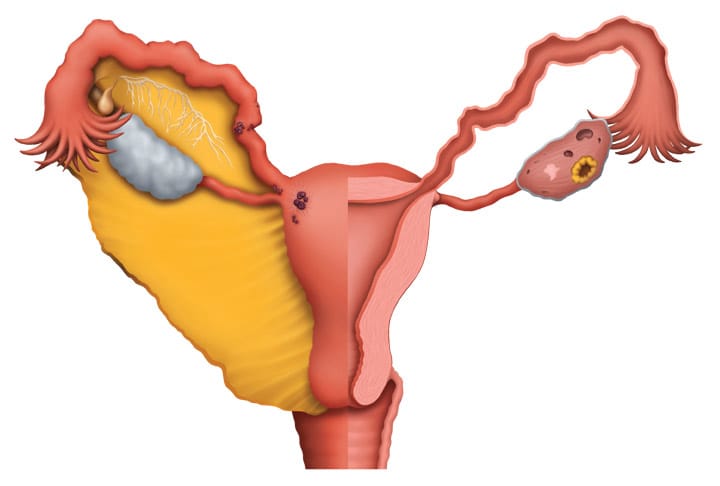
    If you suspect that you may have endometriosis, it is important that you consult with your doctor and receive an accurate diagnosis. Endometriosis is commonly diagnosed via a pelvic exam or a surgical procedure called laparoscopy. As part of the diagnosis, the doctor will typically determine which stage of endometriosis a woman has. Identifying the stage helps guide the selection of the treatment most appropriate for her particular case.

    The four stages of endometriosis are evaluated using the following criteria:

    • Endometrial implants
      • Location
      • Extent
      • Depth
    • Endometriomas
      • Presence
      • Size
    • Adhesions
      • Severity

    Stage 1 Endometriosis (Minimal) 

    The first stage of endometriosis is characterized by superficial implants that are sometimes mistaken for cysts or ovarian cancer. They resemble small, flat patches or flecks on the pelvic surface. The presence of these implants causes irritation and inflammation in surrounding tissues, leading to the formation of adhesions. Adhesions are bands of internal scar tissue that can bind tissues and organs that are normally mobile, causing pain and dysfunction.

    Stage 2 Endometriosis (Mild) 

    Most women are diagnosed with minimal or mild endometriosis. The attributes of the first-stage endo are present in the second stage as well, but more aggressively. Black spots appear over the fibrous adhesions, which have grown in intensity, likely causing irritation during ovulation and/or pelvic pain. During this stage, lesions also appear in the recto-uterine pouch — the area between the uterus and rectum.

    Stage 3 Endometriosis (Moderate) 

    Endometriomas, sometimes called “chocolate cysts,” begin to appear in the third stage of endometriosis. Chocolate cysts get their name because, over time, the blood inside the cyst turns dark red and brown. If a cyst ruptures, it can cause extreme abdominal pain and inflammation in the pelvic region. Inflammation and infection, in turn, cause more adhesions.

    As endometriomas increase in size and number, so do the adhesions that form in response.

    Stage 4 Endometriosis (Severe) 

    This is the final stage of endometriosis, associated with a large number of cysts and severe adhesions. Endometriomas can grow very large — even as big as a grapefruit — during this stage. Endometriomas over the size of 2 cm will likely need to be surgically removed.

    Since many of the cysts at this stage are on the back wall of the uterus and the rectum, women with stage 4 endo may experience digestive issues, including painful bowel movements, constipation, nausea/vomiting, and abdominal pain. In addition, infertility is likely with stage 4 endo.

    Do I Have Endometriosis?

    The following are some common symptoms of endometriosis:

    Symptoms of endometriosis do not always correlate with the stage. For example, a woman with stage 2 endo may experience more pain than a woman with stage 4.

    Discover how Clear Passage® Physical Therapy’s non-surgical, drug-free approach can potentially alleviate your endometriosis pain and improve fertility – schedule your Free Consult or Request Info today to explore a personalized treatment plan. To learn more, visit our Apply to Therapy page.

    References:

  • Patient Story: Unexplained Abdominal Pain

    Patient Story: Unexplained Abdominal Pain

    Rae’s story is an excerpt from our book, Overcome Infertility and Pain, Naturally

    My two weeks in Gainesville, Florida, were a turning point for me. I don’t think I will ever be able to put into words what they did for me, my health, my approach to good health, and my outlook on life.

    I have been no stranger to the acronym “ICI” (Invisible Chronic Illnesses), and had a plethora of TLAs (three-letter acronyms) as diagnoses for my various levels of ill health, pain, and inability to “have a life.” What brought me to Clear Passage® was the four years of fighting stomach pain, a pain that made all other pain issues pale in comparison.

    I developed stomach “clutches” that literally doubled me over and brought me to my knees. Having pain issues from FMS (Fibromyalgia Syndrome) and MPS (Myofascial Pain Syndrome) did not prepare me for this sharp and focused wave of pain. It hurt so badly that the pain would make me throw up whatever was in my stomach, and then for the next “n” number of hours (sometimes days) heave pure bile. That was my cue to go to the emergency room.

    After my third visit there, one physician decided that gallstones were the issue. He admitted me, and I waited three days until the surgeon was available. I was afraid of surgery; my health was not the best to begin with, but the knowledge that this would end the cycle of excruciating pain was what kept me strong.

    Recuperating from the surgery was no picnic, but I was free of the stomach issue, or so I was told. All it took was one roughage-filled meal to have me dialing 911 and awaiting the ambulance. It was so frightening and disheartening, but I hadn’t put two and two together yet; even worse, neither had the doctors. They all believed this was all part of the “recovery process” from the surgery, and my system was trying to handle the digestion process without the gallbladder doing its job of breaking food down with enzymes and directing it into my intestines.

    Much later, it became apparent to all of us that my stomach issue was not resolved by surgery. In fact, the surgery had exacerbated my problem (origin still unknown).

    I then went to multiple GI specialists, “la crème de la crème,” who were all adamant that I had an issue, but no one could diagnose it. I soon found myself chasing pain clinics and having tests of pure discomfort. I had MRIs and CT scans with and without dye; I swallowed markers to track my digestive system by X-ray and swallowed other nasty stuff to clean my system the night before. I underwent all of these tests and procedures to show the medical folk how my digestive tract worked, how fast it moved, what path it took, and other arcane data. I had endoscopies and colonoscopies. And still, I had to go to the ER again and again with the pain. The ER doctors took so many X-rays of my entire torso that I am surprised I don’t glow in the dark!

    So between tests, specialists, and pain clinics, I kept having to find relief in the emergency room. They would insert an N/G (nasogastric) tube into my stomach, give me enemas, experiment with intravenous medicines, and inject Atropine… After a while, they’d create any concoction or cocktail they could think of. They, too, were frustrated and also “suspicious” since the relief inevitably came when they finally gave me the injection of a narcotic, along with anti-nausea medicine.

    Sometimes they used an IV, and they’d maybe add something to hydrate me, but inevitably, excruciating pain in my stomach recurred. Depending on what they saw, they would either calm my pain with drugs or admit me due to a bowel obstruction, or “ileus.”

    My ER visits eventually became even more frequent. My primary care physician kept suggesting exploratory surgery as the only way to figure out what was wrong. He put me on narcotics to try to keep me home and help me minimize going to the ER over and over again for pain relief. There were weeks when broth and Jell-O were my only fare — I remember being so excited when I could add some food to my Jell-O. There are not nearly enough Jell-O flavors available!

    As my pain, bloating, and digestion problems continued, along with trips to the ER, including admission to the hospital, my doctor became more insistent on the need for exploratory surgery. He assured me that if there were the expected adhesions from my prior (unnecessary) surgery, the way to eliminate them was more surgery.

    I started to attack the Internet for information. I found Clear Passage®.

    After reading horror stories about adhesions being compounded by multiple surgeries that attempted to release previous adhesions (which sounded both scary and logical to me), I approached my MD about going to Clear Passage®. His feeling was that it would not harm me, and at most, it would only cost me some time and money. He felt it was worth a shot — he was supportive of my efforts. I can’t tell you how warm and welcoming everyone at Clear Passage® was. I filled my form out very, very completely, and I have a long and complicated health history, as I alluded to earlier. I held nothing back. I spoke to a therapist on the phone, and she soon became my new best friend and confidante. Despite my weight, Clear Passage® was willing to work with me, as long as my expectations were realigned to recognize that it might impact the level of my success.

    An image of Deep Tissue Massage to break up surgical adhesions.
    Breaking up Surgical Adhesions

    My therapist did not hold back or “weasel-word” what I was in for and what to expect. She was a professional always, but with such a heart. I went to Florida, where their team of therapists worked together to create a plan for me. Every step of the way, I found caring, smiling people who listened to me and encouraged me while the therapists worked; rather, WE worked together — I had to be actively involved, mind and body. The rest of the staff always smiled, answered questions, suggested places to visit, and accommodated my schedule needs.

    By the end of two weeks, I had made new friends, really more like sisters: a family of my choice. I was so sad to leave them, but it was time to “graduate” and say goodbye. They gave me resources, paperwork, cheat sheets of exercises, and more to continue the process at home.

    After I returned home, it was eleven long, lovely months before I ever hit the ER with a stomach issue again. Now, almost 7 months later, I’ve not gone to the ER since. Compared to my schedule of multiple ER trips every year, this feels like magic (albeit based on their science, intuition, training, and heart). I never imagined this could be my reality!

    I am now on the brink of getting off narcotics, which, at one time, were the only things that kept me from being in the hospital 24/7. I admit I’m anxious about this step, but excited too. This could never have been possible without my time at Clear Passage®.

    Related Content:

    Read more about Abdominal and Pelvic Adhesions.

    • Bowel Blockage Symptoms

      Bowel Blockage Symptoms

      The first symptoms of blocked bowel obstruction, also called bowel blockage, are typically pain, nausea, or vomiting. These symptoms are often accompanied by difficulty or inability to pass gas or stool.

      Additional symptoms that develop as the bowel blockage worsens are:

      • Pain or tenderness around or just below the belly button
      • Stomach cramps that come and go
      • Distention (swelling or bloating of the stomach)
      • Constipation and the inability to pass gas (indicates a total blockage)
      • Diarrhea (indicates a partial blockage)
      • Vomiting and nausea

      Severe abdominal pain, persistent bloating, nausea, and the inability to pass gas or stool can be a sign of blocked bowel that should be evaluated by a medical professional as soon as possible.


      We have found that a mechanical bowel blockage is almost always caused by abdominal adhesions. Adhesions are bands of internal scar tissue that form on or between organs, preventing them from functioning correctly. In the case of bowel blockage, adhesions obstruct the passage designed to transport food and may prevent the body from processing food.

      If you experience severe abdominal pain or other bowel blockage symptoms, you should seek immediate medical care.

      Our therapists treat bowel obstruction using non-surgical, manual therapy. Schedule a free phone consultation with an expert therapist to learn more.

    • Do Abdominal Adhesions Show on an MRI Scan?

      Do Abdominal Adhesions Show on an MRI Scan?

      Another reader has submitted a question that we wanted to share with everyone. Read on to learn about diagnosing abdominal adhesions.

      Q: I am experiencing a significant amount of abdominal pain, and I think it is due to adhesions that formed after a surgery. How can I find out if I have adhesions? Do abdominal adhesions show on an MRI scan? – Edward

      A: Hi Edward, this is an excellent question as adhesions can be difficult to diagnose through conventional means, often confounding both patient and physician. They do not appear on diagnostic tests such as MRI, X-ray, ultrasound, or CT scan. As a result, when adhesions are suspected to be the cause of a patient’s pain or dysfunction, exploratory surgery is often used.

      The surgery performed is typically a laparotomy or laparoscopy. Laparoscopy is a procedure in which a camera is placed in the abdomen via a tube; this is the less invasive of the two surgical types. In an exploratory laparotomy, the surgeon makes an incision in the abdomen in order to examine the organs. The size and location of the incision vary depending on the specific concern. A surgeon will generally opt to perform a laparoscopy instead of a laparotomy when possible.

      An image of Deep Tissue Massage to break up surgical adhesions.
      Breaking up Surgical Adhesions

      Our therapists use a different approach for identifying adhesions. The first step is always a thorough evaluation of the patient’s medical history, with a particular emphasis on surgeries. This information gives the therapist a significant amount of insight into potential areas of adhesion formation. Once treatment begins, the therapist palpates the body and regularly seeks the patient’s feedback about the specific areas that are tender or painful. Throughout this process, the therapist uses manual therapy techniques to decrease the bonds between adhesions and reduce their pull on pain-sensitive structures.

      Clear Passage® Physical Therapy is a world leader in the non-surgical treatment of abdominal adhesions. Experience relief from invisible yet debilitating abdominal adhesions with Clear Passage® Physical Therapy’s Free Consult and Request Info – discover how their unique, non-surgical manual therapy can detect and treat adhesions that don’t show on MRI scans, potentially saving you from unnecessary exploratory surgery and providing long-lasting pain relief. To learn more, visit our Apply to Therapy page.