Blog

  • Ten-year Retrospective Study on the Efficacy of Manual Physical Therapy to Treat Female Infertility

    Amanda D. Rice, PhD; Kimberley Patterson, PTA; Leslie B. Wakefield, DPT; Evette D. Reed, PT; Kelseanne P. Breder, BA; Belinda F. Wurn, PT; C. Richard King III, MD; Lawrence J. Wurn, LMT

    ABSTRACT

    Background • Female infertility is a complex issue encompassing a wide variety of diagnoses, many of which are caused or affected by adhesions.

    Objectives • The study intended to examine the rates of successful treatment of infertile women using a protocol of manual physical therapy to address underlying adhesive disease leading to infertility.

    Methods • The research team designed a retrospective chart review.

    Setting • The study took place in a private physical therapy clinic.

    Participants • Participants were 1392 female patients who were treated at the clinic between the years 2002 and 2011. They had varying diagnoses of infertility, including occluded fallopian tubes, hormonal dysfunction, and endometriosis, and some women were undergoing in vitro fertilization (IVF).

    Intervention • All patients underwent whole-body, patient-centered treatments that used a protocol of manual physical therapy, which focused on restoring mobility and motility to structures affecting reproductive function.

    Amanda D. Rice, PhD, is the director of clinical studies; Kelseanne P.Breder, BA, is an intern. Both are in the research department at Clear Passage Physical Therapy in Gainesville, Florida. Kimberley Patterson, PTA, is a therapist; Leslie B. Wakefield, DPT, is a physical therapist; Evette D.Reed, PT, is a physical therapist; and Belinda F. Wurn, PT, is a clinical director. All are located in the clinical department at Clear Passage Physical Therapy. C. Richard King, III, MD, is the medical director of Clear Passage Physical Therapy.

    Lawrence J. Wurn, LMT, is a therapist in the clinical department and the research director in the research department at Clear Passage Physical Therapy.

    Corresponding author: Lawrence J. Wurn, LMT

    Outcome Measures• Improvements demonstrated in the condition(s) causing infertility were measured by improvements in tubal patency and/or improved hormone levels or by pregnancy.

    Results • The results included a 60.85% rate of clearing occluded fallopian tubes, with a 56.64% rate of pregnancy in those patients. Patients with endometriosis experienced a 42.81% pregnancy rate. The success rate was 49.18% for lowering elevated levels of follicle-stimulating hormone (FSH), with a 39.34% pregnancy rate in that group, and 53.57% of the women with polycystic ovarian syndrome (PCOS) achieved pregnancy. The reported pregnancy rate for patients who underwent IVF after the therapy was 56.16%. The results also suggested that the treatment was effective for patients with premature ovarian failure (POF). Conclusion • The manual physical therapy represented an effective, conservative treatment for women diagnosed as infertile due to mechanical causes, independent of the specific etiology. (AlternTherHealthMed. 2015;21(3):32-40.)

    Infertility affects 6% to 11% of women in the United States,1–3 stemming from a wide variety of diagnosed medical conditions. These rates are similar to those of other developed countries.4 The most common etiologies for female infertility include occluded fallopian tubes, endometriosis, elevated levels of follicle-stimulating hormone (FSH) that signal a decrease in ovarian function, and polycystic ovarian syndrome (PCOS). Among the less common causes of infertility in women are premature ovarian failure (POF) and unexplained infertility, a classification in which no cause for infertility can be identified. To date, no single treatment has proven effective in producing natural conception in women with this broad spectrum of infertility etiologies. However, a variety of treatment options with varying degrees of invasiveness exist for each condition, from a wait-and-see approach to surgery or in vitro fertilization (IVF).

    Manual manipulation therapy is used by physical therapists, osteopathic physicians, and chiropractors as a standard treatment in a wide variety of medical diagnoses, such as adhesive capsulitis, pain from postmastectomy scars, back pain, and dysfunction related to the pelvic floor.5–13 The intent of manual physical therapy is to decrease pain and increase mobility; its use is applicable to all areas of the body, from osseous structures to soft tissue, including skin and muscles.14,15 In the current 10-year retrospective analysis, a single treatment protocol, the Clear Passage Approach (CPA), demonstrated efficacy in treating female infertility that was due to a variety of etiologies. The study examined the success rates for various conditions when using the protocol, which combines several whole-body and site-specific techniques of manual physical therapy. That protocol focuses on deforming the adhesive collagen cross-links that comprise adhesions and appear to contribute to the underlying causes of infertility, including mechanical blockages and some hormonal imbalances. Decreasing adhesions that bind the organs appears to help the body to function and to respond in a more appropriate physiological manner.

    METHODS

    Participants

    Patients treated for infertility between 2002 and 2011 at Clear Passage Physical Therapy’s (CPPT’s) sites were included in the current retrospective study. All sites included are private physical therapy practices. Infertility was defined based on criteria from the Centers for Disease Control and Prevention (CDC) as the inability to conceive for 12 months of unprotected intercourse in women younger than age 35 years or for 6 months in women older than age 35 years.2 The physicians’ diagnoses and the patients’ self-reported medical histories were examined for causes of infertility, including elevated FSH levels, blocked fallopian tubes, endometriosis, PCOS, POF, and unexplained infertility. Although most successes noted in this study were via natural conception, the study also included women who had therapy prior to IVF, by separate reference.

    To be included in the study, the patients must have had a previous diagnosis of infertility prior to treatment, with a corresponding medical cause(s). Classifications of patients and the measures of success were defined for each of the 6 reported etiologies of infertility: (1) elevated FSH, (2) tubal occlusion, (3) endometriosis, (4) PCOS, (5) POF, and (6) unexplained infertility.

    Elevated FSH. For the purpose of the current study, elevated FSH was defined as a level of 10 mIU/mL or higher on days 2 through 5 of the menstrual cycle. All testing for FSH levels was performed in independent, nationally regulated clinical laboratories using standardized references and protocols.16 Success was defined as a decrease in FSH levels post-treatment, as assessed at days 2 through 5 of the menstrual cycle and/or pregnancy.

    Tubal Occlusion. The patients were those women with total tubal occlusion prior to treatment, including those with only 1 fallopian tube, as diagnosed by either surgery or hysterosalpingogram (HSG). In patients with bilateral tubal occlusion, treatment was considered to be successful if a post-treatment HSG demonstrated open fallopian tube(s) or if intrauterine pregnancy was confirmed, with the assumption that at least 1 tube was opened during treatment.

    Endometriosis, PCOS, POF, or Unexplained Infertility. Treatment of patients with a medical history of endometriosis, PCOS, POF, or unexplained infertility was considered a success if they experienced a confirmed pregnancy.

    InVitroFertilization.Patients who underwent the CPA treatment prior to IVF were considered a success if they had a positive clinical pregnancy test post-IVF, regardless of the source of implanted egg/embryos—fresh or frozen, donor or non-donor eggs.

    The rates of success for patients who underwent the CPA treatment were compared with those in published studies in which the rates of success from standard medical treatments were reported for each diagnosis. All patients consented to the use of their data in a standard form for informed consent, and the study was approved by MaGil IRB (Rockville, MD, USA).

    A subset of the patients included in the 10-year analysis had also been included in small, multiple case reports or reports of phase I studies; a total of 76 of the 1392 patients had been included in those previous reports 17–21.

    Follow-up

    Previous patients were contacted for follow-up after their treatment at CPPT using questionnaires that were sent annually by postal mail or e-mail, and they were questioned regarding pregnancies, pregnancy outcomes, and all efforts to achieve pregnancy. Patients treated for elevated FSH were asked to provide their posttreatment FSH levels. Patients lost to follow-up were not included in the analysis.

    Treatment

    Patients were treated using a patient-centered, individualized treatment plan of physical therapy that is standard practice at the clinic and that included a comprehensive review of the patient’s medical history and an initial evaluation. The regimen and modalities included in the treatment plan are termed the CPA, which uses a variety of recognized techniques of manual physical therapy, together with refinements and modifications of those techniques. All physical therapists had been trained and certified in the CPA; therefore, the variation in treatment was negligible between therapists. The techniques that the therapy used had been examined previously, with results published by the research group and others 15, 17–20, 22–31.

    Based on each patient’s goals and subjective complaints and on findings from the initial evaluation, the CPA protocol was individualized to treat sites that presented with restricted mobility within each patient’s body. 32 The therapy used various site-specific pressures across the restrictive bands of adhered tissues and structures, working progressively deeper from the most superficial tissues to restore mobility via myofascial release. 33 Adhesions within and between organs and interstitial spaces within the viscera were addressed using the Wurn technique 29; decreased organ motility was then addressed using visceral manipulation. 33 The amount of force and the length of time that the force was applied to each area had the potential to be significant, but the treatment was maintained within the tolerance of the patient. The standard treatment regimen was 20 hours, administered 4 hours per day for 5 days.

    Statistical Analysis

    Basic descriptive statistics were generated based on data from the clinic’s database. Correlations were identified using DataDesk version 6.2.1 (Data Descriptions, Ithaca, NY, USA), via a linear regression model in which items from past medical history were used as the variables against a determination of a positive or negative outcome for each measured condition. A P≤ .05 was considered suggestive, and P<.005 was considered significant. All statistical analyses were completed on the data as a whole as well as separately for variations by site or therapist; no variation was identified (data not shown).

    Standard methods for odds ratio calculations were used for the CPA treatment’s success rates compared with those of published studies. 34 Significance was determined to be P≤ .05, where the odds ratio confidence interval did not include 1.0, the point of equivalence.

    RESULTS

    For the study, 1392 patients were identified for individual infertility conditions based on previous medical history, including physicians’ diagnoses. Each condition was analyzed separately, with patients experiencing multiple conditions being included in all analyses for which they were identified. In addition to each condition being assessed separately, the influence of age, year of treatment, treating therapist, and past medical history was analyzed for diagnoses. The number of patients and relative incidence rates for each category are shown in Table 1.

    Blocked Fallopian Tubes

    Blocked fallopian tubes, estimated as the primary cause of 25% to 35% of female infertility,35 were observed in 680 of the treated patients, with follow-up in 235 patients. Being the largest group treated at the clinics for infertility, several outcomes were measured. The first outcome was the success rate for the return to patency of at least 1 fallopian tube post-CPA treatment, which was 60.85% (95% CI, 54.48-66.87). The standard-of-care option for women with blocked fallopian tubes to open their tubes is surgery, with several surgical options available depending on the location of the blockage. When the rates of patients with successfully opened fallopian tubes post-CPA treatment were compared with reported rates of success from the literature, it was observed that the CPA performed as well as or at higher rates of success than surgery did (Table 2).

    Upon examining predictors for a positive outcome, previous surgery to open the fallopian tubes was a statistically significant predictor of a negative outcome with P≤ .0001. When the patients were analyzed separately based on a history of previous surgery to open their tubes, the success rate was 68.9% (124/180) for patients with no history of surgery and 34.5% (19/55) for patients whose surgical history involved attempts to open their tubes. The type of surgery performed on the fallopian tubes could not be analyzed as a predictor of outcomes due to the lack of information regarding the actual procedures performed for each patient, related either to incomplete data on or unavailability of some surgical reports. Suggestive predictors for positive outcomes (ie, open fallopian tubes post-CPA) included (1) reporting of prior physical or sexual abuse, P = .0085; (2) current neck pain, a predictor of outcomes, both negative and positive. The year and treating therapist did not influence outcomes in any analysis (data not shown).

    Of the patients included in the study, 428 (30.7%) exhibited multiple conditions and were represented in more than 1 categorical analysis. Although some patients were included as a success in more than 1 analysis, this finding was not viewed as a negative given the overall percentage of women included in multiple analyses, assuming that multiple diagnoses of infertility for any patient would not improve her chances of success, and that no additive effect occurred for the numbers or types of infertility.

    Table 1. Overall Rates of Infertility Diagnoses and the Overall Treatment Success Rates


    Diagnosis
    No. of PatientsIncident RateSuccess/ Follow-upPercent Success
    95% CI
    Blocked tubes a68048.9%143/23560.8554.48-66.87
    Blocked tubes b

    81/14356.6448.45-64.48
    Endometriosis b55539.9%128/29942.8137.33-48.47
    PCOS 2584.2%15/2853.5735.81-70.47
    POF 290.6%1/520.003.62-62.45
    Elevated FSH c25618.4%60/12249.1840.49-57.96
    Elevated FSH b

    48/12239.3431.12-48.21
    Pre-IVF b23617.0%82/14656.1648.10-64.00
    Unexplained infertility b201.4%3/1225.008.89-53.23

    Abbreviations: CI, confidence interval; PCOS, polycystic ovarian syndrome; POF, premature ovarian failure; FSH, follicle-stimulating hormone; IVF, in vitro fertilization.

    a) Success rate for patients with known posttreatment tubal status. b) Pregnancy rate for patients with follow-up and known tubal status of open. Decrease in FSH posttreatment.

    Table 2. Success Rates for Women With Occluded Fallopian Tubes Treated With CPA as Compared With Previously Published Success Rates for Surgical Interventions

    Abbreviations: CPA, clear passage approach; CPT, odds ratio; OR, odds ratio; CI, confidence interval.

    P= .0124; (3) neurological conditions, P= .0312; (4) prior Again, the CPA treatment was demonstrated to have rates that sexually transmitted diseases (STDs), P= .0345; and (5) prior pelvic inflammatory disease, P= .0501. Suggestive predictors (Table 2). Patients for whom treatment did not open at least 1 for negative outcomes were (1) Crohn’s disease, P= .0380;  fallopian tube; and those who did become pregnant via IVF (2) diagnosis of pelvic adhesions, P= .0139; and (3) previous posttreatment were also included in the pre-IVF statistics. laparotomy, P = .0101.

    The location and characteristics of each type of fallopian tube occlusion—proximal versus distal or midtubal occlusion. Endometriosis is present in approximately 11% of the and the presence of a hydrosalpinx were analyzed to female population40, but it is the cause of infertility in 20% to 68% determine outcome predictors for successful treatment. of infertile women.41 Of the patients treated with the CPA, 558 neither location of tubal occlusion nor presence of a had a previous diagnosis of endometriosis from a physician. Hydrosalpinx was a significant predictor of outcomes. More than one-half of those patients also presented with (P = .0429). The rate of resolution of hydrosalpinx was 44.8%; additional conditions, such as blocked fallopian tubes and 47/105 total tubes with hydrosalpinx before the CPA treatments, elevated FSH. In the endometriosis analysis, successwas were patent tubes after therapy, with no evidence of hydrosalpinx. Defined as pregnancy; the overall success rate was 42.8%—128. The rate of pregnancy for patients with successful outcomes was 299 patients with follow-up. The study included 214 patients treated, resulting in at least 1 open fallopian tube, with endometriosis as the only diagnosed condition, leading to a determination independent of prior history of fallopian tube infertility, with follow-up on 118 patients and a pregnancy rate after surgery. The overall pregnancy rate was 56.64% (81/143), and the rate was 37.3% (44/118). The standard medical treatments for patients who have at least 1 open fallopian tube after CPA endometriosis vary, depending on the goals and the treatment. One pregnancy was via IVF, with all other needs of the individual patient. Treatments may include pregnancies via natural conception. The single patient who underwent surgical intervention to remove the endometriosis and then underwent IVF after the CPA treatment had opened her pelvic cavity, contraceptives, or combinations of these fallopian tubes experienced a subsequent natural pregnancy. When compared with published success rates for following the successful IVF, suggesting that the results suggest that pregnancies in women with endometriosis who were treated with CPA treatment for opening blocked fallopian tubes are long-lasting; with standard medical interventions, CPA demonstrated lasting results. In fact, several women who presented with bilateral tubal rates similar to or better than the standard of care (Table 3). occlusion before treatment reported multiple natural pregnancies after treatment.

    Prior tubal surgery did not influence pregnancy rates in women for whom the CPA treatment was successful in opening their fallopian tubes. Pregnancy rates from patients with a known tubal status after the CPA treatment were compared with published rates of pregnancy in women who had surgical interventions for blocked tubes.

    Table 3. Pregnancy Success Rates for Endometriosis Patients Treated With CPA Compared With Success Rates for Medication and Surgical Intervention Published Studies

    Abbreviations: CPA, clear passage approach; OR, odds ratio; CI, confidence interval.

    Endometriosis is recognized as a cause of fallopian tube occlusion, often associated with the formation of pelvic adhesions. For the 228 patients treated for both endometriosis and occluded fallopian tube(s), the current analysis found a pregnancy rate of 38.1% (45/118). For women with endometriosis and fallopian tube occlusion who had post-treatment documentation of tubal patency status, the success rate for opening blocked fallopian tubes was 59.7% (40/67). The rates of success in patients with prior surgery to open their fallopian tubes were similar to those reported in the section providing statistics on blocked fallopian tubes.

    A subset of patients with endometriosis underwent the CPA treatment prior to the initiation of IVF, independent of tubal patency or other outcomes. Of the 56 patients with follow-up who underwent IVF post-CPA treatment, the clinical pregnancy rate after transfer was 55.4% (31/56), which is 1.3 times that of the national average of 40.3% for IVF transfer alone in women with endometriosis. This subset of patients was included in the overall statistics for IVF success.

    No pregnancy was reported for either of the 2 treated patients who had both POF and endometriosis. Women with both PCOS and endometriosis had a pregnancy rate of 75% (6/8), with all pregnancies reported via natural conception. Women with endometriosis and elevated FSH had a pregnancy rate of 40% (10/25), with 2 pregnancies via IVF and 8 by natural conception. The number of women in these subcategories was not sufficient to have adequate statistical comparisons with other treatments, but they do support the initiation of future studies involving these comorbid conditions. Predictors for outcomes of treatment for women with endometriosis were also performed using linear regression. Age was identified as a significant predictor (P= .001), where women younger than age 35 years were more likely to achieve pregnancy. A diagnosis of fibromyalgia was identified as a suggestive negative predictor (P = .0180).

    Elevated Follicle-Stimulating

    Although no statistically significant predictors for outcomes were identified in the analysis, a higher pregnancy rate was observed in women younger than age 35 years than in women older than age 35 years.

    PrematureOvarianFailure

    POF has a 1% to 2% prevalence rate in the general population46 and is characterized by an increase in FSH and a decrease in ovarian function, with or without amenorrhea. Several studies have reported a spontaneous pregnancy rate of 4% to 10% in patients with POF, in which ovulation and normal menses occur unpredictably.47,48 Between 2002 and 2011, 9 patients with POF were treated in the research team’s clinics using the CPA, and follow-up occurred with 5 patients. One patient became pregnant, giving an overall success rate of 20%. That patient conceived naturally, with no assistive technology or ovulation-inducing medications. Because she was 30 years old, the success of the patient may have been due in part to her age, whereas the other patients were aged 38 years or older. Therefore, the length of time with elevated FSH and ovarian failure might have been less likely to affect successful treatment than for the other patients treated with POF. As so few patients were in this group, analysis for identification of predictors for outcomes could not be performed, and as no medical treatment for infertility in these patients exists, no comparisons could be performed.

    Polycystic Ovarian Syndrome

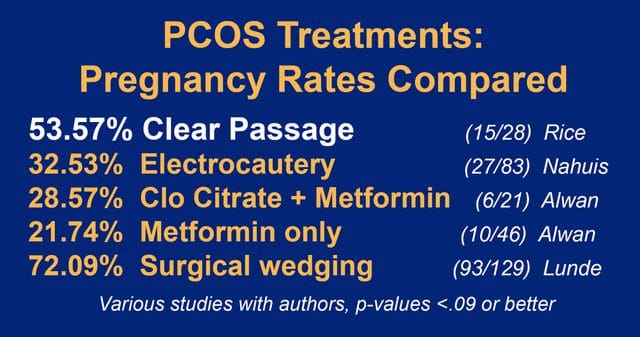
    PCOS affects an estimated 8% to 20% of women worldwide.49,50 Anovulation is commonly associated with PCOS patients, directly affecting fertility.49,51,52 A total of 59 patients with a history of PCOS were treated with the CPA, with follow-up available for 28 patients. The overall pregnancy success rate was 53.57% (15/28); one of the 15 pregnancies in this data subset was achieved via IVF.

    Hormone

    Between 2002 and 2011, 250 women were treated at the research team’s clinics for elevated FSH, as defined at a level of 10 mIU/mL or higher on days 2 through 5 of the menstrual cycle. The overall success rate for women with elevated FSH, as defined by either a decrease in FSH levels or a pregnancy, was 49.18% (60/122). The pregnancy rate was 39.34% (48/122), with 43 natural and 5 IVF pregnancies. No medical treatment that represents the standard of care currently exists for women with elevated FSH levels; therefore, no comparisons with the standard of care could be performed.

    Table 4. Pregnancy Success Rates for PCOS Patients Treated With CPA Compared With Published Success Rates for Medication and Surgical Intervention Studies.

    CPASuccess (Total)
    Published Studies Success (Total)
    Comparison
    OR (95%CI)PValue
    15 (28)53 (83)Nahuis53 (all)0.44 (0.18-1.07).0713

    27 (83)
    Nahuis53 (surgery with no ovulation induction medications)
    2.39 (1.00-5.73)

    .0502
    14 (21)Alwan54 (clomiphene citrate)0.58 (0.18-1.86).3579

    6 (21)
    Alwan54 (clomiphene citrate and metformin)
    2.88 (0.87-9.61)

    .0844
    10 (46)Alwan54 (metformin)4.15 (1.50-11.53).0063
    93 (129)Lunde550.45 (0.19-1.03).0589
    23 (52)Amer561.45 (0.58-3.66).4257

    Abbreviations: CPA, clear passage approach; OR, odds ratio; CI, confidence interval.

    Table 5. Pregnancy Success Rates for IVF Transfer post-CPA by Age as Compared With US National Statistics45

    Age CategoryCPA Success (Total)National Statistics Success (Total)aComparison
    OR (95%CI)PValue
    <3527 (40)156 359 (344 542)2.50 (1.29-4.84).0067
    35-3718 (30)68 720 (184 035)2.52 (1.21-5.22).0133
    38-4017 (35)49 165 (172 537)2.37 (1.22-4.60).0107
    41-427 (13)15 166 (80 004)4.99 (1.68-14.84).0039
    >427 (16)4146 (46 629)7.97 (2.97-21.41)<.0001

    Abbreviations: IVF, in vitro fertilization; CPA, clear passage approach; OR, odds ratio; CI, confidence interval.

    A total of patients from 2003 to 2011, all diagnoses.

    Options for standard medical treatment of PCOS include medications—clomiphene citrate, metformin, or combinations thereof—and surgical interventions to induce ovulation. The rates of pregnancy in patients treated using the CPA were directly compared with success rates for various interventions reported in the literature. The CPA demonstrated significantly higher rates of pregnancy when compared with metformin alone; the CPA treatment presented no significant differences in rates of pregnancy when compared with clomiphene citrate or the surgical interventions of ovarian wedging or drilling (Table 4).

    Predictors for outcomes for PCOS patients were again analyzed by linear regression. No significant predictors were identified; however, several predictors were identified as suggestive of success, with P-values lower than .05. Suggestive negative predictors for pregnancy were (1) previous vaginal infections, P = .0254; (2) a prior STD infection, P = .0238; and (3) reported back pain, P = .0130. Suggestive positive predictors were identified as (1) dyspareunia, P = .0110, and (2) dysmenorrhea, P = .0075. Although not significant in the analysis, patients with prior surgery to correct anovulation—ovarian wedging or drilling—did not report overall improvement levels that were similar to those of patients who had not undergone prior surgery for PCOS, suggesting further studies involving this patient population should be conducted.

    Unexplained Infertility

    Unexplained infertility affects an estimated 18% to 28% of women, with no medical cause for the inability to conceive.57,58 For the 10 years presented in this report, 20 women were treated at the clinic with unexplained infertility, with follow-up of 12 of these patients. These patients experienced a 25% pregnancy rate (3/12). One of the 3 pregnancies was attributed to IVF, whereas the other 2 were via natural conception. These rates are in line with published observational rates of pregnancy in a population with unexplained infertility59; however, the CPA may decrease the time to first conception in these patients, and this finding presents a topic for future investigation.

    Treatment Prior to IVF

    In 2010, more than 135 800 IVF cycles were completed in the United States. The national average for pregnancy after transfer was 37.3% in 2010, as reported by the Society for Assisted Reproductive Technology (SART),45, with a distinct decrease in pregnancy rates by 5-fold for the older-than-age-42 category versus the younger-than-age-35 category.

    A total of 231 women were treated with the CPA prior to undergoing IVF. The overall pregnancy rate for the 146 patients with follow-up was 56.16% (82/146), which is 1.5 times that of the national IVF pregnancy rate without the CPA.45 Those data encompassed all infertility diagnoses, including those noted by the research team’s group, allowing for a direct comparison to SART’s overall data. A clear trend and an associated predictor for outcomes by age existed, in which younger patients had higher rates of pregnancy with subsequent IVF cycles. Table 5 shows the comparisons for success rates for women treated with the CPA prior to IVF transfer compared with the national statistics for all transfers by age between 2003 and 2011. The data demonstrate significantly higher rates of success in patients treated with the CPA prior to IVF transfer for all ages.

    The only suggestive positive predictor for outcomes for the IVF data set as a whole was age (P = .0443). This observation is in line with standard guidance for infertility and current literature in which the younger-than-age-35 category has demonstrated higher pregnancy rates.

    DISCUSSION

    Physical therapy is a commonly used medical adjuvant treatment for a variety of conditions. It is typically focused on one area of the body, with a limited number of modalities. In this article, the research team has demonstrated successful treatment with the CPA for women with various underlying causes for infertility. The CPA uses a combination of manual physical therapy techniques to treat the entire body of each patient, with a focus on decreasing adhesions and cross-links that bind neighboring tissues during a prior healing event. The CPA treatment appeared to improve or restore function.

    Figure 1. Hypothesized mechanism for the positive effect of the cpa treatment on the female reproductive system. In the figure, the force (1) that is applied to the restricted area of the ovary frees the tissue. The result (2) is excitation of the visceral (organ) effector, which sends an impulse to the integration center of the central nervous system (CNS) via the afferent neuron, while it simultaneously increases blood and lymphatic flow to the local tissue. This excitation causes an efferent impulse and a release of acetylcholine (ACH), which excites the ovary (3) to release progesterone and estrogens. This release triggers an increase in the endometrial lining of the uterus (4a). Simultaneously, progesterone and estrogens provide negative feedback to the hypothalamus/pituitary (4b) for the production of follicle-stimulating hormone (FSH). The response of the ovary to normal levels of circulating FSH (5) and the development of the dominant follicle trigger the release of luteinizing hormone (LH), which initiates the release of lymphocytes from the spleen to facilitate follicular development and oocyte release (6). The vasodilation and ability of the tissues to function normally promote the ability of the lymphocytes to exit the blood vessels and enter the ovarian tissues.

    Abbreviation: CPA, clear passage approach.

    For patients with various infertility diagnoses, with a return of fertility and fecundity.

    The hypothesized mode of action for the CPA has been developed based on documentation in the literature, clinical observations, and knowledge of mechanisms and modes of action from other manual therapy modalities (Figure 1). The CPA, with an emphasis on the Wurn technique for patients in the current study, appeared to work by deforming adhesions in the body, thereby allowing increased mobility, motility, and function of the structures involved in fertility.

    Some causes of infertility are straightforward, such as occluded fallopian tubes, whereas others are quite complex, such as POF and PCOS. In cases of straightforward adhesive disease, dissociation and deformation of the adhesions are sufficient in many cases to restore fertility. However, in more complex etiologies of infertility, including hormonal regulation, the research team’s hypothesis is that the therapy affects 1 or more mechanical blocks in communication between the brain and the reproductive system—the hypothalamic-pituitary-gonadal axis or other mechanical paths. The research team theorizes that these blocks may be caused either by (1) misalignment of the cranium or spine, affecting nervous system communication; (2) dysfunctional tissues surrounding blood vessels; (3) nerves in the pelvic region decreasing efficient stimulation, or (4) a combination of any of these causes. Aberrant ovulation and hormonal function have been observed in women with spinal injuries, supporting the observation that mild spinal misalignment could be sufficient to influence hormonal function. 60

    Treatment with the CPA had a 60.85% success rate overall for opening 1 or both tubes in women with total tubal occlusion, and the data suggest that the fallopian tubes remained open, indicating that the adhesions did not return unless subsequent inflammation, infection, trauma, or surgery occurred. Prior surgery to treat occluded fallopian tubes was identified as a negative predictor for the success of the CPA treatment. This finding is hypothesized to be due to the damage to the fallopian tubes that occurs during surgical procedures, which has been suggested to be the initiating factor for tubal reocclusion in surgical literature.61,62 The rates of success for the CPA, when directly compared with the rates of success for surgical interventions, demonstrated equivalence or superiority for tubal patency postintervention and for subsequent pregnancy. Further studies to assess the impact of the type of surgical procedure and outcomes prior to the CPA treatment are planned.

    The use of the CPA in treating women with endometriosis had previously been shown by the research group to be efficacious in the treatment of sexual dysfunction, dyspareunia, and dysmenorrhea, with long-lasting results.18,19,63 The success in using the CPA as a treatment for women experiencing infertility associated with endometriosis has now been demonstrated, with a 42.8% pregnancy rate and equivalence to pregnancy rates after surgical interventions. Given the high rate of success, further studies are warranted to assess the effect of the stage of endometriosis on treatment outcomes.

    Hormonal dysregulation impacts a woman’s fertility and is often challenging to treat. The CPA has been shown in the current study to affect hormonal regulation positively in women with POF, PCOS, and elevated FSH, with success rates of 20%, 53.6%, and 49.2%, respectively. The number of patients in the POF studies was not adequate to perform stringent analyses; however, further studies are planned, given the positive initial results observed. The rate of pregnancy in PCOS patients treated with the CPA, when directly compared with surgical or medication interventions, was again demonstrated to be equivalent or superior to those standard interventions.

    The CPA treatment was also demonstrated to be beneficial to those patients who underwent IVF after treatment, with pregnancy rates 1.5 times higher than those for IVF alone, as reported by SART.45 When compared with national statistics for IVF success rates, the CPA was shown to be superior to IVF alone for all age categories.

    Limitations of this study include a high rate of drop-out to follow-up and a dependence on a comprehensive medical history upon the patients’ self-reports of that history and on their provision of the surgical and test results. In addition, incomplete data existed on male factors affecting fertility rates in the treated women. Consequently, the actual rates of success for female infertility may be higher than reported here because it is estimated that up to 40% of infertile couples have male factors that contribute to infertility.64,65 Live birth rates were unable to be reported due to low follow-up rates. Additional prospective, controlled studies are planned to further examine the suggestive predictors and comprehensive data for outcomes post-CPA treatment for all etiologies of infertility.

    CONCLUSIONS

    Manual physical therapy has been demonstrated to reverse female infertility attributed to occluded fallopian tubes, hormonal dysregulation, endometriosis, and unexplained infertility and to increase the success of in vitro cycles.

    AUTHOR DISCLOSURE STATEMENT

    The research team received no funding for this study and has no conflicts of interest related to it.

    REFERENCES

    1. Chandra A, Martinez GM, Mosher WD, Abma JC, Jones J. Fertility, family planning, and reproductive health of US women: data from the 2002 National Survey of Family Growth. Vital Health Stat 23. December 2005;(25):1-160.
    2. Chandra A, Copen CE, Stephen EH. Infertility and impaired fecundity in the United States, 1982-2010: data from the National Survey of Family Growth. Natl Health Stat Report. August 2013;(67):1-18.
    3. Martinez G, Daniels K, Chandra A. Fertility of men and women aged 15-44 years in the United States: National Survey of Family Growth, 2006-2010. NatlHealthStat Report. 2012;(51):1-28.
    4. Bushnik T, Cook J, Hughes E, Tough S. Seeking medical help to conceive. HealthRep. April 2012;23(4):7-13.
    5. Rosenbaum TY, Owens A. The role of pelvic floor physical therapy in the treatment of pelvic and genital pain-related sexual dysfunction (CME). J SexMed. 2008;5(3):513-523.
    6. Sucher BM. Ultrasonography-guided osteopathic manipulative treatment for a patient with thoracic outlet syndrome. J Am Osteopat Assoc. 2011;111(9):543-547.
    7. Boyles R, Toy P, Mellon J Jr, Hayes M, Hammer B. Effectiveness of manual physical therapy in the treatment of cervical radiculopathy: a systematic review. J Man Manip Ther. 2011;19(3):135-142.
    8. Bayliss AJ, Klene FJ, Gundeck EL, Loghmani MT. Treatment of a patient with post-natal chronic calf pain utilizing instrument-assisted soft tissue mobilization: a case study. J Man Manip Ther. 2011;19(3):127-134.
    9. Senbursa G, Baltaci G, Atay A. Comparison of conservative treatment with and without manual physical therapy for patients with shoulder impingement syndrome: a prospective, randomized clinical trial. Knee Surg Sports Traumatol Arthrosc. 2007;15(7):915-921.
    10. Şenbursa G, Baltaci G, Atay ÖA. The effectiveness of manual therapy in supraspinatus tendinopathy. ActaOrthopTraumatolTurc.2011;45(3):162-167.
    11. Gaspar PD, Willis FB. Adhesive capsulitis and dynamic splinting: a controlled, cohort study. BMC Musculoskelet Disord. September 2009;10:111.
    12. Field DA, Miller S. Cosmetic breast surgery. AmFamPhysician. 1992;45(2):711-719.
    13. Licciardone JC, Kearns CM, Hodge LM, Minotti DE. Osteopathic manual treatment in patients with diabetes mellitus and comorbid chronic low back pain: subgroup results from the OSTEOPATHIC Trial. J Am Osteopath Assoc. 2013;113(6):468-478.
    14. Farrell JP, Jensen GM. Manual therapy: a critical assessment of role in the profession of physical therapy. Phys Ther. 1992;72(12):843-852.
    15. Threlkeld AJ. The effects of manual therapy on connective tissue. Phys Ther. 1992;72(12):893-902.
    16. Beastall GH, Ferguson KM, O’Reilly DS, Seth J, Sheridan B. Assays for follicle-stimulating hormone and luteinising hormone: guidelines for the provision of a clinical biochemistry service. Ann Clin Biochem. 1987;24(pt 3):246-262.
    17. Wurn BF, Wurn LJ, King CR, et al. Treating fallopian tube occlusion with manual pelvic physical therapy. AlternTherHealthMed. 2008;14(1):18-23.
    18. Wurn LJ, Wurn BF, King CR, Roscow AS, Scharf ES, Shuster JJ. Increasing orgasm and decreasing dyspareunia with a manual physical therapy technique. MedGenMed.2004;6(4):47.
    19. Wurn BF, Wurn LJ, Patterson K, King CR, Scharf ES. Decreasing dyspareunia and dysmenorrhea in women with endometriosis via manual physical therapy: results from two independent studies. J Endometr. 2011;3(4):188-196.
    20. Wurn BF, Wurn LJ, King CR. Treating female infertility and improving IVF pregnancy rates with a manual physical therapy technique. MedGenMed. 2004;6(2):51.
    21. Wurn B, Wurn L, King R. Miracle Moms, Better Sex, Less Pain. Gainesville, FL: Med-Art Press; 2009.
    22. Arnadottir TS, Sigurdardottir AK. Is craniosacral therapy effective for migraine? Tested with the HIT-6 Questionnaire. Complement Ther Clin Pract. 2013;19(1):11-14.
    23. Castro-Sánchez AM, Matarán-Peñarrocha GA, Arroyo-Morales M, Saavedra-Hernández M, Fernández-Sola C, Moreno-Lorenzo C. Effects of myofascial release techniques on pain, physical function, and postural stability in patients with fibromyalgia: a randomized controlled trial. Clin Rehabil. 2011;25(9):800-813.
    24. Fryer G, Morse CM, Johnson JC. Spinal and sacroiliac assessment and treatment techniques used by osteopathic physicians in the United States. Osteopath MedPrim Care. April 2009;3:4.
    25. Kramp ME. Combined manual therapy techniques for the treatment of women with infertility: a case series. J Am Osteopath Assoc. 2012;112(10):680-684.
    26. Langenau EE, Dowling DJ, Dyer C, Roberts WL. Frequency of specific osteopathic manipulative treatment modalities used by candidates while taking COMLEX-USA Level 2-PE. J Am Osteopath Assoc. 2012;112(8):509-513.
    27. Matarán-Peñarrocha GA, Castro-Sánchez AM, García GC, Moreno-Lorenzo C, Carreño TP, Zafra MD. Influence of craniosacral therapy on anxiety, depression, and quality of life in patients with fibromyalgia. EvidBasedComplementAlternatMed. 2011;2011:178769.
    28. Moore SD, Laudner KG, McLoda TA, Shaffer MA. The immediate effects of muscle energy technique on posterior shoulder tightness: a randomized controlled trial. J Orthop Sports Phys Ther. 2011;41(6):400-407.
    29. Rice AD, King R, Reed ED, Patterson K, Wurn BF, Wurn LJ. Manual physical therapy for non-surgical treatment of adhesion-related small bowel obstructions: two case reports. J Clin Med. 2013;2(1):1-12.
    30. Wong CK. Strain counterstrain: current concepts and clinical evidence. ManTher. 2012;17(1):2-8.
    31. Bove GM, Chapelle SL. Visceral mobilization can lyse and prevent peritoneal adhesions in a rat model. J Bodyw Mov Ther. 2012;16(1):76-82.
    32. Miles A. Science, humanism, judgement, ethics: person-centered medicine as an emergent model of modern clinical practice. Folia Med (Plovdiv). 2013;55(1):5-24.
    33. Educational Council on Osteopathic Principles (ECOP) of the American Association of Colleges of Osteopathic Medicine (AACOM). Glossary of Osteopathic Terminology. Chevy Chase, MD: American Association of Colleges of Osteopathic Medicine; 2011. http://www.aacom.org/resources/bookstore/ Documents/GOT2011ed.pdf. Accessed June 6, 2014.
    34. Altman DG. Practical Statistics for Medical Research. London, UK: Chapman and Hall; 1991.
    35. Serafini P, Batzofin J. Diagnosis of female infertility: a comprehensive approach. JReprod Med. 1989;34(1):29-40.
    36. Sueoka K, Asada H, Tsuchiya S, Kobayashi N, Kuroshima M, Yoshimura Y. Falloposcopic tuboplasty for bilateral tubal occlusion: a novel infertility treatment as an alternative for in-vitro fertilization? Hum Reprod. 1998;13(1):71-74.
    37. Rimbach S, Bastert G, Wallwiener D. Technical results of falloposcopy for infertility diagnosis in a large multicentre study. HumReprod. 2001;16(5):925-930.
    38. Li SC, Liu MN, Hu XZ, Lu ZL. Hysteroscopic tubal catheterization and hydrotubation for treatment of infertile women with tubal obstruction. ChinMed J (Engl). 1994;107(10):790-793.
    39. Thurmond AS, Machan LS, Maubon AJ, et al. A review of selective salpingography and fallopian tube catheterization. Radiographics. 2000;20(6):1759-1768.
    40. Buck Louis GM, Hediger ML, Peterson CM, et al.; ENDO Study Working Group. Incidence of endometriosis by study population and diagnostic method: the ENDO study. Fertil Steril. 2011;96(2):360-365.
    41. Bosteels J, Van Herendael B, Weyers S, D’Hooghe T. The position of diagnostic laparoscopy in current fertility practice. Hum Reprod Update. 2007;13(5):477-485.
    42. Stepniewska A, Pomini P, Bruni F, et al. Laparoscopic treatment of bowel endometriosis in infertile women. Hum Reprod. 2009;24(7):1619-1625.
    43. Zhu S, Liu D, Huang W, et al. Post-laparoscopic oral contraceptive combined with Chinese herbal mixture in treatment of infertility and pain associated with minimal or mild endometriosis: a randomized controlled trial. BMC Complement Altern Med. July 2014;14:222.
    44. Lee HJ, Lee JE, Ku SY, et al. Natural conception rate following laparoscopic surgery in infertile women with endometriosis. Clin Exp Reprod Med.2013;40(1):29-32.
    45. Society for Assisted Reproductive Technology. Clinic summary report: all SART member clinics. 2010. https://www.sartcorsonline.com/rptCSR_PublicMultYear. aspx?ClinicPKID=0. Accessed January 10, 2013.
    46. Beck-Peccoz P, Persani L. Premature ovarian failure. OrphanetJRareDis.April 2006;1:9.
    47. Nelson LM. Clinical practice: primary ovarian insufficiency. NEnglJMed. 2009;360(6):606-614.
    48. Bidet M, Bachelot A, Bissauge E, et al. Resumption of ovarian function and pregnancies in 358 patients with premature ovarian failure. J Clin Endocrinol Metab.2011;96(12):3864-3872.
    49. March WA, Moore VM, Willson KJ, Phillips DI, Norman RJ, Davies MJ. The prevalence of polycystic ovary syndrome in a community sample assessed under contrasting diagnostic criteria. Hum Reprod. 2010;25(2):544-551.
    50. Azziz R, Woods KS, Reyna R, Key TJ, Knochenhauer ES, Yildiz BO. The prevalence and features of the polycystic ovary syndrome in an unselected population. J Clin Endocrinol Metab. 2004;89(6):2745-2749.
    51. Boyle J, Teede HJ. Polycystic ovary syndrome–an update. AustFamPhysician. 2012;41(10):752-756.
    52. Badawy A, Elnashar A. Treatment options for polycystic ovary syndrome. Int J Womens Health. February 2011;3:25-35.
    53. Nahuis MJ, Kose N, Bayram N, et al. Long-term outcomes in women with polycystic ovary syndrome initially randomized to receive laparoscopic electrocautery of the ovaries or ovulation induction with gonadotrophins. HumReprod. 2011;26(7):1899-1904.
    54. Ayaz A, Alwan Y, Farooq MU. Efficacy of combined metformin-clomiphene citrate in comparison with clomiphene citrate alone in infertile women with polycystic ovarian syndrome (PCOS). J Med Life. 2013;6(2):199-201.
    55. Lunde O, Djøseland O, Grøttum P. Polycystic ovarian syndrome: a follow-up study on fertility and menstrual pattern in 149 patients 15-25 years after ovarian wedge resection. Hum Reprod. 2001;16(7):1479-1785.
    56. Amer SA, Li TC, Metwally M, Emarh M, Ledger WL. Randomized controlled trial comparing laparoscopic ovarian diathermy with clomiphene citrate as a first-line method of ovulation induction in women with polycystic ovary syndrome. Hum Reprod. 2009;24(1):219-225.
    57. Ray A, Shah A, Gudi A, Homburg R. Unexplained infertility: an update and review of practice. Reprod Biomed Online. 2012;24(6):591-602.
    58. Kamath MS, Bhattacharya S. Demographics of infertility and management of unexplained infertility. BestPractResClinObstetGynaecol. 2012;26(6):729-738.
    59. Brandes M, Hamilton CJ, van der Steen JO, et al. Unexplained infertility: overall ongoing pregnancy rate and mode of conception. Hum Reprod. 2011;26(2):360-368.
    60. Jackson A. Reproductive system. In: Lin VW, Cardenas DD, Cutter NC, et al., eds. Spinal Cord Medicine: Principles and Practice. New York, NY: Demos Medical Publishing; 2003
    61. Allahbadia GN, Merchant R. Fallopian tube recanalization: lessons learnt and future challenges. Women’s Health (Lond Engl). 2010;6(4):531-548.
    62. Gleicher N, Confino E, Corfman R, et al. The multicentre transcervical balloon tuboplasty study: conclusions and comparison to alternative technologies. HumReprod.1993;8(8):1264-1271.
    63. Rice AD, Patterson K, Wurn BF, King CR, Wurn LJ. Update on “Decreasing dyspareunia and dysmenorrhea in women with endometriosis via a manual physical therapy: results from 2 independent studies” [letter]. J Endometr.2014;6(3):161-162.
    64. Sharlip ID, Jarow JP, Belker AM, et al. Best practice policies for male infertility. Fertil Steril.2002;77(5):873-882.
    65. Thonneau P, Marchand S, Tallec A, et al. Incidence and main causes of infertility in a resident population (1,850,000) of three French regions (1988-1989). HumReprod.1991;6(6):811-816.
  • Treating Small Bowel Obstruction with Manual Physical Therapy: A Controlled Prospective Efficacy Study

    Journal: Gastroenterology(2015). 148(4): S-644. doi: 10.1016/S0016-5085(15)32174-0

    Presentation Number: Mo1229

    Author Block:

    AmandaD.Rice, CR.King, Lawrence J. Wurn, Belinda F. Wurn, Bernhard Klingenberg

    Clear Passage Therapies, Gainesville, Florida, United States; 2 Department of Mathematics and Statistics, Williams College, Williamstown, Massachusetts, United States

    Background:

    Small bowel obstructions (SBOs) caused by adhesions are a common post-surgical complication, with few treatment options available for patients to address the adhesions that cause recurrent SBOs. We have developed a manual therapy regimen that focuses on the deformation of adhesions between and within the organs throughout the abdomen and pelvis. In this prospective, internally controlled study, the impact on quality of life in patients with a history of SBO after treatment with a manual physical therapy regimen was assessed.

    Methods:

    Twenty-seven subjects with a history of recurring adhesive small bowel obstructions completed a manual therapy regimen (median=53 years, range=10.5-89.4 years) focused on abdominal adhesion deformation. Outcomes were measured via administration of validated questionnaires specific to subjects with SBO to allow for quantification of the degree of impact on their quality of life for six domains. Questionnaires were completed before and 90 days after treatment (117.4 ± 25.9 days post-treatment follow-up). The degree of adhesion deformation was quantified by the improvement in range of motion and tissue mobility as compared to prior to treatment.

    Results:

    A total of 26 subjects completed the study and demonstrated significant improvements in four domains in the SBO-Q. Improvements in the domains for pain (p=0.0087), overall quality of life (p=0.0016), and pain severity (p=0.0006) were significant when average scores before treatment were compared with scores after treatment. The gastrointestinal symptoms (p=0.0258) domain was marginally significant. There was no statistically significant improvement identified in the diet or medication domains in the SBO-Q for this population.

    Significant improvements in range of motion in the trunk (p≤0.001) were also observed for all measures.

    Discussion:

    This manual physical therapy protocol is an effective treatment option for patients with adhesive small bowel obstructions. This study demonstrates significant improvement in reported symptoms and overall quality of life of subjects.

  • Fertility and Sterility: Sexual Dysfunction

    Reprinted from Volume 86, Supplement 2, September 2006

    Contact: Clear Passage Therapies • www.clearpassage.com

    IMPROVING SEXUAL FUNCTION IN PATIENTS WITH ENDOMETRIOSIS VIA PELVIC PHYSICAL THERAPY.

    L. J. Wurn, B. F. Wurn, C. R. King III, A. S. Roscow, E. S. Scharf, J. J. Shuster. Clear Passage Therapies, Inc., Gainesville, FL; Florida Medical Research Institute; Southeastern Women’s Health, Gainesville, FL; None, n/a, FL; Dept of Epidemiology and Public Health Policy, Coll of Medicine, Univ of Florida, Gainesville, FL.

    OBJECTIVE: Among the most common symptoms experienced by the 5 million American women with endometriosis is pain during sexual intercourse. The purpose of this study was to assess the efficacy of a non-invasive manual pelvic physical therapy in reducing dyspareunia and improving overall sexual function in this population.

    DESIGN: Retrospective analysis.

    MATERIALS AND METHODS: A retrospective analysis was performed on 14 patients (mean age = 33.8) with endometriosis, confirmed by laparoscopy or laparotomy. The outcome measure was post-treatment test scores vs. pre-treatment test scores on the validated Female Sexual Function Index (FSFI) full scale and 6 individual domains (desire, arousal, lubrication, orgasm, satisfaction, and pain). After completing the pre-test, the 14 patients underwent 20 hours of manual pelvic physical therapy designed to address restricted soft tissue mobility due to micro-adhesions and adhesions. The post-test was completed 6 weeks after the last treatment date to allow time for the body to assimilate the changes and undergo a full menstrual cycle. RESULTS: Although the FSFI was designed to evaluate the relative degree of dysfunction within the individual domains, there is obvious overlap among the 6 categories. The Wilcoxon Signed-Rank Test (2-sided) was used on the paired post-test/pre-test differences. It showed a statistically significant improvement (P = <0.00 I) on the overall full scale score, as well as on each of the 6 individual domains: Desire (p = 0.011 ); Arousal (p = 0.004); Lubrication (p = 0.00 I); Orgasm (p = 0.004); Satisfaction (p = 0.005); and Pain (p <0.00 I).

    CONCLUSION: Many aspects of sexual dysfunction in patients with endometriosis appear to be treatable by a non-pharmaceutical, non-surgical pelvic physical therapy technique. The therapy should be considered as a new adjuvant to existing medical and gynecologic treatments.

  • Fertility and Sterility: Endometriosis

    Reprinted from Volume 86, Supplement 2, September 2006

    Contact: Clear Passage Therapies • www.clearpassage.com

    TREATING ENDOMETRIOSIS PAIN WITH A MANUAL PELVIC PHYSICAL THERAPY.

    L. J. Wurn, B. F. Wurn, C.R. King III, A. S. Roscow, E. S. Scharf, J. J. Shuster. Clear Passage Therapies, Inc., Gainesville, FL; Florida Medical Research Institute; Southeastern Women’s Health, Gainesville, FL; Dept. of Epidemiology and Public Health Policy. Coll. of Medicine, Univ. of Florida, Gainesville, FL.

    OBJECTIVE: Approximately 5 million American women (mainly ages 25-40) suffer from endometriosis, a chronic and often exceedingly painful disease. Although not necessarily progressive, endometriosis pain usually increases during menstruation and sexual intercourse. Since this pelvic physical therapy has already been shown to reduce dyspareunia, the purpose of this study was to assess its efficacy in treating endometriosis pain.

    DESIGN: Prospective analysis.

    MATERIALS AND METHODS: A prospective analysis was performed on 18 patients (mean age = 37.2) with endometriosis confirmed via laparoscopy or laparotomy. The primary outcome measures were post-test vs. pre-test scores on various pain scales (i.e., each patient acted as her control). Prior to therapy, patients completed an IO-point pain scale (enhanced by the specific written descriptions of the Mankoski Pain Scale©), on which they rated their average pain during ovulation, pre-menstruation, menstruation, and sexual intercourse.

    RESULTS: The Wilcoxon Signed-rank Test (2-sided) was used on the paired pre-test/post-test differences. The Total Difference, comprising pain during 3 phases of the menstrual cycle (ovulation, pre-menstruation, and menstruation), was significant (P = 0.014), with the lessening of pain during menstruation accounting for much of the difference (P = 0.008). The paired pre-test/post-test difference in pain during sexual intercourse was also significant (P = 0.001).

    CONCLUSION: This manual pelvic physical therapy offers a non-surgical, non-pharmaceutical alternative to treating pain due to endometriosis. Moreover. It appears to have its greatest effect on the typically most painful times (i.e., menstruation and sexual intercourse).

  • Fertility and Sterility: Hydrosalpinx

    Reprinted from Volume 86, Supplement 2, September 2006

    Contact: Clear Passage Therapies • www.clearpassage.com

    TREATING HYDROSALPINX WITH A MANUAL PHYSICAL THERAPY.L. J. Wum, B. F. Wum, M. Kan, C.R. King III, A. S. Roscow, E. S. Scharf. Clear Passage Therapies, Inc., Gainesville, FL; Newport Fertility Center, Newport Beach, CA; Florida Medical Research Institute; and Southeastern Women’s Health, Gainesville, FL.

    OBJECTIVE: Hydrosalpinx of the fallopian tube is largely regarded as an indicator of tubal dysfunction causing infertility. Several studies have documented the detrimental effects of hydrosalpinges on IVF pregnancy rates. Surgical removal of hydrosalpinges is generally recommended because it is associated with improvement in IVF pregnancy rates. The purpose of this study is to examine the efficacy of a non-invasive manual pelvic physical therapy to improve the function of fallopian tubes that have been compromised by hydrosalpinx.

    DESIGN: Retrospective analysis.

    MATERIALS AND METHODS: A retrospective analysis was performed on eight patients with documented tubal occlusion who met the additional inclusion criterion of hydrosalpinx in one or both tubes, diagnosed by hysterosalpingogram or laparoscopic chromotubation. These patients underwent manual physical therapy in order to treat the hydrosalpinges and improve fertility. The therapists were able to indirectly access the fallopian tubes by manipulating the peritoneum, uterine and ovarian ligaments, and adjacent structures. Post-treatment unilateral or bilateral tubal patency in the tube(s) with hydrosalpinx was confirmed by hysterosalpingogram. The mean interval between the last treatment date and patency confirmation was 5 weeks. A second outcome measure was a natural and/or IVF pregnancy within the 2-year follow-up period, without surgical intervention to address the hydrosalpinx.

    RESULTS: Of this subset of patients with total occlusion plus hydrosalpinx (mean age = 35), 4/8 (50%) demonstrated post-treatment patency in one or both of the tubes containing the hydrosalpinx. Of the 4 patent patients, 2/4 (50%) reported natural post-therapy full-term pregnancies via the tube with hydrosalpinx as follows: one had a successful post-treatment IVF pregnancy and delivery, followed by a natural intrauterine pregnancy/delivery; a second patient had a natural pregnancy/delivery and a second subsequent pregnancy. Of the 4 non-patent patients, one had a laparoscopy to remove the tubes, became pregnant through IVF but miscarried; another had a natural ectopic pregnancy after therapy; a third had a successful IVF pregnancy and live birth delivery; the fourth reported no pregnancy after therapy.

    CONCLUSION: The presence of hydrosalpinges is associated with infertility and decreased pregnancy rates with IVF. Surgical removal of hydrosalpinges is often recommended. This physical therapy offers a non-surgical option to treat infertility in patients with hydrosalpinges and tubal occlusion.

    Supported by:

    The Official Journal of the American Society for Reproductive Medicine

  • Clearing Bowel Obstruction and Decreasing Pain in a Terminally Ill Patient via Manual Physical Therapy

    Amanda D. Rice, PhD, Evette D’Avy Reed, PT, Kimberly Patterson, PTA, LMT, Belinda F. Wurn, PT, and Lawrence J. Wurn, LMT

    Journal of Palliative Medicine Volume 16, Number 3, 2013

    © Mary Ann Liebert, Inc. DOI: 10.1089/jpm. 2012.0458

    This is a copy of an article published in the Journal of Palliative Medicine,© 2013 copyright Mary Ann Liebert, Inc.; Journal of Palliative Medicine is available online at: http://online.liebertpub.com

    Decreasing pain and improving function and quality of life are important topics for patients who refuse, or are not candidates for, traditional medical interventions, and those at the end stages of disease. Patients with inoperable, metastatic bowel carcinoma who experience pain and small bowel obstruction (SBO) as a result of adhesions are a subset of these patients. The standard treatment, adhesion and/or resection surgery, followed by post-surgical medications to prevent infection and decrease pain, may not be ideal in end-stage cancer patients. We treated such a patient using manual soft tissue physical therapy with goals of decreasing her pain and alleviating symptoms of bowel obstruction secondary to adhesions successfully, using a protocol we developed initially to open fallopian tubes that were blocked by adhesions.

    The patient was a 61-year-old married woman with a history of multiple abdominopelvic surgeries over the last 12 years, including hysterectomy, ileostomy, and ileostomy reversal with chemotherapy and radiation for treatment of stage IIIB ovarian/peritoneal carcinoma. She experienced SBO episodes every 2-3 months and had five adhesiolysis and/or resection surgeries to attempt to repair the bowel. Because she had undergone a recent exploratory laparoscopy that revealed metastasis to the omentum, her physicians were reluctant to perform any further surgeries, and the patient requested no more surgical interventions.

    She was unable to eat or drink, so a peripherally inserted central catheter (PICC line) was placed, and she received total parenteral nutrition (TPN) daily. She experienced chronic pain associated with the SBOs at a level of 4-5/10 that increased throughout the day with movement. The patient was undergoing chemotherapy and medicated with Nexium 40mg qd, Compazine 10mg prn, Zofran 4mg prn, Ativan 1mg qd, multivitamin bid, Vitamin D 2000mg qd, Co-Enzyme Q10 qd, and Dilaudid prn for pain. Her goals were to relieve the abdominal pain, decrease SBO incidents, eat a normal diet, and travel.

    The patient underwent 29 hours of manual soft tissue physical therapy, 1–6 times over six months, focused on detaching the abdominal adhesions, and was instructed in self-treatment techniques. At initial evaluation, she said she must reside near a hospital, due to the PICC line and recurring SBOs.

    She demonstrated improvement through the duration of therapy with significant pain decrease and functional increase. By discharge, her physician had removed the PICC lines because she had returned to eating a normal diet (including hamburger). She was then able to travel overseas with her husband, a significant increase in her quality of life.

    Alleviating pain and dysfunction, and improving life quality are challenging goals in patients with inoperable gastrointestinal cancer. Here we report a successful nonsurgical treatment for abdominal adhesions, pain, and dysfunction in a terminally ill patient. Before therapy, she lived with recurring SBOs, repeated surgeries, pain, and dysfunction. Her only nutrition was intravenous TPN. After undergoing this manual soft tissue physical therapy, she was able to eat a normal diet and participate in activities she desired.

    References

    1. AlternativeMedicineandRehabilitation.Wainapel SF, Fast A (eds). Demos Medical Publishing, 2003. Available from: http://www.ncbi.nlm.nih.gov/books/NBK11183/ (Last accessed September 4, 2012.)
    2. Principlesofmanualmedicine, 2e. Greenman PE. Williams & Wilkins, Baltimore, Maryland, 1996.
    3. Brown JS. Rehabilitation of Soft Tissue Injuries in the 1990s. Dynamic Chiropr 1991;9(21):1–3.
    4. Wurn BF, Wurn LJ, King CR, Heuer M a, Roscow AS, Hornberger K, et al: Treating fallopian tube occlusion with manual pelvic physical therapy. Altern Ther Health Med 2008;14(1):18–23.
    5. Wurn BF, Wurn LJ, King CR, Heuer MA, Roscow AS, Scharf ES, et al: Treating female infertility and improving IVF pregnancy rates with a manual physical therapy technique. MedGenMed 2004;6(2):51.
    6. Wurn BF, Wurn LJ, Patterson K, King CR, Scharf ES: Decreasing dyspareunia and dysmenorrhea in women with endometriosis via a manual physical therapy: Results from two independent studies. J Endometriosis 2011;3(4):188–96.
  • Decreasing recurrent bowel obstructions, improving quality of life with physiotherapy: Controlled study

    Amanda D Rice, Kimberley Patterson, Evette D Reed, Belinda F Wurn, Kristen Robles, Bernhard Klingenberg, Leonard B Weinstock, Janey SA Pratt, C Richard King III, Lawrence J Wurn

    Amanda D Rice,  Department of Internal Medicine, College of Medicine-Phoenix, University of Arizona, Phoenix, AZ 85004, United States

    Kimberley Patterson, Evette D Reed, Belinda F Wurn, Kristen Robles, Lawrence J Wurn, Clear Passage Therapies, Gainesville, FL 32606, United States

    Bernhard Klingenberg,  Department of Mathematics and Statistics, Williams College, Williamstown, MA 01267, United States

    Leonard B Weinstock,  Clinical Medicine and Surgery, Washington University School of Medicine, Specialists in Gastroenterology, LLC, St. Louis, MO 63141, United States

    Janey SA Pratt,  Department of Surgery, Stanford University School of Medicine, Palo Alto, CA 94035, United States

    C Richard King III,  College of Medicine, University of Florida, Gainesville, FL 32607, United States

    ORCID number: Amanda D Rice (0000-0003-0708-2160); Kimberley Patterson (0000-0003-3370-9924); Evette D Reed (0000-0003-2298-6993); Belinda F Wurn (0000-0002-0413-4685); Kristen Robles (0000-0002-3428-0544); Bernhard Klingenberg (0000-0001-9959-9989); Leonard B Weinstock (0000-0001-6484-1691); Janey SA Pratt (0000-0002 -6850-3427); C Richard King III (0000-0003-0807-1260); Lawrence J Wurn (0000-0002 -1393-1264).

    Author contributions:
    Rice AD, Klingenberg B, King CR and Wurn LJ designed the study; Patterson K, Reed ED, Wurn BF and Wurn LJ performed the treatment; Rice AD performed subject follow-up and control subject data collection; Klingenberg B performed the statistical analysis; Rice AD wrote the manuscript; Patterson K, Reed ED, Wurn BF, Robles K, Klingenberg B, Weinstock LB, Pratt JS, King CR and Wurn LJ revised the manuscript for final submission.

    Institutional review board statement: This study was approved by the MaGil Institutional Review Board.

    Clinical trial registration: ClinicalTrials.gov registration #NCT02639195 https://clinicaltrials.gov/ct2/show/results/ NCT02639195

    Informed consent statement: All subjects provided consent for the study. Treated subjects provided written consent; untreated subjects provided consent via the Assessment Center online system.

    Conflict-of-interest statement: Belinda F Wurn and Lawrence J Wurn are the owners of Clear Passage. All other authors report no conflicts.

    Data sharing statement: Data will be available upon request, de-identified with IRB approval.

    CONSORT 2010 statement: The guidelines of the CONSORT 2010 Statement have been adopted for this study.

    Open-Access: This article is an open-access article that was selected by an in-house editor and fully peer-reviewed by external reviewers. It is distributed in accordance with the Creative Commons Attribution Non Commercial (CC BY-NC 4.0) license, which permits others to distribute, remix, adapt, build upon this work non-commercially, and license their derivative works on different terms, provided the original work is properly cited, and the use is non-commercial. See: http://creativecommons.org/licenses/by-nc/4.0/

    Manuscript source: Unsolicited manuscript

    Correspondence to: Lawrence J Wurn, Research Associate, Clear Passage Therapies, 4421 NW 39th Ave, Suite 2-2, Gainesville, FL 32606, United States. Telephone: +1-352-3361433

    Fax: +1-352-3369980

    Received: February 26, 2018

    Peer review started: February 27, 2018

    First decision: March 15, 2018

    Revised: April 22, 2018

    Accepted: May 6, 2018

    Article in press: May 6, 2018

    Published online: May 21, 2018

    Abstract

    AIM

    To compare (1) the quality of life and (2) the rate of recurrent small bowel obstructions (SBO) for patients treated with novel manual physiotherapy vs no treatment.

    METHODS

    One hundred and three subjects (age 19-89) with a history of recurrent adhesive SBO were treated with a manual physiotherapy called the Clear Passage Approach (CPA), which focused on decreasing adhesive crosslinking in abdominopelvic viscera. Pre- and post-therapy data measured recurring obstructions and quality of life, using a validated test sent 90 days after therapy. Results were compared to 136 untreated control subjects who underwent the same measurements for subjects who did not receive any therapy, which is the normal course for patients with recurring SBO. Comparison of the groups allowed us to assess changes when the physiotherapy was added as an adjunct treatment for patients with recurring SBO.

    RESULTS

    Despite histories of more prior hospitalizations, obstructions, surgeries, and years impacted by bowel issues, the 103 CPA-treated subjects reported a significantly lower rate of repeat SBO than 136 untreated controls (total obstructions P = 0.0003; partial obstructions P =  0.0076).  Subjects treated with the therapy demonstrated significant improvements in five of six total domains in the validated Small Bowel Obstruction Questionnaire (SBO-Q). Domains of diet, pain, gastrointestinal symptoms, quality of life (QOL), and pain severity when compared to post  CPA treatment were significantly improved (P < 0.0001).  The medication domain did not change in the CPA treated group (P = 0.176).

    CONCLUSION

    CPA physical therapy was effective for patients with adhesive SBO, with significantly lower recurrence rate, improvement in reported symptoms, and overall quality of life of subjects.

    Key words: Clear passage approach; Manual therapy; Physical therapy; Small bowel obstructions; Adhesions; Physiotherapy; Alternative therapy

    ©TheAuthor(s)2018. Published by Baishideng Publishing Group Inc. All rights reserved.

    Rice AD, Patterson K, Reed ED, Wurn BF, Robles K, Klingenberg B, Weinstock LB, Pratt JS, King CR, Wurn LJ. Decreasing recurrent bowel obstructions, improving quality of life with physiotherapy: Controlled study. WorldJGastroenterol 2018; 24(19): 2108-2119 Available from: URL: http://www.wjgnet.com/1007-9327/full/v24/i19/2108.htm DOI: http://dx.doi.org/10.3748/wjg.v24.i19.2108

    INTRODUCTION

    Adhesive small bowel obstruction (SBO) is a common life-threatening complication of surgery or abdominal trauma in both pediatric and adult populations, typically caused by adhesions that form as a normal part of the healing process[1-3]. As a side effect of the inflammatory response required for healing to occur, adhesions form in tissues at and near the surgical repair within hours, due to the presence of collagen and scar tissue mediators.

    Surgery is frequently cited as the primary cause of adhesive bowel obstruction; repeat surgery increases the risk of adhesion formation[4]. The financial cost per patient for adhesiolysis and bowel resection was $65955 and $114175, respectively, with 30-day hospital readmission rates of 12.3% and 18.1% in the United States in 2010[5]. The average hospital stay for cases of SBO surgery was 14.2 days, and for abdominal adhesiolysis was 8.4 days [5].

    The present cost of a one-week course of CPA physical therapy is under $7000 in the United States (and is comparable in the United Kingdom). The therapy is performed in an outpatient setting; no hospitalization or surgery is required.

    A large previously published clinical study that followed adult subjects 10 years post-surgery found that more than 30% of the surgical small bowel resection subjects underwent additional surgery due to adhesions within the study time frame[6]. In a prospective analysis of patients undergoing laparotomy who had previously had one or more abdominal operations, 93% (195/210) were found to have adhesions attributable to their prior surgery[1]. Patients with mesh inserted during surgery have been identified as having increased adhesion formation, leading to increased complexity of future surgical procedures[7-9].

    Thus, adhesion-related disease causes significant surgical efforts and hospital resources and comprises major expenditures each year. Additionally, there is a considerable negative impact on the patients’ quality of life (QOL).

    In the absence of bowel ischemia, strangulation, or perforation, current guidelines for the management of SBO are gastric decompression with suction, full-strength gastrographin (in some institutions), and IV hydration for the first 24-72 h to see if the obstruction will resolve without surgery[10]. While sometimes effective in treating the current obstruction, this approach does not address the internal adhesions or the risk of subsequent bowel obstructions[11,12]. The only treatment currently available to reverse adhesive bowel obstructions is surgery, which frequently causes new adhesions. A number of surgical techniques, modifications, and adhesion-preventing medications and barriers have been investigated, but no solution has been shown to significantly prevent the formation of adhesions to date[13-19]. Thus, any therapy that decreases the risk of bowel obstruction in the absence of surgery is of significant importance.

    Manual physical therapy (mPT), a method of physiotherapy and rehabilitation, is used to treat patients with a wide variety of adhesive conditions, including burns, adhesive capsulitis, radiculopathy, pain, infertility, and lessening of scars[20-30]. This therapy has shown promise in preventing adhesion formation in animal models[31,32]. The Clear Passage Approach (CPA), a specialized mPT regimen hypothesized to deform the adhesions that cause SBO episodes, has been demonstrated as effective in decreasing adhesions, pain, and improving QOL in subjects with recurrent SBO in case-control and efficacy studies[33-35]. In pilot studies, independent radiologic reports showed that the therapy cleared bowel stricture and obstruction, obviating the need for planned laparotomy for adhesiolysis and SBO[36,33-35].

    Surgery is often necessary in cases of bowel obstruction complicated by ischemia or caused by hernia or cancer, surgery has not been shown to improve quality of life (QOL), reduce pain, or reduce recurrence rate in patients with adhesive SBO. Further, except as shown in pilot studies of CPA therapy, there is currently no other treatment available to patients with known adhesions who are not obstructed to reduce recurrence, pain, or need for further surgery. In this study, we report on the use of the CPA, a manual physical therapy protocol, to treat abdominal and pelvic adhesions that cause SBO, and to improve the quality of life (QOL) of study subjects when compared to untreated subjects in a control arm.

    Aim and hypothesis

    The aim of the study is twofold: (1) to determine whether manual physiotherapy can lower the rate of repeat SBO in patients who have undergone prior adhesive bowel obstructions and surgeries, and (2) to examine whether the therapy can improve the quality of life of these patients, using a validated test.

    The hypothesis is that the manual physiotherapy treatment can decrease SBO recurrence and improve the self-reported quality of life in subjects with a history of adhesive SBO, compared to untreated control subjects.

    MATERIALS AND METHODS

    Eligibility criteria

    Subjects in the retrospective CPA treatment arm were selected for inclusion in the study based on medical history and completion of both a pre-treatment and post-treatment questionnaire. Only adult subjects were included in this study. Exclusion criteria included: BMI > 36, active infection, abnormal ovarian cysts, surgery within the last 90 days, and bleeding disorders. Each subject was provided with written informed consent, as is standard for clinical practice. Subjects with a recent history of cancer were excluded from this study. A total of 103 subjects were treated at one of five private physical therapy clinics affiliated with Clear Passage between November 2012 and October 2015. All CPA therapists and affiliates completed an 80-hour practical training and evaluation course prior to becoming certified in the Clear Passage Approach. All subjects with follow-up were eligible and included in the analysis.

    Subjects in the control arm were recruited via a website and online advertisements for the study. Inclusion criteria included: adult subjects who had experienced a partial or total bowel obstruction within the last two years. Exclusion criteria included: Cancer within the last 5 years, chemotherapy or radiation treatments in the last 10 years, current pregnancy, or prior treatment at Clear Passage. All study-related activities were performed via the NIH Assessment Center (www.assessmentcenter.net), including screening, informed consent, and all data collection. A total of 460 subjects were screened, with 281 subjects eligible and 260 completing the initial questionnaire; 6 subjects were removed from the control study due to having previously received CPA treatment, 117 subjects were lost to follow-up, and 1 subject was removed due to less than 50% of the follow-up questionnaire being completed. A total of 136 subjects completed both questionnaires and were included in the analysis. The study diagram is shown in Figure 1. This study was approved by the MaGil Institutional Review Board.

    Study design

    This was a non-randomized controlled study comparing subjects with a history of SBO who underwent CPA treatment to untreated control subjects. The CPA treatment group included a retrospective chart review of subjects treated for adhesive disease with a history of SBO who had undergone standard clinic follow-up. All subjects included in the treatment arm received treatment within private outpatient physical therapy clinics by therapists certified in the CPA. Subjects in a prospective untreated control arm, including those not treated with the CPA, were recruited for participation in a survey-based observational data collection.

    Outcomes were measured in an observational manner using the validated paper-based SBO Questionnaire (SBO-Q) using previously established quartiles[37]. The SBO-Q was developed and validated to be used as a patient-reported tool to quantify the experiences of patients with recurrent SBOs. The questionnaire comprises five domains and a pain rating section. Each domain measures a distinct aspect of QOL. The Diet domain assesses the diet of the subject, from inability to tolerate any liquid to a normal solid food diet. The Pain domain reports pain throughout the body, with oral intake of food or liquid, and with bowel function.

    Figure 1: Study diagram.

    The Gastrointestinal (GI) Symptom domain quantifies symptoms often associated with SBO, such as nausea, emesis, bowel spasm, and constipation. The Medication domain reports the frequency of medications required to maintain bowel function. The QOL domain quantifies the amount of time off work, social activities, and overall concern of the patient regarding their bowel function. These tend to be major lifetime concerns for many people who experience recurring bowel obstructions.

    Subjects provided previous medical history and records; no radiologic evaluations were performed as part of the study. Questionnaires were completed prior to treatment for the control measure. The post-treatment questionnaires were sent to the subjects 90 days post-treatment, with completion at 78-140 days post-treatment for the CPA treatment arm and 90-115 days for the control arm subjects.

    Sample size calculation

    For evaluating the power of our study, we made some simplifying assumptions. We assumed that differences in the 6 domain scores before and after treatment follow a normal distribution. For all but two of the SBO-Q domains, we assumed that the mean difference was zero (i.e., no treatment effect), but for two domains, we assumed that the treatment lowered the average domain score by 1 point. We assumed that the standard deviation of each difference was 2.5 points. We then simulated the power by looking at the proportion of times that both multiplicities adjusted two-sided P-values for the two domains where we assumed a treatment effect was less than 5%. When selecting a sample size of 100, this was the case in 82% of our simulations. Therefore, 100 patients in the pre- and post-treatment comparison result in at least 80% power to detect a significant difference of 1 point in the mean domain score of two domains. All computations were made in the statistical software R[38].

    Treatment

    Subjects treated with the CPA received manual therapy to areas of the body identified by the treating therapists as showing decreased mobility or function during the evaluation via palpation and range of motion tests. All subjects were evaluated from head to toe. In the case of these subjects, the focus of the therapy was on the abdominopelvic viscera that demonstrated decreased mobility, hypothesized to be due to adhesions formed after surgery, trauma, or other tissue damage, therefore leading to SBO episodes. The majority of the therapy focused on treating abdominopelvic viscera that demonstrated decreased mobility with palpation. Treatment was administered in multiple-hour sessions, which included up to four hours a day over the course of 5 days, with the typical subject completing 20 h of treatment. The average number of treatment hours per subject was 22.6 ± 8.5 h with a range of 10-74 h; 75 of 103 subjects in the CPA treatment group received 20 h of treatment.

    In order to decrease adhesions, the CPA uses techniques from a variety of manual modalities to treat the subject in an individualized manner, focusing on each subject’s areas of restriction and concern with the goal of deforming adhesions and increasing the mobility of adhered tissues and organs, working from the most superficial tissues to those deeper in the body. The therapy accomplishes this by the use of various site-specific pressures across restrictive bands of adhered tissues and structures within the abdomen and pelvis, using a bimanual deep massage. The intent of the therapy is to detach and reverse the cross-linking.

    CharacteristicsControlCPA treatmentPvalue
    Age, yr


    Median33.557< 0.001
    Range19-7119-89
    Sex


    Male58330.0853
    Female7870
    Race


    White8090
    Black/African American391
    American Indian/Alaska Native12
    Asian32
    Native Hawaiian/Pacific Islander00
    Other110
    Unknown28
    Ethnicity


    Hispanic or Latino121
    Not Hispanic or Latino10891
    Unknown1611
    Marital Status


    Married/long term relationship4769
    Single6316
    Divorced/widowed2511
    Unknown17

    CPA: Clear Passage Approach.

    Binds collagenous fibers together to form adhesions. The therapists work progressively deeper from the most superficial tissues, restoring mobility via myofascial release[39]. Adhesions within and between organs and interstitial spaces within the viscera were addressed using the Wurn technique[29,34], which is a bimanual soft tissue manipulation that can include a slow stretch to adhered areas within the abdomen and pelvis, previously shown to return patency to occluded fallopian tubes. The intent of this technique is to detach crosslinks that bind collagen fibers, thus shearing apart adhesions manually, in order to return the tissues to a more mobile, less adhered state. Toward the end of deep tissue work, CPA certified therapists may use visceral manipulation to increase organ motility[39]. The amount of force and time the force was applied to each area has the potential to be significant, but was maintained within the tolerance of the subject in accordance with the guidelines of the American Physical Therapy Association. Detailed clinical treatment records were maintained throughout the course of therapy.

    Subject monitoring

    Subjects enrolled in the control arm of the study were not monitored, as this was an observational web-based study arm. Subjects included in the treatment arm were monitored daily for changes in pain, diet, bowel habits, and overall well-being during their treatment, as is standard practice. Adverse events were monitored by the treating therapists during the course of treatment and reviewed during the chart review process. There were no adverse events reported in the CPA treated group within the clinical data or by follow-up.

    Disease scoring

    The overall degree of adhesive disease was determined using a clinic-generated disease scoring table that takes into account all qualitative and quantitative measures performed during the initial evaluation and post-treatment discharge assessment. The degree of impact on a subject’s quality of life for range of motion was determined using multiple resources, as well as the extensive experience of the therapists. Multiple other standard physiotherapy tests were also performed and included in the assessment for disease score[40-44]. Supplemental Table 1 contains the disease scoring protocol in which the score is expressed as a decimal, with 0 representing no disease or impact on overall function, and 1 is severely impacted.

    Statistical analysis

    We used χ2 tests and t-tests for the analysis comparing the demographic and medical variables between the treated and control groups.

    For analyzing the multivariate responses from the SBO-Q, we used the minimum P-value based on a paired t-statistic for each survey question as the test statistic for the overall and the domain hypotheses[45]. The raw and multiplicity-adjusted P-values displayed in tables refer to testing the null hypothesis that the mean difference between the initial and follow-up surveys equals 0. Since there are 6 domains for which we tested for a mean difference, we used multiplicity-adjusted P-values to adjust the raw P-values and account for the fact that we are testing 6 hypotheses simultaneously. For a particular domain, a significant difference in the mean domain score can be concluded when the corresponding multiplicity-adjusted domain P-value is less than 0.05.


    ControlCPA treatmentPvalue
    Number of previous surgeries


    044< 0.001
    1-28916
    3-53934
    > 6349
    unknown10
    Number of prior partial bowel obstructions in the last 3 yr

    < 0.001
    0324
    1-1013270
    11-2018
    > 2001
    Number of prior total bowel obstructions

    0.4894
    0453
    14729
    24611
    3273
    4 or more127
    The number of years of impact on life due to bowel issues


    Average (SD)5.5 (7.2)10.7 (11.2)< 0.0001

    CPA: Clear Passage Approach.

    Using the multiplicity-adjusted P-values (computed via the Bonferroni correction) will control the overall (familywise) error rate at 5%. Similarly, the multiplicity-adjusted P-values for each survey question account for the fact that we are testing 37 hypotheses comparing mean differences simultaneously, one for each question. For any given survey question, a multiplicity-adjusted P-value less than 0.05 implies a significant difference in the mean score, controlling the overall rate of Type I errors at 5% when testing these 37 hypotheses simultaneously.

    The statistical package R (R Foundation for Statistical Computing, Vienna, Austria) was used for all statistical analyses.

    RESULTS

    impacted their lives was 5.5 ± 7.2 for the control group and 10.7 ± 11.2 for the CPA treated group (P<0.001).

    Rates of recurrent SBO

    All subjects at the 90-day follow-up questionnaire were queried regarding the number of bowel obstructions, hospitalizations, and surgeries for SBO experienced. There were differences between the groups, with the CPA treated group reporting fewer total number of obstructions, hospitalizations, and surgeries. A total of 124 control and 103 CPA treated subjects responded to the questions. 21.77% of the control group subjects and 8.74% of the CPA group subjects experienced a partial bowel obstruction between the two questionnaires (P=0.0076),  14.52% of control group subjects and 0.97%.

    The CPA group subjects reported a total bowel obstruction.

    A total of 103 CPA treated subjects and 136 untreated control subjects were included in the analysis. Demographics for study subjects are located in Table 1, and the number of prior surgeries and bowel obstructions is located in Table 2. Subjects in the CPA treatment group were significantly older, and the total number of prior surgeries, partial SBOs, and years impacted with bowel symptoms was much higher than that of the control group. There were 46.2% male subjects in the control group and 32% male subjects in the CPA treated group (P = 0.0853). The average age of subjects in the control group was 36.4 ± 12.5 years and 54.5 ± 15.7 years for the CPA treated group (P<0.001); the average number of prior surgeries in the control group was 2.07 ± 1.29 as compared to 4.56 ± 2.86 for the CPA treated (P=0.0001). The average number of prior partial SBOs in the control group was 1.88 ± 1.60 and 3.97 ± 5.09 in the CPA treated group (P=0.0001). The total number of SBO was 2.17 ± 1.85 for the control group and 1.68 ± 7.95 for the CPA treated group (P=0.4894). The number of years the subjects reported bowel symptoms (P=0.0003): 5.65% of control group subjects, and 1.94% of CPA group subjects reported undergoing surgery for a bowel obstruction (P = 0.1548). The differences between untreated and treated patients at follow-up would naturally extrapolate into a sizable decrease in cost, due to avoiding repeat SBO-related hospitalizations and surgeries.

    SBO-Qanalysis

    For both the control and CPA group, we tested the null hypothesis that for each of the 6 domains, the mean domain score the first time the survey was administered was equal to the mean domain score the second time the survey was administered 90 days later. The alternative hypothesis was that there was a significant difference in the mean domain score between the initial and follow-up administration of the survey for at least one domain. Missing data from any question/subject were removed from the overall analysis.

    For the control group data, despite the fact that no intervention took place between the two times the survey was conducted

    Domain questionDifference mean, St.DevRawP–valueMultiplicity-adjusted P-valueLower confidence boundUpper confidence bound
    Diet-0.060.930.4251.000-0.280.15
    Liquid-0.091.080.3421.000-0.390.21
    Soft-0.201.200.0551.000-0.540.14
    Solid-0.111.480.3881.000-0.530.31
    Anything0.131.350.2561.000-0.250.51
    Pain10.170.610.0020.0130.020.31
    General20.501.230.0000.0000.150.85
    Upper GI0.001.111.0001.000-0.310.31
    Lower GI20.351.140.0000.0160.030.67
    BM20.500.960.0000.0000.230.77
    Head_neck0.011.050.9351.000-0.290.30
    Migrane0.051.180.6121.000-0.280.38
    Coccyx-0.131.070.1501.000-0.430.17
    Eating20.351.240.0010.0450.000.70
    Drinking0.021.100.8151.000-0.290.33
    Back0.011.110.8771.000-0.300.33
    GI symptoms10.180.580.0000.0030.050.32
    Nausea0.291.220.0060.215-0.050.64
    Vomit-0.040.880.6271.000-0.280.21
    GI_spasm-0.010.970.8601.000-0.290.26
    Constipation0.060.900.4481.000-0.190.31
    Diarrhea0.261.140.0100.354-0.060.58
    BS_JLM0.040.960.5921.000-0.220.31
    Gas_bloat_dist20.391.320.0010.0280.020.76
    Inc_sounds20.411.140.0000.0020.090.73
    No_BM0.071.100.4371.000-0.240.38
    Ab_BM0.011.220.8891.000-0.330.36
    Eat_bloat20.451.510.0010.0250.030.88
    Medication-0.031.390.8041.000-0.350.29
    Meds-0.031.390.8041.000-0.420.36
    Quality of life0.100.770.1260.759-0.080.28
    Off_work0.131.190.2181.000-0.210.46
    Off_social0.101.420.3961.000-0.300.50
    Off_sex0.121.370.3131.000-0.270.51
    Off_daily_function0.251.380.0361.000-0.140.64
    Off_eat_out0.341.230.0020.059-0.010.69
    Massage_worry-0.311.190.0030.104-0.650.02
    Worry0.061.070.5211.000-0.240.36
    Pain severity0.231.460.0640.382-0.100.57
    Duration_pain0.331.240.0030.105-0.020.68
    Recent_max_pain0.242.620.2951.000-0.500.97
    Recent_min_pain0.352.170.0641.000-0.260.96
    Recent_avg_pain0.021.890.8921.000-0.510.55

    1Denotes domains for which average scores (over all questions within a domain) are significantly different between the initial and the follow-up survey, controlling the familywise error rate (over the 6 domains) at 5%.

    2Denotes questions for which scores are significantly different between the initial and the follow-up survey, controlling the familywise error rate (over the 37 questions included in the SBO-Q) at 5%.

    SBO-Q: Small Bowel Obstruction Questionnaire was administered. Table 3 shows a significant difference (multiplicity-adjusted P<0.05) in mean domain scores for the Pain and GI Symptoms domain. However, the lower bounds of the corresponding confidence intervals for the mean difference in domain scores are close to zero (0.02 and 0.05, respectively), indicating that, while statistically significant, the actual improvement may be very small.

    A further analysis of the individual survey questions shows that within the Pain domain, General, Lower GI, BM, and Eating pain improved significantly between the initial and follow-up surveys. However, note the small lower bounds for the corresponding confidence intervals for the mean difference, indicating very small changes except perhaps for BM and General pain. The significant improvement in those two could reflect a time effect, the perceived pain lessening over time. Similarly, the three significant differences for individual questions in the GI Symptoms domains all have very small lower bounds of corresponding confidence intervals. For all other domains and all other individual survey questions within domains, no significant differences emerged (multiplicity-adjusted P-values > 0.05). The diet domain had a multiplicity-adjusted P=0.425, the Medication domain P=0.804, and the QOL domain P=0.126, all indicating no major changes in symptoms over the three-month period studied. For the CPA group, Table 4 shows significant differences for all domains (multiplicity-adjusted P-value < 0.05) except for the Medication domain (multiplicity-adjusted).

    Domain questionChange mean, St. DevRawP–valueMultiplicity-adjusted P-valueLower confidence boundUpper confidence bound
    Diet10.771.030.0000.0000.491.04
    Liquid20.491.190.0000.0030.100.87
    Soft20.711.380.0000.0000.261.16
    Solid20.911.700.0000.0000.351.47
    Anything20.981.660.0000.0000.441.53
    Pain10.520.730.0000.0000.330.72
    General20.881.410.0000.0000.431.34
    Upper GI20.851.340.0000.0000.411.29
    Lower GI20.581.490.0000.0050.101.07
    BM20.491.080.0000.0010.130.85
    Head_neck0.391.390.0050.201-0.060.85
    Migrane0.110.690.1171.000-0.120.34
    Coccyx0.160.750.0351.000-0.090.41
    Eating20.681.510.0000.0010.181.17
    Drinking20.461.260.0000.0130.050.87
    Back20.591.290.0000.0000.171.01
    GI symptoms10.440.680.0000.0000.260.62
    Nausea20.531.130.0000.0000.160.90
    Vomit0.170.580.0030.113-0.020.36
    GI_spasm0.200.890.0260.979-0.090.49
    Constipation20.541.480.0000.0130.061.03
    Diarrhea20.411.190.0010.0280.020.79
    BS_JLM0.061.010.5591.000-0.270.39
    Gas_bloat_dist20.721.460.0000.0000.241.19
    Inc_sounds0.371.350.0080.286-0.080.81
    No_BM20.561.360.0000.0030.111.01
    Ab_BM20.631.540.0000.0030.131.14
    Eat_bloat20.711.390.0000.0000.261.17
    Medication0.401.840.0290.176-0.090.89
    Meds0.401.840.0291.000-0.201.00
    Quality of life10.780.850.0000.0000.551.01
    Off_work20.420.910.0000.0000.120.72
    Off_social20.781.290.0000.0000.361.21
    Off_sex20.611.450.0000.0030.121.10
    Off_daily_function20.991.400.0000.0000.531.45
    Off_eat_out20.641.380.0000.0000.191.09
    Massage_worry20.751.820.0000.0030.151.34
    Worry21.321.640.0000.0000.781.85
    Pain Severity11.511.660.0000.0001.071.95
    Duration_pain21.211.860.0000.0000.611.82
    Recent_max_pain22.703.260.0000.0001.623.78
    Recent_min_pain20.651.820.0010.0230.041.25
    Recent_avg_pain21.201.970.0000.0000.551.86

    1Denotes domains for which average scores (over all questions within a domain) are significantly different between the initial and the follow-up survey, controlling the familywise error rate (over the 6 domains) at 5%.

    2Denotes questions for which scores are significantly different between the initial and the follow-up survey, controlling the familywise error rate (over the 37 questions) at 5%.

    (P-value = 0.176). The domain confidence intervals indicate that the mean difference in the average Diet and Quality of Life score falls somewhere between 0.5 and 1.0 on the 5-point scale, which is a rather large average effect. (For comparison, in the control group, no significant differences were reported for these two domains. Further, the difference in the average Pain Severity score was significant, ranging from 1.07 to 1.95. (For the control group, there was no significant difference.)

    Overall, in the CPA group, 29 out of 37 survey questions showed a significant difference (in fact, improvement), compared to just 7 in the control group. Judging by the confidence intervals (CIs), some of the greatest improvements were seen in the Pain, QOL, and Diet domains. In the Pain Domain, notable improvements occurred for the questions “Experience of pain in general” (CI: 0.43-1.34), “Experience pain in the upper GI region” (CI: 0.41-1.29), “Recent Maximum Pain” (CI: 1.62-3.78), and “Duration of Pain” (CI: 0.61-1.82).

    Patients who have undergone the significant trauma of SBO, accompanied by long hospital stays (average 14.2 d[5]), followed by invasive surgeries and recovery from those events, have significant “QOL” concerns afterwards. With regard to the QOL domain, some noteworthy large differences between the initial and follow-up survey were observed for the question “How often the subject worries about another SBO” (CI: 0.78-1.85), “How often the subject was unable to perform daily functions” (CI: 0.53-1.45), and “How often the subject was unable to attend social events” (CI: 0.36-1.21). Related to QOL.


    Baseline 90d/90d post treatment
    DietPainGIQOLMedicationDietPainGIQOLMedication
    Quartiles for control subjects


    Normal441624410034242612100
    Mild54767937276180862224
    Moderate2441295993029227812
    Severe14343601132240
    Quartiles for CPA treated subjects


    Normal24475022715274746082
    Mild212734397262220263
    Moderate35241527251668918
    Severe235415091180

    But analyzed under the Diet domain, the question about “The ability to eat anything” also showed some large improvements (CI: 0.44-1.53).

    When the total number of subjects per SBO-Q domain is assessed for both questionnaires for the quartiles indicating the degree of impact (normal, mild, moderate, and severe), it was observed that the general trend demonstrated more subjects reporting experiences corresponding to no impact or normal for the quartiles in the CPA treatment group than the control group (Table 5). The significance observed in the individual question score analysis is also observed in this representation of the data, showing the clinical significance of these changes in the CPA treated group.

    Trunk range of motion

    All CPA treated subjects underwent a comprehensive physical therapy initial evaluation that included measurements for range of motion (ROM). It has been previously demonstrated that a significant improvement in ROM in the trunk was observed in patients with a history of SBO and may be a positive predictor for outcome. Included in these measurements are: trunk flexion; trunk extension; left and right side bending; left and right trunk rotation[40,42-44].

    Every subject who presented with decreased ROM demonstrated improvement for at least one of the measurements presented in Table 6. Furthermore, 31.47% of total measurements were within the normal range after CPA treatment compared to 19.74% before treatment. Although not all subjects had a normal ROM for all measures after treatment, all subjects demonstrated overall improvements.

    Statistical analysis of changes showed a significant increase in the mean ROM after treatment compared to before for all six measures (multiplicity-adjusted P-values< 0.05).

    Patients with a history of SBO and surgery often presented with a kyphotic posture; we surmised this was due to the pull of abdominal adhesions, creating a forward flexion of the trunk. The improvement in trunk extension following CPA treatment suggests that adhesions in the abdomen and pelvis that prevented the subject from bending backwards or standing upright prior to therapy diminished enough to show significant improvement in trunk extension following the manual treatment. The improvements in side bending and rotation also suggest that decreasing adhesions in the abdomen and pelvis allowed improved trunk ROM. These findings indicate that improvements in trunk ROM measurements may be suitable as a predictor for the degree of adhesion deformation post CPA treatment.

    Disease scoring

    The observations made by the therapists at the initial evaluation and after CPA treatment were utilized to generate an objective numerical value for analysis of the overall state of the adhesive disease of the treated subjects. This numerical score takes into account the entire patient, assessed from head to toe, and includes ROM, organ motility, standard physical therapy tests, posture, and tissue response, with a range from 0 (no disease or deficiencies) to 1.0 (maximum disease) (supplemental Table 1). A total of 101 subjects in the CPA treated group were included in the assessment; results showed significant improvement in the full-body disease score. Prior to CPA treatment, the average disease score was 0.65 ± 0.11 (range 0.37-0.95) compared to post CPA treatment 0.29 ± 0.10 (range 0.1-0.53) (P< 0.001). This measure correlates well with both the ROM measures (Table 6 and the changes observed in the quartiles post CPA treatment in Table 5.

    DISCUSSION

    It is widely accepted that the adhesions that cause SBO and symptomology in subjects are often caused by prior abdominal or pelvic surgery[10,46]. This study is the first controlled study of a specific physical therapy protocol known as the Clear Passage Approach (CPA) in subjects with a history of SBO. The results of this study are very similar to those reported in an earlier uncontrolled efficacy study and case reports using the CPA to treat subjects with recurring SBO[35]. In all measures, the subjects treated with the CPA experienced significant improvements as compared to their baseline.

    Range of motion measure (normal)Pretreatment (n=103) Post-treatment (n=103) mean (SD) mean (SD) Number with normal ROM Number with normal ROMRawPvalueMultiplicity-adjusted-PvalueLower confidence boundMultiplicity-adjusted P-value
    Flexion (80)76.9 (19.4)82.5 (15.1)< 0.0010.010-10.4-0.7

    4874


    Extension (25)25.2 (13.7)29.9 (11.8)< 0.001< 0.001-7.8-1.5

    4577


    Left side bending (45)38.0 (10.3)42.6 (8.7)< 0.001< 0.001-7.2-2.1

    3759


    Right side bending (45)38.8 (12.2)43.4 (8.7)< 0.001< 0.001-7.4-1.8

    4762


    Left rotation (45)37.0 (14.8)44.2 (14.4)< 0.001< 0.001-10.4-4

    2347


    Right rotation (45)39.3 (13.6)45.5 (12.3)< 0.001< 0.001-9.5-2.9

    4470


    ROM: Range of motion.

    Before CPA treatment, and when compared to untreated controls. Manual physical therapy can provide adjunct therapy for known adhesions where there is no other available therapy proven to decrease recurrent SBO or to treat pain associated with adhesive disease. Unlike surgical procedures, adhesions do not appear to occur after treatment with the CPA[28].

    Because treatment group participants had more complex histories and symptoms, their improvements likely had more of an impact on daily function than subjects in the control group. The results from this study suggest that the CPA can be used to treat adhesions and scar adherence safely in the recurrent SBO subject population, demonstrating significant improvements in overall pain, severity of pain, QOL, and number of episodes of SBO as compared to untreated subjects. Further, subjects who were previously concerned about having another SBO episode reported a significant decrease in that concern three months after treatment. In addition, the cost savings from using a relatively inexpensive outpatient treatment in place of surgery to prevent future obstruction, hospitalization, and surgery are worthy of consideration.

    Based upon changes in range of motion and disease scores, it is inferred that tissue and organ mobility were improved as the subjects demonstrated an increased range of motion in active movement tests. Improvements in range of motion allowed subjects to perform daily tasks more easily and contributed positively to their overall QOL. The limitations of this study include the lack of randomization and a sham treatment group. A sham treatment is challenging to accomplish in a study such as this, where the treatment is 20 h of manual therapy over the course of one week. Indirect measures used to assess adhesions in the subjects, including improvement in self-reported symptoms, ROM, and objective disease scoring, were used as outcome measures. While these measures are indirect, all correlated well with the post CPA treatment experiences and the decreased number of SBOs and surgeries in the treatment group, compared to the control group.

    Today, when a patient is discharged after non-surgical (or surgical) Management of adhesive SBO, there is no therapy that can be prescribed to help reduce recurrence. Further, the quality of life for patients who have undergone SBO, with or without surgery, is often greatly compromised. Repeat surgery for SBO is widely regarded as a primary cause of recurring SBO.  This technique appears to delay or obviate surgery for many patients who have undergone the trauma of SBO, at a fraction of the cost of surgery. It offers a therapy where none is currently available.  The CPA therapy appears to be a viable conservative option for patients who previously were told that there was nothing that they could do to reduce their chances of recurrent SBO.

    Research background

    Manual physiotherapy (mPT), called “manual physical therapy” in the United States, has been used to treat a wide variety of adhesive conditions, including burns, adhesive capsulitis, radiculopathy, pain, and the lessening of scars. In pilot studies, independent radiologic reports showed that the Clear Passage Approach (CPA), a specialized mPT performed in an outpatient setting, cleared bowel stricture and obstruction, obviating the need for planned surgical adhesiolysis and bowel resection. In case-control and efficacy studies, CPA demonstrated effectiveness in decreasing adhesions and pain, and improving quality of life (QOL) in subjects with recurrent small bowel obstruction (SBO).

    Surgery is often cited as a primary cause of recurrent SBO due to the formation of post-operative adhesions. If a non-invasive outpatient therapy can decrease recurrent SBO and reduce the need for additional surgeries, it can improve quality of life for patients, with lower risk and decreased cost.

    Research motivation

    Adhesions that form after surgery present major problems for physicians and their patients. Surgeons note that adhesion barriers and gels are not always effective at preventing recurrent adhesions. The opportunity to delay or prevent post-surgical adhesions that can cause pain and recurring bowel obstruction is profound for patients. Many people live in fear that another major surgery or death could occur at any time, due to a recurrent obstruction.

    Research objectives

    The study has two main objectives: (1) to determine whether manual physiotherapy can lower the rate of repeat SBO in patients who have undergone prior adhesive bowel obstructions and surgeries; and (2) to examine whether the therapy can improve the quality of life of these patients, using a validated test.

    Research methods

    This is a controlled phase two study in which 103 subjects with a history of recurrent adhesive SBO were treated with a manual physical therapy called the CPA. The focus of the therapy was to decrease adhesive crosslinking in the abdominopelvic viscera. Pre- and post-therapy data measured recurring obstructions and quality of life using a validated test sent 90 days after therapy. Results were compared to 136 untreated control subjects who underwent the same measurements, but who did not receive any therapy. Until this method was developed, physical therapy had never been investigated as a course to treat recurring SBO.

    Research results

    Despite histories of more prior hospitalizations, obstructions, surgeries, and years impacted by bowel issues, the 103 CPA-treated subjects reported a significantly lower rate of repeat SBO than 136 untreated controls (total obstructions P = 0.0003; partial obstructions P = 0.0076). Subjects treated with the therapy demonstrated significant improvements in five of six total domains in the validated Small Bowel Obstruction Questionnaire (SBO-Q). Domains of diet, pain, gastrointestinal (GI) symptoms, quality of life (QOL), and pain severity when compared to post CPA treatment were significantly improved (P< 0.0001). The medication domain did not change in the CPA treated group (P = 0.176). Numerous studies examine the use of mPT to decrease adhesions and pain, and to improve function for conditions in various parts of the body. Pilot studies that examine the use of CPA include independent radiographs of cleared bowel obstruction. In a 10-year retrospective study of using CPA to treat adhesion-related female infertility (n = 1392), CPA opened blocked fallopian tubes in 60.85% (143/235) of women diagnosed with total tubal occlusion. In a recent study, mPT was shown to disrupt bowel adhesions in a rat model.

    This is the first controlled study of using manual physiotherapy to decrease adhesions in the bowel.

    The availability of the therapy is presently limited to private outpatient clinics in the United States and the United Kingdom, where therapists have been fully trained and certified in the CPA.

    Research conclusions

    Manual physiotherapy significantly improved the quality of life and significantly decreased the rate of re-occlusion for patients with a history of SBO. Performed in an outpatient setting, the non-invasive therapy significantly reduced repeat obstructions. In addition, physical therapy has a much lower risk and cost than hospitalization or surgery.

    The study proposes that manual physiotherapy, which is commonly used to decrease adhesions in a variety of conditions, may be useful to decrease adhesions in the bowel. As such, it may delay or prevent recurring SBO.

    This study noted that: (1) Post-surgical adhesions are frequently cited as the primary cause of SBO; (2) average costs in the United States for adhesiolysis and SBO are $65955 and $114175, respectively; (3) average hospital stays for adhesiolysis and SBO are 8.4 d and 14.2 d, respectively; (4) costs for a novel non-surgical physiotherapy to address adhesions and SBO are less than $7000; (5) Subjects treated with the therapy reported a significantly lower rate of repeat SBO than the untreated controls (total obstructions P = 0.0003; partial obstructions P = 0.0076); (6) subjects treated with the therapy demonstrated significant improvements in five of six total domains in the validated SBO-Q; (7) statistical analysis showed a significant increase in all six measures of trunk range of motion (flexion, extension, left and right side bending, left and right rotation.)

    Manual physiotherapy significantly decreased the rate of recurrent small bowel obstruction (SBO) and improved the quality of life for patients with a history of prior SBO. Based on the decreased number of recurring obstructions and the measurable improvements in trunk range of motion, this manual physiotherapy can significantly improve outcomes and quality of life for patients who undergo abdominal or pelvic surgery to treat adhesions or SBO.

    This study proposes the use of a specialized manual physiotherapy, the CPA, to delay or prevent recurring SBO. This study confirmed and quantified hypotheses from earlier pilot studies that CPA could increase QOL, delay or prevent recurring SBO, and delay or obviate the need for additional surgery for patients with recurring SBO, with less risk and a lower cost than the present model. The major implication for clinical practice is that physicians, who are often stymied by the frequent recurrence of adhesions and SBO following abdominal surgery or resection, now have a less risky and less costly alternative to repeat surgery.

    Research perspectives

    There is a place for a multi-disciplinary approach to a vexing problem for surgeons – the recurrence of adhesions and SBO following abdominal surgery or pelvic surgery. We hope to be able to quantify further the degree to which CPA can decrease the recurrence of SBO and the need for repeat surgeries. A prospective controlled study with closely matched study groups could be performed with the CPA method vs sham physiotherapy.

    REFERENCES

    1. Menzies D, Ellis H. Intestinal obstruction from adhesions – how big is the problem? AnnRCollSurgEngl1990; 72: 60-63 [PMID: 2301905]
    2. Ten Broek RP, Issa Y, van Santbrink EJ, Bouvy ND, Kruitwagen RF, Jeekel J, Bakkum EA, Rovers MM, van Goor H. Burden of adhesions in abdominal and pelvic surgery: systematic review and meta-analysis. BMJ 2013; 347: f5588 [PMID: 24092941 DOI: 10.1136/bmj.f5588]
    3. Parker MC, Ellis H, Moran BJ, Thompson JN, Wilson MS, Menzies D, McGuire A, Lower AM, Hawthorn RJ, O’Brien F, Buchan S, Crowe AM. Postoperative adhesions: ten-year follow-up of 12,584 patients undergoing lower abdominal surgery. DisColonRectum2001; 44: 822-829; discussion 829-830 [PMID: 11391142 DOI: 10.1007/BF02234701]
    4. Strik C, Stommel MW, Schipper LJ, van Goor H, Ten Broek RP. Risk factors for future repeat abdominal surgery. Langenbecks Arch Surg 2016; 401: 829-837 [PMID: 27074725 DOI: 10.1007/ s00423-016-1414-3]
    5. HCUPnet: A tool for identifying, tracking, and analyzing national hospital statistics. 2012; Available from: URL: http://hcupnet.ahrq.gov/HCUPnet.jsp?Id=6D36343307A90AD9Form=SelLAYJS=YA ction=%3E%3ENext%3E%3E_LAY=Researcher
    6. Wilson MS, Ellis H, Menzies D, Moran BJ, Parker MC, Thompson JN. A review of the management of small bowel obstruction. Members of the Surgical and Clinical Adhesions Research Study (SCAR). Ann R Coll Surg Engl 1999; 81: 320-328 [PMID: 10645174]
    7. Bingener J, Kazantsev GB, Chopra S, Schwesinger WH. Adhesion formation after laparoscopic ventral incisional hernia repair with polypropylene mesh: a study using abdominal ultrasound. JSLS2004; 8: 127-131 [PMID: 15119656]
    8. Van Eijck FC, Wijnen RM, van Goor H. The incidence and morbidity of adhesions after treatment of neonates with gastroschisis and omphalocele: a 30-year review. J Pediatr Surg 2008; 43: 479-483 [PMID: 18358285 DOI: 10.1016/j.jpedsurg.2007.10.027]
    9. Chelala E, Baraké H, Estievenart J, Dessily M, Charara F, Allé JL. Long-term outcomes of 1326 laparoscopic incisional and ventral hernia repairs with the routine suturing concept: a single-institution experience. Hernia 2016; 20: 101-110 [PMID: 26093891 DOI: 10.1007 /s10029-015-1397-y]
    10. DiSaverio S, Coccolini F, Galati M, Smerieri N, Biffl WL, Ansaloni L, Tugnoli G, Velmahos GC, Sartelli M, Bendinelli C, Fraga GP, Kelly MD, Moore FA, Mandalà V, Mandalà S, Masetti M, Jovine E, Pinna AD, Peitzman AB, Leppaniemi A, Sugarbaker PH, Goor HV, Moore EE, Jeekel J, Catena F. Bologna guidelines for diagnosis and management of adhesive small bowel obstruction (ASBO): 2013 update of the evidence-based guidelines from the world society of emergency surgery ASBO working group. WorldJEmergSurg2013; 8: 42 [PMID: 24112637 DOI: 10.1186/1749-7922-8-42]
    11. Lorentzen L, Øines MN, Oma E, Jensen KK, Jorgensen LN. Recurrence After Operative Treatment of Adhesive Small-Bowel Obstruction. JGastrointestSurg2018; 22: 329-334 [PMID:29030779 DOI: 10.1007/s11605-017-3604-x]
    12. Hajibandeh S, Hajibandeh S, Panda N, Khan RMA, Bandyopadhyay SK, Dalmia S, Malik S, Huq Z, Mansour M. Operative versus non-operative management of adhesive small bowel obstruction: A systematic review and meta-analysis. Int J Surg 2017; 45: 58-66 [PMID: 28728984 DOI: 10.1016/j.ijsu.2017.07.073]
    13. Pismensky SV, Kalzhanov ZR, Eliseeva MY, Kosmas IP, Mynbaev OA. Severe inflammatory reaction induced by peritoneal trauma is the key driving mechanism of postoperative adhesion formation. BMC Surg 2011; 11: 30 [PMID: 22082071 DOI: 10.1186/1471-2482-11-30]
    14. Arung W, Meurisse M, Detry O. Pathophysiology and prevention of postoperative peritoneal adhesions. WorldJGastroenterol2011; 17: 4545-4553 [PMID: 22147959 DOI: 10.3748/wjg.v17.i41.4545]
    15. Yigitler C, Karakas DO, Kucukodaci Z, Cosar A, Gülec B, Akin ML. Adhesion-preventing properties of 4% icodextrin and canola oil: a comparative experimental study. Clinics(Sao Paulo) 2012; 67: 1303-1308 [PMID: 23184208 DOI: 10.6061/clinics/2012(11)14]
    16. Cheong YC, Shelton JB, Laird SM, Richmond M, Kudesia G, Li TC, Ledger WL. IL-1, IL-6, and TNF-alpha concentrations in the peritoneal fluid of women with pelvic adhesions. Hum Reprod2002; 17: 69-75 [PMID: 11756364 DOI: 10.1093/humrep/17.1.69]
    17. tenBroek RP, Wilbers J, van Goor H. Electrocautery causes more ischemic peritoneal tissue damage than ultrasonic dissection. SurgEndosc 2011; 25: 1827-1834 [PMID: 21140171 DOI: 10.1007/ s00464-010-1474-3]
    18. Cahill RA, Redmond HP. Cytokine orchestration in post-operative peritoneal adhesion formation. World J Gastroenterol 2008; 14: 4861-4866 [PMID: 18756592 DOI: 10.3748/wjg. 14.4861]
    19. Lauder CI, Garcea G, Strickland A, Maddern GJ. Abdominal adhesion prevention: still a sticky subject? Dig Surg 2010; 27: 347-358 [PMID: 20847564 DOI: 10.1159/000314805]
    20. Sucher BM. Ultrasonography-guided osteopathic manipulative treatment for a patient with thoracic outlet syndrome. J Am Osteopath Assoc 2011; 111: 543-547 [PMID: 21955534 DOI: 10.7556/jaoa. 2011.111.9.543]
    21. Sampson S, Meng M, Schulte A, Trainor D, Montenegro R, Aufiero D. Management of Dupuytren contracture with ultrasound-guided lidocaine injection and needle aponeurotomy coupled with osteopathic manipulative treatment. J Am Osteopath Assoc 2011; 111: 113-116 [PMID: 21357497]
    22. Boyles R, Toy P, Mellon J Jr, Hayes M, Hammer B. Effectiveness of manual physical therapy in the treatment of cervical radiculopathy: a systematic review. JManManipTher2011; 19: 135-142 [PMID: 22851876 DOI: 10.1179 /2042618611Y.0000000011]
    23. Bayliss AJ, Klene FJ, Gundeck EL, Loghmani MT. Treatment of a patient with post-natal chronic calf pain utilizing instrument-assisted soft tissue mobilization: a case study. J Man Manip Ther 2011; 19: 127-134 [PMID: 22851875 DOI: 10.1179/2042618611Y.0000000006]
    24. Şenbursa G, Baltaci G, Atay ÖA. The effectiveness of manual therapy in supraspinatus tendinopathy. Acta Orthop Traumatol Turc 2011; 45: 162-167 [PMID: 21765229 DOI: 10.3944 AOTT.2011.2385]
    25. Gaspar PD, Willis FB. Adhesive capsulitis and dynamic splinting: a controlled, cohort study. BMC Musculoskelet Disord 2009; 10: 111 [PMID: 19735563 DOI: 10.1186/1471-2474-10-111]
    26. Wurn LJ, Wurn BF, King CR, Roscow AS, Scharf ES, Shuster JJ. Increasing orgasm and decreasing dyspareunia with a manual physical therapy technique. MedGenMed2004; 6: 47 [PMID:15775874]
    27. Wurn BF, Wurn LJ, Patterson K, King CR, Scharf ES. Decreasing dyspareunia and dysmenorrhea in women with endometriosis via manual physical therapy: Results from two independent studies. JEndometr 2011; 3: 188-96 [DOI: 10.5301/JE.2012.9088]
    28. Wurn BF, Wurn LJ, King CR, Heuer MA, Roscow AS, Hornberger K, Scharf ES. Treating fallopian tube occlusion with manual pelvic physical therapy. AlternTherHealthMed2008; 14: 18-23 [PMID: 18251317]
    29. Wurn BF, Wurn LJ, King CR, Heuer MA, Roscow AS, Scharf ES, Shuster JJ. Treating female infertility and improving IVF pregnancy rates with a manual physical therapy technique. MedGenMed 2004; 6: 51 [PMID: 15266276]
    30. Kramp ME. Combined manual therapy techniques for the treatment of women with infertility: a case series. JAmOsteopathAssoc 2012; 112: 680-684 [PMID: 23055467]
    31. Bove GM, Chapelle SL. Visceral mobilization can lyse and prevent peritoneal adhesions in a rat model. J Bodyw Mov Ther 2012; 16: 76-82 [PMID: 22196431 DOI: 10.1016/j.jbmt.2011.02.004]
    32. Chapelle SL, Bove GM. Visceral massage reduces postoperative ileus in a rat model. J Bodyw Mov Ther 2013; 17: 83-88 [PMID: 23294688 DOI: 10.1016/j.jbmt.2012.05.004]
    33. Rice AD, Wakefield LB, Patterson K, Reed ED, Wurn BF, King CR 3rd, Wurn LJ. Decreasing adhesions and avoiding further surgery in a pediatric patient involved in a severe pedestrian versus motor vehicle accident. Pediatr Rep 2014; 6: 5126 [PMID: 24711912 DOI: 10.4081/pr.2014.5126]
    34. Rice AD, King R, Reed ED, Patterson K, Wurn BF, Wurn LJ. Manual Physical Therapy for Non-Surgical Treatment of Adhesion-Related Small Bowel Obstructions: Two Case Reports. JClinMed2013; 2: 1-12 [PMID: 26237678 DOI: 10.3390/jcm2010001]
    35. Rice AD, Patterson K, Reed ED, Wurn BF, Klingenberg B, King CR 3rd, Wurn LJ. Treating Small Bowel Obstruction with Manual Physical Therapy: A Prospective Efficacy Study. Biomed Res Int 2016; 2016: 7610387 [PMID: 26989690 DOI: 10.1155/2016/7610387]
    36. Rice AD, Reed ED, Patterson K, Wurn BF, Wurn LJ. Clearing bowel obstruction and decreasing pain in a terminally ill patient via manual physical therapy. JPalliatMed2013; 16: 222-223 [PMID: 23362839 DOI: 10.1089/jpm. 2012.0458]
    37. Rice AD, Wakefield LB, Patterson K, D’Avy Reed E, Wurn BF, Klingenberg B, King Iii CR, Wurn LJ. Development and Validation of a Questionnaire to Measure Serious and Common Quality of Life Issues for Patients Experiencing Small Bowel Obstructions. Healthcare(Basel) 2014; 2: 139-149 [PMID: 27429266 DOI:10.3390/healthcare2010139]
    38. A Language and Environment for Statistical Computing, R Foundation for Statistical Computing. 2017
    39. Glossary of Osteopathic Terminology. 2011; Available from: http://www.aacom.org/resources/bookstore/Documents/GOT2011ed.pdf
    40. Norkin CC, White DJ. Measurement of Joint Motion: A Guide to Goniometry. 2nd ed. Philadelphia: F.A. Davis Company; 1995
    41. Senbursa G, Baltaci G, Atay A. Comparison of conservative treatment with and without manual physical therapy for patients with shoulder impingement syndrome: a prospective, randomized clinical trial. Knee Surg Sports Traumatol Arthrosc 2007; 15: 915-921 [PMID: 17333123 DOI: 10.1007/s00167-007-0288-x]
    42. Kendall F, McCreary E. Muscles: Testing and Function. 3rd ed. Baltimore: Williams & Wilkins; 1983
    43. Surgeons AA of O, editor. Joint Motion: Method of Measuring and Recording. Chicago: AAOS; 1965
    44. Hoppenfield S. Physical Examination of the Spine and Extremities. New York: Appleton-Century-Crofts; 1976
    45. Westfall, P., Young, S. Resampling-based multiple testing: Examples and methods for p-value adjustment. New York: Wiley; 1993
    46. Brüggmann D, Tchartchian G, Wallwiener M, Münstedt K, Tinneberg HR, Hackethal A. Intra-abdominal adhesions: definition, origin, significance in surgical practice, and treatment options. DtschArzteblInt2010; 107: 769-775 [PMID: 21116396 DOI:10.3238/arztebl.2010.0769]

    P-Reviewer: Delibegovic S, Kaya DO, Ünver B  S-Editor: Wang XJ

    L- Editor: A  E-Editor: Huang Y

    Reproduced under Creative Commons license; highlights added. Published by Baishideng Publishing Group Inc., 7901 Stoneridge Drive, Suite 501, Pleasanton, CA 94588, USA; Telephone: +1-925-223-8242; Fax: +1-925-223-8243; E-mail: bpgoffice@wjgnet.com; http://www.wjgnet.com

  • Treating Fallopian Tube Occlusion with Manual Pelvic Physical Therapy

    Belinda F. Wurn, PT; Lawrence J. Wurn, LMT; C. Richard King, MD; Marvin A. Heuer, MD;

    Amanda S. Roscow, MPT; Kimberley Hornberger, PTA, LMT; Eugenia S. Scharf, PhD

    Disclosure: Therapy was performed and data gathered at Clear Passage Therapies, Inc., in Gainesville, Florida, which funded the study. The company is owned by Belinda F. Wurn, PT, and Lawrence J. Wurn, LMT. Amanda S. Roscow, MPT, and Kimberley Hornberger, PTA, LMT, are employees of Clear Passage Therapies. Eugenia S. Scharf, PhD, received an honorarium for her services. C. Richard King, MD, and Marvin A. Heuer, MD, have no financial or proprietary interest in the subject matter or materials discussed.

    Belinda F.Wurn, PT, is the national director of services at Clear Passage Therapies, Inc., Gainesville, Florida. Lawrence J. Wurn, LMT, is the director of clinical studies at ClearPassage Therapies. C. Richard King, MD, is a gynecological surgeon with Southeastern Women’s Health and the medical director at Florida Medical and Research Institute, Gainesville.Marvin

    A. Heuer, MD, is the chief scientific officer at Iovate Health Sciences, Inc., Toronto, Ontario, and associate clinical professor, Department of Family Medicine and Community Health, University of Florida, Gainesville. Amanda S.Roscow, MPT, is the clinical director, and Kimberley Hornberger, PTA, LMT, is a therapist at Clear Passage Therapies. Eugenia S. Scharf, PhD, is a freelance medical writer/editor/researcher in Gainesville.

    It is generally agreed that adhesions within the fallopian tubes are a major cause of infertility.1 Pelvic adhesions may negatively impact the efficacy of in vitro fertilization (IVF) and other assisted reproductive techniques.2 Many gynecologists concur that when the occlusion is caused by

    pathology (vs spasms), the tubes rarely, if ever, spontaneously reopen. Although some contend that diagnostic hysterosalpingo-grams (HSGs) may themselves enhance fertility, others proclaim this a myth, and the debate continues.3 Moreover, despite the variety of surgical procedures to correct tubal adhesions, the optimal treatment of infertility due to tubal occlusion has not been established.4

    Tubal adhesions are most often caused by previous abdominopelvic surgery, endometriosis, infection, polyps, ectopic pregnancy, and chronic inflammation.5,6 At 1 to 2 months post-injury, collagen fibrils organize into discrete bundles that eventually mature into a fibrous band. Collagen cross-links may evolve from microadhesions to adhesions to scars. Ironically, the adhesions formed as a byproduct of healing after surgical procedures to open blocked fallopian tubes may themselves be a cause of the high tubal reocclusion rates over time.7

    The ability of manual therapy to effect structural change in adhesions is supported by the basic literature on mechanical tissue

    testing, as well as connective tissue physiology and remodeling. In brief, specific sustained physical force applied to a given area has been shown to alter connective tissue length and mobility.8,9 Theoretically, soft-tissue mobilization creates microfailure of the collagenous cross-links that cause pain and dysfunction and hence can affect restoration of normal mobility and function to previously adhered structures.

    The purpose of this retrospective analysis was to determine the efficacy of a manual soft-tissue therapy in increasing tubal mobility and function in women with total bilateral tubal occlusion and a gynecologic history indicating likely pelvic adhesion formation. Since an individual’s subfertility may be a function of concurrent factors, the therapy also addressed (by default) probable adhesions affecting neighboring reproductive organs and adjacent structures.10,11

    METHODS

    The soft-tissue techniques used in this study were developed after extensive investigation of current, innovative physical therapy methods, including techniques taught and endorsed by the American Physical Therapy Association (APTA). The encouraging results obtained in prior retrospective and prospective investigations10 prompted this retrospective analysis of the therapy’s efficacy in treating tubal occlusion. All therapists had met the criteria for certification in the use of this therapy.

    PatientSelection

    A total of 28 infertile women, self-selected from the general population, were evaluated and treated over a 3-year period. Patients presented with a variety of symptoms appropriate to women’s health physical therapy (eg, dyspareunia, dysmenorrhea, incontinence, chronic pelvic pain).

    The primary criteria for inclusion in this analysis were the following: (1) a history indicative of abdominopelvic adhesions;

    (2) documented complete bilateral tubal occlusion (ie, no spillage of contrast medium) or unilateral occlusion if the contralateral tube had been surgically removed before treatment; and (3) documented radiologic, surgical, or pregnancy reports after treatment. Pre-treatment diagnoses of tubal occlusion were made by laparoscopy or laparotomy with chromotubation or HSG as reported by the patients’ physicians, along with a description of the extent and type (proximal, midtubal, distal, combination) of tubal blockage.

    In addition to the diagnostic reports of tubal occlusion and histories indicating probable abdominopelvic adhesions, these patients met the US requirement for infertility by failing to achieve a natural intrauterine pregnancy after a minimum of 1 year of unprotected intercourse. None were excluded from this analysis on the basis of such potentially confounding variables as hormonal problems, hydrosalpinx, advanced age, or (possible) male factor.

    Follow-up data were obtained via radiologic, surgical, and pregnancy reports. The 28 (primarily Caucasian) patients ranged in age from 26 to 43 years. Mean age was 35.2 (median, 36); mean duration of infertility was 4.7 years (median=2.0), and the mean body mass index was 24.3.

    Including the 3 subjects with only 1 tube (the functional equivalent of bilateral occlusion), the types of tubal occlusion were as follows:

    • proximal occlusion in both tubes or equivalent (n=12);
    • midtubal occlusion in both tubes (n=5);
    • distal occlusion in both tubes or equivalent (n=6); and
    • combinations: proximal/distal (n=4), proximal/midtubal (n=1).

    Patient histories were obtained from medical records and included physical therapy and biomechanical assessments; gynecological, surgical, and trauma history; and prior infertility tests, diagnoses, and treatments. Among the factors indicating a strong probability of pre-treatment abdominopelvic adhesion formation were abdominopelvic surgery (86%); infection/inflam-mation, including endometriosis (86%); trauma (78%); miscarriage (21%); and tubal pregnancy (18%).

    StatisticalPlan

    Although no formal sample size calculation was prospectively done, N=28 is typical of pilot studies. This sample size assures, with 95% confidence, estimation of a proportion within 20% of the true value.

    Procedures

    Because all patients had reported a variety of abdominopelvic problems (eg, pelvic and/or intercourse pain, menstrual cramps, endometriosis pain), their physical therapy treatment protocols were designed to address these conditions as well as tubal occlusion. The manual therapy (a protocol of soft tissue physical therapy) was described in more detail in an earlier study.10 The treatment team was composed of 5 therapists, all trained in this protocol to treat pelvic adhesions. The 28 subjects were treated by a combination of 2 or more therapists.

    After reviewing patient histories and performing extensive manual palpation of the abdominopelvic region, the therapists determined the areas of decreased mobility. They then engaged the soft tissues by using their hands to apply a specific force to restricted structures (visceral, myofascial, and ligamentous) until they perceived a release of the cross-links. The fallopian tubes, which are very difficult to palpate, were accessed via external, internal, and bi-manual manipulation of more palpable neighboring soft tissue structures. Manual internal (vaginal) therapy has been practiced by US physical therapists to treat pelvic pain and incontinence since 1977, when the APTA Section on Obstetrics and Gynecology was created. It is common practice today and is taught and endorsed by the (renamed) APTA Section on Women’s Health.

    To illustrate for non-specialists how our therapists were able to indirectly access the tubes, the following brief review of pelvic anatomy may be helpful. The fallopian tube is located in the superior aspect of the free margin of the broad ligament, between

    the ovary and the round ligament. Due to the close anatomical relationship between the peritoneum and the ovary, any surgical, inflammatory, traumatic, or infectious damage to the peritoneum can affect ovarian or tubal function. At the sides of the uterus, 2 layers of peritoneum (from the anterior and posterior aspects of the uterus) join to form the broad ligament that extends to the lateral walls of the pelvis. The mesosalpinx is the part of the broad ligament that goes from the tube to the ovary and comprises the anterior and posterior layers of the peritoneum. The ovaries are attached to the posterior aspect of the broad ligament. The peritoneal mesovarium surrounds the ovaries and connects the superior ovary to the fimbriated end of the tubal infundibulum. Thus, there are sufficient structural elements attaching to the fallopian tubes via adjoining structures to allow indirect manipulations by the therapist.

    The therapists palpated these soft tissues and assessed their texture, tension, and relative temperature while feeling for decreased elasticity, distensibility, or increased heat. They used their palpation skills to assess restrictions in these parameters in the tissues and organs surrounding the fallopian tubes by manipulating the peritoneum, uterine and ovarian ligaments, and neighboring structures.

    In general, release was noted by a marked increase in soft-tissue mobility, extensibility, flexibility, and range of motion at the targeted sites after each therapy session. Further evidence of release included improved alignment and biomechanics, along with an increased range of motion of osseous and ligamentous soft tissue structures. Patients who had reported pain symptoms at their initial visit often reported pain relief during the course of treatment—presumably due to the decreasing tension and pressure on nerves and pain-sensitive structures and improved mobility of the structures during normal movements.

    DataCollection

    All 28 patients received manual physical therapy treatments for pelvic pain and/or adhesions, and each signed an informed consent agreeing to the compilation and (confidential) publication of her complete case history, treatment data, and results. Manual physical therapy is considered conservative and non-invasive and is included in Current Procedural Terminology, the official American Medical Association list of commonly accepted clinical procedures. Although its potential to facilitate fertility is a relatively new concept, manual physical therapy is commonly used by physical therapists to treat pain or adhesions (as in this case). The collection of existing data when patients cannot be identified is excluded from the requirements of institutional regulatory boards under 45CFR 46.101(b)(4).

    In accordance with the standards of the APTA, detailed clinical records were kept of all patient visits, including symptomatic complaints, areas treated, treatment techniques performed, treatment dates, and duration.12. All but 4 patients completed the recommended 20-hour treatment within 1 month; 23 of 28 did so within 1 week. If a patient reported she was pregnant during the course of therapy, any remaining sessions were cancelled.

    The standard therapy session was 1-2 hours, minus 15 minutes for room preparation and paperwork.

    Because there is no agreed-upon estimate of how long tubes remain open (thus enabling pregnancy), an arbitrary decision was made to end the follow-up period 2 years after the patients’ last treatment dates. (Some studies allow a minimum 1-year follow-up; others continue for 2-5 years13 or longer.)

    None of the 28 patients in this study received any other treatment (medical or integrative) for tubal occlusions while undergoing the manual therapy or in the interval between manual therapy and the post-therapy patency test (including pregnancy).

    RESULTS

    To evaluate the effectiveness of the therapy in treating tubal occlusion, the primary outcome measures were (1) confirmed tubal patency or natural intrauterine pregnancy and (2) natural intrauterine pregnancy within the 2-year follow-up period. Although the latter is assuredly the “gold standard” for tubal patency, a meta-analysis of HSG showed that its high specificity (0.83) makes it a “useful test for ruling in tubal obstruction.”14(p486) As mentioned previously, patients were treated by a combination of 2 or more therapists from the 5-person treatment team. Data analysis showed there were no observable differences in success rates among the various therapists.

    Patency

    Of the 28 participants, 17 (61%, 95% exact CI 41%-78%) demonstrated post-treatment unilateral or bilateral patency as measured by HSG (n=15) or natural intrauterine pregnancy (n=2). The mean interval between the last treatment date and patency con-firmation was 2 months (median=1 month).

    In a preliminary attempt to determine if the treatment had equal efficacy for various types of tubal occlusion (proximal, distal, midtubal), the data were subdivided into 3 groups. Including the 3 women whose contralateral tube had been surgically removed, 23 of 28 subjects had the same type of obstruction in both tubes. Five women had occlusion “combinations” (ie, proximal/distal [n=4] or proximal/midtubal [n=1]) (Table 1).

    The results were as follows: 8 of 12 (66.7%) patients with proximal lesions in both tubes demonstrated post-treatment patency, as did 3 of 6 (50%) patients with distal lesions; 2 of 5 (40%)

    patients with midtubal lesions; and 4 of 5 (80%) patients with “combination” occlusion achieved patency. Of the 4 patients with a combination of proximal/distal occlusion, 2 achieved patency in both tubes, and 1 achieved patency only in the distally occluded tube. The 1 patient with proximal/midtubal occlusion achieved patency in the tube with midtubal obstruction.

    Pregnancy

    Of the 17 patent patients, 9 (53%; 95% exact CI 28%-77%) reported a natural or intrauterine insemination–assisted (n=1) intrauterine pregnancy by the end of the 2-year follow-up period. No ectopic pregnancies occurred in any of the patients. The mean interval between the last treatment date and confirmation of pregnancy was 11 months (median=9 months).

    The natural intrauterine pregnancy rate for all treated patients was 32% (9 of 28). Any patient who demonstrated post-treatment total occlusion was automatically considered a failure in terms of (potential) pregnancy. Table 2 shows the relationship between the type of tubal occlusion and subsequent patency for the 9 pregnant patients. It is evident that clinical pregnancies were documented in all 3 (proximal, distal, midtubal) types of occlusion.

    TABLE2Pregnancies* by Occlusion Type and Post-treatment Patency
    PatientType of OcclusionPost-treatmentPatency
    1proximal/proximalpatency via pregnancy
    2proximal/proximalpatency via pregnancy
    3proximal/proximal1 tube opened
    4proximal/proximal1 tube opened
    5proximal/proximal1 tube opened
    6midtubal/midtubal2 tubes opened
    7distal/removeddistal tube opened
    8proximal/distaldistal tube opened
    9proximal/distal2 tubes opened
    *Nine of 17 (53%) patients had an intrauterine pregnancy.

    Effects of Age and Overweight/Obesity

    Although no subjects were excluded from this analysis on the basis of advanced age or overweight/obesity, we suspected these variables might affect the outcomes. The statement, “a woman’s 35th birthday marks a watershed that irreversibly lowers the probability of reproduction in her life”1(p. 10), apparently holds true even in the various surgical/medical treatments of tubal obstruction.15 Thus, we looked at the patency and pregnancy data sets both by age group: <35 years vs 35+ and body mass index (BMI).

    Age/Patency

    As of their last treatment date, the mean age for the <35 group was 30.5 years (range=26-34), and the mean age for the

    ≥35 group was 39.2 years (range=35-43). Thus, the difference in mean age between the 2 groups was 8.7 years. The results showed that 10 of 13 (77%) patients <35 vs 7 of 15 (47%) patients ≥35 demonstrated post-treatment fallopian tube patency (Table 3).

    Age/Pregnancy

    As of the patients’ last treatment date, the mean age for the patient <35 group was 30.8 years (range=26-34), and the mean age for the patient≥35 group was 38.6 years (range=35-42). Thus, the difference in mean age between the 2 groups was 7.8 years. The results showed that 7 of 10 (70%) patients <35 vs 2 of 7 (29%) patients ≥35 achieved a post-treatment natural intrauterine pregnancy (Table 4).

    TABLE4Pregnancies of Patent Patients by Age Group
    AgenNo.Pregnant%Pregnant
    <35*10770.0
    ≥35†7228.6
    Total17952.9
    *Mean=30.8 years; †mean=38.6 years.

    Although we have no insights into why age affects tubal patency, the results suggest that the efficacy of this therapy was (as usual) considerably greater for the <35 group. Nevertheless, nearly half of the age ≥35 patients had 1 or both tubes opened, and 29% of these patent patients conceived by the end of the follow-up period.

    Overweight/Obesity

    Our primary concern was that structures as small and delicate as fallopian tubes would be more difficult to manipulate in overweight and obese women. Nine patients had a BMI of 25-29, and 2 had a BMI of >30; thus, 11 of 28 (39%) were overweight or obese. Somewhat to our surprise, 8 of 11 (73%) overweight patients (including both obese women) demonstrated post-therapy patency, suggesting that the therapists were able to indirectly access the tubes via the adjoining structures as described earlier. Because the fallopian tubes presumably would be more difficult to access in obese/overweight women, the effectiveness of the technique with overweight patients suggests that micro-manipulation of the fallopian tubes may be achieved via macro-manipulation (release of tension/adhesions/scar tissue) of the adjoining cardinal and broad ligaments.

    TreatmentSafety

    None of the patients reported any observable complications or adverse side effects as a result of their treatment.

    DISCUSSION

    The results indicate that manual soft-tissue therapy helped restore patency and function in women with tubal occlusion and a history indicating probable adhesion formation. Abdominopelvic adhesions are particularly relevant to several aspects of reproductive medicine, as outlined below:

    1. Pelvic adhesions that interfere with access of the fallopian tubes to the ovaries are widely recognized as a major cause of infertility.1 Whereas some types of tubal obstruction can be considered a biomechanical reproductive organ dysfunction associated with an indication of pelvic adhesions, 1 study of falloscopic tuboplasty reported, “a high incidence of multiple adhesions was observed in the entire length of tubal lumen in patients having bilateral occlusion.”16(p71)
    2. Tubal adhesions are a major factor affecting the success rates of medical/surgical procedures designed to facilitate fertility. For example, although a transvaginal fallopian tube catheterization study achieved a 100% successful catheterization rate for fallopian tube ostia and a 64% successful recanalization rate, the subsequent intrauterine pregnancy rate was only 11%. The authors concluded that “the higher incidence of adhesions in the patients’ background caused the low incidence of pregnancy.”17 (p. 49) A large-scale (n=246) investigation of background factors in relation to pregnancy outcomes after a variety of fertility surgery procedures (adhesiolysis, salpingostomy, tubal anastomoses, implantation, and myomectomy) also found that the extent of tubal damage was the most relevant factor in subsequent fertility, and that “adhesion formation is not negligible.”18(p281)
    3. The adhesions that form as a byproduct of healing from the various invasive procedures may themselves be a cause of the high reocclusion rates over time. For example, a repeat HSG 6 months after an ambulatory, minimally invasive catheter procedure showed a total reocclusion rate in 35 of 43 (81%) patients.7

    We believe a major strength of this retrospective analysis was its inclusive population. Patients were not excluded for conditions such as hydrosalpinx, hormonal problems, advanced age, overweight/obesity, duration of occlusion, prior removal of 1 tube, or possible male factor—any of which might have lowered the success rates.

    Although the main weakness of this analysis may be the lack of an external control group, we did not consider one, as no published study of a standard surgical procedure compared its results to a planned “no treatment” control group. The rationale, presumably, is that occluded tubes do not spontaneously reopen. Thus, other than natural pregnancy, the only way to know if patency was achieved in a control group member must be via yet another diagnostic test. Although some researchers contend that a second diagnostic HSG may itself permit enhanced fertility in proximal occlusion cases, this ongoing debate is complicated by the oil-soluble vs water-soluble contrast agent issue.

    In trying to determine the estimated patency rate of a relatively large untreated control group, however, we found a study in which participants enrolled on the basis of diagnosed proximal tubal occlusion (HSG and/or laparoscopy) underwent another HSG to confirm occlusion prior to receiving transcervical balloon tuboplasty (TBT). Eight percent (12 of 147) of the patients demonstrated patency, thereby forming a default control group for comparing pregnancy rates with the TBT-treated group.7 To compare: the patency rate in our retrospective analysis (61%; 17 of 28) differed from this (8%) historical control rate, P<.001 by chi-square analysis.

    The fact that laparoscopy may be the more definitive means of diagnosing tubal obstructions notwithstanding, we could not insist that our “adhesion-ridden” patients undergo yet another potentially adhesion-inducing (and costly) surgery just to recon-firm the absence or presence of post-treatment occlusion.

    Although the incidence of proximal tubal occlusion (PTO) represents just 20%-33% of all cases with tubal occlusion,5,19 considerable progress has been made in its treatment relative to the other types. Published reports, however, still show patency and pregnancy rates to be extremely variable. Direct comparisons of treatments are difficult as not all studies distinguish between intrauterine and ectopic pregnancies, and many surgical cases do report a sizable percentage of ectopic pregnancies after tuboplasty.

    We did not originally distinguish between the 3 main types of tubal occlusion, so we are at a disadvantage in comparing our results with standard treatments (eg, microsurgical tubal anastomosis, tubal catheterization and recanalization, balloon tuboplasty), many of which deal only with PTO. Given the relatively small size of our (unplanned) subgroups, we chose to cite our total group results, which also included midtubal, distal, and combination cases.

    Nearly every study of PTO shows a discrepancy in the success rates for patency and subsequent pregnancy. For example, although some contend that “pregnancy rate rather than tubal patency should be the measure by which transcervical tubal recanalization procedures are judged,”20 (p. 1425), there is no clear explanation of the widely varying pregnancy rates (7% to 61%) that have been reported.

    Accordingly, we have arbitrarily limited comparison of our results to the putative largest study of infertile patients (total N=3424) treated with selective salpingography and balloon tuboplasty.21 A subgroup of 277 women with bilateral PTO but “no other identified cause for their infertility” (including distal disease or hydrosalpinges) were first treated with selective salpingography and, if that failed, with balloon tuboplasty. The median age was 27.8 years, and the combined success rates for patency and (all) subsequent pregnancies were 68% and 36%, respectively.21 Although the median age of our 28 subjects was 36.0 years (ie, 8 years older), the success rates for patency and subsequent intrauterine pregnancies were similar: 61% and 32%, respectively. Moreover, as mentioned above, no patients in our analysis were excluded on the basis of any “other identifiable causes” of infertility, including the more problematic midtubal and distal occlusion. The importance of distinguishing between types of tubal occlusion was shown by a large, multicenter transcervical balloon tuboplasty study that found that patients with PTO had sig-nificantly higher pregnancy rates than those with midtubal or distal obstruction.

    The results of the few relatively recent studies of distal occlusion were most discouraging. Although one 1994 study of several laparoscopic treatments showed variable patency rates (33%-66%), the pregnancy rate was 19 of 81 (23%), of which only 10% were intrauterine pregnancies.22 Hence, many investigators have concluded that assisted reproductive techniques (eg, IVF) may represent the most effective means of treating patients with poor tubal status, severe adhesions, etc.4,13,23.

    Although the number of subjects with bilateral (or equivalent) distal occlusion in our analysis was too small (n=6) to determine pregnancy rates, 3 of 6 (50%) patients with distal lesions in both tubes demonstrated post-treatment patency in the distally occluded tube, including the 2 patients whose second tube had been surgically removed. Moreover, 3 of the 4 women with a combination proximal/distal occlusion also demonstrated patency in the distally occluded tube. (Of these, 2 of 3 showed patency in both tubes.) Thus, 6 of 10 women (60%) with distal occlusion in 1 or both tubes showed post-treatment patency of a distally occluded tube. As shown in Table 2, patients 7 and 8 subsequently conceived via their previously occluded distal tube, and patient 9 (proximal/distal combination) may have done so.

    Another noteworthy finding was that 4 of 8 (50%) patients with diagnosed hydrosalpinges showed post-treatment patency; 2 of these 4 patent patients had a subsequent intrauterine pregnancy.24 Incidentally, 8 of the 9 women shown to have achieved pregnancy had a subsequent live birth, including the 2 women with hydrosalpinx. Clearly, there is a need for a large-scale, randomized, controlled trial of this therapy.

    In conclusion, there are various indications for a noninvasive manual soft-tissue physical therapy directed toward breaking down existing adhesions. This therapy has already been shown to decrease abdominopelvic pain and improve sexual function11 and IVF pregnancy rates10 and may prove similarly effective in treating tubal occlusion and facilitating subsequent fertility. The therapy may be used alone or in conjunction with other medical/surgical treatments (eg, various recanalization procedures).

    Acknowledgments

    The authors thank Jonathan J. Shuster, PhD, and Amy Burnette Parker for their technical assistance.

    REFERENCES

    1. Strickler RC. Factors influencing fertility. In: Keye WR Jr, Chang RJ, Rebar RW, Soules MR, eds. Infertility: Evaluation and Treatment. Philadelphia: W.B. Saunders, 1995:8-18.
    2. Maruyama M, Osuga Y, Momoeda M, Yano T, Tsutsumi O, Taketani Y. Pregnancy rates after laparoscopic treatment: Differences related to tubal status and presence of endometriosis. JReprodMed.2000;45(2):89-93.
    3. Yun AJ. Enhanced fertility after diagnostic hysterosalpingography: the debate continues. AJRAmJRoentgenol.2005;184(1):347; author reply 347-348.
    4. Nichols KP, Steinkampf MP. Tubal surgery vs in vitro fertilization for the treatment of infertility due to distal tubal occlusion. PrimCareUpdateObGyns.1998;5(4):168.
    5. McComb PF, Fleige-Zahradka BG. The fallopian tube: pathophysiology. In: Keye WR Jr, Chang RJ, Rebar RW, Soules MR, eds. Infertility: Evaluation and Treatment.Philadelphia: W.B. Saunders, 1995: 444-473.
    6. Diamond MP, Copperman AB. Treatment of disorders of the fallopian tube. In: Keye WR Jr, Chang RJ, Rebar RW, Soules MR, eds. Infertility: Evaluation and Treatment.Philadelphia: W.B. Saunders, 1995:474-482.
    7. Gleicher N, Confin E, Corfman R, et al. The multicentre transcervical balloon tubo-plasty study: conclusions and comparison to alternative technologies. Hum Reprod. 1993;8(8):1264-1271.
    8. Threlkeld AJ. The effects of manual therapy on connective tissue. Phys Ther.

    1992;72(12):893-902.

    1. Maitland GD. Vertebral Manipulation. 5th ed. London: Butterworth & Co, 1986: 3-4.
    2. Wurn BF, Wurn LJ, King R, et al. Treating female infertility and improving IVF pregnancy rates with a manual physical therapy technique. Medscape GenMed. 2004; 6(2):51. Available at http://www.medscape.com/viewarticle/480429. Accessed October 8, 2007.
    3. Wurn LJ, Wurn BF, King CR, Roscow AS, Scharf ES, Shuster JJ. Increasing orgasm and decreasing dyspareunia with a manual physical therapy technique. Medscape Gen Med.2004;6(4):47. Available at http://www.medscape.com/viewarticle/493989. Accessed October 8, 2007.
    4. American Physical Therapy Association. Guide to Physical Therapist Practice. 1st ed. Alexandria, VA: American Physical Therapy Association; 1997: Appendix 7-2, 7-3.
    5. Laatikainen TJ, Tenhunen AK, Venesmaa PK, Apter DL. Factors influencing the success of microsurgery for distal tubal occlusion. ArchGynecolObstet. 1988;243(2):101-106.
    6. Swart P, Mol BW, van der Veen F, van Beurden M, Redekop WK, Bossuyt PM. The accuracy of hysterosalpingography in the diagnosis of tubal pathology: a meta-analysis. Fertil Steril. 1995;64(3):486-491.
    7. Dubuisson JB, Chapron C, Ansquer Y, Vacher-Lavenu MC. Proximal tubal occlusion: is there an alternative to microsurgery? Hum Reprod. 1997;12(4):692-698.
    8. Sueoka K, Asada H, Tsuchiya S, Kobayashi N, Kuroshima M, Yoshimura Y. Falloscopic tuboplasty for bilateral tubal occlusion. A novel infertility treatment as an alternative to in vitro fertilization? Hum Reprod. 1998;13(1):71-74.
    9. Sato M, Yamada R, Kimura M, et al. Transvaginal fallopian tube catheterization–diagnostic and therapeutic usefulness. RadiatMed. 1993;11(2):49-52.
    10. Strandell A, Bryman I, Janson PO, Thorburn J. Background factors and scoring systems in relation to pregnancy outcome after fertility surgery. Acta Obstet Gynecol Scand. 1995;74(4):281-287.
    11. Wiedemann R, Sterzik K, Gombisch V, Stuckensen J, Montag M. Beyond recanalizing proximal tube occlusion: the argument for further diagnosis and classification. HumReprod.1996;11(5):986-991.
    12. Woolcott R, Petchpud A, O’Donnell P, Stanger J. Differential impact on pregnancy rate of selective salpingography, tubal catheterization, and wire-guide recanalization in the treatment of proximal fallopian tube obstruction. HumReprod.1995;10(6):1423-1426.
    13. Osada H, Kiyoshi Fujii T, Tsunoda I, Tsubata K, Satoh K, Palter SF. Outpatient evaluation and treatment of tubal obstruction with selective salpingography and balloon tuboplasty. Fertil Steril. 2000;73(5):1032-1036.
    14. Sasse VV, Karageorgieva E, Keckstein J. Laparoscopic treatment of distal tubal occlusion-reocclusion and pregnancy rate. JAmAssocGynecolLaparosc.1994;1(4, Part 2):S32.
    15. Letterie GS, Luetkehans T. Reproductive outcome after fallopian tube canalization and microsurgery for bipolar tubal occlusion. JGynecolSurg.1992;8(1):11-13.
    16. Wurn LJ, Wurn BF, Kan M, King CR, Roscow AS, Scharf ES. Treating hydrosalpinx with manual physical therapy. Fertil Steril.2006;86 (Suppl 1): S307.
  • Endometriosis Pain and Symptoms

    It’s a chronic disease affecting millions of women globally. Endometriosis occurs when tissue similar to the lining of the uterus grows outside it, causing significant pain and various other symptoms. This condition presents with a wide range of manifestations, making diagnosis challenging for many individuals.

    Symptoms of Endometriosis Pain

    • Chronic pelvic pain
    • Lower back or leg pain
    • Pain with bowel movements
    • Bloating or abdominal discomfort
    • Pain before, during, or after menstruation
    • Severe menstrual cramps (dysmenorrhea)
    • Pain during or after intercourse (dyspareunia)
    • Fatigue, especially around the menstrual cycle
    • Pain with urination, especially during menstruation
    • Pain that worsens over time or becomes more frequent
    • Digestive symptoms such as constipation, diarrhea, or nausea

    Defining Endometriosis and Cellular Behavior

    Endometriosis involves the presence of endometrial-like tissue outside the uterus. This chronic disease affects reproductive-age women globally, leading to various symptoms. The exact cause remains unknown, yet research continues to advance understanding of its complex mechanisms.

    Ectopic Endometrial-Like Tissue Growth

    This condition develops when tissue resembling the uterine lining grows elsewhere in the body. These growths respond to hormonal changes, similar to normal endometrial tissue. This misplaced tissue can be found in various locations, most commonly within the pelvic region.

    The Inflammatory Response and Cytokine Release

    The presence of ectopic endometrial-like tissue triggers a localized inflammatory response. Cells release cytokines, signaling molecules that contribute to pain and tissue damage. This process is a significant driver of the disease’s painful symptoms.

    Abnormal inflammatory cytokine expressions are a key aspect of endometriosis pathology. These molecular pathways are now being targeted in research for earlier and more accurate diagnosis. Understanding this dysregulation helps in developing precision-targeted therapies to address the root causes of inflammation and pain.

    Formation of Internal Adhesions and Scarring

    Continued inflammation and tissue damage from endometriosis often lead to adhesions. These fibrous bands of scar tissue can bind organs together. Adhesions contribute to chronic pain and can impair organ function.

    Scar tissue formation from endometriosis can cause organs to stick together, leading to significant discomfort and functional issues. These internal adhesions are a direct result of the body’s attempt to heal the inflamed areas. Laparoscopic surgery is often performed to excise these adhesions and endometriosis lesions, though recurrence is a common challenge.

    Endo Stage 2

    Endo Stage 3

    Endo Stage 4

    Key Facts and Statistics

    Global Prevalence and Demographic Reach

    Endometriosis affects an estimated 10% of reproductive-age women worldwide, equating to approximately 190 million individuals. In the UK, this translates to 1 in 10 women and those assigned female at birth, making it the second most common gynecological condition.

    Average Diagnostic Delays

    Diagnosis of endometriosis typically takes between 4 and 12 years. This extended period highlights a significant challenge in healthcare, with some studies indicating an even longer delay of 7 to 10 years.

    The prolonged diagnostic journey for endometriosis patients contributes to increased suffering and uncertainty. Variations in symptoms and a lack of specific non-invasive diagnostic tools mean many individuals endure years of pain before receiving a definitive diagnosis. Early recognition and improved diagnostic pathways are urgently needed to mitigate this burden.

    Economic and Social Burden

    Endometriosis imposes substantial health, social, and economic burdens. The condition can severely diminish quality of life through chronic pain, heavy bleeding, fatigue, and mental health issues like depression and anxiety.

    Beyond physical symptoms, endometriosis often leads to infertility, poor sexual health, and social isolation. The cumulative effect of these challenges results in significant economic strain due to healthcare costs, lost productivity, and the personal toll on individuals and their families. Addressing this burden requires comprehensive support and improved management strategies.

    Expert Insights

    • Dr. Rebecca J. Craig, a McLeod Gynecologist, states, “We know the problem is caused when the endometrium — blood and tissue that is normally shed monthly from the uterus — starts to grow outside the uterus. Yet, there’s still much we have to learn about endometriosis.”
    • Dr. Dan Martin, Scientific and Medical Director at the Endometriosis Foundation of America, notes that innovations in endometriosis care have moved at a rapid pace in recent years. He highlights a significant increase in research, with almost 2,000 articles published on PubMed in the past year (as of December 2021), a nearly 50% increase compared to the previous four years.
    • Professor Christian Becker, Co-Director of the Endometriosis CaRe Centre, emphasizes the urgent need for a novel imaging tool to assist healthcare professionals in identifying or ruling out endometriosis, given the prolonged suffering and uncertainty caused by delayed diagnosis.
    • Dr. Jill Ingenito, an endometriosis excision surgeon, states, “When people come in to see me for pelvic pain, you need to convince me that you DON’T have endometriosis.” This highlights the high prevalence and the need for medical professionals to consider endometriosis as a primary differential diagnosis for pelvic pain.
    • Larry Wurn, Founder of Clear Passage® therapy, states that endometriosis pain is a result of inflammation causing tissue adhesions, which is treated using manual, non-surgical methods (the Wurn Technique®). Research showed significant, lasting reductions in pain, with 50% of patients reporting complete resolution of pain at 12 months.

    Manual physical therapy offers a non-invasive approach to managing endometriosis symptoms. This specialized therapy focuses on addressing the physical manifestations of the disease, providing an alternative or complementary option to traditional medical interventions.

    The Wurn Technique® for Adhesion Reduction

    The Wurn Technique® employs targeted manual manipulation to reduce adhesions, which are bands of scar tissue often associated with endometriosis. Reducing these adhesions can alleviate pain and improve organ function for patients.

    Restoring Organ Mobility and Function

    Therapists work to restore natural movement and flexibility to pelvic organs affected by endometriosis. This can help to alleviate discomfort and improve overall physical well-being.

    Endometriosis often causes organs to become restricted and less mobile due to inflammation and adhesions. Manual therapy techniques gently mobilize these tissues, aiming to release tension and improve the natural gliding surfaces between organs. This restoration of mobility decreases pain signals, improves circulation, and supports the optimal functioning of the reproductive and digestive systems, which are frequently impacted by the condition.

    Non-Surgical Management of Dyspareunia

    Manual physical therapy can effectively address dyspareunia, or painful intercourse, often experienced by individuals with endometriosis. This therapy focuses on releasing tension and improving tissue flexibility.

    Dyspareunia in endometriosis patients often stems from muscle spasms, nerve irritation, and scar tissue within the pelvic floor. A physical therapist utilizes specific manual techniques to release trigger points, lengthen shortened muscles, and desensitize affected nerves. They may also guide patients through exercises to strengthen and relax the pelvic floor, helping to reduce pain during sexual activity and improve comfort.

    Practical Data on Treatment Efficacy

    Treatments for endometriosis aim to alleviate symptoms and improve quality of life. Various approaches, from myofascial release and physical therapy to hormonal therapies to advanced surgical techniques, show differing levels of success in managing this complex condition. Understanding these outcomes helps in creating personalized care plans.

    Below is a graph of Endometriosis Pain reduced after applying Clear Passage® physical therapy.

    Reduction in Dysmenorrhea and Dyspareunia

    Many patients report significant reductions in both painful periods (dysmenorrhea) and painful intercourse (dyspareunia) following treatment. A 2020 clinical trial, for example, demonstrated a 28% reduction in pelvic pain and dysmenorrhea with a new selective estrogen receptor modulator and a 78.57% reduction in pain for painful intercourse (dyspareunia) when using the Clear Passage® Wurn Technique.

    Improvements in Quality of Life Scores

    Patients often experience enhanced overall well-being, reflected in improved quality of life scores. Managing symptoms like severe pain, fatigue, and anxiety directly contributes to better daily functioning and mental health.

    The impact of endometriosis extends beyond physical discomfort, influencing mental health, social interactions, and professional life. Effective treatments, by reducing the burden of symptoms, allow individuals to regain a sense of normalcy. This improvement encompasses various aspects of life, including emotional stability, social engagement, and productivity, which are all components of a higher quality of life.

    Long-Term Success in Natural Conception

    Some interventions are associated with improved chances of natural conception for individuals struggling with endometriosis-related infertility.

    While endometriosis can affect fertility, it does not preclude natural conception for all women. Surgical removal of endometriotic lesions can improve the uterine environment, making it more conducive to pregnancy, but surgical adhesions will result from this and cause health problems later in life. Many women with endometriosis successfully conceive, sometimes with medical assistance, demonstrating that a diagnosis does not equate to absolute infertility.

    Using the Wurn Technique from Clear Passage is a way of having natural conception by using a natural treatment plan where adhesions are involved.

    Below is a graph of the success rates of pregnancy from surgical and non-surgical treatments.

    Common Misconceptions About Endometriosis

    Dispelling common myths surrounding endometriosis is imperative for accurate understanding and timely intervention. Many prevalent beliefs often delay diagnosis and adequate treatment, leading to prolonged suffering for affected individuals. It is critical to differentiate between widely held but incorrect notions and the medical realities of this complex condition.

    Myth: The symptoms are just a heavy period or normal period pain.

    Fact: Endometriosis pain can be crippling and is much more than normal period cramps. The displaced tissue responds to hormonal signals, causing inflammation and pain, and blood has nowhere to drain, leading to pooling and scar tissue formation. Normal period pain should only last one to two days, respond to medication, and not impair normal activities.

    Myth: Endometriosis only affects the pelvic region.

    Fact: While most common in the pelvis (outer surface of the uterus, bladder, fallopian tubes), endometriosis can occur anywhere in the body, including the abdomen, chest, and rarely, the lungs. Cases of thoracic endometriosis (affecting the chest) have been reported without pelvic symptoms.

    Myth: Endometriosis is always painful.

    Fact: Not everyone with endometriosis experiences pain. Some women are diagnosed only when investigating infertility. Up to 30% of women with endometriosis do not have any symptoms. The severity of pain does not always correlate with the extent of the growths.

    Myth: Endometriosis can be prevented.

    Fact: The causes of endometriosis are unknown, so there is no known way to prevent it. Certain steps to lower estrogen levels might reduce risk, as estrogen fuels lesion growth.

    Myth: Endometriosis always improves after menopause.

    Fact: While symptoms often improve, menopause doesn’t bring relief to all. Ovaries still produce small amounts of estrogen, which can continue to fuel growths and cause pain. Some post-menopausal women may opt for surgery.

    Myth: Pregnancy cures endometriosis.

    Fact: Some women experience temporary symptom relief during pregnancy due to hormonal changes, but endometriosis does not just go away, and symptoms often return after childbirth.

    Myth: If you have endometriosis, you can’t get pregnant.

    Fact: While endometriosis can affect fertility, not all women with the condition struggle to conceive, and many have healthy pregnancies, sometimes with medical assistance. The vast majority of women with endometriosis are ultimately able to have a child.

    Myth: Endometriosis only affects middle-aged women or women in their 30s and 40s.

    Fact: Teens can also develop endometriosis. A 2020 study found 64% of 1,000 teens with pelvic pain had endometriosis. Risk factors for teens include family history, starting periods before age 11, short periods, or heavy periods.

    Myth: Mild pain means your condition isn’t serious.

    Fact: The severity of pain does not always reflect the extent of the disease. Some women with small growths experience severe pain, while others with extensive growths have minor pain.

    Myth: Endometriosis can be easily diagnosed.

    Fact: Endometriosis is often undiagnosed or misdiagnosed for years due to variable symptoms mimicking other conditions like irritable bowel syndrome or pelvic inflammatory disease. A definitive diagnosis requires invasive surgery.

    Important Terminology in Pelvic Pathology

    • Endometriosis: A chronic, inflammatory disease where tissue similar to the lining of the uterus (the endometrium) grows outside of the uterus, usually with an associated inflammatory process. This misplaced tissue creates inflammation, scar tissue (fibrosis), and adhesions, leading to pain and other symptoms.
    • Endometrium: The tissue that normally lines the inside of the uterus, which builds up and sheds each month during menstruation.
    • Lesion / Implant: Terms for an individual area or patch of endometriosis tissue found outside the uterus.
    • Inflammation: A core process of endometriosis where the body’s immune system reacts to the misplaced tissue, causing pain, swelling, and tissue damage.
    • Estrogen-Dependent Disease: Endometriosis lesions are fueled by estrogen, which is why many medical treatments focus on suppressing estrogen production or blocking its effects.
    • Fibrosis: The thickening and scarring of connective tissue, a key component of endometriosis lesions that contributes to deep nodules and the “tethering” of organs.
    • Retrograde Menstruation: The leading theory for how endometriosis begins, suggesting that during menstruation, some blood and endometrial cells flow backward through the fallopian tubes into the pelvic cavity, where they can implant and grow.
    • Adenomyosis: A condition where endometrial-like tissue exists within and grows into the uterine muscle wall. It is considered a distinct entity from endometriosis, despite often coexisting.
    • Adhesions: Bands of fibrous scar tissue that bind organs together, often caused by endometriosis or surgery, and are a source of pelvic pain.
    • Chronic Pelvic Pain (CPP): Widespread pelvic pain that lasts for six months or longer and is not exclusively related to menstruation.
    • Dysmenorrhea: Painful menstruation.
    • Dyspareunia: Painful intercourse.
    • Dyschezia: Painful bowel movements.
    • Dysuria: Painful urination.
    • Endo Belly: The characteristic and often severe bloating, distension, and water retention associated with endometriosis, caused by widespread inflammation.
    • Endometrioma (Chocolate Cyst): An ovarian cyst filled with old, dark blood, resembling liquid chocolate, that occurs when there is bleeding into a cyst due to endometriosis.
    • Laparoscopy: A minimally invasive surgical procedure used to diagnose and sometimes treat endometriosis by allowing direct visualization of pelvic organs.
    • Excision Surgery: A surgical procedure to cut out endometriosis tissue.
    • Ablation: The removal or destruction of tissue using heat, laser, or other methods.
    • Add-back Therapy: The addition of synthetic forms of estrogen and progesterone to counteract side effects (like menopausal symptoms and bone density loss) when taking certain hormones (e.g., GnRH agonists) that induce an artificial menopause.
    • Wurn Technique®: Manual hands-on technique that can decrease abdominal adhesions, thus decreasing endo pain. 

    Clinical Definitions: Dysmenorrhea, Dyspareunia, and Dyschezia

    Understanding specific terms helps clarify the diverse symptoms experienced. Dysmenorrhea refers to painful menstrual periods. Dyspareunia describes painful sexual intercourse. Dyschezia indicates painful bowel movements, all common complaints in individuals with endometriosis.

    Retrograde Menstruation Explained

    One theory suggests retrograde menstruation contributes to endometriosis. This occurs when menstrual blood flows backward through the fallopian tubes, depositing endometrial cells outside the uterus.

    The concept of retrograde menstruation posits that instead of exiting the body, endometrial tissue and blood travel into the pelvic cavity. These displaced cells can then implant and grow on organs outside the uterus, leading to the formation of endometriotic lesions. Dr. Rebecca J. Craig, a McLeod Gynecologist, supports this idea, stating that the problem arises when the endometrium grows outside its usual location.

    Endometriomas and the “Chocolate Cyst”

    Some individuals develop endometriomas, often called “chocolate cysts.” These are cysts filled with old, dark blood, typically found on the ovaries.

    The distinctive dark, thick fluid inside endometriomas gives them their colloquial name, “chocolate cysts.” These cysts form when endometrial tissue grows on the ovaries, bleeds during menstruation, and the trapped blood accumulates over time. Their presence can significantly contribute to pain and fertility challenges.

    Mechanical Restrictions and Tissue Tethering

    Endometriosis lesions, particularly deep infiltrating endometriosis, can cause significant scarring and adhesions. These fibrous bands of tissue can bind organs together, restricting their natural movement and contributing to chronic pain. The physical tethering often leads to a sensation of pulling or dragging within the pelvis.

    Bowel and Bladder Involvement

    Endometriotic implants on the bowel and bladder can cause significant discomfort. Patients often report pain with urination or bowel movements, along with symptoms like bloating, constipation, or diarrhea, which mimic irritable bowel syndrome.

    Fallopian Tube Entrapment

    Adhesions can also encase the fallopian tubes, limiting their mobility and function. This entrapment can significantly impact fertility.

    Adhesions around the fallopian tubes can obstruct the delicate fimbriae, which are responsible for capturing the egg after ovulation. This mechanical hindrance prevents the egg from traveling to the uterus, a common factor contributing to infertility in women with endometriosis.

    Structural Impact on the Sacrum and Hips

    Endometriosis can extend to the ligaments supporting the sacrum and hips, leading to referred pain. This often manifests as lower back pain, hip pain, and sciatica-like symptoms.

    Lesions infiltrating the uterosacral ligaments, which support the uterus, directly contribute to persistent sacral pain. This infiltration can also cause muscle spasms and tension in the pelvic floor, exacerbating discomfort and leading to chronic pain that radiates into the hips and down the legs.

    The Neurological Component of Chronic Pain

    Understanding the neurological aspects of endometriosis pain reveals how the condition can lead to persistent and widespread discomfort. The disease’s impact extends beyond localized lesions, influencing the central nervous system and altering pain perception.

    Central Sensitization Processes

    Pain signals from endometriotic lesions can cause the nervous system to become hypersensitive. This process means the body perceives even minor stimuli as intense pain, amplifying discomfort throughout the pelvic region and beyond.

    Nerve Entrapment by Fibrous Bands

    Fibrous bands, often a result of inflammation and scarring from endometriosis, can compress or encase nerves. This physical impingement directly irritates nerve fibers, generating sharp, shooting, or burning pain.

    These fibrous adhesions, formed as the body attempts to repair tissue damaged by endometriotic implants, can tighten around nerves. The constant pressure and irritation from these bands contribute to neuropathic pain, which is often difficult to manage with standard pain relief medications.

    The Brain-Pelvis Pain Connection

    The intricate connection between the brain and the pelvis plays a significant role in how endometriosis pain is experienced. Chronic pain reshapes neural pathways, creating a feedback loop that sustains and intensifies discomfort.

    Long-term pain signals from the pelvic region can alter brain structure and function, leading to changes in how pain is processed and perceived. This neurological remodeling contributes to the widespread and often debilitating nature of endometriosis-associated pain, making it a complex condition requiring a multifaceted approach to management.

    Diagnostic Pathways and Clinical Evaluation

    Patients often face a prolonged diagnostic journey, with an average delay between 4 and 12 years. This extended period of uncertainty highlights the difficulties in identifying endometriosis. Healthcare professionals currently rely on a combination of methods, including a detailed menstrual health history and physical examinations, to aid in diagnosis.

    Limitations of Imaging Technology

    Ultrasound and other imaging techniques sometimes offer limited visibility. These non-invasive methods often fail to detect superficial endometriotic lesions, making a definitive diagnosis challenging without further intervention.

    Surgical Laparoscopy as the Gold Standard

    Direct visualization through surgical laparoscopy remains the most reliable method. This minimally invasive procedure allows surgeons to confirm the presence of endometrial implants and visually assess their location and extent. A diagnostic laparoscopy involves making small incisions to insert a thin, lighted tube with a camera. This enables the surgeon to directly inspect the pelvic organs for endometriotic lesions, which can then be biopsied for histological confirmation. This direct visual confirmation is why it is considered the definitive diagnostic tool.

    Palpation and Physical Assessment

    A thorough physical examination, including bimanual palpation, can sometimes reveal tenderness or nodularity. These findings can suggest the presence of deeper endometriotic lesions, particularly in the rectovaginal septum or uterosacral ligaments. During a physical assessment, a healthcare provider may feel for abnormalities or tender areas within the pelvic region. While palpation cannot definitively diagnose endometriosis, it can raise suspicion and guide further diagnostic steps, especially when combined with a comprehensive patient history of pain and other symptoms.

    Systemic Effects Beyond the Pelvic Region

    Endometriosis, while often presenting with pelvic pain, manifests with systemic effects that extend throughout the body. The condition’s chronic inflammatory nature contributes to a range of symptoms beyond localized discomfort.

    Fatigue and Immune Dysregulation

    Many individuals with endometriosis experience persistent fatigue, a common and debilitating symptom. The chronic inflammation associated with the condition can also lead to broader immune system dysregulation.

    Digestive Complications and “Endo Belly”

    Digestive issues, including bloating, constipation, and diarrhea, are frequently reported by those with endometriosis. These symptoms often contribute to a distended abdomen, commonly known as “endo belly.”

    The presence of endometrial-like tissue outside the uterus can trigger inflammation and adhesions within the abdominal cavity, directly affecting the digestive organs. This irritation can disrupt normal bowel function, leading to a variety of gastrointestinal disturbances that mimic irritable bowel syndrome (IBS) and contribute to significant discomfort and visible abdominal swelling.

    Psychological Toll of Chronic Illness

    Living with chronic endometriosis pain and unpredictable symptoms significantly impacts mental well-being. Individuals often experience higher rates of depression and anxiety, reflecting the profound psychological burden of the disease.

    The constant struggle with pain, the uncertainty of diagnosis, and the disruption to daily life can lead to significant emotional distress. This chronic stress, coupled with potential hormonal imbalances associated with endometriosis, contributes to the elevated risk of mental health conditions, requiring comprehensive support for affected individuals.

    Specialized Care at Clear Passage

    Clear Passage® offers a distinct approach to endometriosis care, focusing on non-surgical, patient-centered physical therapy. This specialized treatment aims to address the root causes of pain and infertility, providing an alternative to conventional methods. Their multidisciplinary team works to improve the quality of life for those affected by endometriosis.

    Decades of Clinical Expertise

    Clear Passage has accumulated extensive experience over many years, refining their understanding of endometriosis. Their practitioners possess deep knowledge of the disease’s complexities and its varied presentations. This dedication translates into informed and effective treatment protocols.

    Peer-Reviewed Results and Studies

    Independent research supports the efficacy of Clear Passage’s manual physical therapy. Published studies demonstrate positive outcomes for patients with endometriosis-related pain and infertility. These peer-reviewed findings validate their therapeutic approach.

    A significant body of evidence, including multiple peer-reviewed publications, confirms the effectiveness of Clear Passage’s specific manual physical therapy techniques. These studies, conducted by independent researchers, highlight measurable improvements in pain reduction, increased fertility rates, and enhanced overall quality of life for women diagnosed with endometriosis. The consistent positive results underscore the scientific basis and credibility of their specialized treatments.

    Patient-Centered Physical Therapy

    Each patient receives a highly individualized treatment plan tailored to their unique symptoms and needs. The therapy focuses on gentle, hands-on techniques to address adhesions and restrictions. This personalized approach aims to optimize patient comfort and outcomes.

    Therapists at Clear Passage develop comprehensive plans after a thorough assessment of each individual’s condition. The treatment involves gentle, site-specific manual techniques designed to release adhesions and restore mobility to affected tissues and organs. This personalized care considers the patient’s specific pain patterns, lesion locations, and overall health goals, fostering a supportive and effective healing environment.

    In Conclusion

    The debilitating pain and varied symptoms of endometriosis significantly impact millions globally. Although diagnostic delays persist, increased awareness and research are accelerating the understanding and management of this complex condition. Advances in personalized treatments, innovative surgical techniques, and emerging non-hormonal therapies offer hope for improved outcomes and enhanced quality of life for those affected.

  • PCOS Symptoms

    PCOS Symptoms

    “PCOS is a common hormonal disorder affecting women of reproductive age. It is characterized by a combination of symptoms that can significantly impact a woman’s physical and emotional well-being.”

    Common Symptoms

    PCOS symptoms, often stemming from hormonal imbalances (high androgens) and insulin resistance, commonly include irregular or missed periods, excess body/facial hair (hirsutism), severe acne, and difficulty losing weight. Other symptoms include hair thinning on the scalp, skin tags, and darkened skin patches.

    Other Associated Symptoms

    Beyond the primary indicators, other symptoms are commonly linked with PCOS, impacting various aspects of health. These can include metabolic issues, mental health challenges, and sleep disturbances, all requiring attention for comprehensive management.

    Metabolic Disturbances and Insulin Resistance

    People with PCOS may experience insulin resistance, where their body’s cells don’t respond to insulin effectively. This often leads to elevated insulin levels, increasing the risk for type 2 diabetes and heart disease. Up to 80% of women with PCOS face this challenge.

    Psychological Impacts and Mood Disorders

    Many women with PCOS report significant psychological distress. Women with PCOS may experience depression, with symptoms up to three times higher than in the general population. Anxiety is also common, with some studies showing rates up to six times greater.

    Living with PCOS can be an emotional journey, impacting overall well-being. The chronic nature of symptoms like acne, unwanted hair growth, and weight fluctuations can understandably contribute to feelings of self-consciousness or frustration. Managing these symptoms and the associated health risks often requires ongoing effort, which can be mentally taxing. Support systems and mental health resources are available to help you navigate these challenges.

    Sleep Apnea and Fatigue Patterns

    Struggling with sleep apnea, a condition where breathing repeatedly stops and starts during sleep. This often results in chronic fatigue and daytime sleepiness, affecting the energy levels and daily functioning.

    The link between PCOS and sleep apnea is complex, but it is often attributed to hormonal imbalances and obesity, both common in women with PCOS. Untreated sleep apnea can worsen insulin resistance and contribute to cardiovascular problems, forming a cycle of health challenges. Addressing sleep disturbances is an important step in improving overall health and quality of life when managing PCOS.

    KEY FACTS & STATISTICS

    • PCOS affects an estimated 10–13% of reproductive-aged women globally. Some sources indicate a range of 5-13% or 6-13% worldwide. In the US, it affects about 1 in 10 women of childbearing age, or 5 to 6 million women.
    • Up to 70% of women with PCOS worldwide may be undiagnosed.
    • From 1990 to 2021, global PCOS cases increased by 56% (incidence), 59% (prevalence), and 58% (Disability-Adjusted Life Years – DALYs) among females aged 10-24. The age-standardized incidence rate rose from 49.45 to 63.26 per 100,000.
    • Projections indicate a continued increase in global PCOS incidence by 8.32% by 2036.
    • PCOS is the most common cause of anovulation globally and a leading cause of infertility.
    • Approximately 65-80% of women with PCOS experience insulin resistance, independent of obesity.
    • 50% of women with PCOS will become diabetic or pre-diabetic before age 40.
    • The prevalence of depressive symptoms is up to three times higher, and anxiety symptoms are up to six times higher in patients with PCOS.

    EXPERT INSIGHTS

    • Dr. Jessica Chan, an assistant professor of Obstetrics and Gynecology at Cedars-Sinai and a reproductive endocrinologist, states that PCOS is a set of symptoms resulting from a problem with reproductive hormones that can lead to irregular periods, excess hair growth or acne, and infertility. She emphasizes that while there’s no cure, symptoms can be managed through each stage of the disorder.
    • Dr. Itunu Johnson-Sogbetun, a Family Physician specializing in women’s health, highlights that PCOS is a whole-body hormonal disorder and not just a reproductive condition, despite its name. She notes its impact on insulin resistance, increasing the risk of diabetes and heart disease, and also affecting mental health.
    • Dr. Pardis Hosseinzadeh, fertility specialist and PCOS advocate, and Sasha Ottey emphasize the long-term health implications of PCOS, including increased risk of type 2 diabetes, metabolic syndrome, abnormal lipids, chronic hypertension, early-onset cardiovascular disease, non-alcoholic fatty liver disease, sleep apnea, and precancerous lesions of the uterus.

    The Role of Mechanical Adhesions in Pelvic Health

    Understanding the body’s interconnectedness can illuminate new pathways for managing PCOS. Mechanical adhesions, often microscopic, can restrict organ movement and blood flow in the pelvic area, potentially contributing to discomfort and dysfunction. Addressing these adhesions may improve overall pelvic health.

    Integrated Holistic Approaches to Hormonal Balancing

    Managing PCOS requires a comprehensive strategy that addresses the disorder’s multifaceted nature. Combining conventional treatments with lifestyle adjustments and complementary therapies can offer a more holistic path to hormonal balance.

    This integrated approach acknowledges that PCOS is more than just a reproductive issue; it is a whole-body hormonal disorder. Better outcomes are achieved by combining dietary changes, structured exercise, and behavioral interventions with medical treatments. This synergy can help regulate insulin levels, reduce androgen production, and alleviate symptoms like irregular periods, acne, and excess hair growth, improving overall well-being.

    Clear Passage® Method for Reproductive Wellness

    Consider the Clear Passage® Method, a specialized manual physical therapy, as a non-surgical option. This therapy focuses on detaching adhesions to restore mobility and improve blood flow, offering a potential benefit for reproductive health and symptom management in women.

    The Clear Passage® Method works by gently breaking down adhesions, which are often microscopic and can bind tissues together, restricting natural movement and function. This targeted therapy aims to enhance organ mobility and improve circulation within the pelvic region. For those with PCOS, this can mean reduced pain, improved menstrual regularity, and potentially increased fertility by optimizing the environment for reproductive organs.

    • Increased incidence among younger individuals: A recent study showed increased rates of PCOS diagnoses among individuals aged 16 to 20 years in 2019 compared to 2006 in the US.
    • Integrated care: There is a desire among women with PCOS for more integrated clinics offering a “one-stop” solution, combining conventional treatments with lifestyle counseling and complementary therapies.
    • Cardiovascular disease risk: PCOS is increasingly recognized as a cardiovascular disease risk-enhancing factor, with evidence for increased risk of myocardial infarction and stroke even in reproductive years.
    • Gut microbiome research: Novel insights into alterations in the gut microbiome in PCOS suggest possible contributions to metabolic dysfunction and inflammation, opening avenues for innovative therapeutic strategies. This gut dysbiosis may also be linked to the high prevalence of mental health disorders like depression and anxiety in PCOS.
    • Early diagnosis and prevention: Given the increased prevalence of multisystem comorbidities, early diagnosis, especially in adolescence, is crucial for appropriate counseling, early prevention, and frequent cardiometabolic screening.
    • Machine learning for diagnosis: Researchers are exploring machine learning algorithms from electronic health records to predict PCOS diagnosis, aiming for more timely diagnosis and optimized referrals.

    Advances in Non-Invasive Therapeutic Interventions

    Scientists are exploring innovative non-invasive approaches to manage PCOS, moving beyond traditional methods. New research focuses on therapies like the therapy that Clear Passage® provides, which minimize discomfort and recovery time for individuals.

    Modern Nutritional Science for Endocrine Support

    Recent discoveries in nutritional science offer targeted support for endocrine balance in PCOS. Dietary interventions are being refined to address insulin resistance and hormonal dysregulation effectively.

    Understanding the impact of diet on the endocrine system is becoming increasingly refined. Specific nutritional strategies, such as low-glycemic index diets and the Mediterranean diet, are demonstrating significant benefits in managing PCOS. These approaches can help stabilize blood sugar, reduce insulin levels, and potentially lower androgen production, directly addressing some of the core hormonal imbalances you might experience with PCOS.

    Telemedicine and Digital Health Monitoring Tools

    Digital health solutions are transforming PCOS management, offering remote monitoring and virtual consultations. These tools provide convenient access to care and empower individuals to track their health metrics.

    The convenience of telemedicine and digital health monitoring tools is reshaping how you can manage PCOS. Expert advice and ongoing support are now available from the convenience of home. These platforms allow for continuous tracking of symptoms, medication adherence, and lifestyle changes, providing the healthcare provider with valuable data to create a personalized treatment plan and ensure consistent care.

    PRACTICAL DATA

    • Lifestyle modifications: Dietary changes, structured exercise programs, and behavioral interventions are considered first-line management, especially for overweight and obese women with PCOS.
    • Dietary interventions: Low-glycemic index (low-GI) diets and the Mediterranean diet are widely studied for their ability to promote weight loss, lower insulin levels, and reduce androgen production.
    • Weight loss: Even a small amount of weight loss (5-10% of overall weight) can help overweight women with PCOS begin ovulating on their own.
    • Treatment tailoring: No single treatment can reverse all hormonal changes or address all clinical features of PCOS; therefore, medical management should be tailored to individual symptoms.
    • Metformin: In combination with a combined oral contraceptive pill, metformin may benefit high metabolic risk groups, including women with a BMI >30 kg/m², diabetes risk factors, and/or impaired glucose tolerance.
    • Regular periods: Women with PCOS should aim for a period at least once every three months due to the risk of endometrial hyperplasia or endometrial cancer.
    • Clear Passage® Therapy: Systematic releasing of adhesions that bind the ovaries and uterus may help hormones and impact fertility.

    Approaching PCOS management, various practical strategies can significantly alleviate symptoms. Focusing on lifestyle modifications, tailored medical treatments, and understanding different management approaches.

    Symptom Severity Scoring Systems

    Assessing the impact of PCOS symptoms helps in customizing a treatment plan. These systems provide a structured way to track changes and evaluate the effectiveness of interventions over time.

    Comparison of Pharmacological vs. Holistic Management

    Considering individual symptoms is key, as no single treatment addresses all aspects of PCOS. Medical management should be tailored to the patient’s specific needs, combining different approaches for optimal results.

    When comparing different management strategies, you will find that pharmacological interventions often target specific symptoms, such as metformin for insulin resistance or birth control for regulating periods. Holistic approaches, including dietary changes and structured exercise, are considered first-line management, especially for weight management and overall metabolic health. The table below outlines key differences:

    PCOS Management Approaches

    Pharmacological Management

    • Uses medications like Metformin or combined oral contraceptive pills.
    • Targets specific hormonal imbalances or metabolic risks.
    • Often tailored for high metabolic risk groups.

    Holistic Management

    • Focuses on lifestyle changes: diet, exercise, behavioral interventions.
    • Aims for overall well-being, weight loss, and reduced androgen production.
    • Includes low-GI diets, the Mediterranean diet, and regular physical activity.

    COMMON MISCONCEPTIONS

    Myth: PCOS only affects overweight women.

    Fact: PCOS can affect individuals of all shapes and sizes, including those with a normal or low BMI. While weight gain is a symptom, it’s not a prerequisite for diagnosis.

    Myth: If you have regular periods, you don’t have PCOS.

    Fact: Even people with regular periods can have PCOS. Menstrual irregularities are just one of many possible symptoms.

    Myth: People with PCOS cannot get pregnant.

    Fact: While PCOS can make conception more difficult, many individuals with PCOS can and do get pregnant with the right treatment, like the one that Clear Passage® provides and supports, including lifestyle changes or medication.

    Myth: Birth control is the only form of treatment.

    Fact: While birth control can manage symptoms, PCOS treatment is often tailored and may include lifestyle changes, other medications, and fertility treatments; it is not a cure.

    Myth: All women with PCOS have ovarian cysts.

    Fact: The term “polycystic” refers to the appearance of multiple small follicles on ultrasound, not necessarily traditional cysts, and not everyone with PCOS will have them. The diagnosis requires at least two out of three criteria, which include irregular periods, hyperandrogenism, or polycystic ovaries on ultrasound.

    Myth: PCOS is caused by poor lifestyle choices.

    Fact: PCOS is a complex hormonal disorder influenced by genetics, insulin resistance, and inflammation; lifestyle factors can influence symptom severity but are not the root cause.

    Understanding PCOS means dispelling common myths that often surround the condition. You might encounter misinformation about symptoms, diagnosis, and treatment, which can complicate the journey. This section addresses some widely held but incorrect beliefs.

    IMPORTANT TERMINOLOGY

    • Androgens: Often referred to as “male hormones,” females produce androgens, but women with PCOS often have higher levels, contributing to symptoms like acne and excess hair growth.
    • Anovulation/Anovulatory cycles: Menstrual cycles where an egg is not released, leading to infertility. PCOS is the most common cause of anovulation.
    • Hirsutism: Excessive hair growth in a male-pattern distribution (e.g., face, chest, back), a common symptom of high androgen levels in PCOS.
    • Hyperandrogenism: The presence of high levels of androgens, either through elevated blood tests or clinical signs like hirsutism and acne.
    • Insulin Resistance: A condition where the body’s cells don’t respond properly to the hormone insulin, leading to elevated insulin levels and increased risk for type 2 diabetes. It is common in women with PCOS.
    • Oligomenorrhea: Infrequent menstrual periods.
    • Polycystic Ovaries: Ovaries that appear enlarged with multiple small follicles on ultrasound. This is one of the diagnostic criteria for PCOS, but not all women with PCOS have them.
    • Rotterdam criteria: Widely recommended diagnostic criteria for PCOS, requiring at least two of the following: irregular periods/ovulatory dysfunction, hyperandrogenism (clinical or biochemical), or polycystic ovaries on ultrasound.

    Defining Hyperandrogenism and Hirsutism

    Understanding these terms is key to recognizing PCOS. Hyperandrogenism refers to elevated androgen levels, seen in blood tests or through physical signs like acne. Hirsutism, a direct result of hyperandrogenism, describes excessive hair growth in areas typically associated with male patterns.

    Understanding Luteinizing Hormone and FSH Ratios

    Atypical ratios of Luteinizing Hormone (LH) to Follicle-Stimulating Hormone (FSH) often indicate PCOS. These hormones play a central role in the menstrual cycle. A higher LH:FSH ratio can disrupt ovulation.

    The body produces both LH and FSH to regulate ovarian function and the menstrual cycle. In PCOS, an imbalance, specifically a higher LH relative to FSH, can prevent follicles from maturing properly and releasing an egg, leading to anovulation and irregular periods. This disruption is a key feature in many PCOS diagnoses.

    A peer-reviewed study of 1,392 women conducted over ten years showed hormonal improvement in 49% of women diagnosed as infertile due to high FSH (follicle-stimulating hormone[i]) after receiving Clear Passage ® therapy. Over 39% of women diagnosed with FSH levels above 10 conceived after a 5-day Clear Passage® session; most had natural pregnancies.

    Explaining Insulin Sensitivity and Glucose Tolerance

    Insulin sensitivity and glucose tolerance are vital concepts when discussing PCOS. Insulin resistance, common in PCOS, means that the cells don’t respond effectively to insulin. This leads to higher blood glucose levels.

    The body produces insulin to regulate blood sugar. When you have insulin resistance, the pancreas works harder, producing more insulin to try to maintain normal blood glucose. Over time, this can exhaust the pancreas and lead to impaired glucose tolerance, pre-diabetes, and eventually type 2 diabetes, a significant comorbidity with PCOS.

    Diagnostic Criteria and the Rotterdam Consensus

    Confirming a PCOS diagnosis relies on specific criteria, most commonly the Rotterdam Consensus. This internationally recognized guideline helps healthcare professionals accurately identify the condition. You will need to meet at least two of these criteria for a clinical diagnosis.

    Requirements for a Clinical PCOS Diagnosis

    To receive a PCOS diagnosis, you must exhibit at least two of the three Rotterdam criteria. These include irregular periods or ovulatory dysfunction, hyperandrogenism (clinical or biochemical), or polycystic ovaries on ultrasound. The doctor will assess the symptoms.

    Differential Diagnosis to Rule Out Other Disorders

    Physicians must exclude other conditions that mimic PCOS symptoms before making a definitive diagnosis. This process ensures that the patient will receive the correct treatment for their specific health needs. Ruling out other disorders prevents misdiagnosis.

    The doctor will carefully consider other potential causes for the symptoms, such as thyroid disorders, congenital adrenal hyperplasia, or hyperprolactinemia. These conditions can present with similar signs, such as irregular periods or excess hair growth. A thorough evaluation helps distinguish PCOS from these other endocrine issues, ensuring appropriate management. This diagnostic rigor is vital for well-being.

    The Importance of Comprehensive Blood Panels

    Comprehensive blood panels are vital for evaluating hormone levels and metabolic health. These tests help confirm hyperandrogenism and assess for insulin resistance. They provide crucial insights into the internal physiological state.

    Blood tests will specifically measure androgen levels, such as testosterone, and evaluate insulin sensitivity. These panels also screen for other metabolic markers, like lipids, which are often dysregulated in PCOS. This detailed blood work helps tailor treatment plans, addressing both hormonal imbalances and metabolic risks associated with PCOS, including the risk of type 2 diabetes.

    Fertility Challenges and PCOS

    Many women with PCOS experience difficulty conceiving, as the condition is a leading cause of infertility globally. Understanding the specific ways PCOS impacts the reproductive system can help you explore effective strategies for achieving pregnancy.

    Anovulation and the Path to Conception

    Irregular or absent ovulation, known as anovulation, is a primary barrier to conception for many with PCOS. The body struggles to release an egg consistently, making a natural pregnancy challenging without intervention.

    Improving Egg Quality Through Systemic Health

    Optimizing overall health can significantly impact the quality of eggs. Addressing underlying metabolic issues, such as insulin resistance, and adopting a nutrient-rich diet support healthier ovarian function.

    Focusing on systemic health can directly enhance egg quality. For instance, managing insulin resistance, which affects 65-80% of women with PCOS, can lead to better hormonal balance. Implementing dietary changes, like a low-glycemic index or Mediterranean diet, and engaging in regular exercise are first-line management strategies that promote weight loss and reduce insulin levels, creating a more favorable environment for egg development.

    Reducing Pelvic Adhesions to Support Ovarian Function

    Sometimes, physical obstructions like pelvic adhesions can hinder ovarian function and egg release. It is speculated that a mechanical aspect of PCOS in some women is when the ovaries become covered with collagen fibers, the building blocks of adhesions. The Clear Passage® method reduces these adhesions to improve the chances of conception.

    Pelvic adhesions, fibrous bands of scar tissue, can develop around the ovaries and fallopian tubes, potentially interfering with ovulation and egg transport. While not directly caused by PCOS, it is yet another symptom of PCOS; addressing existing adhesions can optimize the reproductive environment. Consulting with a healthcare provider to assess for adhesions and discuss potential interventions, such as specific physical therapies or minimally invasive procedures, could be a beneficial step in the fertility journey.

    Long-Term Health Monitoring

    Understanding the long-term implications of PCOS is important for well-being. This condition can increase the risk for various health issues, including type 2 diabetes and cardiovascular disease. Staying proactive with regular health screenings and tailored management strategies is key to mitigating these risks and maintaining overall health.

    Cardiovascular Risk Assessment in PCOS Patients

    The risk of cardiovascular disease is higher with PCOS, even in reproductive years. Regular assessments, including monitoring blood pressure and cholesterol, are important. Early identification allows for lifestyle adjustments and medical interventions to protect heart health.

    Managing the Risk of Endometrial Hyperplasia

    Irregular periods associated with PCOS can increase the risk of endometrial hyperplasia. Aim for a menstrual period at least once every three months. This helps shed the uterine lining, preventing abnormal cell growth.

    Sustained periods without shedding the uterine lining can lead to a buildup of the endometrium, which is the inner lining of the uterus. This thickening, known as endometrial hyperplasia, can progress to precancerous lesions and, in some cases, endometrial cancer. Regular menstrual cycles, whether naturally occurring or induced by medication, are a protective measure against this risk. The doctor can discuss various options to achieve this, ensuring that uterine health is maintained.

    Type 2 Diabetes Prevention Strategies

    You face a significantly increased risk of developing type 2 diabetes before age 40. Focusing on preventive strategies is therefore critical. Lifestyle modifications, such as dietary changes and regular exercise, are often the first line of defense.

    Maintaining a healthy weight through dietary interventions like low-glycemic index (low-GI) diets or the Mediterranean diet can significantly improve insulin sensitivity. Even a modest weight loss of 5-10% of your total body weight can help regulate insulin levels and improve ovulation. Your healthcare provider might also recommend medications like Metformin, especially if you have a higher BMI or other risk factors for diabetes, to help manage insulin resistance and reduce your diabetes risk.

    Conclusion

    In a nutshell, with this in mind, understanding PCOS symptoms is diverse, impacting reproductive health, metabolism, and mental well-being. Recognizing these signs allows the patient to seek a timely diagnosis and personalized management. Tailoring treatments, including lifestyle changes and medication, helps you effectively manage specific symptoms and improve overall health.