“In early 2004, I became pregnant for the first time,” Savannah told us. “But my husband and I were soon devastated when we learned it was an ectopic pregnancy.”
Once a woman experiences an ectopic pregnancy, her perspective on pregnancy is forever changed. The excitement of a positive pregnancy test can be quickly transformed into fear.
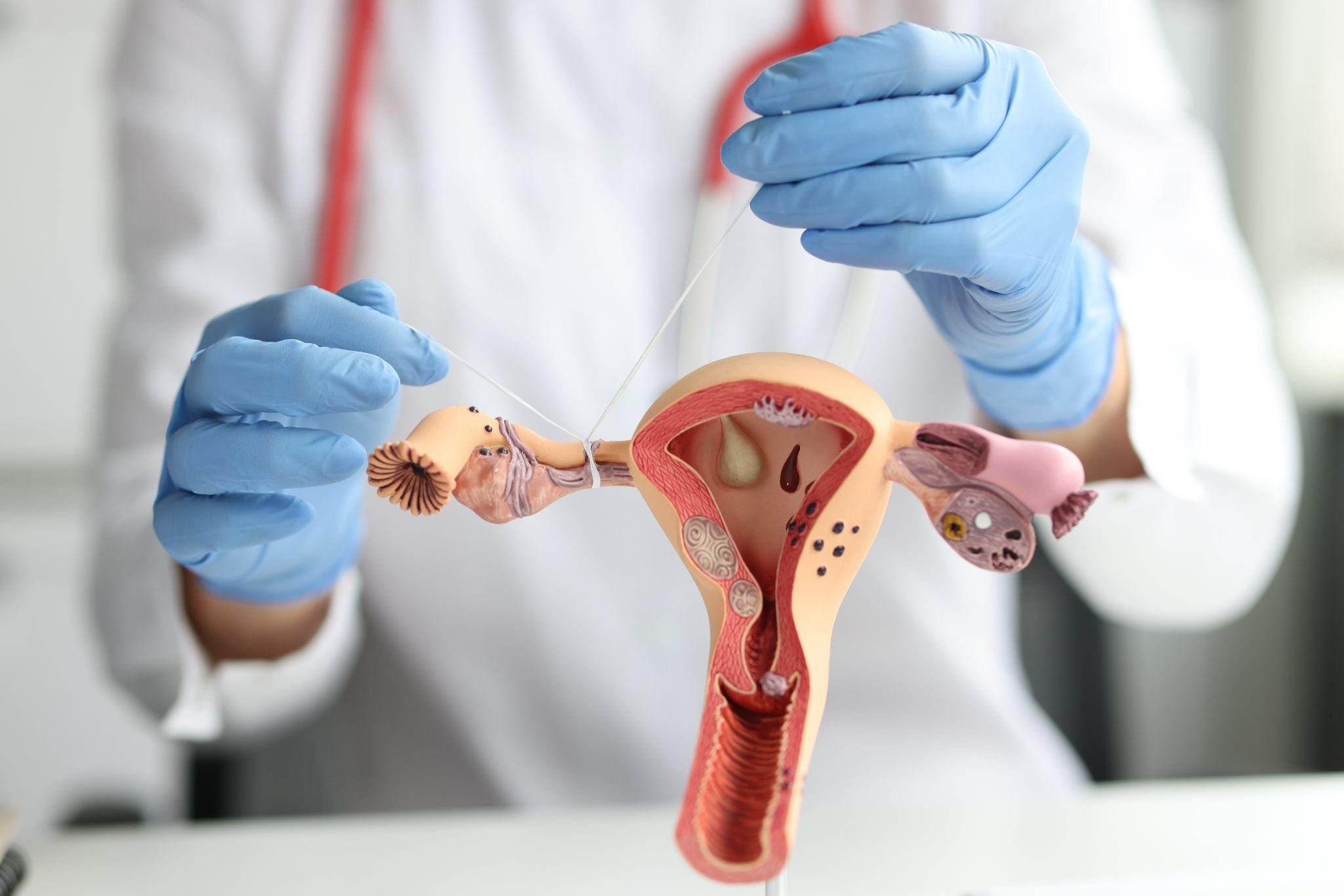
Doctors find that adhesions in or around the fallopian tubes can lead to ectopic pregnancies. After Savannah’s ectopic pregnancy, she underwent diagnostic laparoscopic surgery, and her doctor found adhesions around her ovaries and fallopian tubes.
Her doctor removed what adhesions he could. Although Savannah trusted the hands of her doctor, she was still fearful that another ectopic pregnancy might occur.
While a surgeon can remove many adhesions, she or he may be unable to access or cut areas that would impair fertility. Furthermore, adhesions frequently regrow as a direct result of the surgery.
Savannah told us, “I wanted to do everything I could to reduce adhesions and avoid another ectopic pregnancy.” She found our clinic and underwent our 20-hour treatment program. The day she returned home, Savannah became pregnant. Her ultrasound later showed her pregnancy was progressing normally. Nine months later, she gave birth to a beautiful boy. Remarkably, she went on to have a second son.
Women shouldn’t have to fear another ectopic pregnancy due to adhesions. Learn more about treatment for adhesions and the infertility page.
Women who experience secondary infertility are often baffled by their diagnosis. “I was able to easily conceive before,” many women tell us. “Why am I now having trouble?”
When our therapists examine women with secondary infertility, they look for ten key changes:
C-Section – Did the patient have a C-section? Adhesions and scar tissue after a C-section can cause blocked fallopian tubes or prevent proper implantation
Episiotomy – Did the patient have an episiotomy? An episiotomy scar can cause adhesions that extend into the vagina and cervix, causing the cervix to become stiffened and preventing the passage of sperm
Hormonal Changes – Has the patient had her hormone levels checked since giving birth? Has the patient’s period changed in heaviness or number of days? Pregnancy and aging can cause hormones to change, which may cause infertility
Surgeries – Did the patient undergo any surgeries since pregnancy? Surgeries can cause adhesions to form and impair fertility
Trauma – Has the patient experienced any car accidents, falls, abuse, or similar traumatic events? These events can cause long-lasting injuries, pelvic imbalances, adhesion formation, and other factors that can negatively impact fertility
Infection – Has the patient had any bladder, vaginal, or yeast infections since pregnancy? Infections can cause adhesions to form in the delicate structures of the female pelvis. These adhesions can impair female fertility in multiple ways
Inflammation – Has the patient been diagnosed with any new inflammatory conditions, such as endometriosis or PID? Inflammation directly causes adhesion formation, which can lead to infertility
Pelvic or Back Pain – Has the patient experienced any hip, back, or pelvic pain since pregnancy? Pain is a sign that something is wrong. Pain in the pelvis may be linked to infertility, such as a hip injury that is located near the fallopian tubes.
Sexual Dysfunction or Intercourse Pain – Has the patient experienced any sexual dysfunction or intercourse pain since pregnancy? Any problems with decreased desire, arousal, lubrication, orgasm, or satisfaction are signs that adhesions have formed in the delicate structures of the reproductive tract, possibly causing infertility
Ovulation or Menstrual Pain – Has the patient experienced any new ovulation or menstrual pain since pregnancy? Ovulation pain is a sign that adhesions may be restricting and impairing the proper function of the ovary. New menstrual pain is a sign that adhesions may have formed around the uterus, preventing proper implantation.
Clear Passage® Therapies offers six back-saving tips to help holiday shoppers ease or eliminate back pain during an all-day shopping spree.
Gainesville, FL, November 21, 2008 — Clear Passage® Therapies, a recognized leader in manual physical therapy for adhesions, pain, and infertility, offers six back-saving tips for holiday shoppers hitting the malls and outlets this season.
“Your low back is the center and core of your body,” says Larry Wurn, President and Director of Clinical Studies, Clear Passage® Therapies. “Taking care of your lower back is key in maintaining a strong, healthy body overall.”
According to Wurn, the six major tips shoppers should use to reduce potential back pain associated with a long day of shopping are
Wear comfortable shoes with good cushioning support; flip-flops and high-heeled shoes are not recommended.
Avoid carrying any weight (e.g., purse, presents, or a baby) on one side of your body. “Weighty objects should be carried close to the center of your body to minimize stress on your lower back,” he said. “Hold them in close – or use a backpack attached evenly on both shoulders.”
Condense your large purse to a smaller, lightweight satchel to keep the excess weight to a minimum.
When you can, use a cart instead of a handbasket for your purchases. A cart will not only take a huge weight off your shoulders and back, but it will also lend valuable support to your lower back.
Don’t let the stress of shopping cause you to lift your shoulders. High shoulders are inefficient, carry less weight, and can quickly cause neck pain or headaches during a day of shopping. Let your shoulders relax onto your chest; then use your arms to lift, keeping your packages low and close to your body.
Concrete and tiled floors can be hard on the back, so take regular breaks to sit or elevate your feet. A 5 to 10-minute break from your feet for every hour of shopping is a good plan.
Wurn and his wife, Belinda, are currently co-authoring a book, ‘Miracle Moms, Better Sex, Less Pain’, that examines their non-surgical manual physical therapy (Wurn Technique®). The therapy has been shown in peer-reviewed medical journals to reduce adhesions, decrease pain, and restore function. It has proven effective for many people without the risks or side effects of surgery or drugs. It can be used as a stand-alone treatment or in conjunction with other treatments.
‘Miracle Moms’ will be published this winter, with medical insights by research gynecologist and co-author Richard King, MD. A ‘sneak peek’ is available at the Clear Passage® Therapies blog to spur discussion with readers on important topics.
Chlamydia, often known as the “silent” STD, can cause extensive scarring and adhesions within the female reproductive tract. Because Chlamydia produces relatively few noticeable symptoms, women are often unaware they have it until they struggle with infertility and undergo extensive diagnostic testing. Although doctors can cure Chlamydia with pharmaceuticals, the adhesions and scar tissue caused by the disease will remain in the body.
The only option conventional medicine can offer women with adhesions is laparoscopic surgery. However, surgery to open blocked fallopian tubes is not always successful. Furthermore, laparoscopic surgery itself can cause more adhesions and scar tissue to form.
Nicole, one of our former patients, struggled with just this problem. When Nicole and her husband couldn’t become pregnant after three years, they sought the help of a reproductive endocrinologist (RE). Her RE performed a series of tests. Nicole told us, “That was when I found out I had an undetected STD, Chlamydia. It had caused scar tissue to form around and block my fallopian tubes.”
Her specialist recommended surgery to open the tubes or IVF. Nicole sought a second opinion with another RE who suspected she had fibroids in her uterus in addition to blocked tubes. He suggested she undergo a myomectomy to remove the fibroids, and he would also try to open her blocked fallopian tubes at the same time. He successfully removed the fibroids, but he couldn’t open her tubes.
Nicole then tried three IVFs, all of which were unsuccessful or ended in miscarriage. Afterward, she heard about our clinic on an infertility chat site and decided to attend. After treatment, her HSG test showed her fallopian tubes were clear!
However, Nicole’s doctor encouraged her to undergo IVF. Nicole, concerned about her biological clock, chose to undergo the procedure and told us, “At nine weeks, I discovered I had twins, but one passed away early in the pregnancy.” Nicole later gave birth to her baby girl, Joy.
Everyone was later surprised when Nicole became unexpectedly pregnant after the birth of Joy. Nicole exclaimed, “We didn’t try anything, and we got pregnant!” Nicole’s tubes had indeed opened, and she later gave birth to a little boy.
Learn more about natural treatment for blocked fallopian tubes. Nicole’s story, along with the stories of 75 former patients, will be showcased in our upcoming book, Miracle Moms, Better Sex, Less Pain.
As one of the founding members of the Clear Passage® Therapies team, I feel very fortunate to work with an exceptional group of therapists as well as our excellent administrative staff.
I became a physical therapist to help others heal from injuries and return to active lifestyles and full function. But after being
Diagnosed with cancer of the cervix in 1984, I became the patient who needed help healing. Following the diagnosis, I had surgery and extensive internal and external radiation therapy. I survived the cancer, but the treatments designed to heal me left my lower abdomen, pelvis, and lower back scarred, and adhered all of my pelvic organs to neighboring tissues and structures, causing a “frozen pelvis.”
Over the next few years, I began experiencing many symptoms caused by chronic complications that were the result of adhesions and scarring of the radiated tissues and narrowing of blood vessels within the original treatment area. Unfortunately, when a malignant tumor is irradiated, many structures and surrounding normal tissue cells are also damaged. I found out I was infertile, menopausal, and was developing chronic pelvic pain and tailbone pain, and dysfunction of many of my digestive organs.
My career as a physical therapist came to a halt when I found that conventional medicine offered little relief. I began to search for an alternative treatment for my debilitating symptoms. I got tired of hearing “it’s all in your head,” or “you will have to learn to live with it.” Wanting to avoid further medical treatment or surgery, I was treated by many expert osteopathic physicians and manual physical therapists throughout the U.S. and abroad with a variety of hands-on treatments.
I then began taking many post-graduate courses in various manual physical therapy and osteopathic techniques. As the first faint glimmer of hope dawned in my pain relief, my curiosity turned into a passion and then a lifetime journey. The more I learned, the more fascinated I became. Manual soft tissue therapy became my passion as I refined my ability to use my hands to palpate restricted areas and “listen” to the body. My husband, Larry, then began to study with the same experts I had been studying with. He continued to treat me, and I was finally feeling good enough to go back to work. We modified and refined techniques we learned from many experts, and began developing our own techniques.
In 1989, Larry and I opened Professional Touch Physical Therapy (PTPT) to treat a large chronic pain population. Then something remarkable happened. We began seeing “infertility reversals” in patients diagnosed as infertile. And so our journey with Clear Passage® began.
What motivates me professionally and personally is leading a life centered around the principles of excellence, empowerment, integrity, and honesty. My goal was to create the type of clinic I wish I had been able to go to while I was searching for relief from my pain. I wanted to create a space of true healing, support, compassion, empowerment, caring, and mutual respect.
I love to travel, and want to see as much of the world as possible in this lifetime. France and Italy are among my favorite countries. I love to go back there as often as possible! Last winter, Larry and I went skiing in Chamonix, France, for a week. Last summer, we went on a 3-week photo safari to Botswana, Zambia, Zimbabwe, and South Africa, which was the trip of a lifetime. We recently enjoyed a trip to beautiful Cabo San Lucas, Mexico, which is located at the very tip of the Baja Peninsula.
I also love to snow ski, go boating on the lake we live on, swim, work out, listen to audiobooks on my iPod, and play with our two 4-legged “kids.” Larry and I have 2 beautiful Golden Retrievers. Our 2-year-old female is Chablis, from Midnight in the Garden of Good and Evil. The theme of her literature was book titles. Our 1-year-old male is Dylan. The theme of his litter was rivers, so his registered name is Watchin’ the River Flow, by Bob Dylan. I also adore gourmet food and fine wines. Life is good!
One of my favorite expressions is “create your vision, and then step into it.” Best wishes to all of you on your journey!
One of the frequently asked questions I receive during a phone conversation with someone inquiring about Clear Passage® is, “Why do I need to submit a health questionnaire before I can schedule services?” I hope the brief summary below will give you a better understanding of the relevance of the health questionnaire.
The health questionnaire plays an important part in Clear Passage® as it allows our therapists to review your past medical history, which aids them in determining whether our services are appropriate for you.
Each individual has his/her own personal experiences, which you have lived through, and the questionnaire is a tool used to help our therapists understand your individual needs and goals. For example, let’s say that you have a history of ovarian cysts, which you indicated on your questionnaire. However, if you did not completely fill in the section specially designed for cysts, that would then impair the review process, as we would need additional information supporting any past actions taken regarding your ovarian cysts. In the end, we would request that you send us additional information to aid in a final determination as to whether our treatment is appropriate for you.
The questionnaire also assists our Therapist Director at the time of your phone consultation, as it gives her an opportunity to have a look at your past medical history, which aids her during the question-and-answer process of the phone consultation.
I hope that this short summary has given you a better understanding of the relevance of the health questionnaire. I look forward to having the opportunity to speak with you!
GAINESVILLE, Florida, February 18, 2008/PRNewswire/ — A study published in Alternative Therapies in Health and Medicine (Feb 2008) reports that blocked fallopian tubes can be opened without surgery, enabling infertile women to become pregnant naturally.
The authors of the study “Treating Fallopian Tube Occlusion with a Manual Pelvic Physical Therapy” became curious after a pilot study published in Fertility and Sterility (9/06) showed the treatment restored fertility in women with blocked and swollen tubes.
The non-invasive treatment developed by Clear Passage® Therapies® (CPT) involves a unique protocol of manual physical therapy techniques that can be completed at any CPT clinic in one week.
According to the study, CPT’s non-surgical treatment opened tubes in 61% of women with totally blocked fallopian tubes. Without the treatment, their chances for pregnancy would have been available only through surgery or in vitro fertilization (IVF). Of the successful participants, 53% conceived naturally after the non-surgical treatment.
“I was amazed after therapy to learn my only tube was open, and I became pregnant naturally,” said Jennifer Kennedy, a CPT patient. Before therapy, one of her tubes had been removed during emergency surgery, and her remaining tube was totally blocked and swollen. “We wanted a family, but I wanted to avoid more surgery if possible, so I tried CPT. Since therapy, we have been blessed with three beautiful children – naturally,” said Kennedy.
According to research, a gynecologist and former Chief of Staff of North Florida Regional Medical Center, Richard King, M.D., said, “This therapy has shown remarkable results in several areas and is a natural adjunct to gynecologic care.”
Larry Wurn, Clinical Research Director, founded CPT with his wife, Belinda, a physical therapist of 30 years. In 1987, Belinda developed chronic pain after surgery for pelvic cancer. The work they developed relieved her pain. When they used it on patients, women who were diagnosed as infertile began having babies naturally.
A surprising side effect of the work was increased orgasms. Many women reported improved sexual function, including increased desire and orgasm, and less intercourse pain after receiving the therapy, according to two other published medical citations (Fertility & Sterility, Medscape General Medicine).
“These initial results are very encouraging,” said the Wurns. “Many physicians are impressed that a non-surgical therapy (Wurn Technique®™) can be effective in treating pain or infertility.”
New Orleans, LA, November 2, 2006/PRNewswire/ — Scientists at the Annual Meeting of the American Society for Reproductive Medicine (ASRM) reported that therapists were able to open totally blocked fallopian tubes using a new pelvic physical therapy that feels similar to a deep massage. Previously, surgery was the only treatment option for women with blocked fallopian tubes.
The manual treatment (Wurn Technique®) opened blocked fallopian tubes in several women, some of whom conceived naturally after the therapy, according to the study abstract published in Fertility and Sterility (9/2006).
The abstract examined eight women with totally blocked fallopian tubes. One patient had only one tube, and it was blocked, but she had a natural pregnancy and childbirth after receiving the therapy. Half of the women had at least one tube opened by the therapy; half of those became pregnant naturally and gave birth.
The study cases were further complicated by a condition known as hydrosalpinx. Not only were the tubes blocked, but they were filled with a liquid that is considered toxic to embryos.
“Hydrosalpinx is generally thought to render a fallopian tube useless and may decrease the chance for successful in vitro fertilization (IVF),” said co-author Mark Kan, MD, a reproductive endocrinologist at the Newport Fertility Center in Newport Beach, CA. “The therapy opened several affected tubes, and apparently returned function to some of them.”
“While this study was small, the results are clear,” said physical therapist Belinda Wurn, who developed the technique with her husband, massage therapist Larry Wurn. “A diagnostic test clearly shows whether either tube has opened. The full-term pregnancies indicate a return of function.”
Research gynecologist and former Chief of Staff at North Florida Regional Medical Center, Richard King, MD, called the results remarkable. “The therapy is a natural adjunct to gynecologic care,” King says.
The therapists began developing the technique in 1987 to treat author Belinda Wurn’s pelvic pain after cancer and surgery. It is now used to treat female infertility, endometriosis pain, and female sexual dysfunction (including painful intercourse). The therapy is available at Clear Passage® Therapies® clinics throughout the United States.
GAINESVILLE, Fla., Sept. 27, 2004 /PRNewswire/ — Struggling with years of infertility can be stressful and heartbreaking. But the battle is over for three friends who credit their success to a new “infertility massage.”
Alexandra, Angie, and Cathleen all attribute their children to a patent-protected massage therapy called the Wurn Technique®(R). The therapy, which uses no drugs or surgery, appears to decrease adhesions and scar tissue that cause half of all female infertility, according to physical therapist Belinda Wurn, co-developer.
“We use our hands to find adhered areas in and around a woman’s reproductive organs,” said Belinda Wurn. “We apply a sophisticated ‘infertility massage‘ to free the reproductive tissues from adhesions that prevent proper function and cause infertility.”
The therapy’s effectiveness was recently chronicled in Medscape General Medicine, Ob/Gyn & Women’s Health. The peer-reviewed journal reported that 71% of infertile women conceived within one year after the treatments without any further medical or surgical intervention. A second study followed women who received in vitro fertilization (IVF) transfer after therapy. Two-thirds (67%) of the transfers resulted in pregnancy, beating the 41% national average reported by the CDC. But for the three friends, pregnancy came without surgical intervention.
Alexandra was the first of the three friends to discover the therapy’s success. With one blocked fallopian tube and the other tube scarred and adhered from a C-section, her physician told her it was unlikely she would ever conceive again. Yet, she has had two children since therapy and is now pregnant again. “I recommended the therapy to my friend Angie, who had been struggling with infertility for so long,” Alexandra said.
Angie was infertile for five years, with a history of endometriosis, miscarriages, and seven failed intrauterine inseminations (IUI). But after receiving the new therapy, Angie also conceived naturally and gave birth to a beautiful baby girl. “I know that the therapy is what my body needed to be successful,” Angie said. She called her friend, Cathleen.
Cathleen was given a 5% chance of ever becoming pregnant, even with IVF. Her tubes were scarred, and her fimbriae were clubbed with adhesions. After five years of infertility and four IVF attempts, she was crushed. She had never had a single pregnancy. “Angie bugged me to try the therapy, so I finally went. A few months after therapy, to my utter amazement, I was pregnant,” Cathleen said. Cathleen also gave birth to a little girl.
“We are very excited about the results we are seeing with our therapy. At least 60 babies have already been born or are presently expected by women who were diagnosed as infertile,” said massage therapist Larry Wurn, co-developer of the Wurn Technique® and Director of Clinical Studies at Clear Passage® Therapies.