How long have you been a therapist? Since 1989, so 22 years
How long have you been practicing the Wurn Technique®? My wife Belinda and I began developing it in 1989. We then incorporated Clear Passage® in 1995.
How did you first become interested in this work? It began when my wife developed debilitating adhesions after surgery and massive doses of radiation therapy.
Where did you grow up? Jacksonville, Florida, then moved to San Francisco in 1969. I became Guest Curator at the Fine Arts Museums of San Francisco in 1972, coordinating large, multi-museum shows throughout the San Francisco Bay area for the next three years.
What’s your favorite food? I love Indian and Thai food, and anything with lots of garlic!
Where did you receive your education? University of North Carolina, then transferred to San Francisco State University during a very exciting time in the early 70s. That was when our campus became a center of protest against the Vietnam War. I can still remember police on horseback herding students into or away from certain buildings – while I was just trying to get to class.
What is your philosophy on continuing education? Continuing education is vitally important. You never stop learning. I learn every day from studying, from my co-workers, and from my patients.
What conditions do you have experience treating? My main focus centers around the adhesions that form wherever the body heals. I have extensive experience treating chronic pain, bowel obstruction, female infertility, endometriosis, intercourse and menstrual pain, TMJ, chronic head and neck pain, low back, and post-surgical pain.
Where is your favorite place to go on vacation? Anywhere exotic – where there is no fax machine, phone service, or Internet! My favorite is being “away from it all.” For that reason, I love to scuba dive – to just be one of the fish!
What is your favorite part about treating patients? I love giving people back their lives and helping make their dreams come true.
What do you hear patients say most often after receiving treatment? “I don’t want to leave; I wish I lived here.”
What one word describes you best? Inspired.
What drives you every day? There are people suffering with physical needs that have found no relief, or whose conditions have worsened, using traditional medicine – drugs or surgery. Some have debilitating pain, some have life-threatening conditions; many have been told “there is nothing that can be done for you” or “it’s all in your head” when it is clear to us that they have very real, tangible problems. In most cases, these are conditions that we can reverse.
I love it that we are so often able to give people back pain-free lives and hope using a non-invasive therapy that is based on compassion and grounded in science.
I love it that to be successful, we must deeply listen to our patients, ask them what they are feeling, and even what they feel needs to happen in their bodies for them to reach their goals. Thus, we empower each patient to help create and direct her/his own cure. Working together with patients to achieve a great result is exciting, powerful, and humbling. I am truly blessed to be able to work with people in need and to help them find a new life and achieve their goals.
Natural Pregnancy After Seven Years of Infertility- Jennifer’s Story
My husband and I attempted unsuccessfully to get pregnant from the very beginning. Upon attending Clear Passage® Physical Therapy, I had been married for six years.
I come from a large family with five siblings, including a twin sister. I love being from a large family, so I have always wanted many children. My husband has three siblings and feels the same way.
We married just a week shy of my 30th birthday, so we started working on a family right away. Early in our marriage, I suffered from discomfort and sometimes pain during intercourse. Months and soon years went by, and I was not getting pregnant despite the fact that I had never used any form of birth control. I felt intuitively that the intercourse discomfort and pain must be connected to my infertility.
I decided it was time to visit my gynecologist to gain some understanding of the problem. My doctor said that after two years of unprotected sex and no pregnancy, I was officially “infertile.” Wow, I never thought that it would happen to me! But sure enough, that diagnosis became part of my life.
I then began the next step, trying a fertility drug called Clomid. I tried three months of Clomid with no success. My doctor then suggested that I undergo some diagnostic tests to see if there was a physical problem.
I went through the typical battery of tests. In fact, my HSG was done on the morning of September 11, 2001. It was a bad morning in many ways, to say the least! The doctors told me that I was not getting spill of the dye into one side, and they suspected one of my fallopian tubes was blocked. However, because of where the blockage occurred, they could not be certain that it was totally blocked. They encouraged me not to worry because “Sometimes this procedure opens things up, and women often get pregnant afterward.”
I left with a bittersweet feeling. I had a blockage on one side, but it could be “opened up.” Although I was hopeful initially, months went by, and I still was not pregnant. I then went back to my gynecologist, who sent me to the local infertility specialist.
During the consultation, he suggested that I had two primary options: I could either do in vitro fertilization (IVF) or artificial insemination. He said that with the statistics, IVF was the most likely method to produce results. As a practicing Catholic, I knew this was not a good choice for me.
I decided to speak with several Catholic priests about this. They all suggested that even though we do not always understand God’s plan or the church’s “rules” on the sanctity of life, we must still obey as Catholics. We cannot “pick and choose” which rules to obey and which not just because they do not fit into our lives. I knew this was a spiritual lesson for me as well, and my responsibility was clear.
I thought about adoption and would be open to it, but my husband was not fully on board. He felt that God would give us a baby one day and that we should wait longer. Easier said than done!
I decided to buy the sticks that would tell me when I was ovulating and keep trying naturally. I used those sticks nearly daily for four years! I also tried the “basal temperature/natural family planning” method, but I didn’t have success with it either.
In the meantime, I was having chronic urinary tract infections (UTIs). I went through a battery of tests regarding this and even received antibiotic treatment for six months. All testing was inconclusive or negative, yet the UTIs continued.
Through all of this, I couldn’t help feeling that these issues were all somehow connected to my infertility. After all, they were in the same general part of the body. How could I have occasional discomfort during intercourse, chronic UTIs, and infertility, all generally unexplained? I also knew I had chronic back pain from two accidents I was in. I asked my doctors if these were related, and most said no. But I still was not convinced.
My emotions during this process were difficult to bear. Any time a friend would tell me she was pregnant, I received an invitation to a baby shower or a baby was born, I would feel happiness for the friend, but incredible sadness that it was not me.
My twin sister married several years after me. I warned her to try to get pregnant right away if she wanted a family. After all, I was having such a difficult time, and we were twins. Wouldn’t you know, she conceived on her honeymoon! She miscarried a month later and re-conceived again within two months. Two pregnancies within three months!
Finally, in 2004, my sister-in-law was working as a medical director in a medium-sized hospital. She was receiving medical journals online and found an article regarding the efficacy of treatment by Clear Passage®. She forwarded the article to me, and I felt that this may just be the answer that I was looking for. Many of their patients also had chronic UTIs and infertility, as well as pain during intercourse. This sounded familiar!
I thought this might be an answer to my prayers, and I contacted them immediately. They gave me a medical history form to complete in order to determine if I was an appropriate candidate for treatment. The closest treatment center at the time was in a city about 2.5 hours north of my home.
When I was accepted into the fertility treatment program, I set up my first 10 hours during a holiday break. My family doctor specialized in physical medicine, and he readily gave me a script for “physical therapy” due to chronic pain, which ultimately helped to alleviate some of the cost of the program.
I began my treatment the week after Christmas in 2005. I am in the rehabilitation field myself and have worked alongside physical therapists, so I had an inkling of an idea of what was to occur, but did not know fully, so I was slightly nervous.
The process consisted of both typical physical therapy maneuvers, but also “internal” maneuvers. This was uncomfortable at first, but it proved to be one of the most beneficial parts of the process. It was kind of like going to the OB/GYN for a check-up. The therapist was thoughtful and described what she was doing, why, and what she was finding in her assessment and during treatment. She also explained why I may be feeling pain during intercourse on occasion.
I left feeling filled with hope and looking forward to completing the process.
Six months later, in June of 2005, I went to Florida and completed the final 10 hours. I had multiple therapists, all of whom were professional and caring. The halls of the center were filled with baby pictures, and a new mother was there showing the therapists her child. I started to cry. I felt hope and anxiety at the same time. Would this really work for me, or was I just a hopeless case? Why would this work after six years of no success? Just because there are some success stories doesn’t mean it will happen to me. I am 36 years old now.
As I completed my treatment, they gave me some suggestions and materials for preventing pain during intercourse. When I returned home, I was eager to see my husband. We had a wonderful night, pain-free and pleasurable! I had a new intimate life with my husband! This was an unexpected bonus!
By September 2005 (three months later), I took a home pregnancy test at my sister’s house because I suspected I could be pregnant. It was positive! I never cried so hard in my entire life! I felt so relieved and filled with joy and excitement. I couldn’t wait to tell everyone. I wanted the world to know — I didn’t care about “waiting until the first trimester is over just in case.” I just couldn’t hold it in. I gave my husband a “Parents” magazine with a positive test inside to tell him our news. He was elated as well. We were finally going to be parents.
However, we were not out of the woods yet. During the pregnancy, I contracted “fifth’s disease” while working at a school with young children. I had never heard of it before, but apparently, it is one of the diseases on the “don’t get this when you’re pregnant” list. So I had to have weekly ultrasounds. It was another blessing in disguise because I had a chronicled picture history of my daughter’s development in utero.
In June of 2006, we had a beautiful, healthy baby girl, 8 pounds 6 ounces. She was the most beautiful thing I have ever seen. I was 37 years old at her birth, and I finally had the child I had always wanted my entire life. I can’t even look at her without crying tears of joy. I am so grateful to God and to the caring, skillful therapists at Clear Passage®. They not only helped me conceive my daughter, but also conceive again naturally — I’m 11 weeks pregnant! They truly changed my life!
As the place where natural conception occurs, the fallopian tubes are truly the place where life begins. Due to their location and size, fallopian tubes can become blocked by pelvic scars or adhesions. Together, these “mechanical causes” account for about 40% of all female infertility. Tubes can block near the uterus (proximal), by the ovary (distal), or in the middle of the tube (mid-tubal). In some cases, the tube swells with fluid in a condition called hydrosalpinx. While a single blocked tube impairs fertility, blockage of both tubes causes total infertility.
Surgery Until recently, the only options for women with blocked tubes were to undergo surgery to open one or both tubes, or to remove the blocked tubes and proceed directly to in vitro fertilization (IVF). This is often the recommended course that infertility specialists offer to women with hydrosalpinx.
Natural Treatment – The Wurn Technique® Several medical journals have now examined a manual physical therapy (Wurn Technique®) for its ability to open and return function to totally blocked fallopian tubes, including hydrosalpinx. The “hands-on” treatment opened tubes in most of the study participants, without surgery or drugs. Most of the successes had natural pregnancies and births after therapy. Several reported subsequent pregnancies/births, so the positive results lasted for years for these women. In other published studies, the therapy significantly decreased pelvic and intercourse pain and improved sexual function. The therapy can be used as a stand-alone infertility treatment or in conjunction with regular medical care.
Adhesions form as the body’s first response to trauma, surgery, infection, or inflammation. These adhesions are made up of strong, fibrous cross-links that attach to the nearby tissues and organs of the damaged area. When the abdomen or bowel experiences trauma, adhesions can begin to form in the bowels, causing bowel obstructions. These adhesions can cause bowel obstruction in three different ways.
1. Adhesions can form inside the bowel.
When the bowel experiences trauma, such as surgery to remove part of the bowel, adhesions can form inside the bowel. These adhesions, made of thick collagen bonds, make it difficult for food to pass and can often cause cramping and pain during the digestion process.
2. Adhesions can surround and restrict the bowel from the outside.
After a pelvic or abdominal trauma, adhesions can form outside the bowels. These adhesions can surround the delicate tissues of the bowel, restricting and pinching them from the outside. This causes a decrease in digestive function and often pain and cramping after eating.
3. Adhesions can surround and kink the bowel like a garden hose.
When adhesions form on the outside of the bowel, they can surround the bowel, causing it to kink much like a garden hose. This often creates a partial bowel obstruction, which makes the digestion of solid foods difficult.
Treatment options offered to those who experience bowel obstruction are generally surgery. However, surgical treatment for clearing bowel obstructions is the main cause of repeat obstructions. This can often lead to an endless cycle of obstructions and repeated surgeries.
A new non-surgical technique, known as the Wurn Technique®, is now being examined as an alternative treatment for bowel obstruction. This therapy uses hands-on physical therapy techniques to address the underlying adhesions that cause bowel obstruction.
Don’t let adhesions control your life – take charge with Clear Passage® Physical Therapy’s innovative approach to treating bowel obstructions. Request Information and schedule your Free Consultation today to learn how our expert therapists can help you break free from recurring obstructions, then visit our Apply to Therapy page to start your journey towards lasting relief and improved digestive health.
Discover hope for post-C-section fertility challenges with Clear Passage® Physical Therapy’s innovative, non-surgical approach – Request Information and schedule your Free Consultation today to learn how our expert therapists can help address adhesions and improve your chances of conception, then visit our Apply to Therapy page to take the first step towards your dream of expanding your family.
C-section Can Cause Adhesions
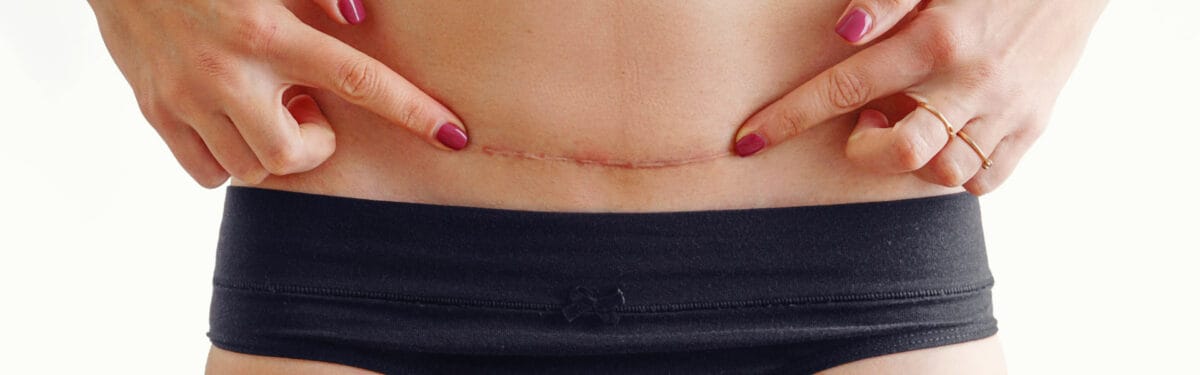
Cesarean section delivery (C-section) is the most common surgery among women in the US and has been shown to be closely related to adhesion formation. Unfortunately, this invasive surgical procedure requires a great deal of healing to occur. Adhesions are one of the body’s automatic responses to traumas such as a fall, surgery, an infection, or an inflammation. These adhesions are much like thick strands of nylon rope that bind to nearby structures and restrict and cover the traumatized area. Though they are designed to help the body heal, adhesions often cause ongoing pain or dysfunction, long after the surface scars have healed.
Because adhesions attach to nearby tissues and organs, they create a pull or restriction in the pelvis, which often results in pain. As the organs, tissues, and muscles attempt to move, a resulting pain occurs.
Adhesions Can Cause Secondary Infertility
As adhesions form throughout the pelvis, they can attach to the delicate organs of the female reproductive system. These strong, fibrous bands restrict the mobility and function of these organs, often causing secondary infertility.
Adhesions Can Cause Digestive Issues
Adhesions can also affect regular digestion by attaching to the outside or inside of the intestinal wall. As adhesion bonds grow, they restrict the regular function of digestion and can often lead to a partial bowel obstruction.
Treatment for Adhesions
Oftentimes, painkillers or infertility drugs are offered as a treatment for those who suffer from post-surgical adhesions. Unfortunately, drugs merely mask the true problem of adhesions and offer no long-term solutions. The next step in treatment is to undergo surgery to cut or burn adhesion bonds throughout the pelvis. However, the trauma of an additional surgery causes additional adhesions to form, which can create an endless cycle of adhesions and surgery.
A manual physical therapy called the Wurn Technique® has shown excellent results in decreasing pain and increasing function related to adhesions. This therapy feels much like a deep pelvic massage as therapists use their hands to break down the bonds of adhesions throughout the pelvis. This therapy has been endorsed by physicians from Harvard, Northwestern, and Columbia as an alternative treatment to surgery. Click here to learn more about this treatment for scar tissue C-section adhesions.
“What a much-needed, useful, and safe way to deal with the common, yet mystifying problem of adhesions. You have perfected a technique to treat adhesions, with years of experience, scientific backup, and case studies to prove it.”
-Dr. Leslie Mendoza Temple, Northwestern University Medical Director
Hydrosalpinx is a collection of watery fluid within the fallopian tube, usually as a result of damage at the distal (far) end of the tube, near the ovary.
How does a hydrosalpinx form?
Just as your knee might swell when it is damaged or inflamed, the fluid pools in the damaged tube, causing it to swell or dilate, as a natural part of healing from inflammation. Whether from a prior surgery, an inflammation, or an infection, the delicate geography of the pelvis responds to these traumas by forming adhesions and often a hydrosalpinx.
How does a hydrosalpinx cause infertility?
In most cases, a hydrosalpinx indicates that the fallopian tube is totally blocked at the far end. There, the delicate flower petal-like fimbriae, which are designed to grasp the egg as it exits the ovary, become adhered or clubbed together, closing the tube completely. Hydrosalpinx is a serious threat to fertility. It not only renders the affected tube(s) totally ineffective, but it may also lessen the effectiveness of various infertility treatments (e.g., in vitro fertilization [IVF]).
How is hydrosalpinx treated?
Surgery
Neosalpingostomy (surgery that incises the hydrosalpinx and leaves an opening in the tube) is a surgical treatment option. The tube, however, often closes again, enabling the hydrosalpinx to return. The most positive results are obtained with younger women and women with small hydrosalpinges. For others, the preferred treatment is usually total surgical removal of the tube prior to IVF.
The Wurn Technique®
The Wurn Technique® is a non-surgical infertility treatment that uses pelvic physical therapy to decrease the adhesions causing tubal damage and hydrosalpinx. Once mobility is restored, the previously blocked tube(s) often regain normal function, creating a free path for conception to occur. Many women with a diagnosis of hydrosalpinx became pregnant naturally after receiving this hands-on therapy.
Couples having trouble getting pregnant suffer frustration, even shame. Experts estimate that about 20 percent of couples will suffer from infertility, temporarily or permanently. The incidence of infertility is about equally divided between women and men. The causes of infertility are both physical and psychological. But, happily, a number of effective fertility treatments are available.
Nature’s Way
Doctors recommend that women try for at least one year to get pregnant naturally before seeking help. Timing and observation are the keys. Fertility experts say that to get pregnant, women should have sex two or three days before they ovulate, their most fertile days.
So-called alternative fertility treatments may help some women. Claims have been made for fertility herbs, oils, massages, and diets. More research needs to be done on these types of fertility treatments. However, two alternative fertility treatments that have been researched and proven effective are acupuncture and a particular physical therapy.
When combined with conventional medical fertility treatments, acupuncture has been shown to be beneficial. It’s believed that acupuncture reduces stress hormones in the body, which interfere with conception.
A unique physical therapy procedure called the Wurn technique has proved highly effective. This hands-on fertility treatment breaks down adhesions, or scarring, one of the leading causes of infertility. This fertility treatment uses pelvic physical therapy to decrease adhesions and increase the function of reproductive organs and glands.
Many women choose natural or alternative fertility treatments because no surgery or drugs are involved. Although alternative therapies are gaining favor, most women still choose conventional fertility treatments, which, in general, do involve surgery or drugs.
Medical Interventions
Surgery to repair part of the reproductive system—in either women or men—helps in some cases. For example, surgery is used to remove fibroid tumors from the uterus or adhesions from the fallopian tubes, both common causes of infertility.
The most common fertility treatment is the administration of fertility drugs to women, either through pills or through injections. Fertility drugs help balance a woman’s hormone levels and help her body ovulate. Some fertility drugs increase the number of eggs a woman produces. This can lead to multiple births—twins, triplets, or more.
Another, more advanced, fertility treatment goes under the broad category of assisted reproductive technology (ART). ART differs from intrauterine insemination (IUI), or artificial insemination, in which only the sperm is handled. With IUI, the donor sperm is inserted into the woman’s uterus through a catheter. IUI is an in-office procedure. With ART, both sperm and eggs are manipulated.
In ART procedures, eggs from a woman’s ovaries are surgically removed, combined with sperm in a laboratory, and returned to the woman’s body. In vitro fertilization is the best-known ART procedure. Although effective, ART poses some potential problems, including low birth weight, premature delivery, and multiple births.
Given the range of fertility treatments available, women need to work with their primary care provider or obstetrician/gynecologist to find just the right fertility treatment to help them become pregnant.
Discover relief from menstrual pain with Clear Passage® Physical Therapy’s Free Consult and Request Info – learn how their unique, non-surgical approach can address cervical issues, adhesions, and alignment problems that may be causing your discomfort, potentially transforming your menstrual experience without invasive procedures. To learn more, visit our Apply to Therapy page.
When women think of menstrual cramps, they normally think of the constant ache or throbbing pain in the pelvis. We seldom think of stenosis of the cervix, also known as a stenotic cervix, but it is a key player in dysmenorrhea. Dysmenorrhea is the medical term for abdominal cramps and pain experienced during menstruation. The main symptoms of dysmenorrhea are pain in the abdominal and pelvic region, sometimes accompanied by digestive issues or headaches.
During menstruation, the lining of the uterus detaches and exits the body through the cervix. The cervix is the opening to the uterus. In its natural, midline position, it opens slightly, allowing menstrual blood to pass into the vagina.
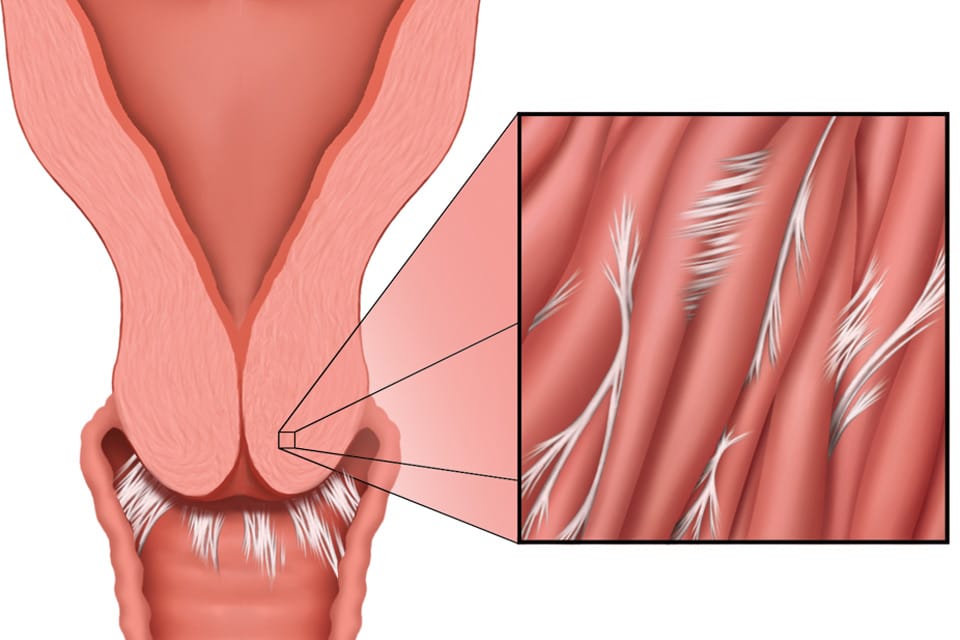
But if the cervix has been damaged or adhesions have formed on or near the cervix, the cervix can cause a great deal of pain during menstruation. If the cervix is pulled or pushed forward, backward, or to one side, it can make the passage of menstrual blood difficult and painful. If adhesions have formed on or near the cervix, the opening of the cervix can be constricted. When blood tries to pass through the constricted opening, it can elicit a great amount of pain.
Because the cervix is protected inside the vagina, many women are not aware of how easily the cervix can be damaged. Sexual intercourse or sexual abuse can physically push the cervix out of alignment. Sexually transmitted diseases can create inflammation that leads to adhesion formation. STDs can also inflame the cervix, making the passage of menstrual blood painful. Radiation therapy causes the same process of adhesion formation and can leave the entire pelvis adhered. Even vaginal or yeast infections can lead to adhesion formation that constricts the cervix or pulls it out of alignment.
Adhesions on the cervix can lead to more than just period pain. Dyspareunia, also known as intercourse pain, is commonly caused by adhesions forming within a woman’s reproductive system. Many women who have adhesions in their reproductive tract or have cervixes that are out of alignment also experience pain during sexual intercourse. The same adhesions that constrict the cervix can also constrict the vaginal walls, leading to pain when stretched.
Unfortunately, this condition often goes untreated because of the personal, sensitive nature of the topic — and reluctance to discuss it with a doctor. If you experience pain during or after intercourse, we encourage you to learn more about this condition that affects millions of women.
Conventional treatment for adhesions involves laparoscopic surgery to lyse (burn) any adhesions. However, few women are willing to undergo surgery in a very delicate, personal area when their chief complaint is menstrual pain.
Clear Passage® offers a unique and effective alternative that directly treats adhesions and the cervix. Using manual physical therapy techniques, our therapists deform and detach adhesions. They also gently enable the cervix to move back to its natural position. Following treatment, many women report that their menstrual pain is significantly decreased or gone. Many women who previously experienced pain with intercourse also report that sex is no longer painful. To learn more about our treatment for menstrual cramps or how we can decrease painful intercourse, see our menstrual pain page or dyspareunia page.
If you suspect you have a small bowel obstruction, you should immediately see a doctor. A small bowel obstruction occurs when the small intestine becomes cinched, preventing solid food from passing through the intestine. Not only is your body unable to absorb the nutrients it needs, but it is also unable to eliminate toxic material. A blockage can also cause extreme pain and bloating as food and gas back up.
While you are waiting to see the doctor or trying to select the best treatment option, you can make changes in your diet to help you cope with the pain, bloating, lack of nutrients, and toxic build-up.*
Severe abdominal pain, persistent bloating, nausea, and the inability to pass gas or stool can be a sign of a blocked bowel that should be evaluated by a medical professional as soon as possible.
Do not eat solid food. If your small bowel is blocked, there may only be a small passage for food. Solid food may be too large, so it is suggested you drink only liquids. While this may be difficult, remember that these dietary changes are only temporary until you receive treatment.
Blend and juice vital nutrients. To ensure you are receiving the nutrients you need, blend nutritious food in a food processor or blender until the consistency is as close to a liquid as possible. Do not try blending any type of meat – not only is it difficult to “blend” meat, but it is significantly harder for the intestine to process meat. To get more nutrients, use a juicer. Use as many organic, fresh fruits and vegetables as you can. This is the time to throw in kale, spinach, and other nutritious foods that your body is lacking due to the blockage and the inability to process solid foods. To mask the taste, try mixing in carrots, sweet potatoes, and apples.
Do not eat or drink any unhealthy food. Because your body is unable to process or eliminate food, it is depleted of nutrients and considerably more toxic. You do not want to add to this by eating or drinking any beverages that will add more unnecessary chemicals or unhealthy additives to your body. This means no soda (which can also be problematic due to the carbonation), no processed food, no fatty foods, etc. You want to do everything you can to provide nutrients for your body.
Drink Slowly. Drinking too quickly can cause you to swallow air. While the air is obviously harmless, it can add to the build-up of gases and the subsequent pain from bloating.
Increase your fiber. Fiber helps waste move through the small intestines. Because you can only drink liquids, try mixing in some flaxseed, blended prunes, or other fiber-rich choices.
Avoid gassy foods. A small blockage can cause gas to build up, creating significant pain. Avoiding food (even in liquid form) that contributes to gas will prevent further pain. Common foods that cause gas are cruciferous vegetables (broccoli, cabbage, etc.), milk products, onions, artichokes, pears, and wheat.
Avoid foods that promote inflammation. Inflammation causes the tissues of the body to swell, meaning the passage of food to your intestines could become smaller. Common foods that cause inflammation include sugar, refined carbohydrates, and gluten-containing foods (wheat, flour, etc.) To learn more about what you can do to reduce inflammation naturally, please read Anti-Inflammatories and Reducing Inflammation Naturally.
This diet should only be used as a temporary measure while you are either waiting to speak with a doctor or being treated for a small bowel obstruction. Learn more about treatment for bowel obstruction.
*These suggestions are not a substitute for medical advice from a doctor or nutritionist.
Many women who experience intercourse pain believe the pain is something they just have to live with or tolerate. They manage the pain by having sex sparingly or avoiding sex at times when it might be particularly painful (such as during ovulation or the week before).
However, if a woman is trying to conceive, she cannot avoid sex or only have sex when it feels best for her. Emily, a former Clear Passage® patient, struggled with just this problem. When she and her husband married, she was disappointed to find that sex was extremely painful. She told us that the pain “was almost unbearable.” Emily and her husband seldom had sex due to the pain, but when they decided to have children, she had to endure the pain. Emily told us, “We tried to have sex more often, and the stress of trying to push past the pain was making my menstrual cycles irregular.”
Painful intercourse is not normal. In fact, pain with intercourse is a clue that there might be something else wrong. Clear Passage® has treated many women who experienced infertility, and a large majority of them experienced painful intercourse as well. We feel that painful intercourse is a sign that adhesions have formed in the reproductive tract, possibly adhering, restricting, and preventing proper function and fertility.
When Emily came to us for help, Clear Passage® therapists delicately and sensitively treated adhesions in her reproductive tract. Emily stated, “I felt very comfortable at Clear Passage® and in control of the treatment. At times, it was uncomfortable because they were treating a very pain-sensitive area, but I could tell the difference as the pain decreased with each session.”
Emily and her husband were eventually able to resume regular intercourse. Emily reported, “Before treatment, my husband had never been able to enter me fully, and finally he was able to!” Emily’s menstrual cycle also returned to a regular cycle, and she is currently expecting.