According to the journal The Physician and Sportsmedicine, sacroiliac joint dysfunction is “a treatable diagnosis for the millions of individuals suffering from acute and chronic low back pain.” In fact, it is one of the more common causes of mechanical low back pain.
Puzzled by what the sacroiliac joint is and how it can cause pain? Read on to learn more.
What is the sacroiliac joint?
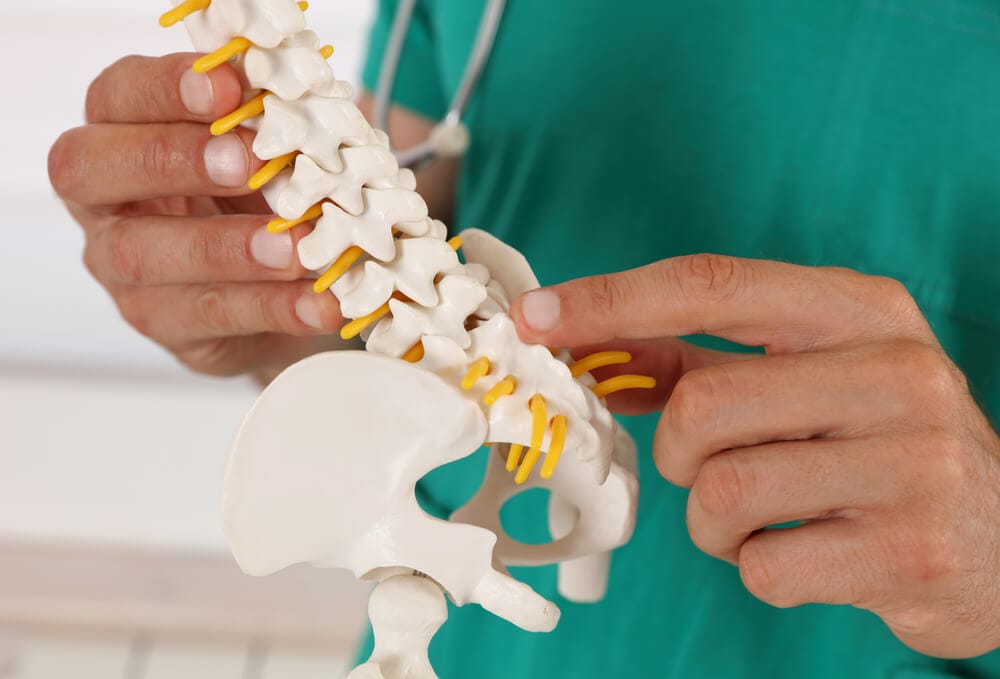
It’s the place where the sacrum and the iliac bones join.
Composed of five vertebrae, the sacrum is located at the base of your spine. On either side of the sacrum are the iliac bones — the two large bones that make up your pelvis.
What are the symptoms of sacroiliac joint dysfunction?
Discomfort with bending over or standing after sitting for long periods
Pain may be worse when riding in a car, bearing weight on the affected side, or performing the Valsalva Maneuver (attempting to forcibly exhale while keeping the mouth and nose closed).
What causes sacroiliac joint pain?
While most sacroiliac joint pain is the result of benign conditions like arthritis, it can also be caused by:
infection
trauma or injury
inflammatory disease
stress fractures resulting from repetitive activity or overuse
Trauma or injury to the SI joints can be caused by a fall onto the buttocks, a blow to the side of the pelvis, or an automobile accident. It puts strain on the ligaments around the SI joint, creating instability and discomfort.
We recently received a question from one of our readers asking, “Can abdominal scar tissue cause pain?” Since this question deals with a condition that can have life-threatening consequences, we decided to answer it in a post. The answer is yes. Bands of scar tissue in the abdomen, called abdominal adhesions, can cause debilitating pain and a life-threatening condition called bowel obstruction. Scar tissue in the abdomen forms as the body heals from an infection or inflammation, such as cholecystitis or gastroenteritis. Abdominal adhesions also form after surgical procedures like appendectomy, bowel obstruction repair, or gastric bypass. In a bowel obstruction, adhesions prevent liquids, food, and gas from moving through the intestines. If untreated, this condition can be fatal. Patients who present with abdominal adhesions typically arrive at our clinics in a state of frustration. With an extensive surgical history, many have spent years searching for a solution to the recurring problems caused by abdominal adhesions. With each surgery to remove adhesions leading to more adhesions, they feel trapped in a vicious cycle of adhesions-surgery-adhesions. Our therapists use a natural approach to treat scar tissue in the abdomen. Using their hands and a protocol of over 200 manual therapy techniques, they decrease adhesions by detaching the individual strands that make up these internal scars. As a result, our therapy allows bowel obstruction patients to avoid additional surgery and subsequent adhesion formation.
If your doctor has just recommended that you have a hysterosalpingogram (HSG), you may feel worried or overwhelmed. Here are some of the essential facts about this routine test.
What?
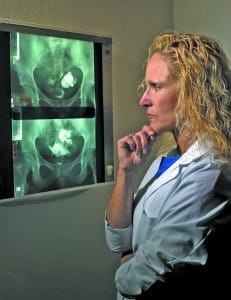
A hysterosalpingogram (HSG) is an X-ray test that looks at the inside of the uterus and fallopian tubes and the area around them. It is an outpatient procedure that usually takes less than 30 minutes to perform.
During the test, you may feel some cramping like menstrual cramps. After the HSG, a woman can immediately resume normal activities, although some doctors may ask that she refrain from intercourse for several days.
Why?
An HSG is often done in women who are having difficulty becoming pregnant. The test may identify mechanical factors contributing to infertility, which include scarred or blocked fallopian tubes and hydrosalpinx.
When?
An HSG should be performed 2 to 5 days after your menstrual period has ended to ensure you are not pregnant. It should also be done before you ovulate the next month — unless you are using contraception — to avoid using X-rays during an early pregnancy. The test cannot be done while you are having a pelvic infection.
Who?
A radiologist typically performs the HSG in the X-ray room of a hospital or clinic. A radiology technologist and a nurse may help the doctor perform the test. A gynecologist or a reproductive endocrinologist (a doctor specializing in infertility) may also assist.
How?
During a hysterosalpingogram, a thin tube is inserted into the uterus through the vagina and is used to fill the uterus with iodine dye (contrast material). Because the fallopian tubes are connected to the uterus, the dye will flow into the fallopian tubes. X-ray beams (fluoroscopy) take pictures as the dye passes through the uterus and fallopian tubes.
These images can show problems such as an injury or abnormal structure of the uterus or fallopian tubes. They can also identify blockages that may prevent an egg from moving through a fallopian tube to the uterus. A blockage can also prevent sperm from moving into a fallopian tube and joining with the egg (fertilization). If the fallopian tubes are free of blockages, the dye outlines the length of the tubes and spills out of the ends.
After experiencing trauma—like surgery, infections, or inflammation—the body forms internal scars, called adhesions, as it heals. Sexual abuse, injury, or a fall on the backside or hips can all prompt adhesion formation and contribute to chronic pelvic pain as well as conditions like colitis, gastritis, perforated ulcer, or appendicitis.
Pelvic inflammatory disease, STDs, endometriosis, surgery to correct conditions such as uterine prolapse, and bladder, vaginal, or yeast infections all incite the same bodily response—adhesions. These adhesions can result in chronic pain and pelvic dysfunction. Adhesions are like internal scars, forming strong bonds between tissues that should be free to move independently. They can restrict movement and create a pulling effect that only irritates the area more.
Surgery to correct uterine prolapse and other forms of pelvic organ prolapse or stress urinary incontinence can cause adhesions to form. In addition, hysterectomy, C-section, and childbirth can also cause adhesions.
Surgery has been cited as the primary cause of adhesions, with between 55 to 100 percent of women developing adhesions after pelvic surgery. While revision surgery can be performed to remove adhesions, the body creates new adhesions to heal itself from additional surgery.
Complications
Because adhesions can form like a rope between distant bodily structures, seemingly inexplicable pain in areas distant from the trauma or infection may result. When adhesions form at the reproductive organs—fallopian tubes, ovaries, and uterus—they can cause pain and hinder reproductive function. Adhesions have been cited as a major cause of infertility.
When the cervix is adhered to, adhesions can cause stenosis of the cervix or fibrosis; fertility is jeopardized, and sex can be painful. The adhesions can form on the ligaments that keep the cervix aligned, pulling the cervix out of position. Everyday movements can exacerbate the problem, perpetuating the cycle of inflammation and adhesion formation.
Sometimes, adhesions can completely obstruct the intestines, causing a life-threatening condition called small bowel obstruction.
Treatments
Doctors may prescribe painkillers to treat post-surgical chronic pelvic pain resulting from conditions such as uterine prolapse. This may help with pain, but does not treat adhesions. If patients do not respond to pain management medications, surgery to remove the adhesions may be recommended.
Lysis of adhesions, which can be performed via open surgery or less-invasive laparoscopy, is the surgical removal (cutting or burning) of adhesions. This can be effective, although it is usually not a permanent fix because the body will form adhesions again to heal itself. Follow-up surgery is probable.
Manual therapy, performed by some pelvic physical therapists, involves applying pressure specifically to affected areas—muscles, fascia, organs, nerves, ligaments, and tendons. The intent of this therapy is to break down adhesions and restore function. This technique often identifies adhesive pain patterns for the therapist to focus on.
The Wurn Technique® is a total-body treatment system that employs over 200 techniques, developed over 20 years by Larry Wurn, LMT, and Belinda Wurn, PT. In attempts to treat Belinda’s chronic pain, the Wurn method proves that with sustained pressure applied over time, adhesions can be detached or dissolved. Patients, including Belinda, have experienced pain relief and improved function, mobility, and flexibility.
Linda Grayling is a writer for Drugwatch.com. She enjoys keeping up with the latest news in the medical field.
Pelvic pain — pain in the area between the hips and below the belly button — affects roughly half of American women. Yet, many do not know why they have pain and often feel uncomfortable discussing it with their doctor. Read on to learn about three conditions that can cause pelvic pain and the treatment options for each.
Pelvic Adhesions
Cause
Treatment Options
The risks associated with anesthesia and infection
No matter how skilled the surgeon is, the body creates more adhesions as it heals from the surgery designed to remove them.
Clear Passage® therapists treat adhesions naturally using a hands-on manual therapy, the Wurn Technique®. Similar to the tiny fibers of a nylon rope, adhesions are made up of individual strands that attach to each other to create powerful bonds or cross-links. Our therapy reduces adhesions by detaching these cross-links.
Endometriosis
Cause
Treatment Options
The Wurn Technique® treats endometriosis pain by decreasing adhesions without the need for surgery or drugs. Clear Passage® therapists use their hands to unravel the bonds that attach endometrial implants to various structures and tissues.
Interstitial Cystitis (IC)
Cause
While no definitive cause of IC has been identified, the condition is thought to be caused by a breakdown of mucin — the cells on the surface of the bladder that protect it from acidity. In addition, the urine of people with IC contains a substance known as antiproliferative factor (APF), which is believed to block the development of cells within the bladder lining.
Treatment Options
Additional treatment methods include bladder distention (stretching of the bladder using liquid or gas) and bladder instillation, also called a bladder bath or wash. Surgery is a last-resort option typically reserved for IC patients who have ulcers in the bladder. For some, symptoms persist even after surgery.
The Wurn Technique® can help alleviate IC symptoms of IC by releasing tissue restrictions caused by the inflammation associated with IC.
TRANSCRIPT: Overcoming Intercourse Pain: Reclaiming Desire and Orgasm
This is what sex is supposed to feel like. This rocks. We can do this again. I had an orgasm for the first time in years. That sounds weird, probably for some people, but for people who have dealt with chronic pelvic pain, not having orgasms goes along with it. To know that it came back and to feel that — that was pretty awesome. Hi, I am a physical therapist. I came to Clear Passage® to receive treatment for my own pain. As a physical therapist, I know it is hard for other people to believe that we therapists have pain as well and deal with pain issues ourselves. So, for many years, I went on experiencing discomfort, pain, and a lack of desire, and my libido went down.
I felt really guilty for not wanting to have intimacy with my husband, and that continued to grow as I did not have anybody to speak to about this condition. It’s something so private; women who are dealing with pelvic pain and pain with intercourse don’t have anybody to talk to. It was hard. It was really painful. It felt like ripping through tissue. It felt like your muscles just bound down. It feels like a hot poker, a jolting pain with movement and thrusting that I know is not normal. It would cause my whole body to tense up. I would not be able to breathe. I couldn’t relax. It was just not pleasant. It was emotionally stressful, as well as physically stressful, because you want to be intimate, and you want to be present, but the pain is really blocking it. So, you are just not into it. You’re not into sex. There is an embarrassing factor in talking about painful intercourse. What is portrayed in the media is that it is wonderfully orgasmic every time you have sex, and that is not reality. The reality is that sex is not always like that, and it is definitely not like that for women who have pain with intercourse.
My doctor thought, “OK, you have pain with intercourse, so let’s do an ultrasound to make sure there is nothing wrong with you. Let’s do some sonograms and let’s test you. Nope, everything is normal.” So they look at me like it’s in my head. Why would you have pain with intercourse if all your tests come back normal, and you look healthy and feel fine? So where do I go from here? In the middle of treatment, my husband came to visit so he could assess my progress and how I felt with intercourse.
This was only two days after treatment. First of all, I had a desire to want to be with my spouse. The desire had really subsided and decreased over the years. When you think of how painful sex is, your body shuts down, and your desire goes away. So just the fact that the desire to want to be with my spouse was there, and physically I had more sensation. I had a lot more sensation in my pelvic area. I was able to respond to touch stimuli. Just what naturally happens during intercourse. You get excited. I was able to feel that excitement again, and the urge to want to be intimate was huge. I had a lot more room in my pelvic floor, even during the actual thrusting motion. Before, it was like a jackknife every time my husband would thrust; I would hold my breath and tense up. It wasn’t him, and instantly it would also affect my spouse, and he would hold back and say, “Oh no, I am hurting you.”
This time around, it was just like “Holy cow! This is what sex is supposed to feel like. This rocks! We can do this again.” I had an orgasm for the first time in years. That sounds weird, probably for some people, but for people who have dealt with chronic pelvic pain, not having orgasms goes along with it. To know that that came back and to feel that, that was pretty awesome.
The struggle that thousands of couples face with conception and infertility can become a nagging see-saw of hope and renewed monthly heartbreak, invisible to the naked eye yet latent, inexorable, hiding just below the surface of a person’s public persona.
Because many find the subject too personal or painful to discuss in public, couples in this situation ally themselves with the tools and the probing, invasive tests that the worlds of medicine, counseling, and psychology have to offer.
Yet when infertility is linked to a history of abdominal or pelvic infections (such as pelvic inflammatory disease (PID), bladder or yeast infections, and endometriosis), single or repeated surgery (such as laparoscopy, C-section, or back surgery), a fall, trauma, abuse, or radiation therapy, and when one or a combination of those factors have caused adhesion formation, a simple but revolutionary solution may have been overlooked.
Recent studies show that an individualized, manual (hands-on) form of physical therapy, also known as site-specific massage to the body’s soft tissues, may help infertile women conceive.
“The primary goal of our therapy is to increase mobility and decrease pain by using specific techniques to break down the excess collagenous cross-links, which are at the core of adhesion formation,” explains Larry Wurn, LMT, a massage therapist and the clinical co-director of the Gainesville, Florida-based Clear Passage® Therapies (a group of small, private clinics). “These excess cross-links may cause pain and limited movement. It would be very difficult for us to break down the primary adhesions that allowed the patient to heal. However, we have strong clinical evidence that we can greatly decrease the excess cross-links, which appear to be the cause of so much pain and dysfunction.”
Wurn developed the technique to help his physical therapist wife, Belinda Wurn, after she experienced pain following several surgeries and pelvic radiation.
“The Clear Passage® philosophy addresses the entire body. The therapists use their hands to gently adjust, apply traction, mobilize, massage, and stimulate the structures of the body from head to toe, in order to restore balance and symmetry,” he says.
Clearing Passages
After injury, infection, or surgery, patients may experience pain, dysfunction, or increased tissue tension in their bodies. Symptoms may appear in muscles, joints, connective tissues, and organs. According to Wurn, problems can occur in the body due to the adhesions formed following the original trauma. Pain and dysfunction can also occur months or years later, due to the body’s compensations in response to the injury, surgery, or infection.
Adhesion formation occurs after trauma to the tissues as a response to the tissue damage. After an injury, infection, or surgery, tiny yet strong collagen fibers form as part of the body’s response to the trauma. These collagen fibers form adhesions by laying down “cross-links” in random patterns, which form the building blocks of scar tissue. “Adhesions can be tough and wiry, or filmy and thin,” says Wurn. “They may be large enough to be seen by diagnostic tests, or so small that they are microscopic. Either way, they can exert tremendous tensile forces on the tissues where they form.”
Adhesions and cross-links may remain in the body long after the original inflammation or trauma has healed. “They may adhere the injured tissues to nerves (causing pain) or to neighboring structures (causing dysfunction),” Wurn explains. “As the body’s tissues heal and adhesions are formed, the tissues begin to shrink somewhat, resulting in decreased movement in the injured area. Thus, the healing process can actually create more mechanical irritation and more cross-linking of collagen fibers, perpetuating the cycle of adhesion formation.”
The treatment focuses on the adhesions in the soft tissues, such as muscles, organs, and connective tissues. The latter may become shorter, restricted, or adhere to neighboring structures after surgery, injury, infection, or inflammation.
Wurn points out that when adhesions or tiny micro-adhesions form around and between structures (including the reproductive organs), the organs may, in turn, adhere to other structures. This restricts the organs, causing them to potentially become painful and/or lose their ability to function properly.
Pain complaints may include back, hip, or neck pain; headaches at the base or top of the skull or temples; cramping, painful menstruation, or pain with intercourse. Functional problems include constipation, loose bowels, poor digestion, or infertility.
Adhesions may cause blocked fallopian tubes, poor function of the fimbria, ovaries restricted by thick or filmy adhesions, or deviation of the cervix, making a difficult passage for sperm. “A sheet of filmy adhesions may decrease the uterine wall’s ability to allow implantation, causing a miscarriage after fertilization. Ovarian adhesions may cause decreased hormonal function,” Wurn says.
How the Wurn Technique® Is Done
The therapist applies a gentle, specific stretch with the hands for a sustained period of time to tighten areas in the body’s connective tissues until the tension is released.
According to Wurn, this release of tension suggests a breakdown of the cross-links, which have been adhering to structures. The release allows those structures to move more freely, generally with decreased pain. “The result is improved mobility of the soft tissues, which the patient notices as decreased pain and increased function.”
Wurn defines candidates as women with a history of abdominal or pelvic infection (such as PID, bladder or yeast infection, or endometriosis), those who have undergone one or more surgeries (such as laparoscopy, C-section, or back surgery), or a fall, trauma, abuse, or radiation therapy. This treatment is not recommended for women with an active infection, cancer, hemophilia, HIV, or those whose fallopian tubes have been closed surgically and never reopened. It is also not recommended for male factor infertility.
Early Results
He notes that the initial results have been very promising, and they are conducting clinical studies in the areas of site-specific infertility massage´s effect on infertility reversal, opening blocked fallopian tubes, increased sexual function, decreased pain with menstruation, ovulation, and intercourse, decreased FSH levels, and increased pregnancy and birth rates with therapy administered prior to IVF transfer.
“We performed two pilot studies before we began a more intensive scientific investigation. Fifty percent of the infertile women in the pilot studies had full-term pregnancies, and an additional 25 percent had at least one fallopian tube clear after treatment.” Wurn says that this nonsurgical treatment apparently improved reproductive capabilities in 75 percent of the women, without drugs or surgery. “Subsequent studies with many more patients appear to validate these results,” he adds. “These rates compare favorably with many medical techniques, but at a lower cost and without the risks of surgery or drugs.”
How much do you really know about adhesions? Everyone develops this internal scar tissue at some point in their life. We want everyone to know about the effects of adhesions, which include pain and dysfunction, female infertility, and bowel obstruction. Take a look at this simple explanation of adhesions and share it with your friends!
Certain medical conditions require a person to restrict their fiber intake, including Crohn’s Disease, Small Bowel Obstruction (SBO), and acute diverticulitis. Your medical adviser may also recommend a Low-Fiber Diet if there is a narrowing of the bowel due to a tumor or an inflammatory disease; after bowel surgery; or when treatment, such as radiation, damages or irritates the gastrointestinal tract. As part of the transition process, following a Low-Fiber Diet plan is crucial to the recovery process.
Here are some guidelines to follow when transitioning to a regular diet.
Gluten-Free Whole Grains
Many of our patients find gluten-free foods to be very beneficial to their diets. Eating a breakfast of whole grains in the mornings provides fuel throughout the day, regulates blood sugar, and is a great beginning for many people. Try starting each day with one serving of these grains: amaranth, brown rice, millet, or quinoa, mixed with olive oil, Himalayan salt, and avocado. ¹/ ³ to ½ cup of the grain is one serving.
One of the most alkalizing foods available, it is well worth your investment in acquiring a taste for green leafy vegetables. Stir-fry greens well with a little olive oil and garlic.
Choose from the following: collard, dandelion, kale, mustard, sorrel, Swiss chard.
Caffeine
Caffeine is a gastrointestinal (GI) irritant that can cause GI upset or diarrhea. Try to limit or omit these from your diet: coffee and decaffeinated coffee, iced tea, green tea and other teas containing caffeine, chocolate drinks, any energy drinks with caffeine or stimulants, and mate.
Produce
Frozen Vegetables. Frozen vegetables can actually be more nutrient-rich than their fresh counterparts. Vegetables are frozen as soon as they are picked rather than being trucked many miles and then left to sit on store shelves. A good variety of organic frozen vegetables is essential for anyone who wants to make healthy and tasty meals in ten minutes (including preparation, cooking, and cleanup). Good frozen vegetables include Asparagus, butternut squash, broccoli/cauliflower mix, and chopped spinach. Chopped spinach lends a creamy, cheesy-like texture to the vegetables.
Avocado. Men may eat up to 1 whole avocado per day; women may eat ½ avocado per day.
Beets and Bananas. It is important to have both beets and bananas on hand for bowel elimination. Beets thin the gall bladder bile while cleaning the liver and intestinal tract. Steamed and eaten in the evening, they will often ensure healthy elimination the next morning. Conversely, bananas are helpful in slow elimination.
Liquids
Please drink six to eight 8-oz. glasses of water each day. Plastic water bottles should be avoided due to their carcinogenic properties.
Filtered Water. It’s always best to use a filtered water source like a Brita®, reverse osmosis process, or carbon filtration method to produce clean, healthy water for your gut.
Bottled Water. Mountain Valley Spring Water® has been bottled at the same natural spring source for 135 years in Arkansas. We believe it is the only bottled water source that does not have additives such as chlorine. Due to an FDA law, any bottled water that isn’t bottled at the source must include chlorine and other chemical additives. Since Mountain Valley® bottles at the source, they are not required to include these additives. In addition, this is the only water that can be purchased in glass bottles. Although this is more expensive – $14.40 per 5 gallons – it is worth the price to avoid the cancer-causing plastics of other bottled waters.
Coconut Water. Coconut water is a natural electrolyte drink that will give you an instant boost when feeling any cleansing reactions. Drink this during or after workouts or when you experience headaches or fatigue. Due to the sugar content, limit your intake to 12 oz. per day and avoid drinking it at night.
Organic Lite Thai Kitchen Coconut Milk. A double-press process removes some of the fat from typical coconut oil. This is a great substitute for oil in a veggie stir-fry. It is also great in herbal teas. It is free of preservatives, additives, and derivatives contained in many other coconut milks.
Living Harvest Hemp Milk. Unsweetened Original. Use it to replace milk or cream in your coffee, but use it sparingly since it is processed.
The Minimal Fiber or Soft Diet requires you to avoid more foods than the Low-Fiber Diet, including ALL fruits and vegetables. (Some juices are allowed – download the free Digestive Health Guide to find out which juices are allowed). If you find that your symptoms are getting better, you can gradually begin switching to the Low-Fiber Diet. Below you will find suggestions on foods to consume while following a Minimal Fiber Diet.
This diet may be needed if your symptoms get worse or occur more frequently.
This diet has less residue than the Low-Fiber Diet. If you continue to have abdominal or stomach pain and intestinal cramping with this diet, you may need to work with your healthcare team to lower your residue intake even more.
Allowed Foods:
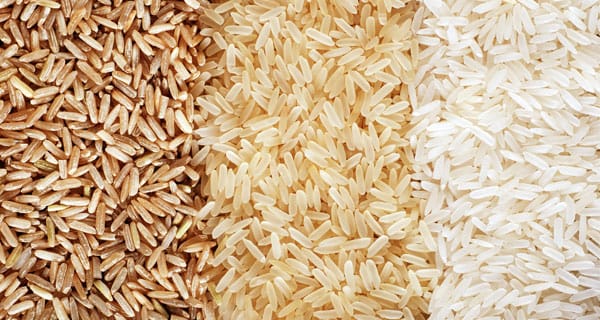
Bread and Grains: white flour bread, plain noodles, white potato (no skin), white rice
Cereals: cream of rice, cream of wheat, grits, strained oatmeal
Dairy: none (although they do not contain fiber, they do add bulk to the stool)
Eggs: scrambled
Meats: lean only; no tough or fibrous meats; no poultry skins; fish
Liquids: almond milk, bouillon, black coffee, clear broth, fruit-flavored drinks, soft drinks, soy milk, strained fruit juice, tea, tomato juice, vegetable juice