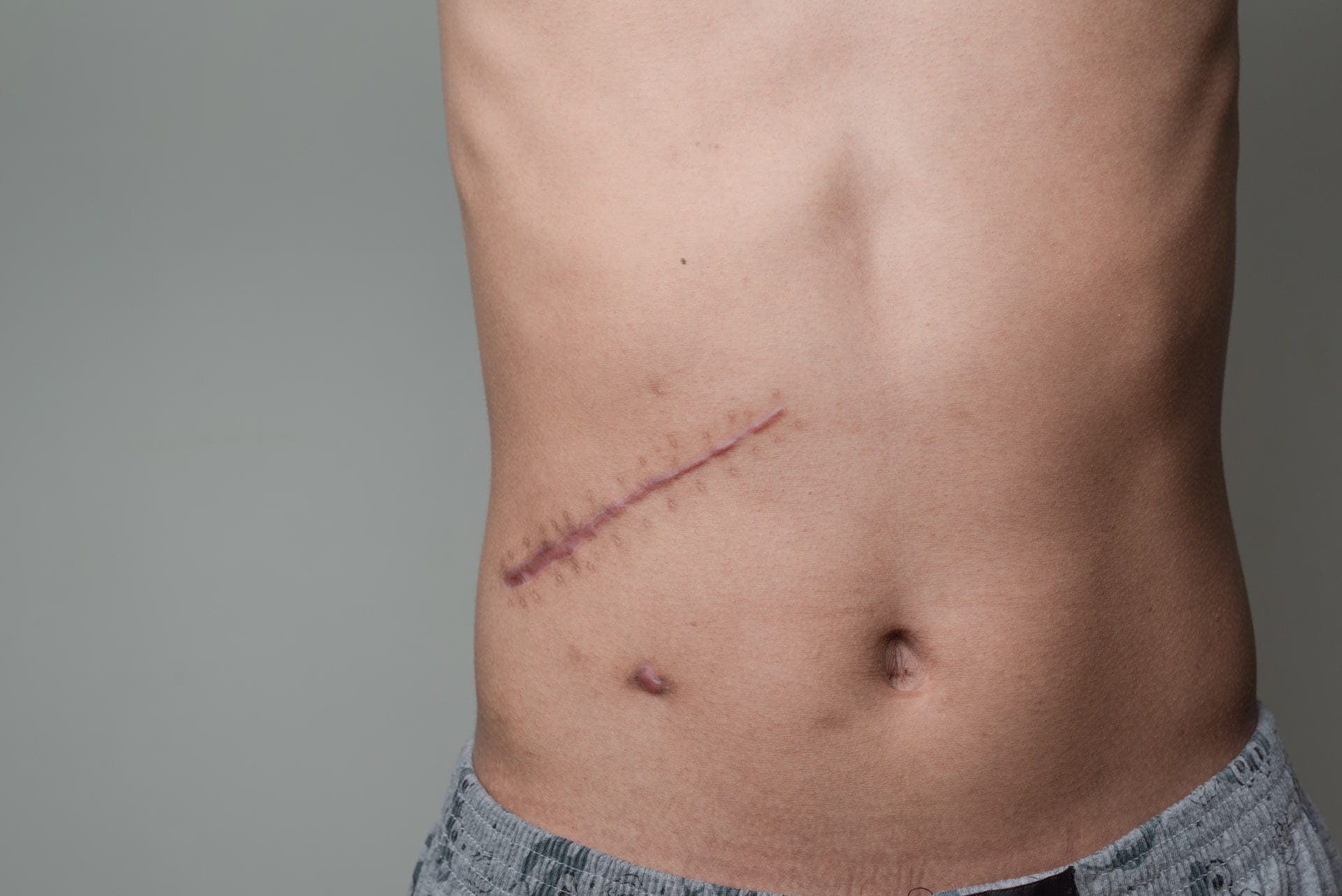
Endometriosis surgical risks include constant pain, more adhesions, infection, and anesthesia-related complications and in extremely rare cases, death.
Q: I have adhesions as a result of a serious abdominal surgery several years ago. I’ve researched different treatments, and it sounds like my only option is to have surgery to clear the adhesions. I’ve been advised not to go this route because I’ll have more adhesions as a result of the surgery. Is there any way to prevent surgical adhesions? – Doug
A: Thank you for sending in this question, Doug.
Preventing the formation of adhesions — bands of internal scar tissue that can bind organs and structures together to cause pain — is difficult. That’s because adhesions form as part of the body’s natural healing process. Adhesions, therefore, develop in response to infection, inflammation, surgery, or trauma. Mainstream medicine’s solution for decreasing adhesions has been a surgical procedure, in which the surgeon either burns or cuts the adhesions.
However, the unfortunate reality is that the very surgery designed to remove adhesions almost always causes more to form. A fact sheet from the Victorian Minister for Health advises that “Surgical removal of adhesions may be pointless, except to remedy serious problems like bowel obstruction. In around 70 percent of cases, the operation to remove the original adhesions will cause more adhesions to develop.” The answer is, therefore, to avoid surgery for removing adhesions if possible and investigate non-surgical treatment options.
Our therapists have 20 years of experience treating chronic pain, without surgery or drugs. They use their hands and a protocol of over 100 manual techniques to detach the cross-links that form adhesions. This therapy has allowed patients with post-surgical adhesions to:
put an end to a seemingly endless cycle of “adhesions-surgery-adhesions.”
return to the pain-free, functional life they lived prior to developing adhesions
improve their quality of life
We invite you to watch the following video, in which you’ll hear a former patient discuss his experience with Clear Passage® and our non-surgical treatment of adhesions.
Another reader has submitted a question that we wanted to share with everyone. Read on to learn about diagnosing abdominal adhesions.
Q: I am experiencing a significant amount of abdominal pain, and I think it is due to adhesions that formed after a surgery. How can I find out if I have adhesions? Do abdominal adhesions show on an MRI scan? – Edward
A: Hi Edward, this is an excellent question as adhesions can be difficult to diagnose through conventional means, often confounding both patient and physician. They do not appear on diagnostic tests such as MRI, X-ray, ultrasound, or CT scan. As a result, when adhesions are suspected to be the cause of a patient’s pain or dysfunction, exploratory surgery is often used.
The surgery performed is typically a laparotomy or laparoscopy. Laparoscopy is a procedure in which a camera is placed in the abdomen via a tube; this is the less invasive of the two surgical types. In an exploratory laparotomy, the surgeon makes an incision in the abdomen in order to examine the organs. The size and location of the incision vary depending on the specific concern. A surgeon will generally opt to perform a laparoscopy instead of a laparotomy when possible.
Breaking up Surgical Adhesions
Our therapists use a different approach for identifying adhesions. The first step is always a thorough evaluation of the patient’s medical history, with a particular emphasis on surgeries. This information gives the therapist a significant amount of insight into potential areas of adhesion formation. Once treatment begins, the therapist palpates the body and regularly seeks the patient’s feedback about the specific areas that are tender or painful. Throughout this process, the therapist uses manual therapy techniques to decrease the bonds between adhesions and reduce their pull on pain-sensitive structures.
Clear Passage® Physical Therapy is a world leader in the non-surgical treatment of abdominal adhesions. Experience relief from invisible yet debilitating abdominal adhesions with Clear Passage® Physical Therapy’s Free Consult and Request Info – discover how their unique, non-surgical manual therapy can detect and treat adhesions that don’t show on MRI scans, potentially saving you from unnecessary exploratory surgery and providing long-lasting pain relief. To learn more, visit our Apply to Therapy page.
Migraine headaches can be caused by ‘mechanical’ factors, which are sometimes overlooked or left untreated by physicians. This type of headache typically does not respond to medication, sending patients on a frustrating journey from specialist to specialist as they search for a solution.
If you are seeking relief from migraine headaches, the first step is to find out whether they are caused by mechanical factors. Use the checklist below to determine if your headaches are mechanical. If so, our therapists can help you return to a pain-free life – without drugs – by decreasing mechanical and soft-tissue restrictions in your body.
Do you have unexplained headaches in any of these places?
base of the skull, top of the neck
anywhere along a line from your temples or eyes, or above either ear
at the top of your head, sometimes along a top line from front to back
at your TMJ muscles (at or below your ear), often accompanied by jaw popping or tooth grinding
Do you have uneven mastoid bones?
Stand in front of a mirror, feet comfortably separated. Place an index finger parallel to the floor at the bottom of each mastoid bone (just under your ear). Are your fingertips level with each other? If not, you may have uneven mastoids, which indicate a strong pull (usually in the side of the lower bone) that can cause recurring headaches.
Do you have uneven shoulders (front view)?
Relax with your feet stable, shoulder-width apart, and ask yourself:
Are my shoulders the same height, or is one higher than the other?
Do I carry my weight evenly on my two feet, or is one leg carrying more weight?
When the head’s support structures (shoulders or spine) are not aligned, it creates unusual pulls on the cranium, causing recurring headaches. When we correct asymmetries, first, in the support structures and then the head, we generally end the headaches.
Do you have uneven shoulders (side view)?
Standing upright in your normal posture, ask a friend to look at you from the side. Ask them to draw an imaginary line through the center of your ear, shoulder, and hip. The line should be vertical. The further forward your head, the more dramatic the pull on the back of your neck and head and up into your cranium, which can cause headaches at the base of the skull.
Do you have TMJ (jaw) problems?
Does my jaw click? Do I tend to grind my teeth or have other TMJ problems?
Jaw problems are generally secondary effects of asymmetries of the head/neck or cranial bones, which can create recurring headaches.
Do you have symptoms of tailbone issues, such as constipation or pain with intercourse?
Arising from events such as a fall onto your bottom or pelvic surgery, these symptoms indicate your tailbone may have been pushed or pulled forward and healed in that position. A forward coccyx can create a pain-causing pull up the dura to attachments at the base of the skull and into the head.
If you answered yes in one or more categories, then you may have mechanical migraines. Request a free phone consultation with an expert therapist to learn more about how we can help you.
Q: Hello, my husband suffers from diverticulitis. He has been hospitalized several times. I’ve been told that it can lead to more serious complications, including obstruction. Can diverticulitis cause bowel obstruction, and how common is it? – Aileen
A:Aileen, thank you for sending in this important question. The answer is yes, diverticulitis can lead to bowel obstruction.
Diverticulitis is an inflammation or infection of small pouches along the walls of the intestines, called diverticula. The pouches can develop anywhere on the digestive tract, but they most commonly form at the end of the descending and sigmoid colons, located on the left side of the abdomen.
Diverticulitis may be acute or chronic. The acute form involves one or more severe episodes of infection and inflammation. For patients with chronic diverticulitis, the inflammation and infection will subside but may never clear up completely. The inflammation can eventually result in a bowel obstruction, symptoms of which include:
pain or tenderness around or just below the belly button
stomach cramps that come and go
swelling or bloating of the stomach (distention)
constipation and the inability to pass gas (a sign of complete blockage)
diarrhea (if bowel is partially blocked)
nausea and vomiting
Pain, nausea, or vomiting accompanied by difficulty or inability to pass gas or stool are typically the first sign of a blocked bowel. Mechanical blockages prevent the normal passage of food, causing it to become backed up. These blockages are often caused by adhesions, or bands of internal scar tissue that form as part of the body’s natural healing process. The intestines stop functioning, preventing the patient from eating or eliminating waste. If untreated, bowel obstruction can be life-threatening and even fatal.
If you or a loved one is experiencing small bowel obstruction for the first time, your mind is likely racing with questions about what can be done to manage the condition, how long it lasts, how doctors can help, and more.
How long does a bowel obstruction last, and what does treatment involve?
If hospitalized, the patient will generally receive a nasogastric (NG) tube through the nose and into the stomach to relieve pressure. Physicians then place a PICC line into a vein to draw blood or to give the patient nutrition, pain medications, etc. If the obstruction does not clear on its own, the medical team will generally recommend open surgery as the primary method to clear the obstruction.
Unfortunately, for many of our patients, bowel obstruction is a recurring event — particularly for those who have had one or more surgeries to clear the obstruction. While surgery can successfully remove existing adhesions, it does not prevent adhesions from forming as the body heals from the latest surgery. Thus, many patients have described feeling trapped in an endless cycle of “adhesions – surgery – adhesions.”
Clear Passage® Physical Therapy is a world leader in the non-surgical treatment of bowel obstruction. Our therapists decrease the adhesions that cause bowel obstruction and help patients put an end to the “adhesions – surgery – adhesions” cycle.
Even if you are new to the world of fertility treatment, you’ve likely heard others rattle off treatment names such as tubal ligation, IVF, IUI, etc. For those who prefer a natural, more conservative treatment option that does not involve drugs or surgery, there is the Wurn Technique®. The therapists at Clear Passage® Physical Therapy have been using it for over 20 years to successfully treat hormonal and mechanical cases of infertility. The Wurn Technique® has also been shown to be an effective pre-IVF therapy that improves transfer success rates.
How does it work?
Treating mechanical infertility causes
Our therapists use their hands to decrease adhesions, detaching the bonds between their individual cross-links. They do so using a protocol of 200 manual therapy techniques. As part of our infertility program, we focus on adhesions that are on or around the reproductive structures. Adhesions in these areas can prevent sperm from meeting the egg and/or disrupt the normal function of the reproductive organs.
Treating hormonal infertility causes
We use a whole-body approach to treat hormonal infertility, keeping in mind that any dysfunction in the spinal cord, dura (the fibrous membrane that envelops the brain and spinal cord), and all of their attachments, from the head to the tailbone, can affect a woman’s ability to conceive. Our experience has shown us that the tissues within the skull, including the pituitary, react to adhesive pulls similar to other tissues in the body. We found that when we treat adhesions affecting the dura and its attachments all the way into the brain, we see dramatic improvements in FSH levels and numerous full-term pregnancies in women who were previously diagnosed as hormonally infertile.
Pre-IVF therapy
Our Pre-IVF Therapy helps decrease spasm and mechanical factors, namely adhesions, in the uterus, cervix, and fallopian tubes, helping increase implantation rates. For optimal results, you should receive therapy within 15 months before your IVF transfer. Our therapists can treat you up to two weeks before you begin ovarian stimulation (the start of your follicle-stimulating medication) or up to two weeks before transfer for an unstimulated cycle.
What are the results?
Published studies have shown that our therapy improves both natural and IVF pregnancy rates. “Treating female infertility and improving IVF pregnancy rates with a manual physical therapy technique,” published in Medscape General Medicine, reported a 67 percent IVF pregnancy rate for women who received our therapy within 15 months of IVF transfer. It also showed that in the natural fertility segment of the study, 90 percent of women who became pregnant delivered full-term babies.
Visit our Success Rates page for a comprehensive overview of our infertility statistics.
What is bowel obstruction? It is a potentially life-threatening condition often caused by abdominal adhesions. To better understand the implications of bowel obstruction and how our therapists treat this condition, we invite you to read the following first-person account from a former Clear Passage® patient. You can find many other patient stories in our book, Overcome Infertility and Pain, Naturally.
Complications and Bowel Obstruction After Abdominal Surgery – Mae’s Story
I asked the gastroenterologist if I could return to the healthy state my body was in before the obstruction, and I was dismayed to hear him say that would be impossible.
As a woman in my fifties, I love to feel good, embrace life, and live it to its maximum. My great-grandfather rode his bicycle every day until he died in his nineties, and I’d like to do the same.
I have been extremely healthy and athletic throughout most of my life; in fact, I was a gymnast and ballerina during school, and a physical fitness devotee afterwards. I had some fleeting abdominal problems in my forties, which were diagnosed as probably Candida or ulcer-related, but I was still going strong. While visiting Italy three years ago, I began to experience serious complications with my health: I suddenly began to lose my breath, and I lost consciousness. Later, I discovered that my husband had first tried to wake me by pouring water over me. When that didn’t work, he desperately slapped me and shook me until I finally came back to my senses. When I fainted again four hours later, someone called an ambulance. Meanwhile, my husband frantically performed CPR and almost fractured a rib to revive me. That time, I was unconscious for almost four minutes.
I was hospitalized for tests for seven days, but all the tests came back negative or inconclusive. Suspecting a small bowel obstruction, the physicians would not allow me to eat solid food. My weight dropped to 98 pounds (I’m 5’2” and normally weigh about 110 or 112). When I was finally released, I wondered if the cause of this unexplainable event was air pollution since, during this time, I had heard that several people had suddenly lost consciousness throughout Italy. Still, I had an early history of bowel problems, and I remembered the hospital physician restricting my food intake due to his concerns about my bowels.
Three years later, I began experiencing something that felt similar to a bowel obstruction, with pressure on my rectum. As the month neared its end, I started to feel unusually weak. Then once again, I fainted, and again my husband forcefully revived me (this time with my son). My memory took me back to my terrifying experience in Italy; then fear set in. Because of the recurrence, I knew it had to be something serious. I went to my doctor immediately and requested a prescription for oxygen. In the past, oxygen enabled me to feel better when I knew I was close to fainting.
I could always tell when I was going to faint: I would get a terrible pain on my right side, by my colon, in the morning or evening. My legs and feet would become ice cold, and I would feel extremely weak and have to lie down. Then my intestines would rumble, and they would feel very weird, almost as if worms were slowly slithering through them. My abdomen would then distend, and I would have to change into pants without a belt so that I could breathe better. Gradually, my breath would slowly slip away from me, and my tongue would turn white. It wouldn’t feel as if I were being strangled; it would feel as if my breath were going away, never to return. It was the worst feeling imaginable. It felt like imminent death.
During these times, I was often unable to eliminate. I sought help by having a few colonics, visiting more doctors, and completing more medical tests. After I fainted another time, I decided to go to a different hospital where I hoped they might provide us with some answers.
After four days, a colonoscopy, a barium swallow test to see if my small intestines were working properly, and many other tests, I was informed that I was perfectly healthy. The doctor never told me that adhesions cannot actually be seen by diagnostic tests – only by surgery.
Having no further reason to hold me in the hospital, the doctors became somewhat verbally disrespectful and treated me as if I were a hypochondriac. For example, when I awoke in the middle of the night feeling the onset of the symptoms that generally preceded my unconsciousness, I asked the nurses for oxygen. After numerous pleas, they very reluctantly gave it to me, at last. The next morning, the doctor was furious with me for “hassling” his nursing staff. I was “being ridiculous and needed to leave,” he said to me. I think he truly believed I was just trying to fool them, for some reason. However, he allowed me to remain because it was the weekend, and I had the “right” to meet with the gastroenterologist to discuss my test on Monday.
In the meantime, my husband continued to research small bowel obstructions online and found valuable information. He learned there was a Catch-22 with bowel obstructions and surgery. Surgery could remove the obstruction, but it would often cause another one to form. We shared this information with the gastroenterologist, and he agreed. He suggested I change to a liquid diet and start taking a mild laxative daily. I asked him if I could return to the healthy state my body was in before the obstruction, and I was dismayed to hear him say that would be impossible. After all of these experiences, I was terrified to ingest anything but liquids, so I slowly became very weak. As my weight continued to decrease, I lived in fear of another fainting episode. I dreaded the night, scared to close my eyes. I didn’t want to sleep. I wanted to stay awake and be vigilant of all of my symptoms. I felt absolutely helpless and couldn’t imagine continuing my life this way.
Through lengthy research, my husband found Clear Passage® Therapies (CPT) and, within a week, I flew to Florida. I had no strength, and I was scared, but it didn’t matter. I had hope and faith that I was going to be well. When the therapists examined me, they noticed that my initial bowel symptoms started after I had several bladder infections following an early appendectomy and (more recent) C-section surgeries. When they felt my pelvis and abdomen, they immediately found extensive adhesions in these areas. They told me that some of the adhesions at my surgical sites felt three inches thick.
They slowly began peeling these adhesions apart, layer by layer. Though it felt uncomfortable and painful at times, I was happy to notice positive results, almost immediately. In the end, my adhesions were so extensive that I stayed at CPT for two weeks. At four hours a day, that was a very intense schedule, but I could feel the changes in my body. I felt that they were saving my life. Over the course of therapy, I started to regain my strength. My belly went from feeling like an inflated ball of steel to feeling like soft skin again. A few days into therapy, I was finally able to have a bowel movement again – this time, without any pressure in my rectum. My body began to function better; my energy began to return.
I started eating solid foods again. In the weeks following therapy, I gained 12 pounds. It was incredible to eat something crunchy and fearlessly enjoy it. When I left CPT, I told them they saved my life, for I really believe they did. I remember the feeling of helplessness before I went to CPT, and I never wanted to relive that again. I don’t want to live thinking about death or dealing with physicians who become abusive when they can’t provide answers. I was given a healthy body to use and feel great. That body was slowly taken from me because of adhesions, but I now have it back.
Clear Passage® Physical Therapy has over two decades of experience treating the adhesions that cause obstructions without surgery. Request a free phone consultation with an expert therapist to learn more about our treatment.
A patient’s mother discusses their family’s experience at Clear Passage®:
Transcript – A Mother’s Journey to Recovery: Small Bowel Obstruction
“It was the first time anyone had asked me that in months. “How am I doing?” Right then, my mind was made up. Clear Passage® Physical Therapy was the place we needed to come. I knew we would be a family here and not just names in a chart, a list of injuries, diagnoses, or problems. My son would not just be a boy run over by a bus who was difficult to deal with.
My son was nine years old on February 3, 2012, when the bus pulled in and did not see Jimmie. He ran to be first on the bus. There was a light snow that morning that covered the ice on the ground, and Jimmie slid under the back tires of the bus. He had an open-book pelvic fracture. It almost tore off his left leg and made a tear going from his upper thigh area, all the way around to the back. I thought for sure he would lose that leg and, through many miracles afterwards, he did not. He was in a medically induced coma for six days until they could do the pelvic surgery to put his pelvis in place with screws.
His initial physical therapy was at a children’s hospital. For being a children’s hospital, you would think it would have a certain level of compassion, which we did not have at all. Once we got home from the other physical therapists that weren’t good fits and that didn’t meet our needs, I began to search a wider range. Clear Passage® Physical Therapy came up again. This time, there was a thing on small bowel obstruction (SBO). They do more than infertility. I called and talked to a lovely lady named Kandy. She was very encouraging and just a wealth of information. I had not talked to a professional in this realm like a mom before, and that was pretty amazing. This was the first time they did not just want to know his case number and injuries, but what kind of kid he was and what things he liked. That was really nice.
The changes in his abdomen after they worked on the scar where his colostomy was looked like a large belly button off to the side. When we were done, it was flush with the rest of his belly. I wish I had taken before-and-after pictures. I had fully expected some other clinical things to happen, but nothing so visually dramatic in five days. That was very encouraging to Jimmie. For a child, you can tell him all the wonderful things they can do, and you go, “Yes, Yes, Yes.” But when he could look down and see it himself, to see his scar not go inward but see the skin — he was amazed. He became a lot more compliant. He saw the good changes in his body. He was also moving, swimming, walking, standing, and walking up stairs better. So, that was a big deal for him.”
Bowel obstruction is a condition in which adhesions, or bands of internal scar tissue, prevent the body from processing food. It can leave patients in excruciating pain and severely impact their quality of life. The good news is that modifying your diet is one of the immediate steps you can take for relief if you are having bowel obstruction symptoms.
Strategically choosing the foods you eat can help alleviate symptoms, and the key lies in minimizing or completely eliminating fiber, depending on the severity of your condition. Fiber is found in plant foods, such as vegetables, fruits, beans, nuts, legumes, and seeds. It is considered an indigestible carbohydrate. By reducing fiber in your diet, you lessen stool bulk and limit the amount of undigested materials that pass through your small and large intestines.
The following are the three main diet tracks for people with bowel obstruction and other digestive disorders. Use the above guide to help you decide which diet is appropriate for you.
Low-Fiber Diet
Avoid any foods that make your symptoms worse.
Cook vegetables to reduce the amount of gas they produce when you eat them.
As your symptoms improve, bring a greater variety of foods back into your diet one at a time and in small amounts. This will help you identify any foods that you cannot tolerate.
Minimal Fiber Diet
Transition to this track from the Low-Fiber Diet if obstruction symptoms get worse or begin occurring more frequently.
This diet has less residue than the Low-Fiber Diet. If you continue to have abdominal or stomach pain and intestinal cramping with this diet, you may need to work with your healthcare team to lower your residue intake even more.
Liquid Diet
You may need to follow this diet if you have severe symptoms with occasional vomiting after eating solid foods.
This diet has little to no residue.
Fluids are important for keeping your skin, eyes, and the lining of your mouth moist and for preventing dehydration.
Avoid all solid foods when on a liquid diet.
While diet changes can help relieve your symptoms, they will not clear the obstruction, which can be life-threatening if untreated. To learn about treating bowel obstruction naturally and abdominal adhesions naturally, without surgery, please fill out our online Request Consultation form to schedule a free phone consultation with one of our expert therapists.
Myofascial Pain Syndrome is sometimes confused with fibromyalgia, or the two terms are used interchangeably. This is incorrect, as they are considered two distinct conditions. If you or someone you know is experiencing symptoms or has recently been diagnosed with one of these disorders, understanding the difference between Myofascial Pain Syndrome (MPS) and fibromyalgia is critical for effective treatment and management.
Fibromyalgia is a disorder that causes musculoskeletal pain, chronic fatigue, memory, sleep, and mood issues. Some experts believe it is caused by hormonal disturbances and chemical imbalances; others suspect that the deep muscle pain characteristic of fibromyalgia is linked to stress, illness, or trauma. Fibromyalgia affects more women than men.
With Myofascial Pain Syndrome (MPS), pressure on sensitive points in your muscles causes pain in seemingly unrelated parts of the body. MPS is often caused by muscle overuse or injury. It can occur alongside conditions such as spinal disc disease and inflammatory illnesses.
The following are key differences between Myofascial Pain Syndrome and fibromyalgia:
1. MPS patients experience localized or regional pain that is confined to one area of the body, while fibromyalgia involves diffuse pain that affects several areas.
2. Fibromyalgia patients have “tender points,” while MPS patients have “trigger points.” Tender points are areas of tenderness around joints, but not the joints themselves. They hurt when pressed with a finger. A trigger point is a sore point that, in addition to hurting when pressure is applied, triggers a referred pain in a different area of the body.
3. In many MPS cases, the pain resolves with treatment of the offending stimulus, while the pain of fibromyalgia has a higher chance of being chronic.
MPS is often present in fibromyalgia patients, but not all MPS patients also suffer from fibromyalgia. With both MPS and fibromyalgia, fatigue, stress, and depression can exacerbate symptoms.
Both conditions can be treated and managed successfully. Request a phone consultation with an expert therapist to learn how the Wurn Technique® can decrease pain and dysfunction caused by Myofascial Pain Syndrome and fibromyalgia — without drugs or surgery.