

This infographic is based on a previous blog post that describes the most common causes of bowel obstruction and what you can do to prevent them.
This infographic is based on a previous blog post that describes the most common causes of bowel obstruction and what you can do to prevent them.
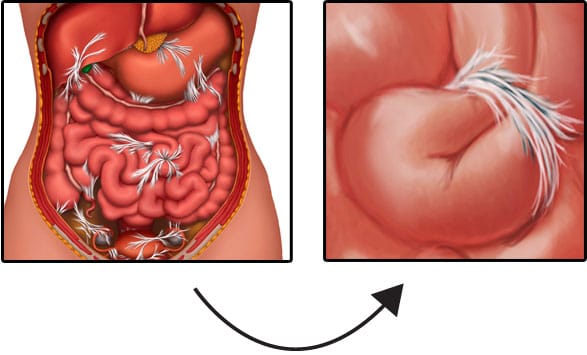
Experience relief from bowel obstructions with Clear Passage® Physical Therapy’s Free Consult and Request Info, offering a non-surgical, manual therapy approach that treats adhesions – the primary cause of most small bowel obstructions – potentially helping you avoid risky surgeries and recurrent blockages. To learn more about applying for therapy, visit our Apply to Therapy page.
An intestinal obstruction, also known as a bowel obstruction or bowel blockage, occurs when food or liquid is unable to pass through either the large or small intestine. If left untreated, life-threatening complications such as tissue death or infection, even death, can occur.
Tissue death occurs when the intestinal obstruction cuts off the blood supply to a section of your intestine and causes the tissue to die. The dead tissue weakens your intestinal wall, which can lead to a tear, allowing the contents of the bowel to spread throughout the abdomen, a condition called Peritonitis. This infection that occurs deep within the abdomen is life-threatening. Surgery, along with direct application of antibiotics to the infected internal sites, is often required to save the patient’s life.

Adhesions: The most common cause of small bowel obstruction is intra-abdominal adhesions. Adhesions caused by abdominal or pelvic surgery cause about 65% to 75% of all small bowel obstructions. Adhesions are scar tissue that can form after infection, radiation therapy, inflammation, and most commonly, surgery. One of the reasons recurring bowel obstructions are so difficult to treat is that obstructions and blockages are often treated with surgery. Post-surgical adhesions can wrap around the intestine and squeeze it shut, similar to pinching a garden hose. In other cases, a stricture (narrowing) can occur, preventing liquids and food from passing through.
Hernias: When the intestine protrudes through an opening in the abdominal wall, it is called a hernia. Hernias can squeeze the bowel shut, making it difficult or impossible for contents to pass through the intestine. This causes impacted stool, a stricture, or a blockage to occur.
Crohn’s disease: This is a chronic inflammatory bowel disease that causes inflammation in the lining of the digestive tract. The constant inflammation leads to scarring and the formation of adhesions.
Malignancy: This is defined as the presence of a malignant tumor (cancer). A tumor can obstruct the intestine, causing a blockage.
Volvulus: This is an obstruction caused by the intestine being twisted or knotted. Once the intestine is twisted or knotted, nothing can pass through. This condition can also obstruct blood flow, causing tissue death.
Diverticulitis: Similar to Crohn’s disease, diverticulitis is an inflammation or infection in the small pouches of the digestive tract that can lead to scar tissue and constipation.
You may be wondering what food you can safely eat with a bowel obstruction. Here are some foods to avoid if you have been diagnosed with a bowel obstruction.

Fasting – Allows the bowel to rest and helps reduce the risk of complications during surgery, if that becomes necessary.
Nasogastric intubation – An “NG Tube” is a tube that carries food and medicine down the throat and into the stomach, and also pumps out excess stomach liquids in an effort to decompress the bowel.
Surgery – Surgery may be required to remove infected or necrotic (dead) tissue or to repair perforations to the bowel.
References

Please join us in welcoming our new addition to the Clear Passage® family, Kristen Robles!


The SIBO SOS™ Summit is an online learning event for patients and practitioners dealing with SIBO (Small Intestinal Bacterial Overgrowth) and IBS (Irritable Bowel Syndrome).
With presentations by 20+ SIBO experts (including Clear Passage®’s Larry Wurn), this in-depth health summit explores the effects, diagnosis, and treatment for SIBO and opens the door for you to find the right options to help you and your patients heal!
We thank all participants in our Controlled Bowel Obstruction Study. We now have the data we need to complete and publish that important paper, which will compare the outcomes among several hundred people who suffer recurring bowel obstructions – comparing those who received CP therapy and those who did not. Watch for our published results in the next few months. We feel it is vitally important to share with the world the extent to which non-surgical therapy can help people who face recurring life-threatening bowel obstructions and surgeries.
“I can’t say enough good things about my experience at Clear Passage®. I will admit, I was a skeptic and pretty astounded at the cost of 20 hours of therapy. My therapists, Evette, Kim, and Kristen, were all gifted in different ways and fit perfectly together as a team. I came primarily to get help with my SIBO, which I believed stemmed from scar tissue from past surgeries that had also created a small bowel obstruction. I literally had a speed bump in my abdomen… and after 5 days, that speed bump was gone. I tested negative for SIBO for the first time in 10 months, and I couldn’t be happier!”

Infertility is much more common than most people realize. Here in the US, 1 in 8 couples struggle to become pregnant. Infertility can be caused by many conditions, including PCOS, blocked fallopian tubes, endometriosis, and adhesions. Now, what if you were told that your diet could cause infertility? The old saying, “You are what you eat,” still rings true. The proper foods can increase fertility, but we need to be careful about foods that can decrease fertility. In the fast-paced world we live in, combined with the endless array of canned food, fast food, and frozen meal choices, maybe it’s time we started paying more attention to what we eat. Here is a list of foods that can help or harm your fertility.

When people think of soy, most people envision a healthy alternative to meat or dairy. What most people don’t know is how soy foods can cause significant fertility issues for both women and men. A study cited in the American Journal of Clinical Nutrition stated that high soy intake can decrease a woman’s FSH levels. Follicle-stimulating hormone (FSH) regulates a woman’s menstrual cycle, and if hormone levels are too high or too low, a woman can have trouble becoming pregnant. Women who have multiple infertility risk factors are more likely to have fertility issues caused by soy intake.
Women aren’t the only ones affected by soy. Since soy contains compounds that mimic estrogen, soy can cause decreased fertility in men. There are two negative side effects that have been observed in men who eat soy. Sperm have something called acrosomes, which are caps that allow the sperm to enter and fertilize a woman’s egg. Soy intake increases the chance for sperm to lose their “caps,” making it harder for the egg to become fertilized. Soy can also reduce a man’s sperm count. A Harvard-based study showed that men with high soy intake produced up to 32% less sperm per milliliter than men who had no soy intake.
Inorganic and processed foods can be harmful even if they appear healthy. Many fruits and vegetables have been treated with some form of pesticides or herbicides. Both types of chemicals can cause fertility issues in men and women. If an individual already has multiple infertility risk factors, consuming food treated with herbicides and pesticides can cause infertility. Pesticides can contain endocrine disruptors, which are chemicals that interfere with human hormone-controlled systems. Because of this, men and women are affected differently, and below are the effects of herbicides and pesticides on fertility for both men and women.
Women have been negatively affected:
Men’s experience:
The best way to avoid pesticides and herbicides is to buy organic foods. Although they can be more expensive, organic food is grown and prepared without the use of pesticides and GMOs.
A study showed that men who drink a quart or more of soda per day have sperm counts 30% lower than men who don’t drink soda. One of the main theories behind this phenomenon is that the high sugar intake from soda causes insulin resistance, which then disrupts fertility in men. The other theory is that a pesticide known as Atrazine, commonly used in corn fields in America and known to reduce sperm count, is an ingredient in the high-fructose corn syrup found in soda and causes men to become less fertile.
The lining of cans contains a chemical called bisphenol-A, more commonly known as BPA. Men who are frequently exposed to BPA have sperm counts 23% lower on average than men who have no exposure to BPA. Canned food leaches BPA from the lining of the cans, which is why men are recommended to choose healthier alternatives to canned foods when trying to conceive.
Bottled water harms fertility in a way similar to canned foods. Thin plastic water bottles allow xenohormones to be leached into the water, which are then ingested. Xenohormones, similar to soy, mimic estrogen in the body. This causes both men and women to have hormone imbalances that leave them with a lower chance of conceiving. You can replace bottled water with stainless steel or glass water bottles while out and about. Newer vacuum thermoses can keep water ice cold for hours at a time, allowing you to have cold water and a higher chance of pregnancy.
These fatty acids are most commonly found in junk food and fast food. A Harvard study showed that men with a large presence of trans-fatty acids in their semen have 96% fewer sperm on average than men with lower concentrations of trans-fatty acids. It is important to check food labels and make sure what you are eating doesn’t contain trans fats. While a diet high in trans-fats can cause other major health issues, couples looking to conceive should focus on healthy fats like omega-3s.
The proper function of our body’s hormonal system is incredibly important for fertility. Alcohol can disrupt the liver’s ability to properly metabolize hormones. This can result in hormonal imbalances, which then lead to ovulatory infertility, which is infertility caused by ovulatory dysfunction. A study that tracked 18,555 women over the course of 8 years found that women who consume at least one alcoholic beverage each day are 50% more at risk for ovulatory infertility than women who don’t drink any alcohol.
Omega-3s are one of the most important foods to increase fertility. Both men and women experience significant fertility benefits when eating a diet rich in omega-3s.
Men have:
Women have:
Omega-3s can be added to diets very easily. The most common foods are fish, egg yolks, flaxseed, and walnuts, or you can simply take an omega-3 pill as a supplement.
A study published in the American Journal of Obstetrics and Gynecology reported that women who consume 5% of their daily calories from vegetable protein experience a 50% lower risk of ovulatory infertility than women who only get their protein from meat.
Iron is important for women trying to get pregnant. Women who don’t eat a lot of red meat or take a multivitamin are at risk for iron deficiency. Making sure you are getting enough iron is important prior to becoming pregnant. Once a woman is pregnant, the developing baby can reduce iron levels in the mother, which is why many women develop anemia during pregnancy. Some experts estimate that women need twice as much daily iron once they are pregnant.
The USDA recommends that people consume half of their daily grains as whole grains. Whole grains include oatmeal, brown rice, and products labeled “whole wheat.” Refined carbohydrates, which include most kinds of pasta, bread, and white rice, can cause issues in women with PCOS. Women with PCOS generally have issues with hormone levels and insulin levels, and consuming refined carbohydrates causes insulin levels to spike. This can further increase fertility issues in women with PCOS.
Read more about “What is PCOS”?
Infertility can be a long and difficult journey. Although a proper diet can help some women, unfortunately, many causes of infertility, such as hydrosalpinx or blocked fallopian tubes, will require treatment. If you or someone you know is struggling with infertility, you can call Clear Passage® at 1-352-336-1433 or fill out a contact form. You will be able to speak with a therapist who will go over your medical history with you and answer any questions you have about our manual therapy infertility treatment. No drugs, no surgery.
Read our report on Vitamin Intake.
References
Please join us in welcoming the dynamic duo, Sara and Claire, to the Clear Passage® family! With roughly 40 years of combined therapy experience, they will be treating our patients in Portland, OR.
Click the images below to learn more about Sara and Claire.


A Clear Passage® patient discusses her lifelong struggle with unexplained chronic pain. “Throughout my life, it seems like I have dealt with some type of pain. I aggressively sought treatment so that I could continue this busy lifestyle that I had, being a mom, a wife, a daughter, a sister, and a friend. I really didn’t want to find myself debilitated and, a few years later, that’s exactly where I would find myself,” she says.
“Clear Passage® provided me with the answers and the pain relief I had been searching for! After my second C-section in 2007, I experienced debilitating pain. I went to 11 doctors, and no one could find anything wrong with me. When I went to get a colonoscopy, the Physician Assistant told me to call his wife. That was one of the greatest gifts I have ever received. She explained adhesions and had me see Belinda and Larry. In one week of treatment, I was 100% pain-free. This past year, I had a bowel obstruction, and again, the doctors could not help me and wanted to do more surgery. I reached out to Clear Passage®, and again, they came to the rescue. I had had some laparoscopic surgeries, and the adhesions were causing my entire digestive system to fail. Again, in one week of treatment, they healed me. I could not give them a better review, and I hope that all women who are in pain may find their way to Clear Passage®. It was an extraordinary experience, to be heard and healed.” -Cherie

Clear Passage® is one of the sponsors of this year’s Integrative SIBO (Small Intestinal Bacterial Overgrowth) Conference, taking place in Chicago, March 25-26. Experts from the U.S. and around the world who will present at the conference include pioneer investigators of the condition, Leonard Weinstock, MD, from St. Louis, and Steven Sandberg-Lewis, ND, from Portland, OR. They and many others will discuss SIBO and various treatment regimes for its effects on the body, from skin conditions to brain function. In addition, SIBO pioneer Dr. Allison Siebecker will discuss various diet strategies to maximize patient outcomes, food intolerance, and herbal considerations to effectively treat SIBO. We look forward to helping educate conference attendees about the implications of adhesions for SIBO patients and how the Clear Passage® Approach can be an effective adjunct to physicians’ treatment of SIBO.

February 28, 2017 – Over one hundred thousand Americans have surgery, and thousands die each year due to small bowel obstructions (SBO). In this condition, internal scars called adhesions can block the passage of food through the intestines. The condition can quickly escalate to a life-threatening status, requiring emergency surgery to save the patient’s life.
That fear has become greatly reduced for many patients thanks to a new non-surgical therapy now offered in conjunction with the St. Louis-based group Specialists in Gastroenterology (SIG). The treatment, which is described as feeling like a deep massage, has shown success at reducing or eliminating recurring bowel obstructions – and is now available in The Gateway City.
“Abdominal adhesions from a prior surgery, trauma, or infection can slow or stop the natural movement of food through the digestive tract,” said SIG President Leonard Weinstock, MD. “By addressing the adhesions non-surgically, this manual physical therapy has achieved significant improvements for many patients who live in fear of another obstruction or have problems such as small intestinal bacterial overgrowth (SIBO).”
The fact that the surgery that saves patients’ lives often causes more adhesions – and more obstructions – has been an ongoing challenge for the medical community. Patients can find themselves in a recurring cycle of adhesions-obstruction-surgery, with no end in sight.
Until now, physicians have had no conservative options to prevent future obstructions or frequent pain from adhesions. Patients report being afraid to travel far from their medical team or to eat a normal diet, for fear of having another obstruction.
The all-natural therapy, called the Clear Passage® ApproachSM, is supported by published studies. It has been cited in over a dozen peer-reviewed medical journals, available via PubMed and the National Library of Medicine.
In St. Louis, the therapy is provided by Sharon Hepburn, PT, who has 20 years of manual therapy experience. “It’s an honor to work with SIG, a renowned group of gastrointestinal experts, to help our patients regain quality of life.”
Clear Passage® Physical Therapy has focused on reducing adhesions without surgery for over 25 years. The therapy, which can be completed in as little as five days, is available at locations in the U.S. and the United Kingdom.
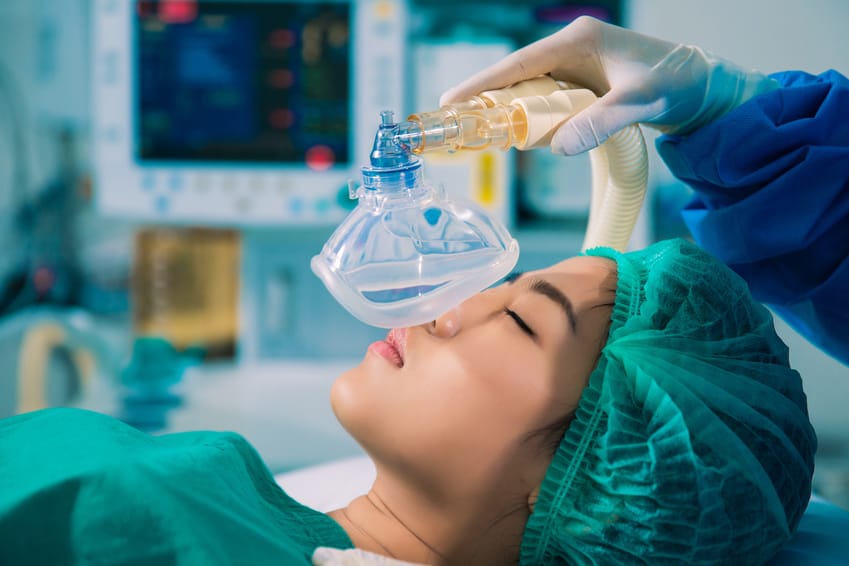

Surgery is a stressful and costly yet necessary event for millions of Americans each year, requiring the use of anesthesia. Most people know that anesthesia is used to numb the body so that the patient does not feel pain during the procedure. What you may not realize is that there are a number of side effects associated with anesthesia. Most of these side effects last from a few days to a couple of weeks.
There is, however, a potentially dangerous side effect that most people are unaware of — post-operative delirium. Susan Baker, a professor at the Johns Hopkins Bloomberg School of Public Health, recalls a frighteningly vivid hallucination she had while recovering from surgery. While lying in her bed, she saw a fire burning down the hospital and had to call the nurses’ station in order to receive help. “It was the most terrifying experience I have ever had,” she said.
There are three different types of anesthesia. The distinction is important because side effects will vary depending on what type of anesthesia you undergo.
Local anesthesia is the mildest form of anesthesia. Numbing a small part of the body is used during minor surgery or procedures, such as routine dental work or getting stitches on your finger. Local anesthesia generally has minimal side effects, including:
Regional anesthesia involves numbing larger parts of the body. Examples of regional anesthesia include an epidural or a spinal block. Side effects can include:
General anesthesia refers to being sedated through either inhaled or intravenous medications. The patient remains unconscious throughout the procedure. General anesthesia is used in major surgery and has the most side effects of the three anesthesia types. These include:
Those with postoperative delirium can experience confusion, memory loss, and vivid hallucinations. Patients often do not remember where they are or why they are in the hospital. Physicians have been aware of postoperative delirium since the 1980s and hypothesized that it results from the stress associated with undergoing surgery. However, new studies now suggest that anesthesia plays a role in postoperative delirium and that the higher the dose, the more likely a patient is to experience delirium. Researchers believe that the condition can be more dangerous than previously thought. The attention and memory deficiency, for instance, can last for months and, in some cases, years.
Delirium tends to be more common after major surgeries. One study found that 50 percent of patients over the age of 60 become extremely disoriented after heart bypass or valve replacement surgery. Now that research supports the correlation between anesthesia and delirium, scientists are concerned about the dosage of anesthesia patients receive. In a study done by Frederick E. Sieber, patients who underwent general anesthesia experienced delirium at twice the rate as those who had local or regional anesthesia.
In another study examining the long-term effects of delirium, Jane Saczynski monitored the mental status of patients 60 and older for one year after a heart bypass or valve surgery. Patients who didn’t experience delirium regained their normal mental capabilities in about a month, while those who did experience postoperative delirium required six to 12 months to return to normal mental function. Currently, the only recommendations to help prevent postoperative delirium are to stop the use of medications that might affect brain activity and have patients’ friends and family visit them frequently.
It is important for the medical community to continue investigating the side effects associated with anesthesia and the long-term impact it can have on patients. As we learn more about the implications of using anesthesia, patients can help protect themselves from the potential side effects by exploring non-surgical treatment options.
References


While the joys of motherhood can be great, it is not uncommon for women to sustain pelvic injuries, resulting in pelvic adhesions, during childbirth. Unfortunately, while the body generally heals, the effects of these injuries can sometimes be felt for years postpartum, affecting the quality and comfort of a woman’s life.
A study in the journal PLOS ONE reported that a staggering 49% of women studied suffered incontinence or pain a full year postpartum. Another study, published in the British Journal of Obstetrics and Gynaecology, reported that many women have pain with sex 18 months after delivery. Some mothers report moderate to severe pain, burning, or stinging with simple day-to-day tasks; others experience changes in the appearance of the genitals. Any of the above symptoms indicates that the muscles, nerves, or connective tissues at the reproductive organs have been injured and that adhesions have likely formed.
Adhesions are internal scars that form in the soft tissues as the body heals from surgery, infection, or trauma. That also includes trauma to the pelvis caused by childbirth. Learn more about the causes and symptoms of adhesions.
While pain-relieving medications can deaden all feeling in the area and desensitizing gels can numb the area, these solutions are not what many women (or their partners) want. Physicians generally suggest avoiding surgery to treat adhesions whenever possible, due to the recurrence of adhesions — sometimes worse than before — as the body heals from surgery. Many of our patients have found that non-surgical physical therapy involving specially developed massage techniques can deform or detach adhesions. In doing so, it frees nerves and organs from the adhesive bonds that form after childbirth, increasing function and decreasing or eliminating pain. The Clear Passage® Approach and Wurn Technique® are unique in this regard.
If you (or someone you know) has experienced any of the following, this treatment may be appropriate for you.
Childbirth-related causes of adhesions
Even minor pain or symptoms may be telling of larger underlying problems and should be examined. Small aches and pains that persist or recur have the potential to grow or cause more serious complications later in life. Unfortunately, legitimate symptoms or pain are sometimes ignored due to the aura of taboo that tends to surround discussion of gynecologic health. A patient may feel awkward discussing something as personal as intercourse pain or feel ashamed that they couldn’t “bounce right back” after giving birth, the way a friend or relative might have.
If you or a woman you know has experienced prolonged pain as a direct effect of a childbirth injury, know that you are not alone and do not need to accept that long-term discomfort is normal. There is an explanation for all pain. It is important to find a diagnosis – the root cause of your symptoms. When you do, you may find that a natural, non-invasive treatment is an appropriate solution.

Clear Passage® has helped many patients overcome ongoing pain or dysfunction caused by scar tissue or adhesions. Our therapists use the Clear Passage® Approach and Wurn Technique®, applying pressure and shearing to detach the crosslinks that adhesions are made of. We invite you to schedule a phone consult with one of our certified therapists, at no cost to you, and learn if our treatment is a fit for your needs and goals. Contact us via this online form or by calling 1-352-336-1433.
References:
Discover relief from C-section adhesions with Clear Passage® Physical Therapy’s free consult and request info, offering a non-surgical approach to address symptoms like chronic pain, infertility, and digestive issues that may have been troubling you for years and are caused by these adhesions. To learn more about getting help, visit our Apply to Therapy page.
C-sections are one of the most common surgeries in the U.S. For many women, a C-section isn’t a choice — it is the only safe way to deliver the baby. Most c-sections are routine and go as planned. However, many women are unaware of the post-surgical complications that can occur months or even years after a C-section. When the body heals from the procedure, it forms bands of internal scar tissue called adhesions. Adhesions can cause a host of problems if left untreated, including chronic pain, female infertility, and life-threatening bowel obstructions. Unfortunately, they are often misdiagnosed because adhesions and pelvic adhesions do not appear on diagnostic tests such as X-rays.
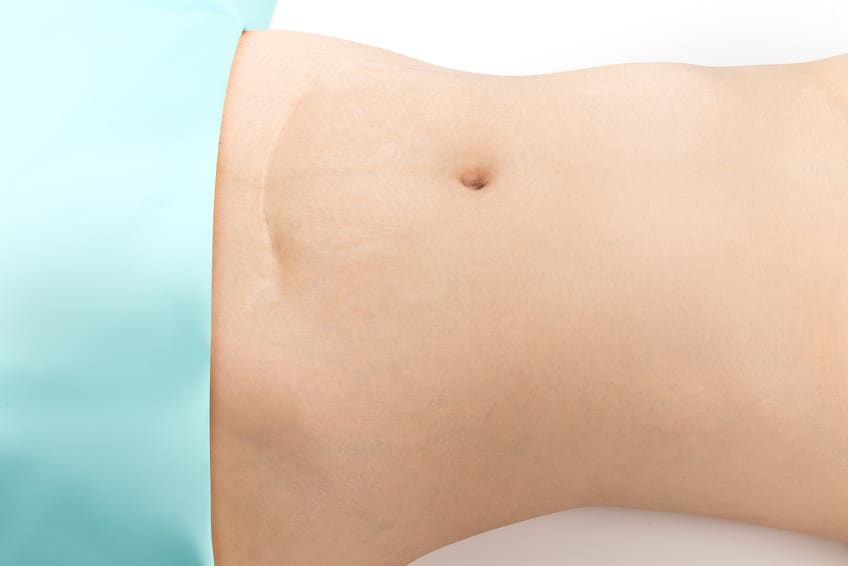
Many of us know about the scar that is left after a C-section, but you may be surprised to learn that the way your scar looks can be an indication of your internal healing. Research now suggests that there is a strong correlation between the physical characteristics of an external C-section scar and the adhesions underneath it. Women can use researchers’ findings to help determine whether they have adhesions after a C-section.
C-section scar tissue is strands of collagen that form in the body after surgery, trauma, infection, or inflammation. Unfortunately, they are rarely discussed, and many patients have never heard the term ‘adhesions.’ Because they are part of the body’s natural healing process, there is no way to prevent adhesions from forming, and the surgeries designed to remove them cause more to form.
Adhesions can look like spider webs covering the organs or like filmy, white strands of nylon rope constricting structures inside the body. These powerful strands of collagen wrap around structures at the healing site and can restrict blood flow or reduce the function of internal organs. They can bind tissues and organs, resulting in mild to excruciating pain.
When we talk to patients, they often have an ‘aha moment.’ We begin describing what someone with post-surgical adhesions typically experiences, and the common response is “Wow, you’re describing me!” Women who have had C-sections often know something is wrong – they can feel it, whether it’s a specific pain or a tightness that they have trouble describing. Unfortunately, many physicians will tell them that pain after a C-section is common and that there is nothing to be done about it.

The following are common symptoms of adhesions after a C-section. If these describe you, you may have adhesions.
Now that you are familiar with the symptoms of post-C-section adhesions, we will look at the different visual characteristics of a C-section scar and what it can tell you about the presence of adhesions.
Lie flat on your back and examine your C-section scar. Women with flat, small scars without significant pigment changes (changes in skin color) are less likely to have adhesions in their pelvis. However, a scar that pulls towards the back (indented) or one that is raised and thick — with or without changes in the color of the skin in that area — suggests the presence of dense adhesions. Additionally, women with scars that are darker in color than the rest of their skin are much more likely to have adhesions, regardless of whether the scar indents, lies flat, or protrudes out.
If your scar looks like this example — indented without any changes to the pigment — there is a high probability that you have adhesions. Because the skin is indented, women with this type of scar are more likely to have dense adhesions than those whose scar looks similar but is flat, without indentation. If you have c-section scar pain, you most likely also have c-section scar tissue.

If your scar looks similar to this image (raised with pigment change), you also likely have adhesions. Women with this type of scar are most likely to have dense adhesions, which cause pain and dysfunction, because the scar exhibits characteristics from both risk categories — raised and different pigmentation than the surrounding skin.

If your symptoms match those described in this article and your scar resembles the examples provided, there is a high probability that you have adhesions. Few options exist for women with abdominal adhesions after a C-section. Surgeons can cut or burn (lyse) adhesions, but the invasive procedure leads to the formation of new adhesions. Some women are able to live without treatment, while others experience recurring, debilitating pain and dysfunction.
If you or a woman you know is suffering from adhesions after a C-section, we encourage you to fill out a contact form or call us at 1-352-336-1433. You will be able to schedule a phone consultation with one of our certified therapists at no cost, and learn whether our non-surgical treatment is appropriate for you.
References:
http://www.ncbi.nlm.nih.gov/pubmed/25304098