We recently received a question from one of our readers asking, “Can abdominal scar tissue cause pain?” Since this question deals with a condition that can have life-threatening consequences, we decided to answer it in a post. The answer is yes. Bands of scar tissue in the abdomen, called abdominal adhesions, can cause debilitating pain and a life-threatening condition called bowel obstruction. Scar tissue in the abdomen forms as the body heals from an infection or inflammation, such as cholecystitis or gastroenteritis. Abdominal adhesions also form after surgical procedures like appendectomy, bowel obstruction repair, or gastric bypass. In a bowel obstruction, adhesions prevent liquids, food, and gas from moving through the intestines. If untreated, this condition can be fatal. Patients who present with abdominal adhesions typically arrive at our clinics in a state of frustration. With an extensive surgical history, many have spent years searching for a solution to the recurring problems caused by abdominal adhesions. With each surgery to remove adhesions leading to more adhesions, they feel trapped in a vicious cycle of adhesions-surgery-adhesions. Our therapists use a natural approach to treat scar tissue in the abdomen. Using their hands and a protocol of over 200 manual therapy techniques, they decrease adhesions by detaching the individual strands that make up these internal scars. As a result, our therapy allows bowel obstruction patients to avoid additional surgery and subsequent adhesion formation.
After experiencing trauma—like surgery, infections, or inflammation—the body forms internal scars, called adhesions, as it heals. Sexual abuse, injury, or a fall on the backside or hips can all prompt adhesion formation and contribute to chronic pelvic pain as well as conditions like colitis, gastritis, perforated ulcer, or appendicitis.
Pelvic inflammatory disease, STDs, endometriosis, surgery to correct conditions such as uterine prolapse, and bladder, vaginal, or yeast infections all incite the same bodily response—adhesions. These adhesions can result in chronic pain and pelvic dysfunction. Adhesions are like internal scars, forming strong bonds between tissues that should be free to move independently. They can restrict movement and create a pulling effect that only irritates the area more.
Surgery to correct uterine prolapse and other forms of pelvic organ prolapse or stress urinary incontinence can cause adhesions to form. In addition, hysterectomy, C-section, and childbirth can also cause adhesions.
Surgery has been cited as the primary cause of adhesions, with between 55 to 100 percent of women developing adhesions after pelvic surgery. While revision surgery can be performed to remove adhesions, the body creates new adhesions to heal itself from additional surgery.
Complications
Because adhesions can form like a rope between distant bodily structures, seemingly inexplicable pain in areas distant from the trauma or infection may result. When adhesions form at the reproductive organs—fallopian tubes, ovaries, and uterus—they can cause pain and hinder reproductive function. Adhesions have been cited as a major cause of infertility.
When the cervix is adhered to, adhesions can cause stenosis of the cervix or fibrosis; fertility is jeopardized, and sex can be painful. The adhesions can form on the ligaments that keep the cervix aligned, pulling the cervix out of position. Everyday movements can exacerbate the problem, perpetuating the cycle of inflammation and adhesion formation.
Sometimes, adhesions can completely obstruct the intestines, causing a life-threatening condition called small bowel obstruction.
Treatments
Doctors may prescribe painkillers to treat post-surgical chronic pelvic pain resulting from conditions such as uterine prolapse. This may help with pain, but does not treat adhesions. If patients do not respond to pain management medications, surgery to remove the adhesions may be recommended.
Lysis of adhesions, which can be performed via open surgery or less-invasive laparoscopy, is the surgical removal (cutting or burning) of adhesions. This can be effective, although it is usually not a permanent fix because the body will form adhesions again to heal itself. Follow-up surgery is probable.
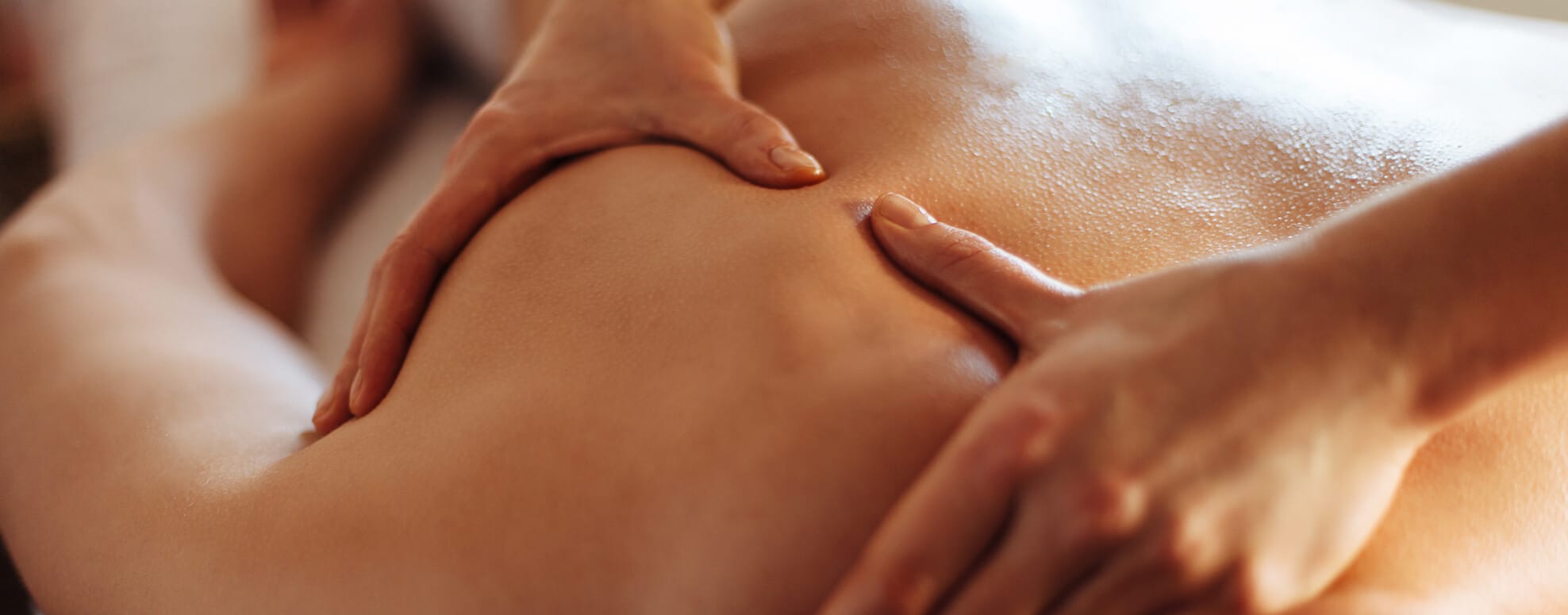
Manual therapy, performed by some pelvic physical therapists, involves applying pressure specifically to affected areas—muscles, fascia, organs, nerves, ligaments, and tendons. The intent of this therapy is to break down adhesions and restore function. This technique often identifies adhesive pain patterns for the therapist to focus on.
The Wurn Technique® is a total-body treatment system that employs over 200 techniques, developed over 20 years by Larry Wurn, LMT, and Belinda Wurn, PT. In attempts to treat Belinda’s chronic pain, the Wurn method proves that with sustained pressure applied over time, adhesions can be detached or dissolved. Patients, including Belinda, have experienced pain relief and improved function, mobility, and flexibility.
Linda Grayling is a writer for Drugwatch.com. She enjoys keeping up with the latest news in the medical field.
We received a question from one of our blog readers, and we thought it would be important to share the answer with all of our readers who may suffer or know someone who suffers from the pain and discomfort associated with bowel obstruction:
Can surgery for bowel obstructions cause adhesions? I know adhesions cause bowel obstructions, but can surgery for bowel obstructions cause adhesions?
In short, absolutely.
Surgical lysis of adhesions involves cutting or burning the adhesions under general anesthesia, via laparoscopy or laparotomy (open surgery). In addition, the bowel is generally severed, the obstructed area is removed, and the (now shortened) bowel ends are re-attached.
While lysis of bowel adhesions can be effective, surgery has some major drawbacks:
Risks associated with general anesthesia and infection
The body creates more bowel adhesions as it heals from the surgery designed to remove them (even with the skills of the finest surgeon)
90% of patients develop adhesions following open abdominal surgery
55% to 100% of women develop adhesions following pelvic surgery.1
35% of all open abdominal or pelvic surgery patients were readmitted to the hospital more than twice to treat post-surgical adhesions during the 10 years after their original surgery.2
Abdominal surgery itself has been implicated as a major cause of adhesion formation, and many patients become trapped in a cycle of surgery-adhesions-surgery.
How can I break the surgical cycle?
Explore the non-surgical treatment options offered by Clear Passage® Physical Therapy. Recognizing that surgery can cause abdominal adhesions to recur is an important step forward in our understanding of bowel obstruction. The benefits of choosing Clear Passage® include:
No drugs or surgery
20 years of experience treating bowel obstructions (SBO). Read more about the history of the Wurn Technique®.
Results: reducing or eliminating obstructions
Decrease in pain
Returns mobility to organs that have become adhered.
Liakakos T, Thomakos N, Fine PM, Dervenis C, Young RL. Peritoneal Adhesions: Etiology, Pathophysiology, and Clinical Significance. Dig Surg. 2001; 18: 260-273. PMID 11528133
Ellis H, Moran BJ, Thompson JN, Parker MC, Wilson MS, Menzies D, McGuire A, Lower AM, Hawthorn RJ, O’Brien F, Buchan S, Crowe AM. Adhesion-related hospital readmissions after abdominal and pelvic surgery: a retrospective cohort study. Lancet Br J Med. 1999; 353: 1476-80. PMID 10232313.
Adhesions form as the body’s first response to trauma, surgery, infection, or inflammation. These adhesions are made up of strong, fibrous cross-links that attach to the nearby tissues and organs of the damaged area. When the abdomen or bowel experiences trauma, adhesions can begin to form in the bowels, causing bowel obstructions. These adhesions can cause bowel obstruction in three different ways.
1. Adhesions can form inside the bowel.
When the bowel experiences trauma, such as surgery to remove part of the bowel, adhesions can form inside the bowel. These adhesions, made of thick collagen bonds, make it difficult for food to pass and can often cause cramping and pain during the digestion process.
2. Adhesions can surround and restrict the bowel from the outside.
After a pelvic or abdominal trauma, adhesions can form outside the bowels. These adhesions can surround the delicate tissues of the bowel, restricting and pinching them from the outside. This causes a decrease in digestive function and often pain and cramping after eating.
3. Adhesions can surround and kink the bowel like a garden hose.
When adhesions form on the outside of the bowel, they can surround the bowel, causing it to kink much like a garden hose. This often creates a partial bowel obstruction, which makes the digestion of solid foods difficult.
Treatment options offered to those who experience bowel obstruction are generally surgery. However, surgical treatment for clearing bowel obstructions is the main cause of repeat obstructions. This can often lead to an endless cycle of obstructions and repeated surgeries.
A new non-surgical technique, known as the Wurn Technique®, is now being examined as an alternative treatment for bowel obstruction. This therapy uses hands-on physical therapy techniques to address the underlying adhesions that cause bowel obstruction.
Don’t let adhesions control your life – take charge with Clear Passage® Physical Therapy’s innovative approach to treating bowel obstructions. Request Information and schedule your Free Consultation today to learn how our expert therapists can help you break free from recurring obstructions, then visit our Apply to Therapy page to start your journey towards lasting relief and improved digestive health.
As one of the founding members of the Clear Passage® Therapies team, I feel very fortunate to work with an exceptional group of therapists as well as our excellent administrative staff.
I became a physical therapist to help others heal from injuries and return to active lifestyles and full function. But after being
Diagnosed with cancer of the cervix in 1984, I became the patient who needed help healing. Following the diagnosis, I had surgery and extensive internal and external radiation therapy. I survived the cancer, but the treatments designed to heal me left my lower abdomen, pelvis, and lower back scarred, and adhered all of my pelvic organs to neighboring tissues and structures, causing a “frozen pelvis.”
Over the next few years, I began experiencing many symptoms caused by chronic complications that were the result of adhesions and scarring of the radiated tissues and narrowing of blood vessels within the original treatment area. Unfortunately, when a malignant tumor is irradiated, many structures and surrounding normal tissue cells are also damaged. I found out I was infertile, menopausal, and was developing chronic pelvic pain and tailbone pain, and dysfunction of many of my digestive organs.
My career as a physical therapist came to a halt when I found that conventional medicine offered little relief. I began to search for an alternative treatment for my debilitating symptoms. I got tired of hearing “it’s all in your head,” or “you will have to learn to live with it.” Wanting to avoid further medical treatment or surgery, I was treated by many expert osteopathic physicians and manual physical therapists throughout the U.S. and abroad with a variety of hands-on treatments.
I then began taking many post-graduate courses in various manual physical therapy and osteopathic techniques. As the first faint glimmer of hope dawned in my pain relief, my curiosity turned into a passion and then a lifetime journey. The more I learned, the more fascinated I became. Manual soft tissue therapy became my passion as I refined my ability to use my hands to palpate restricted areas and “listen” to the body. My husband, Larry, then began to study with the same experts I had been studying with. He continued to treat me, and I was finally feeling good enough to go back to work. We modified and refined techniques we learned from many experts, and began developing our own techniques.
In 1989, Larry and I opened Professional Touch Physical Therapy (PTPT) to treat a large chronic pain population. Then something remarkable happened. We began seeing “infertility reversals” in patients diagnosed as infertile. And so our journey with Clear Passage® began.
What motivates me professionally and personally is leading a life centered around the principles of excellence, empowerment, integrity, and honesty. My goal was to create the type of clinic I wish I had been able to go to while I was searching for relief from my pain. I wanted to create a space of true healing, support, compassion, empowerment, caring, and mutual respect.
I love to travel, and want to see as much of the world as possible in this lifetime. France and Italy are among my favorite countries. I love to go back there as often as possible! Last winter, Larry and I went skiing in Chamonix, France, for a week. Last summer, we went on a 3-week photo safari to Botswana, Zambia, Zimbabwe, and South Africa, which was the trip of a lifetime. We recently enjoyed a trip to beautiful Cabo San Lucas, Mexico, which is located at the very tip of the Baja Peninsula.
I also love to snow ski, go boating on the lake we live on, swim, work out, listen to audiobooks on my iPod, and play with our two 4-legged “kids.” Larry and I have 2 beautiful Golden Retrievers. Our 2-year-old female is Chablis, from Midnight in the Garden of Good and Evil. The theme of her literature was book titles. Our 1-year-old male is Dylan. The theme of his litter was rivers, so his registered name is Watchin’ the River Flow, by Bob Dylan. I also adore gourmet food and fine wines. Life is good!
One of my favorite expressions is “create your vision, and then step into it.” Best wishes to all of you on your journey!