
Category: Abdominal Problems

  • Spring Newsletter | April 2020

    Spring Newsletter | April 2020

    The Clear Passage® Connection

    The official newsletter of Clear Passage® Physical Therapy

    Welcome!
    Our quarterly newsletters bring you
    event announcements, exciting news,
    and helpful resources
    Inside this issue:
    Welcome to Our New Team Members
    On the Air: Clear Passage® Podcasts
    EndoMarch 2020
    Staff Pick: Spring Edition
    Patient Story

    Welcome Our New Therapists

    Charmaine will be treating patients at our new location in Detroit. She has over 20 years of experience in physical therapy, including Women’s Health and Traumatic Brain Injury Rehabilitation in Saudi Arabia.

    Charmaine earned her Doctorate in Physical Therapy degree at  Utica College in 2014, and she is passionate about helping others. “Seeing the quality of life improvements in my patients is incredibly rewarding,” she says.

    Charmaine is fluent in English, Arabic, and Filipino. In her personal time, she loves to travel with her husband and young daughter.

    Melissa will be joining our team at our clinic in St. Louis. An impressive student at school and in life, she is fluent in Japanese, Chinese, German, Korean, and Thai. Before studying massage, Melissa studied International Relations in the U.S.A. and Japan.

    Through compassionate and careful listening, Melissa focuses her intention on each patient’s goals, always with the end in mind. Her background in languages and culture has taught her that “no matter where you are from or what language you speak, everyone can benefit from the power of a healing touch.”

    On the weekends, she loves to take her children to her family farm to ride horses, hike, camp, and swim in local rivers.

    Welcome Our Gainesville
    Team Members

    Julie has been a physical therapist for over 26 years. She trained with the International Academy of Orthopedic Medicine, specializing in 3-dimensional joint mechanics. Julie has always had a hands-on approach to therapy, believing that touch can restore the body’s natural movement patterns through soft tissue techniques, joint mobilization, and guiding proper therapeutic exercise patterns.

    She was introduced to John Barnes’ myofascial release in 2006 and has since taken many of his continuing education courses. Julie knew immediately that Clear Passage® was a perfect fit for her.

    Outside of work, Julie enjoys bicycling events of up to 112 miles, paddleboarding, and yoga, and she meditates every morning.

    Lidia is our new Reception Coordinator at the Gainesville, Florida headquarters. With an academic background in communications, Lidia is a welcome addition to the Clear Passage® team with her upbeat personality, warm smile, and ability to make everyone who enters the clinic feel comfortable. Lidia loves traveling, history, and learning about other cultures.

    She is a cat mom to 5 kitties: Sweetie, Cali, Jiggles, Benji, and Sevy. Lidia says, “What I like about Clear Passage® is how nice everyone is, and how the environment here is very warm. It’s clear that everyone here is very passionate about what they do, and I think that’s incredible.”

    The Worldwide Endometriosis March (abbreviated EndoMarch) is the first global campaign involving synchronized, multi-city ‘march and rally’ demonstrations to raise awareness of endometriosis. An incurable and potentially debilitating disease, endometriosis is fairly common, affecting at least 1 in 10 women and girls. Despite this, the average diagnostic delay is 10 years, and patients are routinely denied adequate medical care. Symptoms include pain with periods and ovulation, pain during or after sex, changes in bowel or bladder habits, chronic pelvic pain, and infertility.

    Clear Passage® will be represented at the EndoMarch in Detroit (date TBA). Our Clear Passage® Detroit affiliates will have a booth to share our research and services. If you plan on attending, please stop by!

    To learn more about EndoMarch, including how to get involved in your local city, visit www.endomarch.org.

    The Clear Passage® Approach: How Treating Adhesions Relieves Endometriosis Pain and Improves Fertility

    Adhesions are frequently found at the site of endometrial implants. When these tissues swell each month, the pull of adhesions can restrict normal function and cause pain and infertility.

    The Clear Passage® Approach focuses on detaching these adhesions. When they are released, the endometrial tissue can swell and shrink freely without causing pain and discomfort.

    Clear Passage® Therapies was recently featured in several podcasts. Larry and Belinda Wurn had the pleasure of discussing their journey from developing their technique for relieving Belinda’s pain to treating infertility and endometriosis patients. To listen, navigate to each podcast episode using the links below.

    Love & Guts:
    https://apple.co/2TFYYfx

    The Cycle:
    https://apple.co/2RnuvCj

    The Wholesome Lotus:
    https://www.thewholesomelotusfertility.com/thewholesomefertilitypodcast/63

    Get Pregnant Naturally:
    https://fabfertile.com/blog/how-to-increase-pregnancy-success-if-you-have-scar-tissue/

    To see published studies on Clear Passage®’s effectiveness with endometriosis, infertility, SIBO, Crohn’s, chronic pain, and bowel obstructions, go to Published Studies.

    Upcoming Podcasts

    Larry and Belinda Wurn completed interviews for these podcasts, which will air over the next few months. Keep an eye on our Facebook page, where we will announce when each one airs!

    Fertility Friday (https://fertilityfriday.com/)

    The Healthy Gut (www.thehealthygut.com)

    Staff Pick: Spring Cleaning

    Spring Cleaning – it isn’t just for your house! This staff pick challenges us to assess our life; to take stock of what’s not working for us and clear away clutter and cobwebs. This can be physical, digital, financial, mental/emotional, or intangible in other ways. How will you “spring clean” this season?

    Larry: My goal this spring is to get my desk organized.

    Belinda: I’ve already gotten rid of many pairs of shoes, and I’ll spend 15 minutes a day going through clothes I no longer wear.

    Jessica: My spring cleaning is paying off all our debt so we can buy a house and prepare for our miracle baby.

    Autumn: I would like to refresh my budget to straighten out my finances to plan more vacation and family time this year.

    Penny: My spring cleaning includes my diet, which I want to improve.

    Kristen: I’m feeling motivated to tidy up and organize my work desk.

    Suzette: I’m going to tackle my Fibber McGee’s closet – the cluttered space underneath my stairs.

    Julie: Since Hurricane Michael, I’ve been cleaning my belongings and spiritual life, including downsizing my storage unit every few weeks.

    Brenda: I am spring-cleaning my physical and mental health by exercising, reading more, and meditating.

    Stephanie: I’m going to tidy my home office space to make room for a meditation corner.

    Bonus Staff Pick: Our Favorite Flowers

    Flowers are blooming here at our Gainesville, Florida headquarters with the arrival of spring. Here are some of our favorite flowers. What are some of your favorite parts of spring?

    The Clear Passage® Facebook Forum and Support Group

    This Forum and Support Group are intended as a meeting place for people interested in the Clear Passage® Approach.

    We encourage previous, current, and prospective patients to join, to share their own experiences and stories. You can help save a life or fulfill the dreams of an infertile woman by sharing your story with others on our forum.

    You can ask questions, reply to others, and help others on their quest for relief from pain or dysfunction caused by adhesions.

    Join the conversation now by going to: fb.com/groups/cptforum

    Relief from Bowel Obstructions After Major Surgeries

    For the full story, go to Patient Testimonials

    Six years ago, I was diagnosed with colorectal cancer and underwent multiple surgeries. Since then, I’ve had nine bowel blockages. I was no longer a candidate for any surgery, and my quality of life was horrible. All I wanted to do was sit on the couch – I didn’t want to go places, I didn’t want to travel anymore. Every day, I wondered if I was going to obstruct again.

    My husband looked online to find alternative ways to fix adhesions and scar tissue. The first thing that came up was Clear Passage®. As soon as we could, we called to make an appointment. They answered all my questions and concerns very concisely and clearly.

    From the moment I walked through the front door, everyone – the receptionist, the therapists, the people in the office – had nothing but smiles. They welcomed me with open arms. This place is a place of touch. They touched me from head to toe. From the first day, I’ve had relief!

    When I first got here, my belly was so hard. Now, after my 5 days of therapy, my belly has softened up to almost pillow-soft, marshmallow-soft. The difference is night and day! Knowing that I can avoid more surgery makes me joyful. Even my husband cries, thinking that I won’t have to go through all that again. Come see what this team of wonderful, professional, caring, and loving people can do for you, as they’ve done for me.

    About Us

    Clear Passage® Physical Therapy is a network of physical therapy clinics in the US and UK. Their clinicians have been highly trained to provide a non-surgical, drug-free treatment that has been shown to decrease adhesions in the body that cause chronic pain, female infertility, life-threatening bowel obstructions, and contribute to SIBO (Small Intestinal Bacterial Overgrowth).

    Clear Passage® is the home of the Clear Passage® Approach®, a unique hands-on physical therapy protocol developed over 30+ years of extensive study and clinical research by Belinda Wurn, PT, and Larry Wurn, LMT.

  • What You Need to Know About Pelvic Adhesions

    What You Need to Know About Pelvic Adhesions

    What are Pelvic Adhesions?

    Many women are not receiving the education needed from their doctors about adhesions. Very few women even know they have adhesions. Most commonly known as “scar tissue,” adhesions are simply scar tissue that forms inside the body. Once formed, the body has no way to deal with the scar tissue, so it will remain in place and sometimes spread to neighboring structures.

    Adhesions consist of tiny strands of collagen that form around injured tissue as the body’s first step in the process of healing. Common areas of adhesion formation are areas affected by a prior infection, inflammation, or endometriosis. Pelvic adhesions can lead to a host of female health problems, ranging from infertility to chronic pain, including pain with intercourse. If you’ve had any kind of surgery, infection, injury, or endometriosis, there’s a good chance you have adhesions. We made a short guide that can help you figure out if you have adhesions after surgery.

    What Causes Pelvic Adhesions?

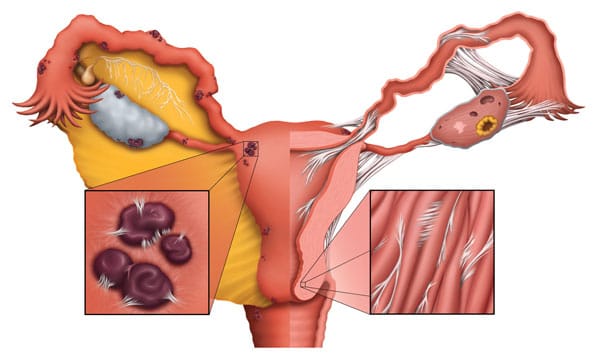
    You can see here that pelvic and abdominal adhesions can form all around the delicate structures of the body.
    • Surgery – Studies show that 55% to 100% of people who undergo pelvic surgery will develop pelvic adhesions. Cutting into the delicate tissues near your reproductive structures can result in a large amount of scar tissue growing around the healing site. Many of the women we treat for secondary infertility or chronic pelvic pain have undergone a prior C-section, hysterectomy, or appendectomy  (appendix removal).
    • Inflammation – Recurring inflammation is a very common cause of adhesions. Pelvic inflammatory disease (PID) is a major contributor to many of the infertility and pain cases we have treated. The constant inflammation causes scar tissue to grow in the pelvic area, often around the fallopian tubes or ovaries.
    • Infection/STIs – Sexually Transmitted Diseases (STDs) can lead to chronic infection and inflammation, which cause scar tissue to grow within the pelvis. The longer an infection or STD remains untreated, the more adhesions will form as the body attempts to surround and contain the infection. A major cause of blocked fallopian tubes is an untreated infection, as a result of chlamydia or gonorrhea.
    • Trauma – Contact sports, car accidents, falls, or work-related injuries are common traumas that can cause the formation of pelvic adhesions. Since the body’s first step in healing is to create adhesions to contain and isolate the injury, almost everyone has adhesions somewhere in their body.
    • Chronic conditions – Conditions that don’t have a definitive cure and recur periodically are considered chronic conditions. Two conditions responsible for a large portion of pelvic adhesions are polycystic ovarian syndrome (PCOS) and endometriosis. Both conditions share characteristics that result in adhesion formation. Chronic inflammation is explained in detail above, and abnormal growths within a woman’s reproductive tract are discussed. PCOS gets its name from the cysts that form on a woman’s ovary. Both the cysts and the surgeries needed to remove the cysts will cause adhesions. Endometriosis occurs when endometrial tissue forms outside of the uterus. Endometriomas and endometrial implants can become inflamed and cause scar tissue to form around the site, causing endometriosis infertility, period, or intercourse pain.
    • Radiation Therapy – We have treated many previous cancer patients for chronic pelvic pain because of radiation therapy. Radiation therapy is a treatment that can cause significant scarring and mechanical dysfunction inside a woman’s abdomen and pelvis. We often hear these patients describe their pain as a “stuck” or “tight” feeling that won’t go away.
    At left, we can see adhesions at sites of endometriosis. At right, adhesions are shown on the inside of the uterus and fallopian tubes, decreasing fertility. At the bottom, adhesions within the muscle of the cervix can cause pain with deep intercourse.

    Symptoms and Conditions Caused by Pelvic Adhesions

    • Blocked fallopian tubes – One of the most common forms of infertility caused by adhesions is blocked fallopian tubes. Adhesions wrap around delicate structures inside the reproductive tract, preventing the reproductive system from working normally. Adhesions can restrict the flow of sperm through the fallopian tubes, preventing the fertilization of an egg. Most physicians no longer perform surgery on these delicate structures because post-surgical adhesions tend to block the tubes once again when the body heals from the surgery.
    • Hydrosalpinx – Another common tubal blockage is a hydrosalpinx. This occurs when fluid collects in the fallopian tube – generally as the result of an infection. As adhesions form at the end of the tube closest to the ovary, the tube swells, much as your knee might swell after a knee injury. Hydrosalpinx usually indicates a totally blocked tube; in the rare case that the end is open, the sperm still tend to get lost in a large amount of fluid in the tube, greatly decreasing the chance for conception and increasing the chance for an ectopic pregnancy, in which the fertilized egg becomes stuck in the tube.
    • Unexplained infertility – Adhesions don’t show up on most diagnostic tests. In order to verify that a patient has adhesions, an exploratory surgery is required to directly visualize the adhesions. Unfortunately, since most patients are unaware of adhesions, the question is never asked: “Maybe my infertility is caused by adhesions?” This can lead to many women suffering from unexplained infertility.
    • Prior surgery – Surgeries are sometimes necessary to save a woman’s life, as in the case of an appendectomy. There may be less urgency to perform surgery in the case of undiagnosed pain. In these cases, a doctor may suggest doing an exploratory surgery to directly visualize the pelvic contents. Because adhesions form after most pelvic surgeries, the very surgery to correct a problem can be the cause of adhesion formation as the body heals.
    • Chronic pain – Stuck, tight, immobile, constantly uncomfortable. These are all common descriptions we hear from patients suffering from adhesions. Because adhesions bind to structures and create constant tension, it is no wonder that so many patients with adhesions also suffer from chronic pain.
    • Sexual dysfunction – Some non-surgical treatments are available for women with intercourse pain (dyspareunia) or other sexual dysfunction. Studies on our work in this area have shown that women have an increase in every measurable criterion of their sexual health (desire, orgasm, lubrication, pain, and arousal) after being treated for adhesions.

    Treatments for Pelvic Adhesions

    Experience relief from debilitating pelvic adhesions with Clear Passage® Physical Therapy’s Free Consult and Request Info – discover how their unique, non-surgical Clear Passage® Approach has helped countless women overcome infertility, chronic pain, and sexual dysfunction caused by internal scarring, without the risks of additional surgery or medication. To learn more, visit our Apply to Therapy page.

    Few options exist for treating pelvic adhesions. Many treatments are aimed at treating the symptoms of adhesions, rather than the adhesions themselves. Following the Hippocratic Oath that all physicians should adhere to, we have always believed that a natural, non-surgical, and drug-free approach should be the first step in the treatment of adhesions. Below are the options we see that have passed scientific scrutiny and been found to be effective, listed from safest to most invasive:

    • Manual Physical Therapy – A non-surgical, all-natural treatment plan is what we consider the best treatment for adhesions. Clear Passage® has been researching and treating patients with adhesions for over 25 years. The Clear Passage® Approach (CPA) is a hands-on therapy that focuses on detaching and weakening adhesions inside the body. Helping patients have natural pregnancies, live a pain-free life, and avoid future surgeries is our number one goal.

    If you or a woman you know is suffering from the symptoms above, we encourage you to complete a contact form or call us at 1-352-336-1433. You will be able to schedule a phone consultation with a member of our patient support team at no cost, and learn whether our non-surgical and drug-free treatment is right for you.

    • Pain Medications – The rise in chronic pain conditions has been met with a rise in pain medication prescriptions. The opioid epidemic is a well-known phenomenon in America. Pain medication simply masks pain; they do nothing to address the cause of the pain. They do not provide permanent solutions; further, they can lead to severe digestive issues along with addiction and dependency. Pain medications should be considered a temporary palliative measure while the patient searches for an actual treatment.
    • Surgery – Lysis (destruction) of adhesions by cutting or burning them during surgery is one of the most common ways to combat adhesion growth. Many surgeons note that this isn’t a permanent solution and often leads to more surgeries, because surgery is the number one cause of adhesions. Surgery also has risks, such as the risk of anesthesia, complications, or infection, and “inadvertent enterotomy,” in which a surgeon mistakenly cuts into or through an organ s/he had not intended to, in the crowded and adherent structures of the pelvis.
  • Clear Passage® November Newsletter – 2018

    Clear Passage® November Newsletter – 2018

    Many exciting things are happening at Clear Passage®! Below are just a few of them.

    New Locations: Manhattan and Boca Raton, Florida

    Manhattan: On November 1st, we opened a location in Midtown Manhattan. The director there (Aura Bijou, PT) has wonderful hands and many years of experience doing Clear Passage® work, as a prior Manhattan Director for us ten years ago! It’s so great to have Aura’s talented hands back with us!

    Aura Bijou, PT

    Boca Raton, FL: We are pleased to announce our new South Florida location in Boca Raton. Director Susan Winograd, PT, has a strong background in our treatment, developed through decades of experience doing soft tissue therapies. As in all of our locations, we screen applicants to find only the best therapists in the world for our patients.

    Susan Winograd, PT

    Reserve Now Before Prices Increase!

    Due to rising costs, we will be raising prices in 2019. You can reserve at 2018 prices now by placing a deposit before January 15th, 2019. Your deposit remains 100% refundable until you schedule your therapy. Book now to take advantage of the 2018 prices!

    Facebook Contest Features Our Adhesions Book

    Our Facebook page is running a contest for people to submit stories of their struggles with adhesions. Stories with the most amount of likes and shares will be saved to share in a new book we are planning. Our intent is to bring awareness of adhesions to the world. Everyone who submits a story will receive copies of our ebook. If you don’t want to wait for your copy, simply order the ebook for 99 cents (or get the paperback for $8.99) by clicking here. If you want to share your Adhesion Story, click here.

    New Bowel Obstruction Study Can Help Insurance Reimbursement

    A recent controlled study, co-authored by surgeons from Harvard, Stanford, and Washington University medical schools, measured results for our patients compared to those without our therapy. Published in the prestigious World Journal of Gastroenterology, the study showed that patients who received the Clear Passage® ApproachSM were 3 times less likely to require surgery and 15 times less likely to have a total obstruction (p=0.0003) than the present ‘standard of care,’ which is no therapy. More data is available on our bowel obstruction and our success rates page. We have added this data to our insurance appeal letter and are already starting to see increased reimbursements from some insurers.

    Insurance Help for Patients With a History of Bowel Obstruction

    We have created a new set of documents that can help our bowel obstruction patients seek reimbursement for treatment.

    New Bowel Obstruction Video Adds Insights

    A new video based on our controlled study underlines not only the success rates, but also the cost savings for your insurer. Watch this video in order to get a greater understanding of how and why our work is effective at stopping recurrent bowel obstructions. Direct this video to your insurers to help you get reimbursement. We will save your insurer’s money while we are saving lives!

    View Additional Resources


  • The Clear Passage® Insider – Spring 2018 Issue

    The Clear Passage® Insider – Spring 2018 Issue

    New Adhesions Book Published

    Written by the founders of Clear Passage®, this book will provide you with an excellent overview and understanding of the internal scars called adhesions.

    Invisible to most diagnostic tests, your doctor can miss or disregard adhesions as a cause of your problems. After a lifetime of studying these commonly overlooked but powerful internal bonds, the authors explore how adhesions cause or worsen major health problems, including chronic pain, female infertility, and life-threatening bowel obstructions. They also discuss available treatment options.

    You need to read this book if:

    • You have chronic pain.
    • You have been told to live with the pain.
    • You are a woman diagnosed with infertility;
    • You or a loved one suffers from bowel obstructions;
    • You are considering surgery to find out what’s wrong.
    • You have seen several doctors, but still have no answer.
    • Your doctor said, “It’s all in your head,” but you know it’s not.

    You can obtain a copy of this book via:

    Clear Passage® co-founder, Larry Wurn, explains how various conditions are caused by adhesions and how to treat them. Below are three of our new condition videos. Click here to view all of our videos.

    What Patients are Saying

    “After a lot of research, I found Clear Passage® and decided to give them a call. I spoke with a very kind woman named Autumn. From the first conversation she simply listened to me and my long infertility story. She told me I would make a great candidate, so I took a leap of faith and scheduled the treatment!

    My husband and I flew from Maine to Gainesville, Florida and stayed for a week, completing 20 hours of treatment. This week did not feel like a week of medical treatment but instead felt like a relaxing/healing vacation. After the first day of treatment I went for a walk and felt my stomach moving more freely as I swung my arms. I guess I never realized how bad the adhesions from a past surgery had stuck everything together.

    From that day I began to notice very big improvements in my attitude, mood and energy level as well! Halfway through treatment I woke up one morning on my stomach and realized I hadn’t slept on my stomach for over 3 years after my surgery! I have been waking up every morning on my stomach following treatment! I just returned to my yoga class for the first time following treatment and was able to transition into certain yoga poses that before felt like my stomach muscles were pulling in different directions so I would have to stop.

    Every day that passes after the treatment I feel more and more healed. I feel like the young and healthy person I use to be! I will never forget the kindness that all these beautiful kind women showed to me and my husband. My husband and I consider these women family and believe they are also invested in our journey to becoming parents! God has truly given these women the gift of healing and I am so grateful to have been there patient!

    Upcoming Chronic Pain Summit

    Starting on May 30th through June 3rd, there will be an online chronic pain summit that features over 40 different pain professionals. Clear Passage® has had the opportunity to be featured on day 3 of the summit, and our video will be live for 24 hours for free.

    View Additional Resources

    Read more about Abdominal and Pelvic Adhesions.

    Read our book, “Overcome Infertility and Pain, Naturally” online.

  • Infertility Risk Factors

    Infertility Risk Factors

    Infertility is defined as the inability to achieve pregnancy after 12 or more months of sexual intercourse without the use of contraceptives. Infertility is a common condition that affects 1 in 8 couples each year in the United States. Many people don’t realize how common fertility issues are. This causes many people to be aware of the risk factors for infertility. Knowing and understanding the risk factors is a critical step in family planning. When individuals take a proactive approach and learn what issues they could face while trying to start a family, they have time to prepare and seek out professional help. Unfortunately, people often wait a year before seeking medical attention. Age is a crucial factor in reproductive health, and every year counts. This guide will help you understand the risk factors that could lead to infertility.

    Age

    Age is the biggest factor in a woman’s ability to get pregnant and have a healthy baby. A recent study showed that fertility tests can’t reliably predict the fertility of a woman later on in life. Starting at age 32, a woman’s fertility steadily decreases, and by age 40, her fertility has declined by half. A healthy woman at age 30 has a 20% chance each month of getting pregnant, while a woman who is 40 only has a 5% chance.

    When a woman ages, her egg quality also declines. Because of this, older women have higher risks of pregnancy complications such as gestational diabetes, placental abruption, and stillbirth. A woman who is over 35 years old is almost 2.5 times more likely to have a stillbirth than a younger woman. Once a woman reaches the age of 40, the chance of a miscarriage is greater than the chance of a live birth. Women who become pregnant at an older age should monitor their pregnancy, as they are more likely to have a child with birth defects or genetic abnormalities.

    Reproductive age is often measured by a woman’s levels of follicle-stimulating hormone (FSH). A high FSH (measured on days 2 to 5 of the period) indicates that the ovary is requesting higher levels of FSH, signaling the eventual end of a woman’s reproductive life. A non-surgical therapy to decrease FSH and increase pregnancies in older women has shown promising results.

    Body Fat

    Low Body Fat

    Studies have shown that women with a low body mass index (BMI) often struggle with infertility. Low BMI is the cause of 12% of all infertility cases. Body fat plays a very important role in a woman’s reproductive system. Sex hormones are stored in body fat, and without enough body fat, women can have a reduced amount of estrogen. Too little estrogen can cause amenorrhea, which is the lack of a menstrual cycle.

    High Body Fat

    A BMI between 25 and 29.9 is considered “overweight,” and a BMI over 30 is considered “obese.” Obesity can cause hormone imbalances that cause problems with ovulation. Obesity increases pregnancy complications and health issues for the baby. Risks associated with obesity are miscarriage, hypertension, pre-eclampsia, gestational diabetes, blood clots, required induction of labor, and stillbirth. Women who are overweight or obese have less of a chance of getting pregnant overall, and they are more likely to take over a year to become pregnant than women at a healthy weight. The risk of pre-eclampsia is 2 times higher in overweight women and 3 times higher in obese women. Overweight women are 2 times more likely to develop gestational diabetes, and obese women are 8 times more likely. A woman who is obese is more than 2 times as likely to have a miscarriage compared to a woman of a healthy weight.

    Sexually Transmitted Diseases (STDs)

    There are 12,000,000 new cases of STDs each year in the United States. STDs can often be asymptomatic, meaning they don’t produce any symptoms, and people are unaware they have contracted one. STDs can lead to pelvic inflammatory disease. Previous STDs can cause significant complications in a woman’s reproductive system. Some complications include scarring, miscarriage, adhesions, blocked fallopian tubes, and ectopic pregnancy (when a pregnancy occurs outside of the uterus).

    Diseased or Blocked Fallopian Tubes

    About 20% of all infertility cases are caused by fallopian tube disease. STDs are a major cause of tubal disease. Common causes of fallopian tube disease are gonorrhea, syphilis, and chlamydia. A hydrosalpinx occurs when a fallopian tube is blocked and filled with fluid. Pelvic inflammatory disease or other infections can often cause a hydrosalpinx.

    Because fallopian tubes often re-close after surgical repair, many reproductive physicians recommend removing the problem tube(s) and moving directly to in vitro fertilization (IVF). This procedure generally involves pharmaceutical treatment along with minimally invasive surgeries to extract, nurture, and then reintroduce the egg into the woman’s reproductive tract.

    A new non-surgical therapy, the Clear Passage® Approach, has been shown to open tubes naturally with a unique therapy designed to detach the adhesions blocking the tube. The therapy, which can feel like a deep massage, opened tubes in 69% of women who had never had surgery on their tubes, and 35% for those who had undergone prior tubal surgery.

    Adhesions

    Adhesions are internal scars (scar tissue) that can form throughout the body. Adhesions form after surgery, trauma, infection, inflammation, or radiation therapy. A woman with a past medical history including one or more of those events is likely to have adhesions. Adhesions affect the mechanical function of a woman’s reproductive system and are a major cause of blocked fallopian tubes, intercourse pain, and pelvic pain. Many people have adhesions without realizing it. We encourage you to read more about adhesions to find out if you are at risk for infertility.

    Endometriosis

    Endometriosis is a condition that causes uterine tissue to form outside of the uterus. The tissue can grow on the ovaries, fallopian tubes, bladder, or bowel. The connection between endometriosis and infertility is not clearly understood, but there are indications that adhesions forming at the site of endometrial implants can negatively impact a woman’s fertility. Symptoms of endometriosis include extremely painful menstrual cramps, heavy menstrual flow, diarrhea or painful bowel movements during your period, and painful sexual intercourse. Endometriosis appears to be passed down genetically, so if a woman has relatives with endometriosis, she is at risk.

    Overall Health Risk Factors

    • Chronic diseases, including diabetes, hypothyroidism, hyperthyroidism, arthritis, hypertension, and asthma
    • Hormonal imbalances or irregular periods
    • PCOS (polycystic ovarian syndrome). Read more about “What is PCOS”?
    • Multiple prior miscarriages
    • Environmental/dietary risks include smoking, alcohol, large amounts of caffeine, or an unhealthy diet

    Take Control of Your Fertility

    If you fall into one or more of these risk factor categories, now is the time to act. Too often, people take their fertility for granted, and only when they are trying to become pregnant do they find out they are infertile. Get a head start on your fertility. There are natural treatment options that can increase your chances of becoming pregnant before trying surgery, IVF, or fertility drugs.

    Talk to your doctor about any risk factors you have and how you can minimize their impact on your fertility or what you can do to prevent them. When it comes to infertility, always remember you are not alone, and you have options.

  • [Infographic] The Main Causes of Bowel Obstructions

    This infographic is based on a previous blog post that describes the most common causes of bowel obstruction and what you can do to prevent them.

  • The Most Common Causes of Bowel Obstruction and How to Prevent It

    The Most Common Causes of Bowel Obstruction and How to Prevent It

    Experience relief from bowel obstructions with Clear Passage® Physical Therapy’s Free Consult and Request Info, offering a non-surgical, manual therapy approach that treats adhesions – the primary cause of most small bowel obstructions – potentially helping you avoid risky surgeries and recurrent blockages. To learn more about applying for therapy, visit our Apply to Therapy page.

    Table of Contents

    What is a bowel obstruction?

    An intestinal obstruction, also known as a bowel obstruction or bowel blockage, occurs when food or liquid is unable to pass through either the large or small intestine. If left untreated, life-threatening complications such as tissue death or infection, even death, can occur.

    Tissue death occurs when the intestinal obstruction cuts off the blood supply to a section of your intestine and causes the tissue to die. The dead tissue weakens your intestinal wall, which can lead to a tear, allowing the contents of the bowel to spread throughout the abdomen, a condition called Peritonitis. This infection that occurs deep within the abdomen is life-threatening. Surgery, along with direct application of antibiotics to the infected internal sites, is often required to save the patient’s life.

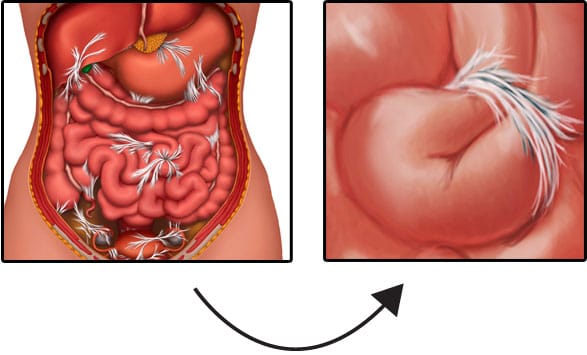
    Image showing internal adhesions pulling and twisting the colon, leading to a bowel obstruction.
    Colon Obstruction Close Up

    Symptoms of a bowel obstruction or bowel blockage

    • Nausea and vomiting
    • Constipation and inability to pass gas
    • Abdominal distention, which can be confused with bloating
    • Fever
    • Tachycardia, which is a heart rate that exceeds the normal resting rate
    • Loss of appetite
    • Recurring abdominal pain

    Causes of mechanical bowel obstructions

    Adhesions: The most common cause of small bowel obstruction is intra-abdominal adhesions. Adhesions caused by abdominal or pelvic surgery cause about 65% to 75% of all small bowel obstructions. Adhesions are scar tissue that can form after infection, radiation therapy, inflammation, and most commonly, surgery. One of the reasons recurring bowel obstructions are so difficult to treat is that obstructions and blockages are often treated with surgery. Post-surgical adhesions can wrap around the intestine and squeeze it shut, similar to pinching a garden hose. In other cases, a stricture (narrowing) can occur, preventing liquids and food from passing through.

    Hernias: When the intestine protrudes through an opening in the abdominal wall, it is called a hernia. Hernias can squeeze the bowel shut, making it difficult or impossible for contents to pass through the intestine. This causes impacted stool, a stricture, or a blockage to occur.

    Crohn’s disease: This is a chronic inflammatory bowel disease that causes inflammation in the lining of the digestive tract. The constant inflammation leads to scarring and the formation of adhesions.

    Malignancy: This is defined as the presence of a malignant tumor (cancer). A tumor can obstruct the intestine, causing a blockage.

    Volvulus: This is an obstruction caused by the intestine being twisted or knotted. Once the intestine is twisted or knotted, nothing can pass through. This condition can also obstruct blood flow, causing tissue death.

    Diverticulitis: Similar to Crohn’s disease, diverticulitis is an inflammation or infection in the small pouches of the digestive tract that can lead to scar tissue and constipation.

    Food that can cause bowel obstructions

    You may be wondering what food you can safely eat with a bowel obstruction. Here are some foods to avoid if you have been diagnosed with a bowel obstruction.

    • Fruits with a cellulose structure can cause or contribute to an obstruction. One of the most common fruits reported to cause intestinal obstructions is the persimmon, though a large number of cases have been reported with citrus fruits in general and other dried fruits.
    • Dried nuts and seeds.
    • Whole grain or other high-fiber breads.
    • Tough or stringy pieces of meat.

    Bowel obstruction prevention

    • Drink plenty of fluids – It is generally suggested that individuals drink 6 to 8 cups of water each day. Water helps food move more easily through the digestive tract.
    • Chew your food thoroughly – Not chewing food well increases the amount of work your digestive tract must do and can contribute to intestinal obstructions.
    • Clear Passage® – A manual physical therapy that treats the adhesions causing recurring bowel obstructions – without surgery or drugs. By avoiding surgery, patients can often avoid repeat bowel obstructions because surgery is the primary cause of adhesions and bowel obstructions.
    • Diet change – Changing your diet may help prevent future bowel obstructions.

    Bowel obstruction treatment

    Fasting – Allows the bowel to rest and helps reduce the risk of complications during surgery, if that becomes necessary.

    Nasogastric intubation – An “NG Tube” is a tube that carries food and medicine down the throat and into the stomach, and also pumps out excess stomach liquids in an effort to decompress the bowel.

    Surgery – Surgery may be required to remove infected or necrotic (dead) tissue or to repair perforations to the bowel.

    Click here to learn more about a non-surgical treatment option for bowel obstruction.

    References

  • The Clear Passage® Insider – October 2017 Issue

    The Clear Passage® Insider – October 2017 Issue

    Meet the Therapist: Kristen

    Please join us in welcoming our new addition to the Clear Passage® family, Kristen Robles!

    Kristen Robles, DPT
    Gainesville, Florida

    SIBO SOS Summit

    The SIBO SOS™ Summit is an online learning event for patients and practitioners dealing with SIBO (Small Intestinal Bacterial Overgrowth) and IBS (Irritable Bowel Syndrome).

    With presentations by 20+ SIBO experts (including Clear Passage®’s Larry Wurn), this in-depth health summit explores the effects, diagnosis, and treatment for SIBO and opens the door for you to find the right options to help you and your patients heal!

    Bowel Obstruction Study Nears Completion

    We thank all participants in our Controlled Bowel Obstruction Study. We now have the data we need to complete and publish that important paper, which will compare the outcomes among several hundred people who suffer recurring bowel obstructions – comparing those who received CP therapy and those who did not. Watch for our published results in the next few months. We feel it is vitally important to share with the world the extent to which non-surgical therapy can help people who face recurring life-threatening bowel obstructions and surgeries.

    What Patients are Saying

    “I can’t say enough good things about my experience at Clear Passage®. I will admit, I was a skeptic and pretty astounded at the cost of 20 hours of therapy. My therapists, Evette, Kim, and Kristen, were all gifted in different ways and fit perfectly together as a team. I came primarily to get help with my SIBO, which I believed stemmed from scar tissue from past surgeries that had also created a small bowel obstruction. I literally had a speed bump in my abdomen… and after 5 days, that speed bump was gone. I tested negative for SIBO for the first time in 10 months, and I couldn’t be happier!”