The diagnosis of unexplained infertility is often due to adhesions – small yet powerful internal scars that do not appear in medical diagnostic tests. Clear Passage® is a world leader, with over three decades of experience treating adhesions and unexplained female infertility, as a complement to regular gynecologic care. Studies in peer-reviewed U.S. and international medical journals found that our manual physio/physical therapy improved fertility for most women.
Complete the online Request Consultation form to receive a free phone consultation with an expert therapist and learn more.
Causes and Frequency of Unexplained Infertility
Unexplained infertility (UI), also called “idiopathic infertility,” is one of the most frequent diagnoses in reproductive medicine. (Gleicher & Barad, 2006)
There is always a cause for infertility, so when a diagnosis shows “no visible cause,” we turn to common “invisible” causes – those that often do not appear in X-rays, ultrasounds, MRI, or CT scans. Perhaps the most common of these invisible causes is adhesions.
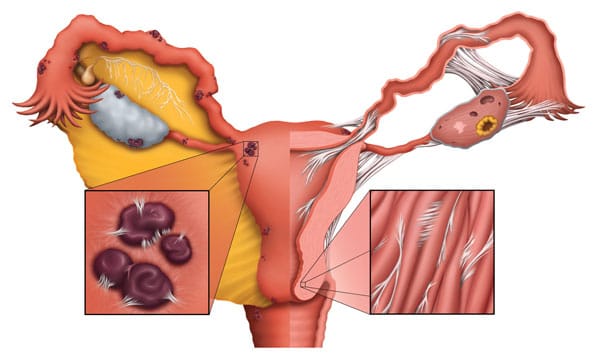
The delicate female reproductive organs can lose function due to adhesive bonds. Adhesions are composed of strong but small (sometimes microscopic) bands of collagen fibers. After surgery, injury, or inflammation, such as endometriosis, adhesions form to start the healing process. Where they form, they create tiny but powerful bonds that can attach like glue to delicate pelvic and reproductive structures. At Clear Passage®, we find adhesions to be a major problem in most of our patients diagnosed with unexplained infertility. Adhesions can cause infertility or pain as they constrict the reproductive organs in adhesive “straitjackets,” decreasing the chance of implantation or causing a miscarriage.
Adhesions that are located near the reproductive tract can impact fertility in numerous ways. Examples include:
Adhesions on the uterine walls and ligaments can cause uterine spasms or inflammation, preventing implantation or causing miscarriage.
Adhesions within the tissues of the cervix can cause stenosis of the cervix, which causes the cervix to close (stenosis), stiffen (fibrosis), or spasm, thus impeding the passage of sperm into the uterus.
Adhesions on the surface of the ovaries can prevent an egg from being released.
Adhesions in or near the fallopian tube can restrict or prevent sperm and egg from meeting, preventing conception.
We encourage women with unexplained infertility to examine their personal and medical history for past healing events that may have caused pelvic adhesions. These include:
Surgery (any surgery to the pelvis, abdomen, hip, or back, etc.)
Trauma (fall onto tailbone, back, or hip, physical or sexual abuse, car accident, etc.)
At a microscopic level, tiny but powerful cross-links form to create adhesions that can cause infertility as they constrict the reproductive organs in adhesive “straitjackets,” decreasing the chance for implantation or causing a miscarriage. When we dissolve or detach the underlying chemical bonds, adhesions appear to pull apart, like clearing the run in a sweater.
Symptoms of Unexplained Infertility
Some symptoms that accompany unexplained infertility include:
Negative finding for male factor infertility
Inability to determine the hormonal cause of infertility
Inability to diagnose mechanical failure of the reproductive tract
Failure to conceive after 12 months of sexual activity without contraception
Treatments for Unexplained Infertility
Clear Passage® Treatment
After reviewing your history of healing events, we conduct a thorough evaluation of your entire body. We palpate for areas of tension or restricted mobility, with particular attention to areas of prior surgery, trauma, infection, or inflammation. We educate you and invite you to become a valued member of your treatment team. Then we begin therapy, using our hands to find, reduce, and eliminate the adhesions, bond by bond, to return your organs to previous mobility, increase functionality, and improve fertility. With over three decades of published results on the effectiveness of manually treating infertility by addressing adhesions, Clear Passage® Physical Therapy is seen as a ‘gold standard’ for natural infertility treatment.
Because adhesions do not appear on diagnostic tests, they are a frequent cause of unexplained infertility. We encourage you to examine your medical history for past healing events (surgery, injury, infection). These cause the adhesions that often result in infertility.
No medical technique has a 100% success rate. If we are unable to open your tubes, your chances for a successful IVF performed within 15 months after therapy increase by roughly 50%, per published studies. View our success rates.
Other Treatment Options (Surgery, Drugs)
Before the Clear Passage® Approach, lysis of adhesions was the only documented choice medical science offered for treating adhesions. This involves cutting or burning the adhesions under general anesthesia via laparoscopy or laparotomy (open surgery).
While lysis of adhesions can be effective, the surgery has some drawbacks:
It carries risks associated with anesthesia or infection.
Because adhesions can prevent the ability to see underlying structures, surgeons can mistakenly cut or burn unintended organs or other structures.
The body tends to create more adhesions as it heals from the very surgery designed to remove them.
Post-surgical adhesions were the focus of a large, ten-year study. The Lancet, a leading medical journal, reported that 35% of all open abdominal or pelvic surgery patients were readmitted to the hospital more than twice to treat post-surgical adhesions during the 10 years after their original surgery. (Ellis et al., 1999) Many follow-up surgeries (22%) occurred in the first year after surgery, and “readmissions continued steadily throughout the 10-year period,” the study noted.
Laparoscopy allows physicians to see the condition of the reproductive organs but the surgery itself can cause adhesions to form.
A large study published in Digestive Surgery showed that more than 90% of patients develop adhesions following open abdominal surgery, and 55% to 100% of women develop adhesions following pelvic surgery. (Liakakos et al., 2001) Small bowel obstruction, infertility, chronic abdominal and pelvic pain, and difficult reoperative surgery are the most common consequences of abdominal and pelvic adhesions. Despite elaborate efforts to develop effective strategies to reduce or prevent adhesions, their formation remains a frequent occurrence after abdominal surgery. (Liakakos et al., 2001) Thus, many patients become trapped in a cycle of surgery-adhesions-surgery, with no end in sight. Clear Passage® ends this repeating cycle for most patients.
Published Research – Clear Passage®
To view published results on the Clear Passage® Approach in treating infertility, please view our Infertility Success Rates Page.
“I thought you might like to know that my FSH (follicle-stimulating hormone) level came down from 12.6 (before I went to you) to 8.1 (after therapy with you). This brings my hormone levels from “unacceptably high” to within a ‘normal’ range. As you know, a high FSH is a sign of diminished ovarian reserve. The FSH levels can fluctuate slightly, but I did not expect that they would go down given my age. I certainly think that CPT helped.” – Sylvie
Pregnant with High FSH
Improving Hormone Levels Naturally
Clear Passage® is a world leader, with over three decades of experience treating female infertility without surgery or drugs. While our focus was originally on mechanical fertility (helping sperm meet egg and helping uterine implantation), a surprising number of infertile women in their upper 30s and 40s were becoming pregnant naturally after therapy, despite diagnoses of high FSH or age-related infertility.
Our attention was further piqued when a peer-reviewed study of 1,392 women conducted over ten years showed hormonal improvement in 49% of women diagnosed as infertile due to high FSH (follicle-stimulating hormone[i]). Over 39% of women diagnosed with FSH levels above 10 conceived after a 5-day Clear Passage® session; most had natural pregnancies.
In a 10-year retrospective study from the National Library of Medicine, both natural and IVF pregnancy rates were high for women diagnosed as sub-fertile or infertile due to high FSH. Over 39% of women treated by Clear Passage® became pregnant despite FSH levels usually considered ‘impossible to conceive.’ Of 48 women in the study, 43 conceived naturally and 5 became pregnant via subsequent IVF.
Success Treating Infertility in Women with High FSH
In the study participants, 39% (48/122) of the women diagnosed as subfertile or infertile due to high FSH became pregnant after receiving the therapy. This is an excellent rate in a group whose expected pregnancy rate was 0%, or close to it. Women in this study had FSH levels of 10 mIU/ml and above, generally so high that they were refused IVF by reproductive physicians.
Complete the online Request Consultation form to receive a phone consultation with a therapist at no cost. Our therapist will review your medical history and goals, answer any questions you have about therapy, and determine if our treatment may be able to help you.
Why High FSH Indicates Subfertility
High FSH is not a cause of infertility. Rather, it is an indicator of subfertility or infertility – often associated with advanced reproductive age. At each menstrual cycle, the ovary (in the pelvis) signals the pituitary (in the cranium) to release follicle-stimulating hormone (FSH) to help follicles mature into eggs suitable for implantation. As a woman’s reproductive system ages, her ovaries require more FSH to produce quality eggs. FSH levels of 10 mIU/ml or higher on days 2-5 of the menstrual cycle generally indicate subfertility or infertility, either due to loss of ovarian function or because menopause has occurred.
Symptoms of FSH or Other Hormonal Issues
Unlike mechanical dysfunction, hormonal issues can sometimes be a little more difficult to diagnose. The symptoms may appear unrelated and spread throughout the body rather than to a single area of discomfort, for example, post-surgical pain.
Absent or irregular periods
Spotting between menstruation
Overly heavy periods
Very painful periods
Hair growth around the face, neck, chest, or back
Weight gain
If you are experiencing any of these symptoms along with infertility, it is quite possible you have a hormonal imbalance. It is important to speak with your doctor and have them check your hormone levels.
Treatments
Clear Passage®️ Treatment
As physical therapists, our first job is to look at biomechanics – the physical bodies our patients bring to us. Clear Passage® uses a “whole body approach” that addresses a patient’s goals along with any structural problems in the body. Focused on the biomechanics of pain, function, and fertility, we initially assumed we could not help reproductive hormone levels. Study of the reproductive system indicated that the communication loop between the ovary and the pituitary was likely blood-borne, thus out of our scope of expertise. Over time, several pregnancies in women we treated, often with quite high FSH, appear to be showing a mechanical aspect to infertility in hormonal conditions, apparently treatable by our manual therapy. Our therapy has helped some women with high FSH to conceive naturally – sometimes more than once.
We continue to see success in this area, as described above and documented in peer-reviewed medical literature. We believe this success is due to our work on the ovaries, the dura, and the cranium. The dura is a fascial sheet that surrounds the spinal cord, from the lowest part of the tailbone (coccyx) to the base of the skull. From there, it enters the skull, then surrounds the brain and all the tissues and the endocrine glands within it. Sheaths of the dura totally surround and infuse with the pituitary, an important regulator of female reproduction.
We have come to believe that tissues within the skull (including the brain and pituitary) react to adhesive pulls similarly to other tissues in the body. Housed within a well-protected cavity of the sphenoid bone in the center of the skull, the pituitary is considered the “master gland” of female reproduction.
Successful reproductive activity and hormone levels depend on a medically recognized communication loop between the ovaries (in the pelvis) and the pituitary and hypothalamus glands (deep within the head). While the exact mechanism of that intricate communication loop remains a mystery, that loop (the pituitary-hypothalamic-ovarian axis, or PHO) is largely responsible for whether or not a woman can create an egg capable of conception. We find that when we treat the ovaries and the dural attachments that reach into the brain and surround the pituitary, we often witness significant improvements in FSH levels – and full-term pregnancies in women diagnosed hormonally infertile.
History: Treating Women with High FSH
We began treating women with diagnoses of high FSH at the urging of a research gynecologic surgeon, former Chief of Staff of North Florida Regional Medical Center, Richard King, M.D. We gathered data by tracking changes in FSH levels for these women before and after therapy. We were encouraged in these early cases when we saw natural pregnancies in older women, including one of whom came to us at age 44 with an FSH of 33.
Because our results in hormonal conditions have been so positive, we now accept women with hormonal infertility, and we actively encourage women with diagnoses that include PCOS and high FSH levels to attend therapy, especially in the case of high FSH. We suggest you call to learn about our most current success rates so we can determine together whether this therapy may help you.
Other Treatments (not Clear Passage®)
We know of no other procedure or pharmaceutical medication that can lower FSH and extend reproductive years for women with high FSH.
Published Success Rates
Following the Scientific Method
In all of our studies, we follow the ‘scientific method’ defined by professional researchers. We start with clinical data. If that indicates safety and efficacy for a group or condition, we create larger pilot studies. If these continue to indicate success, we will begin studying results in larger populations.
When we first began treating infertile women with our manual therapy, the Clear Passage® approach, we learned we could often help the mechanics of sperm meeting egg by decreasing or eliminating mechanical problems such as adhesions, blocked fallopian tubes, tightness or stenosis of the cervix, and endometriosis. Because we had no data at the time showing we could treat hormonal conditions such as high FSH or PCOS, we regularly turned down applicants diagnosed with solely hormonal factors. We didn’t want to waste their money or time, or ours.
Housed within a well-protected cavity of the sphenoid bone in the center of the skull, the pituitary is considered the “master gland” of female reproduction.
We discovered our therapy could successfully treat hormonal conditions after a woman we treated for pelvic pain, who was diagnosed as “menopausal”, became pregnant the month after therapy. She had been refused IVF for the three months prior to coming to us, due to FSH levels of 18, 19, and 28 during those months. Yet, she became pregnant naturally a month after therapy. She had that child, then (with no further therapy) she became pregnant naturally again two years later – and delivered her second child.
First Clinical Trial
After consulting with our gynecologist advisor and a biostatistician, we agreed to accept women with high FSH into our program, with the request that they have their FSH levels measured before and after therapy. In order to create meaningful statistics, the biostatistician required a minimum of 8 participants. We tested more: 16 women diagnosed as infertile with FSH readings over 10 mIU/ml. The women in this trial averaged 39 years of age.
The trial indicated that our therapy was effective for women diagnosed with high FSH, when six of the 16 (38%) became pregnant before they could get their post-therapy FSH checked. Of the remaining ten, nine had decreases in FSH levels, with an average improvement of 11.6 points. Only one woman failed to improve; her FSH increased by one point. Published data from this clinical trial are included in our consumer book, Miracle Moms, Better Sex, Less Pain (Med-Art Press, 2009).
Latest Published Study
In a much larger study, 39% (48/122) of patients with high FSH levels became pregnant after treatment. Of these, 43 had natural pregnancies, and 5 were by IVF. Like so many of our studies, these results closely parallel the 38% success rate of the early clinical trial. It is exciting to see these results in a population of women who were considered hormonally infertile prior to therapy. This is very good news for women wanting to conceive despite being reproductively older, having high FSH, or approaching menopause.
Published success rates for High FSH are stated in the text above. Click here to view all of our infertility success rates.
Clear Passage® – Published Success Rates
A landmark study of over a thousand infertile women treated at Clear Passage® clinics over 10 years examined the therapy’s results in various causes of female infertility. In a subset of 122 women who presented with FSH above the 10 mIU/ml threshold for fertility, 39% (48/122) became pregnant. Remarkably, 90% (43/48) of the successes were natural; five were by follow-up IVF. (Consult our Pre-IVF page for more details if you plan to undergo IVF.)
A large published study showed that 39% of women diagnosed as infertile due to High FSH became pregnant after receiving CP therapy.
Many physicians consider our success with these women remarkable; simply put, they should not have been able to conceive. In fact, few options in medicine exist to help women with high FSH to have their own child.
15 failed IUIs, 7 failed IVFs, 2 children after Clear Passage®
“I feel 100% better than I did before your therapy. Anyone who has gone through extensive fertility treatments can appreciate the wonderful environment you provide at Clear Passage®. After going through your program, I don’t know how anyone can go through fertility treatments without first getting their body as close to 100% as possible.” – Hailey
Clear Passage® is a world leader with over two decades of experience improving female fertility, including treatment before IVF embryo transfer. As early as 2004, a study in WebMD’s Medscape General Medicine indicated that our manual therapy increased IVF results. Some of our highest pregnancy rates were in women between 35 and 45 years of age who had experienced several prior failed IVF cycles.
Our work addresses the physical quality, mobility, and motility of your reproductive organs in ways your reproductive physician cannot do. The results of our focus on helping these organs are clearly shown in the video below.
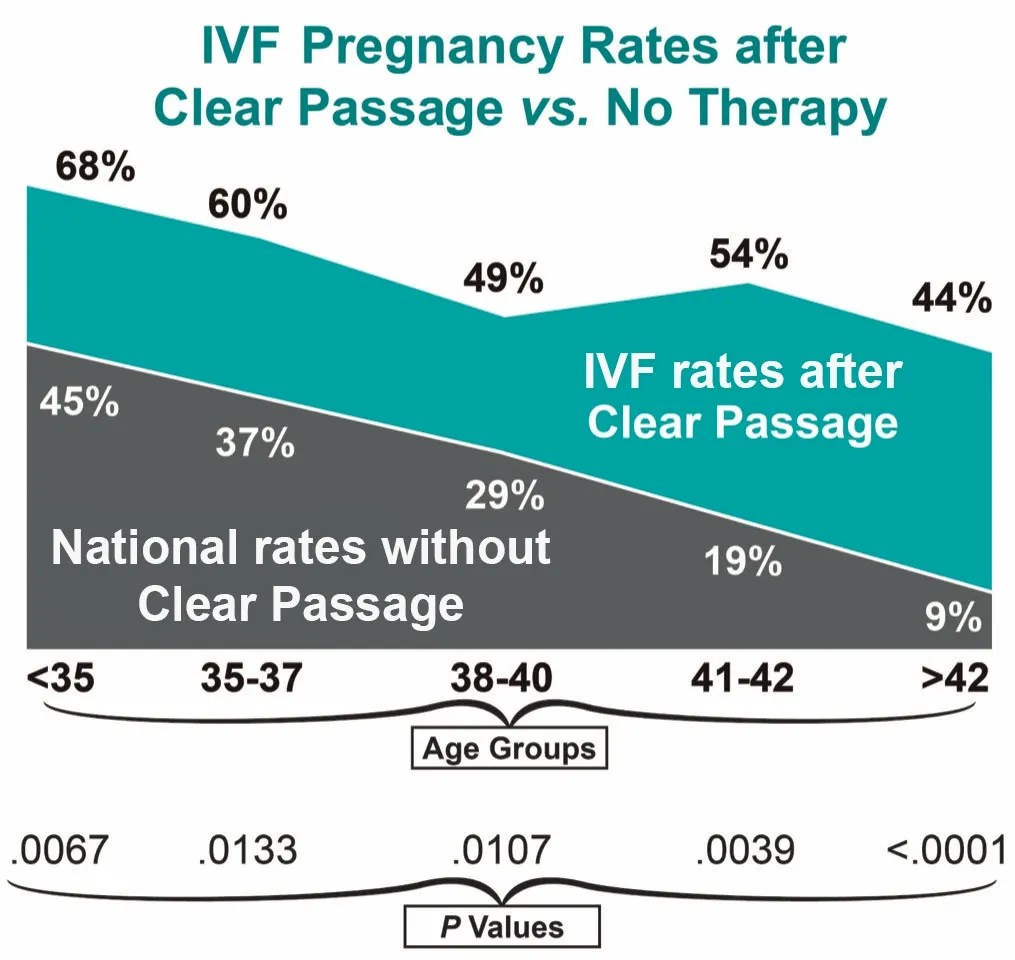
Compared to the US national post-transfer success rate (shown in gray), CP therapy (in teal) significantly increased IVF pregnancy rates in every age group when performed before embryo transfer. Rates among women over 40 were three to five times the national average.
In 2015, we collected data on these success rates and published results in a 10-year study of 1392 infertile women. (Rice et al., 2015a) The results of that study were eye-openers. IVF pregnancy rates averaged 56% across all age groups. Among other surprises, women over 42 were nearly five times as likely to become pregnant with IVF if they received Clear Passage® therapy before embryo transfer (p<.0001). You can read exact statistics grouped by age below, or at our Success Rates page.
Please complete a Medical History Form so we can review your case and advise whether we feel we can help you.
Pre-IVF Therapy Overview
In vitro fertilization (IVF) is a remarkable and complex process in which sperm and egg are united outside the body and transferred into a woman’s reproductive tract. While success rates of IVF have steadily increased since the first successful transfer in 1978, IVF success rates remain around 31% as reported by the U.S. Centers for Disease Control (CDC). You can view a chart that compares CP therapy (alone and with IVF) to IVF rates alone on this page.
Our earliest Infertility studies with pre-IVF data included 25 women and were published in 2004. (Wurn et al., 2004a) By the time the early pilot study closed, 60% (15/25) of the women had conceived or were still pregnant.
In a larger, landmark 10-year study of over 1,000 infertile women treated at Clear Passage® for various types of infertility, the overall IVF pregnancy rate was 56.16% (82/146) (Rice et al., 2015a) for women who had Clear Passage® therapy before IVF transfer. Calculated across all age groups, this rate is much higher than the rate for IVF alone.
IVF physicians may stimulate the ovaries with medications to increase egg production. After extraction, the eggs are united with sperm and placed inside the reproductive tract.
Treatment
Clear Passage® Treatment
Our manual therapy appears to assist IVF transfer in several ways — some documented, some assumed.
Increased blood flow to the ovaries, uterus, and possibly the pituitary
Improved implantation by decreasing microadhesions on and within the uterine wall
One focus of Clear Passage®️ therapy is to decrease tiny adhesive cross-links at the cervix and uterus – to decrease spasm and create a more hospitable surface for implantation.
As we go through life, all people develop adhesions (internal scars) as our bodies heal from life events. The female reproductive tract is subject to infection, inflammation, trauma, and surgery. When bacteria or items enter the vagina from the outside world, the delicate internal tissues can be subjected to microtrauma. These generate adhesions as the body begins to heal. Many women have a contributing history of infection (bladder, yeast, vaginal, etc.) or more serious trauma (falls onto buttocks, accidents, abuse). The body lays down collagen fibers – the building blocks of adhesions, as the first step in healing from any of these events. After the body has healed, the collagen fibers remain, binding tissues that should move freely. Clear Passage® therapists are experts at deforming and detaching these fibers, returning the body to an earlier state of mobility and function. In doing this, it returns fertility to many women.
The decision to undergo IVF is a serious one. You may find it educational to watch the video below of a patient who compares undergoing treatment at Clear Passage® to her experience undergoing In Vitro fertilization.
In summary, our site-specific hands-on therapy appears to decrease spasm and mechanical factors (such as adhesions) at the uterus, cervix, and fallopian tubes. Statistical data show that the therapy increases implantation rates and improves FSH levels. A full 39% of women with FSH levels above 10 (the cut-off for many reproductive physicians) conceived after receiving CP therapy; the great majority had natural pregnancies. Two separate scientific studies showed clinical pregnancy rates significantly higher than the U.S. pregnancy rates for IVF, for women who received Clear Passage® therapy before embryo transfer. Please visit ourinfertility success rates page for more data.
Surgeries may add to the problem since adhesions form as the first step in the healing process, forming at the site of the procedure and often spreading into nearby structures. Adhesions can form on the outer or inner walls of the uterus, creating a less hospitable surface for implantation. Adhesions can also cause spasms or inflammation in the uterus, further complicating or preventing pregnancy.
Adhesions from endometriosis, inflammation, infection, or surgery can form on or within any of the reproductive structures. When they do, they act like glue, decreasing that organ’s ability to function properly.
Adhesions deep within the cervix can cause tightness at the opening of the uterus, called stenosis of the cervix, also known as a stenotic cervix. These tiny adhesions can constrict the cervix, making sperm transfer (whether through intercourse, IUI, or IVF) more difficult. Any adhesive pull of the cervix from its normal midline position can cause spasms in the uterus, decreasing the chance for good uterine implantation and a successful pregnancy. Cervical adhesions can create a pull on the uterus with every step a woman takes, causing further spasms and uterine adhesions.
Some women have been diagnosed by their physician with cervix stenosis (narrowing) or fibrosis (stiffness), evidenced by palpation, which leads to difficult IVF transfers. We have found that these conditions are caused by tiny adhesions attaching to muscle cells within the body of the cervix. When we treat the area, we find that positive changes are generally palpable to us and to the patient’s physician. IVF transfer then becomes easier, and implantation rates appear to increase significantly, per published studies.
Belinda Treating Back Pain
Does Your History Include Any of These?
Adhesions form whenever and wherever the body heals. Because they are composed of microscopic collagen fibers, which often can’t be seen by diagnostic tests (MRI, CT, X-ray), these tiny but powerful fibers are often undetectable. Once formed, adhesions can act like straitjackets, binding structures that need to move freely, decreasing your reproductive tract’s ability to function properly.
If your medical history consists of any of the following, you may benefit from our therapy:
Surgery
Infection
Inflammation
Endometriosis
Menstrual pain
Intercourse pain
Cervical Stenosis
Hip pain or stiffness
Pelvic or low back pain
Physical or sexual abuse
Cycle Timing
Therapy consists of a 20-hour program, which can be completed in as little as five days. For best results, you should receive therapy within 15 months before your IVF transfer. We can treat you up to two weeks before you begin ovarian stimulation (the start of your follicle-stimulating medication) or up to two weeks before transfer for an unstimulated cycle.
Considering the remarkable advantage our study participants had over IVF patients who did not receive therapy first, you may want to postpone a planned IVF cycle for a month or two to attend therapy first. Since the positive effects of therapy on IVF transfer appear to last for over a year, you do not need to receive IVF transfer immediately after therapy. Published data indicate you should attend our therapy between two weeks and 15 months prior to your IVF transfer. (Wurn et al., 2004a)
How to Increase Your Chances of IVF Success
Quit smoking
Reduce your stress
Optimize sperm health
Maintain a healthy weight
Look into taking supplements
Focus on persistence and patience
Ensure you have adequate levels of vitamin D
Partner with an excellent doctor and an embryology laboratory
Compared to the US national success rate (shown in gray), CP Therapy (in teal) significantly increased success rates for IVF in every age group when performed within 15 months of embryo transfer. Rates among women over 40 were three to five times the national average.
Testimonials
To read testimonials from previous patients who used Clear Passage® as a pre-treatment for IVF, please visit our patient testimonial page.
Clear Passage® is a world leader with over three decades of treating female infertility successfully without surgery or drugs. In a landmark 10-year study, our hands-on physical therapy yielded pregnancy rates for women with PCOS at rates similar to standard medical treatments, but without surgery or pharmaceuticals (study chart below).
During three decades of research and development, clinical trials showed numerous natural full-term pregnancies in women diagnosed with a variety of hormonal infertility conditions, including PCOS, endometriosis, and high FSH (advanced reproductive age). Numerous peer-reviewed medical journal citations show these results.
Perhaps the biggest advantage of using Clear Passage® for PCOS was to avoid the drugs and surgeries (e.g., drilling holes in the ovary or cutting wedges from it) that are sometimes used to treat the condition. You can view these surgeries in the videos below:
Complete the online Request Consultation form to receive a free phone consultation with an expert therapist and learn more.
Clear Passage® Success Rates
61%
43%
54%
56%
Opening Blocked Fallopian Tubes
Endometriosis Pregnancy Rate
PCOSPregnancy Rate
IVF Pregnancies After CP Therapy
Causes and Frequency of PCOS Infertility
PCOS is a major cause of female infertility, affecting between 8% and 20% of women worldwide.[i] Most women learn they have PCOS in their 20s or 30s when they consult their doctor about problems getting pregnant. PCOS can happen at any age after puberty.[iii] Women of all races and ethnicities are at risk of PCOS, but the frequency is higher in women who have obesity or have a mother, sister, or aunt with PCOS. As well as problems with fertility, women with PCOS can experience irregular menstrual cycles, changes in physical appearance (acne, weight gain, excessive hair growth), heart problems, and increased risk for diabetes.
Polycystic ovary syndrome (PCOS) is a hormonal disorder that affects as many as 10% of women of childbearing age.
Signs and Symptoms of Polycystic Ovarian Syndrome (PCOS)
Signs are observations by physicians; symptoms are physical features noticed by the patient. PCOS signs and PCOS symptoms can be complicated. It is called a syndrome because PCOS can manifest in a multitude of symptoms or complications. This can make it harder for individuals to be successfully diagnosed with PCOS. These are the most common signs and symptoms:
Hair loss
No periods
Depression
Thinning hair
Irregular periods
Acne and oily skin
Weight gain, overweight, or obesity
Hirsutism (excessive hair growth, commonly on the face, back, or chest)
Infertility (trouble becoming pregnant after 12 months with no contraception)
If you have multiple indications from this list, there is a good chance that you have undiagnosed PCOS. You should make an appointment with your general physician, or you can click here for more information.
Hormonal and Mechanical Aspects
While considered a hormonal disorder, we speculate a mechanical aspect to PCOS in some women when the ovaries become covered with collagen fibers, the building blocks of adhesions. Our thoughts are based on a combination of a) viewing thickened ovarian walls in surgical films, and b) witnessing a high number of infertility reversals in patients with PCOS after we treated them. Because our therapy addresses both the mechanical and the hormonal aspects of female infertility, we feel both aspects may be useful when treating patients with PCOS-related infertility. View success rates at our Calculating My Odds page.
As the name “polycystic” suggests, many cysts typically develop in the ovaries of a woman with this condition. These cysts or follicles (fluid-filled sacs) contain eggs. But in women with PCOS, the ovary does not produce enough hormones for egg maturation. Unable to escape the outer covering, the follicles or cysts remain and build up in the ovaries, preventing ovulation. In addition, the ovaries tend to produce excess levels of androgens (male hormones) in women with PCOS, which can also negatively impact ovulation and fertility.
Addressing Both Aspects of PCOS
Successful reproductive activity depends on medically recognized communication between the ovaries (in the pelvis) and the pituitary/hypothalamus (PH) glands (deep in the cranium). Protected in a cavity within the sphenoid bone in the center of the skull, the pituitary gland is considered the “master gland” of female reproduction and is intimately involved in hormone production and regulation.
While physicians recognize a communication loop between the pituitary/hypothalamus and ovaries, the exact mechanism of that communication remains a mystery. This interplay among glands, called the hypothalamic-pituitary-ovarian (HPO) axis, is largely responsible for whether or not a woman’s eggs can reach maturity during the process of reproduction. Due to the positive results we have documented and published about returning fertility to patients with PCOS and other hormone-related infertility, we believe there is a strong mechanical mechanism in the body’s HPO communication loop that can be improved with our manual therapy.
Symptoms of Polycystic Ovarian Syndrome (PCOS)
PCOS can be a very complicated disorder. It is called a syndrome because PCOS can manifest in a multitude of symptoms or complications. This can make it harder for individuals to be successfully diagnosed with PCOS. These are the most common PCOS symptoms:
Irregular periods
No periods
Infertility (trouble becoming pregnant after 12 months with no contraception)
Hirsutism (excessive hair growth, commonly on the face, back, or chest)
Weight gain, overweight, or obesity
Thinning hair
Hair loss
Depression
Acne and oily skin
If you have multiple symptoms from this list, there is a good chance that you have undiagnosed PCOS. You should make an appointment with your general physician, or you can click here for more information.
Thus, hormonal problems (poor maturation) develop into mechanical problems (ovarian walls thicken and eggs become trapped in the ovary).
In a normal ovary, eggs mature and are released every cycle. In women with PCOS, the ovary does not produce enough hormones for egg maturation. Immature follicles may remain in the ovary, and ovarian walls may thicken.
Treatment Options
Clear Passage®️ Treatment
As physio/physical therapists, we regularly evaluate and treat the functions and mobility of the body’s physical structures, such as muscles, joints, organs, and nerves. It is unusual for us to look at hormonal processes, which are regulated by the endocrine glands. Initially, it never occurred to us that we could affect hormone levels.
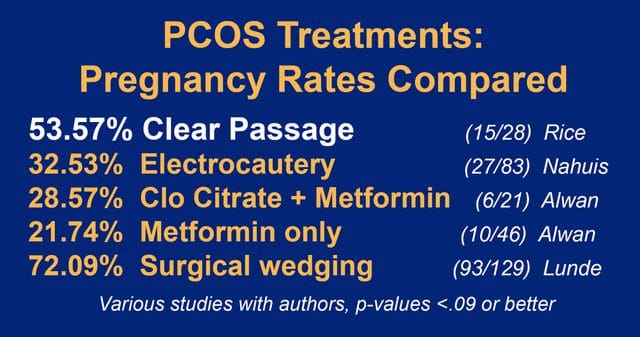
We began to question that assumption when women we treated who arrived with hormonal infertility, including PCOS, high FSH, and endometriosis, became pregnant in relatively high numbers after our therapy. As we saw this phenomenon again and again, we realized we had to investigate. In doing so, we found that many of these women had easy, natural pregnancies and delivered healthy, full-term babies. As shown in our landmark 10-year infertility study, pregnancy rates for women with PCOS-related infertility demonstrated a 54% pregnancy rate (15/28).
Our success with women with hormonal disorders is due in large part to our work, which combines therapy in the pelvis, up the spinal cord and dura mater, and into the cranium. This continuum of structures, which connects the pelvic reproductive organs to the pituitary/hypothalamus in the cranium, exactly defines the HPO axis that is so important to reproductive physicians.
A major component of this route is the dura, a fascial sheath that surrounds the spinal cord from the bottom of the tailbone at the coccyx to attachments at the top of the neck and the base of the skull. From there, the dura mater enters the skull through a large opening (foramen magnum), then spreads out to surround the brain and every structure within the cranium. This includes the sphenoid bone and the pituitary-hypothalamus complex embedded in a fossa (depression) within that bone. Strong sheaths of the dura totally surround and infuse the pituitary gland.
During the course of therapy, we treat the full continuum of reproductive structures, including the dura and all of its attachments, from the ovaries, tailbone, and into the head. Surrounding the spinal cord, this sheath can directly influence the central nervous system, responsible for a myriad of complex bodily activities and commands. Any adhesive restriction within that system between the reproductive organs in the pelvis and the pituitary/hypothalamus in the cranium can cause problems with reproduction.
To date, the results of our research treating hormonal conditions in women have been overwhelmingly positive. While we initially discouraged and even refused to treat women with hormonal infertility, experience has taught us that we can help in many cases. After reviewing their medical histories, we now encourage some women with hormonal conditions, including PCOS, endometriosis, amenorrhea (no menstrual cycle), and high FSH levels, to attend treatment. At the same time, we continue our research in these exciting areas.
No medical technique has a 100% success rate. If we are unable to open your tubes, your chances of a successful IVF performed within 15 months after therapy increase by roughly 50%, per published studies. View our success rates.
As mentioned earlier, PCOS may be treated with pharmaceuticals or surgery. Each has its own advantages and disadvantages. Success rates appear to vary widely, depending on the approach, the provider, and the specifics of each patient’s condition. In essence, there are far too many choices for us to examine on this website. We suggest you consult your physician and consult us to get all the information you can in order to make an informed decision on how to move forward.
Physicians may offer two surgical options to help eggs escape from the thickened ovarian walls. In ovarian drilling, the surgeon drills holes in the ovary. In ovarian wedging, the doctor removes a wedge of the ovary, like cutting out a slice of pie.
Published Success Rates
The Clear Passage® Approach (CPA) demonstrated significantly higher rates of pregnancy when compared with metformin alone; the CPA treatment presented no significant differences in rates of pregnancy when compared with clomiphene citrate or the surgical interventions of ovarian wedging or drilling. We found such a variety of success rates in other medicinal and surgical interventions that it was difficult to create a meaningful comparison of Clear Passage® to surgery and pharmaceuticals, other than the above. Taken from the 10-year study, this chart gives some of our findings.
Complete the online Request Consultation form to receive a free phone consultation with a therapist to learn if we may be able to help you.
NOTE: The 43% pregnancy rate for our patients with endometriosis includes women with totally blocked fallopian tubes. If your tubes are NOT blocked, it’s reasonable to assume your success rate will be higher.
Clear Passage® is a world leader with over three decades of experience decreasing pain and improving fertility in women with endometriosis, without surgery or drugs. Initially, several peer-reviewed pilot studies examined our results treating pain and infertility in women with endometriosis. A ten-year, PubMed-indexed study[i] of 1392 infertile women compared our pregnancy rates to those of surgery (see chart below). Results showed conception rates for women treated with our Clear Passage® physio/physical therapy were 43% (128/299), similar to surgical rates (38% to 49%) but without the risks of anesthesia or surgery.
Causes and Frequency of Endometriosis Infertility
In endometriosis, tissue that normally lines the uterus is found in other areas of the body, frequently accompanied by internal bonds called adhesions. The most common areas for these misplaced tissues are on and near reproductive organs. Adhesions that form around endometrial tissue can act like an internal glue, inhibiting fertility and sometimes causing pain as they squeeze delicate structures or bind them to other structures within the pelvis.
The misplaced endometrial tissue responds to the menstrual cycle as it would in the uterus, swelling during every menstruation. But unlike menstrual fluid that leaves the body, implanted endometriosis cannot exit the body. The inflammation that accompanies the swelling can cause more adhesions to form at the site of endometrial implants, further gluing down structures that should be mobile to function properly.
Our focus is to detach the collagen fibers that comprise adhesions. In doing so, pelvic organs appear to return to an earlier state of freedom and pain-free function.
Side-view of adhesions that can form at endometrial implants. Our focus is to detach the bonds between adhesive cross-links and underlying tissues. Freed from their adhesive bonds, the tissues return to a more normal state; pain decreases, function and fertility improve.
How does endometriosis affect fertility?
30-40% of women with endometriosis who are trying to conceive are diagnosed with infertility.[ii] With its focus on decreasing or eliminating adhesions, the Clear Passage® approach has been used by many women as an alternative to surgery for the pain and infertility associated with endometriosis. Its use is becoming more prevalent due to studies on our work available through the U.S. National Library of Medicine in the National Institutes of Health (NIH).
Adhesions act like glue, binding reproductive structures in curtains or rope-like bonds of collagen fibers and sometimes attaching them to neighboring structures. Bound as they are in adhesive straitjackets, the reproductive organs cannot move or function normally.
Endometrial adhesions may attach to one or both ovaries, causing ovulation pain or decreasing their ability to release an egg. Adhesions can block fallopian tubes in two ways: squeezing them closed from the outside or blocking them from the inside.
We find that endometriosis located on or near the uterus can cause uterine spasm or painful periods, decrease the opportunity for implantation, or cause miscarriage. Endometriosis, which attaches to the nearby bowels, may cause painful bowel movements, back, tailbone, or intestinal pain. In short, adhesions within the reproductive tract can cause pain or dysfunction anywhere in the back or pelvis, including intercourse pain and infertility.
Symptoms of Endometriosis
Painful periods (dysmenorrhea)
Pain during intercourse
Pain during or after bowel movements or urination
Excessive bleeding
Infertility
If you are experiencing any of these symptoms along with infertility, it is quite possible you have endometriosis. The only way to identify endometriosis is with an exploratory surgery. You should speak with your doctor about the best course of action depending on the severity of your condition.
Treatments
Numerous treatment options and significant research data are available to women diagnosed with endometriosis-related infertility. Scientific data from respected medical journals allows consumers to compare the risks and success rates of various treatment options, including Clear Passage®, surgery, and pharmaceuticals. The graph on this page compares our published success rates with the published success rates of other infertility treatments for women with endometriosis, giving clear insights into options and success rates.
In a 10-year study of 1392 infertile women, the Clear Passage® approach rivaled or surpassed standard options for treating endometriosis-related infertility (surgery and pharmaceuticals) when 43% of our patients conceived after therapy. Whether used alone or as an adjunct to pharmaceuticals, many physicians were pleased to see their patients have success without surgery.
Clear Passage®️ – Treating Endometriosis and Adhesions
Adhesions have stymied Western physicians for decades. At a cellular level, they are composed of tiny but powerful collagen fibers, similar to the strands of a nylon rope. These fibers lie down on each other in a random pattern, forming a blanket or scar to surround endometriosis and nearby tissues. Once formed, they can act like glue or straitjackets in the body, causing pain or dysfunction as they bind delicate structures that should be free and mobile to work properly. Adhesions can last a lifetime and sometimes spread unless removed by us or via surgery.
Clear Passage® staff started studying adhesions in 1984 when our physical therapist Director developed severe pelvic pain after surgery due to these internal scars. When we learned that surgery is a major cause of adhesions, our focus shifted to developing a non-surgical therapy to decrease or eliminate them.
We learned that the collagen fibers were incredibly strong; we could not break them using our hands. Then we began studying how the individual strands attach to each other. Over the years, we came to realize that we could detach these powerful strands from each other by focusing on the molecular-chemical bonds (called cross-links) that attach each strand to the next. As we developed the work, our patients’ adhesions began to dissolve and disappear. To our therapists, it felt as if we were pulling out the run in a three-dimensional sweater using just our hands.
The “hands-on” work practiced at Clear Passage® clinics is designed to reduce or eliminate adhesions, cross-link by cross-link. It has been shown to work extremely well for women with endometriosis and to have lasting effects. Many women who arrive with a history of endometriosis and infertility are now mothers of one or more children after a single five-day therapy session at Clear Passage®.
No medical technique has a 100% success rate. If you do not become pregnant soon after therapy and choose to undergo IVF, your chance of an IVF pregnancy increases by 50% over IVF without prior therapy. View our success rates.
Pharmaceutical treatments for endometriosis pain generally involve hormones that prevent endometrial swelling, but also prevent pregnancy. Thus, many women with endometriosis infertility are encouraged to undergo laparoscopic surgery to burn or cut out endometriosis and any accompanying adhesions. We suggest checking your physician’s philosophy before undergoing surgery. Some are conservative; others are more aggressive. One physician told us, “I can cure the endometriosis if I cut so deeply into the affected organs that I get it all.” His focus was clearly on the endometriosis, not on surgical damage to the organ.
No matter how wonderful and skilled the physician is, every surgery carries some risks, including:
Post-surgical adhesions. In a mammoth 58-year study of medical literature, researchers found that adhesions occur in 55-100% of women undergoing pelvic surgery.
Risks associated with general anesthesia and infection.
Inadvertent enterotomy (mistakenly cutting the bowel, bladder, rectum, a fallopian tube, or other structures).
Many women report pain relief after surgery. Some report a recurrence of pain, or worse pain, after surgery. No matter how skilled the surgeon, most pelvic surgeries cause new adhesions as the body heals from the surgery, according to medical studies. (Liakakos et al., 2001)
Unfortunately, post-surgical adhesions can cause recurrence of pain or infertility; endometriosis tends to regrow and spread at and around surgical sites after surgery. A study published in Fertility and Sterility found that endometriosis was most likely to regrow in the places where it was removed during laparoscopic surgery and that unaffected regions next to endometriosis were more likely to develop endometriosis after laparoscopic surgery. [iv]
Pregnancy rates after laparoscopic surgery vary depending on the severity of the endometriosis. Women with stage I-II endometriosis experience far greater success than women with stage III-IV[v]. This is because women with stage III-IV frequently have deep endometrial implants that a surgeon cannot remove without damaging the organ or tissue. In published research, Clear Passage® pregnancy rates were shown to be equivalent to or better than surgical pregnancy rates, depending on the surgery performed[vi].
Published Success Rates
To view all Clear Passage® published infertility success rates in women’s health, click here.
Pregnancy rates for women diagnosed as infertile due to endometriosis who had our therapy were roughly equal to surgical rates, but no surgery was required.
Most women who come to Clear Passage®️ with endometriosis and infertility report significant pain decreases; many became mothers after our therapy.
Treating Endometriosis Without Surgery
In the 1990s, we were surprised to find that our therapy to decrease adhesions often decreased pain and increased fertility for women with endometriosis. As improvements occurred in a wide variety of women we treated, we started sharing our data with PhD researchers to design clinical trials. Beyond organizing our findings into meaningful studies, these medical researchers helped us understand the anatomical reasons our work was helping these women.
Studies on Clear Passage® Treating Endometriosis Infertility
Our first major infertility study that included women with endometriosis was published in 2004 in WebMD’s international journal Medscape General Medicine[vii]. In this pilot study of infertile women, 71% became pregnant naturally, and 64% had full-term deliveries. 33% of the successes reported second natural pregnancies before the study was published. In addition, 67% (22/33) of women who chose to undergo IVF after Clear Passage® became pregnant after embryo transfer. We felt our work was pioneering when Medscape’s editor, Dr. George Lundberg (former editor of the Journal of the American Medical Association), featured this study on the front page of Medscape’s website the month it appeared.
Several other published studies include women with endometriosis. A large study published in 2015[viii] showed a 43% (128/299) pregnancy rate for women diagnosed as infertile with endometriosis. Remarkably, the success rate for opening totally blocked tubes for women with endometriosis was 60% (40/67); women with both endometriosis and totally blocked fallopian tubes had a post-therapy pregnancy rate of 38% (45/118). These results are considered extraordinary; until Clear Passage®, no non-surgical treatment in medicine was shown to decrease pelvic adhesions or open blocked fallopian tubes. Women with endometriosis who chose to undergo in vitro fertilization (IVF) had a post-transfer pregnancy rate of 55% (31/56), which was 1.4 times the national post-transfer average during the period of the study.
Often accompanied by adhesions, endometriosis appears in the interstitial spaces in the body – the places between organs, muscles, and nerves. Thus, they can bind neighboring structures together, causing pain or dysfunction – including infertility.
Adhesions can form alone (right) or at the sites of endometrial implants (left). They act like glue in the reproductive structures, causing pain or infertility.
Treating Endometriosis Pain
In 2004, the reproductive journal Fertility and Sterility published some of our findings in an abstract[ix] describing results of an early pilot study. In 2011, a study in the Journal of Endometriosis showed significant pain relief at all phases of the menstrual cycle and a decrease in intercourse pain for women surgically diagnosed with endometriosis[x]. Reported results in the study showed:
80% had decreased intercourse pain
61% had decreased menstrual pain
50% had less or no ovulation pain, and
39% had decreased pre-menstrual pain
A follow-up report in the Journal of Endometriosis (2014) measured the long-term impact of our therapy treating menstrual and intercourse pain in women with endometriosis[xi]. The results showed that our non-surgical therapy was equivalent to surgical results twelve months after treatment, with 50% of patients reporting complete resolution of pain. This was wonderful news for women with endometriosis who were facing surgery but wanted to avoid the adhesions that so frequently follow surgical intervention.
Endometriosis and accompanying adhesions act like glue in the reproductive tract, adhering to some of the most delicate structures in the body. For proper function, these tiny organs must be free to move easily. Once freed from these bonds, reproductive organs tend to regain mobility and function, including fertility.
Because medical treatments for endometriosis include hormones that prevent pregnancy, many infertile women are encouraged to undergo laparoscopic surgery to cut and burn the endometriosis and adhesions.
Our Story
Clear Passage® knows pelvic adhesions well. We first faced this problem in 1984 when our founder, physical therapist Belinda Wurn, developed severe adhesions after pelvic surgery and radiation therapy for cervical cancer. Unable to work due to adhesion pain and having seen their debilitating effects in her own patients, she was determined to find a non-surgical way to decrease pelvic adhesions.
Noting the frequency of adhesions in patients with endometriosis, she and her husband, massage therapist Larry Wurn, took a much deeper look at the etiology and biomechanics of adhesion formation. They found that the chemical bonds that attached every collagen fiber to its neighbor to create adhesions appeared to dissipate when they used certain manual techniques on the adhesions. With this knowledge, they developed a unique ‘hands-on’ approach to unravel the bonds between the cross-links that comprise adhesions. They hand-picked and trained some of the most experienced manual physical therapists in the world in the methods they developed. Trained directly by the Wurns, these therapists use their non-surgical “hands-on” approach to detach the adhesions that attach endometrial implants to reproductive structures, with results cited in major medical journals. This is the same therapy we use today, with refinements we have developed since our initial inquiry in 1984.
Testimonial of a Clear Passage® patient who had high FSH and a blocked tube with Hydrosalpinx.
Three children were conceived naturally after Clear Passage® therapy alone.
Clear Passage® is a world leader with over three decades of experience in the non-surgical opening of fallopian tubes diagnosed with hydrosalpinx (swollen tubes). Once opened by us, formerly swollen tubes drain the liquid within them, and fertility returns for many women. The therapy, which can feel like a slow and deep site-specific massage, has been shown in numerous peer-reviewed studies to decrease the internal scars called adhesions that are a primary cause of hydrosalpinx.
Adhesions can form anywhere in the tube after a surgery, injury, infection, or endometriosis. They can act like a glue in the female reproductive tract, blocking fallopian tubes or narrowing the ends of the tube to near or full closure, creating or augmenting a hydrosalpinx. Adhesions and crosslinks can spread to bind or squeeze any of a woman’s reproductive structures like internal straitjackets.
Over 1,000 babies have been born to women diagnosed as infertile after treatment at Clear Passage® clinics. The therapy has been shown to open totally blocked fallopian tubes and return function to tubes with hydrosalpinx for some women. Once freed of the distal adhesions, tubes tend to clear as the liquid drains away. When this occurs, function and fertility have returned for many women. Some women have reported two or more natural pregnancies and births after we opened their formerly swollen tubes.
Hydrosalpinx is a condition that occurs when a fallopian tube is totally or partially blocked at the distal end of the tube, near the ovary. Swelling occurs due to fluid buildup that interrupts the natural passage of egg and sperm through the tube. Hydrosalpinx is just one aspect of tubal disease, which may include tubal occlusion (a totally blocked fallopian tube).
Tubal disease accounts for 20% to 30% of all female infertility. The incidence of hydrosalpinx (swollen tube) in infertile women is between 10% and 13% when diagnosed by ultrasound, but may increase to 30% when diagnosed by hysterosalpingogram or laparoscopic surgery, generally considered more accurate tests due to the increased quality of the images.
Hydrosalpinx (swollen tube)
A Deeper Look at Swollen Tubes
In hydrosalpinx, the tube becomes distended, giving it a characteristic sausage-like shape as shown here. The fluid buildup may occur in one or both tubes. A tube with a hydrosalpinx is considered beyond repair by many physicians who feel it will never support a pregnancy or recommend a surgical procedure. We found this not to be true when several patients who came to us with hydrosalpinx had natural full-term pregnancies after we treated them with no surgical procedure required.
Swollen tubes are usually partly or fully blocked by adhesions that form at the distal end (near the ovary). This blockage is generally attributed to adhesions, internal scars that form as the first step in healing from an infection such as PID (pelvic inflammatory disease), surgery, or endometriosis. Acting like a glue in the reproductive tract, adhesions are comprised of tiny but powerful collagen fibers that bind to each other in a chaotic pattern to form an internal scar. On a microscopic scale, these collagen fibers bind together via cross-links that bind them. We believe that our work tends to disrupt or dissolve the crosslinks that have formed, allowing the structure to return to an earlier, more functional anatomy.
Fallopian tubes are the delicate organs that provide a pathway where life begins. Their interior can be compared to a slow-moving river that helps transport a woman’s egg down to meet a single sperm to create a new life to implant and grow within the uterus. With a hydrosalpinx, there is a blockage or narrowing at one end of the fallopian tube. The tube swells to create a large lake within the tube. Without the flow of the river, the sperm and egg can become lost within the lake, so they never meet.
Even if they meet and fertilization occurs, the risk is high that the fertilized egg will become ‘lost’ in the lake of fluid within the tube, resulting in an ectopic pregnancy. When this occurs, the embryo never leaves the tube. It begins to grow there and must be destroyed by an injection of methotrexate. If the injection is delayed too long, a surgeon will remove the tube altogether to save the mother’s life. In either case, the pregnancy will be lost.
Our History of Treating Hydrosalpinx
Since we began investigating in 1984, the founders of Clear Passage® have focused all our efforts on decreasing adhesions. We were initially surprised when the therapy began opening totally blocked fallopian tubes. With a local gynecologist-surgeon, we began to investigate this phenomenon.
One of our first surprises was a woman who had two natural pregnancies and births after we treated her only tube, which was shown in diagnostic tests before therapy to be totally blocked and severely swollen with hydrosalpinx. When she had her first natural full-term pregnancy after therapy (she actually had a subsequent natural pregnancy, this time with twins), our curiosity was piqued. We started to investigate. Here is what we found:
After numerous natural pregnancies occurred in women who came to us with total bilateral occlusion (both tubes completely blocked), we began to document pregnancies and births in women who had only one tube, and that tube was swollen with a hydrosalpinx. We presented our initial data on infertility reversals in this population at the annual meeting of the American Society for Reproductive Medicine in 2004, which published our work in their professional journal Fertility and Sterility that year.
Additional value
Over time, we have found that therapy to address the adhesions that cause hydrosalpinx has additional value. After adhesions form, they can remain in the body for a lifetime. When they form at the distal end of the tube (near the ovary), they can cause swelling of the tube – a hydrosalpinx. From there, adhesions can spread into any part of the reproductive tract or pelvis, including the bladder, rectum, bowel, tailbone, or low back. They can squeeze any of these structures or attach them to others, further decreasing fertility and sometimes causing pain.
Adhesions can form on the outer walls of the uterus, squeezing it and causing spasm, decreasing the chance for implantation. Adhesive crosslinking can also form on the inner walls, covering parts or all of the surface designed to accept a fertilized egg, which we feel can contribute to miscarriage. As we treat, we address the entire reproductive tract within the pelvis. Over the five days of therapy, we will move up to the body into tissues that surround the spinal cord (the dura). We progress into the collagenous offshoots of the dura, which surround the pituitary gland – the master gland of female reproduction. In short, our therapy works to decrease adhesions that create or support a hydrosalpinx in many of the women we treat with this condition. At the same time, we work to decrease adhesions throughout the reproductive tract and into the brain, to increase a woman’s chance for pregnancy – whether natural or assisted by IVF.
Symptoms of Hydrosalpinx
It is common for women who have a hydrosalpinx to not experience any symptoms. Often, the presence of a hydrosalpinx is only discovered upon failure to conceive. Here are some symptoms that can be present:
Abdominal pain in the lower abdomen
Pelvic pain
Abnormal discharge
Ectopic pregnancy
Abnormal vaginal bleeding
If you are experiencing any of these symptoms along with infertility, it is quite possible you have a hydrosalpinx.
Treatments for Hydrosalpinx
Medical Treatments
We know of no commonly accepted medical treatment to reverse hydrosalpinx. Most reproductive physicians suggest removing the affected tube(s) and proceeding directly to in vitro fertilization (IVF).
Clear Passage® Therapies
Clear Passage® is a manual (hands-on) physical therapy shown in numerous medical journal studies to decrease or eliminate adhesions throughout the reproductive tract. Treatment consists of 20 hours of manual therapy, generally given at four hours a day (2 in the morning, 2 after lunch) over five days (e.g., Monday through Friday). Most people travel for therapy, arriving and leaving on the weekend.
Therapy is performed in a private treatment room. It can sometimes feel very light; at other times, it can feel like a quite deep, site-specific massage. We invite patients to bring a partner, relative, or friend if they wish, as she will have free time to explore the local area when not in therapy.
The focus of the therapy is to detach the tiny but powerful collagen fibers that comprise adhesions from each other by dissolving the molecular-chemical bond that attaches them. In doing so, the adhesions tend to unravel and dissipate, much like pulling out the run in a three-dimensional sweater.
In published studies, the therapy has shown success and natural pregnancies after clearing adhesions associated with swollen tubes. When a hydrosalpinx clears during therapy, the liquid trapped within the tube flows out, and the tube appears to return to its normal structure and function. The result has been one or more pregnancies for many women.
No medical technique has a 100% success rate. In published studies, we appear to clear swollen tubes (hydrosalpinx) about 50% of the time. Once cleared, the tubes appear to return to their prior state of function and ability to carry a pregnancy. If we are unable to open your swollen tube(s), your chances for a successful IVF performed within 15 months after therapy increase by roughly 50%, per published studies. Click to view our success rates.
Discover our natural approach to open tubal blockages and enhance fertility without surgery. Clear Passage®, a pioneer with three decades of experience, has successfully restored function to hundreds of totally blocked tubes, including those with hydrosalpinx (swollen tubes).
Our therapy’s impact goes beyond just statistics. By viewing dozens of “before and after” tests, we can actually see the remarkable transformations we achieved in two areas:
Creating a more hospitable environment for implantation
Photographic Results
Opening Blocked Fallopian Tubes
In the LEFT IMAGE (Before Therapy), dye enters the white area showing the inner walls of the uterus, but cannot exit (shown in red circles); these tubes are totally blocked. In the RIGHT IMAGE (After Therapy), dye fills the uterus, then exhibits ‘free spillage’ as it pours out of both fallopian tubes (shown in green circles); these tubes are wide open, capable of pregnancy.
Improving the Uterus
In the LEFT IMAGE (Before Therapy), dye shows the inner walls of a uterus that is quite narrowed, squeezed by adhesions (in the red circle). This woman will have more difficulty conceiving or carrying a baby to full term, with a greater risk of miscarriage. In the RIGHT IMAGE (After Therapy), dye now fills her uterus, freed from constricting adhesions (in the green circle). The increased mobility creates a much more relaxed organ, more capable of accepting an implanted embryo and carrying it to full term.
Why Choose Clear Passage®?
Experience hands-on therapy at Clear Passage®, where our non-surgical approach feels like deep, site-specific pressure. This technique targets and reduces adhesions, the primary cause of blocked tubes.
“Over 1,000 babies have been born to women once diagnosed as infertile after undergoing our treatment.”
Larry Wurn
Unusual in complementary treatments, Clear Passage® has been cited in 20 published studies with excellent results, increasing fertility and improving sexual function. In a large study, we opened tubes in 143 (of 235) women who came to us with total tubal occlusion (both tubes were completely blocked). Most of them became pregnant naturally within a year after we opened their tubes. We regularly open swollen tubes; our success in opening tubes is 69% for women who have never had surgery on their tubes.
Don’t Let the Cost Keep You From Finding Out If Clear Passage® Can Help
You’ve probably already spent money on doctor visits, tests, medications, procedures, and treatments that didn’t give you the answer you were hoping for. The last thing you need is to finally find a treatment worth exploring and then have the cost stop you in your tracks.
Adhesions are a leading cause of tubal blockage. These internal scars can result from pelvic inflammatory disease (PID), endometriosis, infections, prior surgeries, or ectopic pregnancies. After they form, adhesions can remain in the body for a lifetime. When they form at the distal end of the tube (near the ovary), they can cause swelling of the tube in a condition called hydrosalpinx. Adhesions can form and spread into any part of the tube and anywhere in the pelvis. Wherever they form, they can squeeze reproductive structures or attach them to other structures, further decreasing fertility and sometimes causing pain.
While blocked tubes often present no symptoms, some women may experience persistent abdominal pain or face difficulty conceiving after a year of unprotected intercourse. There are just two ways to diagnose blocked tubes or hydrosalpinx: direct visualization during surgery, or (less invasive) imaging.
During a hysterosalpingogram (HSG), contrast dye is injected into the uterus, and an X-ray shows whether it has traveled through the tubes and produced “free spillage” of the dye around the uterus – indicating an open and functional tube. An ultrasound can also diagnose a hydrosalpinx via a Hysterosalpingo Contrast Sonography (HyCoSy). In this procedure, fluid containing small bubbles is placed into the uterine cavity. Watching the ultrasound images, the provider can see if the fluid flows through the fallopian tubes and spills around the ovaries.
Success Stories and Statistics
In a comprehensive study published in 2015, Clear Passage® effectively opened tubes in 61% (143 of 235) of women with total bilateral occlusion—both tubes entirely blocked. Of these, 81 became pregnant (80 naturally and 1 by IVF), showcasing a 57% success rate. Remarkably, the therapy demonstrated success in 69% of women with no prior tubal surgery and 35% in those with previous surgeries directly on their tubes.
“You succeeded in breaking up adhesions that blocked my tubes and in such a short amount of time. The tests confirm this and I was even able to achieve a pregnancy all because of your remarkable work.”
Chandra
Endometriosis and Two Blocked Tubes, Hannah’s Story
7 Steps to Getting Pregnant with Blocked Fallopian Tubes
Unlock the path to natural fertility with Clear Passage® Physical Therapy’s Free Consult and Request Info – discover their groundbreaking, non-surgical approach that has successfully opened blocked fallopian tubes for hundreds of women, potentially saving you from risky procedures and offering hope for a natural pregnancy. To learn more, visit our Apply to Therapy page.
It’s a difficult choice. On one hand, you have an all-natural treatment shown to give life to women diagnosed as infertile, to return life, or save lives for people with long-standing pain or recurring small bowel obstructions. How does a person determine the safest way to proceed?
While we read that Florida has become a new epicenter of coronavirus, a closer look shows that the dramatic growth has been in South Florida, hundreds of miles from our national headquarters. The major cities of Miami, Fort Lauderdale, Tampa, Orlando, and even Jacksonville are reporting high rates of coronavirus; generally speaking, Gainesville and Alachua County, where our main clinic is situated, are not.
Many patients continue to drive to Gainesville or our locations in Saint Louis or California. Those who live near London or New York find those clinics easily accessible. Once in a Clear Passage® clinic, you can be assured that we are taking the proper steps to ensure patient safety.
One advantage of Clear Passage® is that we typically treat very few patients at one time. Even in our Gainesville, Florida headquarters, we generally treat a maximum of three patients a week. Additionally, each patient is assigned their own room in our clinic for the entirety of their treatment at CP. Thus, your exposure to any potential threat is much lower than in most health clinics in the USA or UK.
Flying directly to the Gainesville airport may give you a greater comfort level than flying into Jacksonville, Orlando, or Tampa (which are up to 2 hours away from our clinic). Once patients arrive, many choose to stay in a private rental home. You can have food delivered and even order food before you arrive. The grocery stores here are not crowded, and the positive cases here are significantly lower than in other parts of the state.
We suggest you rent a car so you can take advantage of the numerous uncrowded outdoor sites. In Gainesville, the 400‑acre Kanapaha Botanical Gardens has beautiful topography with lakes filled with plants and flowers from all over the world. A one-hour drive away, you can watch the Cedar Key sunset over the Gulf. Staying in a private home is a bit like staying at your own home, interspersed with visits to a safe, clean clinic in which you are probably the only patient you are going to see.
Thus, making a determination of whether to save your life, restore your quality of life, or return the ability to be a mother is not such a scary decision as it might be. Feel free to call us for more information; we look forward to helping you heal.
Celebrating Life: A Patient’s Story Through Infertility
Two Blocked Fallopian Tubes, Despite Laparoscopy and Open Surgery – Marsha
Marsha was diagnosed with two totally blocked fallopian tubes by HSG, laparoscopy, and laparotomy (open surgery). Her pelvis was so adhered with scar tissue that she was diagnosed with “frozen pelvis.” She had no normal mobility in the pelvis because her organs and tissues were tightly adhered together in a mass. “It’s like glue was poured into her pelvis,” the physician said. “I am sorry to send you such a difficult case, but she certainly fits the criteria of therapy.”
Marsha had undergone both laparoscopy and open surgery (laparotomy) in hopes of correcting her tubal problems and decreasing her pelvic pain. Despite all medical attempts, post-surgical diagnostic tests confirmed that both of her tubes remained totally closed, and even after the pelvic surgeries, she still had significant pain. We resolved to do our best to help her.
When Marsha came in for therapy, her situation was nothing short of severe. Years of inflammation, infection, and multiple surgeries had left her pelvis feeling like a rock. The skin was deeply sucked-in at her surgical scars. Guided by the determination and skills we had developed over years of treating Belinda and others with adhesion pain, we embarked, hoping to help a woman whose (Chief of Staff) physician had told us was an “impossible case.”
We began slowly and steadily to engage our hands in the tissues of Marsha’s pelvis. In the beginning, it felt as if we were pushing against a small boulder, immobile and impassive. However, as the hours passed and the outer layers of adhesions began to detach, we noticed that the boulder began to move upon palpation. Before long, we were able to move Marsha’s boulder a bit from side to side, then top to bottom, then diagonally. Working both externally and internally, we slowly peeled away layer after layer of adhesions until the boulder began to divide into smaller structures, which we called her “rocks and pebbles.” Eventually, most of these dissolved as well, and we were able to actually palpate specific organs within her pelvis. About this time, she reported that her back and intercourse pain, both of which had been severe, had dissipated significantly.
At the time, we had absolutely no idea how many hours of treatment we should render if we were to open either of her tubes. We were just going by touch, feel, and patient feedback. In the end, after 23 hours of manual therapy, we felt Marsha was ready for a repeat dye test. We held our breaths as we sent our test patient for an independent follow-up dye test. To the utter surprise of everyone, the test results were nothing short of remarkable.
The diagnostic physician reported that one of Marsha’s tubes was now completely free, clear, and open with “free spillage” of the dye. In addition, the dye went measurably further through the other tube. We had done it! We had improved both tubes and totally opened one when two different surgeries had failed to achieve any results at all!
Free Virtual SIBO Conference
Still don’t have your Small Intestinal Bacterial Overgrowth (SIBO) under control? Whether you’re a full-fledged tough case, a chronic relapser, or technically “SIBO free” but still dealing with all the symptoms (bloating, constipation, diarrhea, pain, and more!), I have something for you…
Learn more than 10 all-new, unconventional next steps for treating tough SIBO
Learn how hypnotherapy, Immunoglobulin Therapy, Neural Therapy, tapping, DNRS, and more “out of the box” treatments actually work for SIBO… including REAL patient case studies and groundbreaking research.
If you are new to SIBO, Dr. Siebecker has included 4 of her own Masterclasses that cover all the basics of testing and treating, prokinetics, diet, and underlying causes of SIBO.
It’s all being shared at a 48-hour free conference for SIBO patients and practitioners, created by SIBO specialist Dr. Allison Siebecker and hosted by patient advocate Shivan Sarna. Now is your chance to join.
These speakers won’t be talking about diet or antibiotics… these are treatments and ideas you haven’t heard about before. Don’t miss it! Register here.
New Location Opening in Reno/Lake Tahoe
Anita,MSPT,WCS
With a Bachelor of Science in Exercise and Sport Science from The University of North Carolina at Greensboro and a Master’s in Physical Therapy from the University of Delaware in 2000, Anita Lendach has 16 years of experience as a therapist and many more as a teacher/aide in movement and health positions.
In 2009, Anita received a Women’s Health Certification Specialization, becoming one of only 61 such certified specialists in the United States. She has completed over 40 continuing education
courses throughout her career. In addition, she continues to develop her understanding of therapeutic movement through the study of yoga and rehabilitative Pilates.
“I love being a physical therapist. It gives me the opportunity to facilitate a greater level of health in each person I treat while empowering the person with tools to optimize their well-being in the present and future.”
As a Clear Passage® therapist, Anita enjoys helping patients achieve their goals – whether overcoming chronic pain, avoiding obstructions, or having a child. Her treatment philosophy echoes that of Clear Passage® as she melds a traditional science-based approach with deep listening and an intuitive, personal approach to best meet every patient’s individual needs.
In her personal time, she loves to explore the outdoors and travel with her husband.
Lake Tahoe & Reno
Located right next to Reno and Lake Tahoe, our new location will provide an endless number of activities, no matter what your interests are. Lake Tahoe features beautiful beaches and water-based activities as well as plenty of snow to cater to those wanting something a little colder. With an endless number of state parks, this is the perfect spot for someone wanting to do some outdoor sightseeing.
Reno will provide plenty of activities for those who are drawn to big cities and all of the amenities they provide. There is no shortage of options when it comes to restaurants, casinos, shopping, and movie theaters.
Staff Pick:
What’s your favorite Thanksgiving tradition?
Belinda: My favorite Thanksgiving tradition is going to Cabo San Lucas with Larry and enjoying time on the beautiful Sunset Beach.
Autumn: Usually, we go to my sister’s house and eat dinner and watch football while all the kids play outside. If the weather is nice enough, we will have a small bonfire at night.
Brenda: Watching Football after eating dinner and playing board games with family.
Jessica: My favorite Thanksgiving tradition is going to my parents’ ranch. The kids get to go play with the animals and drive around the pastures on the Polaris. They jump on the trampoline and climb trees. I help my Mom in the kitchen with cooking and cleaning. My Dad and the other men usually watch football or racing. The main thing is that everyone is laughing and genuinely happy. It is a very humbling and wholesome feeling to spend quality time with my family.
Julie: Making a white bean chili with southwestern spices with the leftover turkey!
Lidia: My Thanksgiving traditions are eating Chinese takeout and binge-watching TV. I can’t pick a favorite between those two; I just really enjoy vegging out with my sister and our cats.
Carolin: My cousin’s birthday is November 23rd, so we always have a birthday cake at the end of Thanksgiving dinner. It’s nice to be able to celebrate with my entire family since we all live so far apart.
Aura: I usually stress out for 3 weeks prior to trying to cook and freeze enough food for the incoming army. So my tradition is to eat as much as possible so that I can enjoy the fruits of my labor!
POST A REVIEW FOR A CHANCE TO WIN A $ 50 GIFT CARD
Clear Passage® Therapies is offering thanks to our many prior patients who have had success and to upcoming patients. Your review of our services can save a life or help fulfill dreams. Followingyourcompletedtherapy,posta review on a verified website to enter a raffle for a $50 gift card!
Who qualifies for this reward?
Patients who schedule and attend 10 or more therapy hours qualify for this promotion. Patients who have also attended therapy and have not yet posted a review qualify as well. Reviews must be written out (simply leaving a rating does not qualify). If you have left a review before Aug 1st, 2020, you may write a new review on a different website to be entered into the raffle.
Where do I leave a review?
We recommend leaving a written review on one of the following sites: Google Reviews, Facebook, or in an online support group. If you’d like us to suggest some online support groups based on your condition, please call or email us directly. After you’ve left the review, please call or email us to let us know which website you left the review on to ensure you are entered into the raffle.
How do I enter the raffle?
At the end of each quarter, we will enter each qualified person who left a review on a verified website into the raffle. A randomly picked winner will receive a $50 Visa gift card! The winner will be contacted by phone or email. Please ensure that we have your correct mailing address on file.
If you have any questions, feel free to contact us:
Ready to Write a Review? Scan this QR code with your phone to leave us a review on Google!
On the Air: Clear Passage® Featured in Podcasts
Clear Passage® Therapies was recently featured in several podcasts. Larry and Belinda Wurn had the pleasure of discussing their journey from developing their technique for relieving Belinda’s pain to treating infertility and endometriosis patients. To listen, navigate to each podcast episode using the links below.
To see published studies on Clear Passage®’s effectiveness with endometriosis, infertility, SIBO, Crohn’s, chronic pain, and bowel obstructions, go to Published Studies.
The Clear Passage® Facebook newsletter Forum and Support Group
This Forum and Support Group are intended as a meeting place for people interested in the Clear Passage® Approach.
We encourage previous,current,andprospectivepatients to join to share their own experiences and stories. You can help save a life or fulfill the dreams of an infertile woman by sharing your story with others on our forum.
You can ask questions, reply to others, and help others on their quest for relief from pain or dysfunction caused by adhesions.
Clear Passage® Physical Therapy is a network of physical therapy clinics in the US and UK. Their clinicians have been highly trained to provide a non-surgical, drug-free treatment that has been shown to decrease adhesions in the body that cause chronic pain, female infertility, life-threatening bowel obstructions, and contribute to SIBO (Small Intestinal Bacterial Overgrowth).
Clear Passage® is the home of the Clear Passage® Approach®, a unique hands-on physical therapy protocol developed over 30+ years of extensive study and clinical research by Belinda Wurn, PT, and Larry Wurn, LMT.
Many women are not receiving the education needed from their doctors about adhesions. Very few women even know they have adhesions. Most commonly known as “scar tissue,” adhesions are simply scar tissue that forms inside the body. Once formed, the body has no way to deal with the scar tissue, so it will remain in place and sometimes spread to neighboring structures.
Adhesions consist of tiny strands of collagen that form around injured tissue as the body’s first step in the process of healing. Common areas of adhesion formation are areas affected by a prior infection, inflammation, or endometriosis. Pelvic adhesions can lead to a host of female health problems, ranging from infertility to chronic pain, including pain with intercourse. If you’ve had any kind of surgery, infection, injury, or endometriosis, there’s a good chance you have adhesions. We made a short guide that can help you figure out if you have adhesions after surgery.
What Causes Pelvic Adhesions?
You can see here that pelvic and abdominal adhesions can form all around the delicate structures of the body.
Surgery – Studies show that 55% to 100% of people who undergo pelvic surgery will develop pelvic adhesions. Cutting into the delicate tissues near your reproductive structures can result in a large amount of scar tissue growing around the healing site. Many of the women we treat for secondary infertility or chronic pelvic pain have undergone a prior C-section, hysterectomy, or appendectomy (appendix removal).
Inflammation – Recurring inflammation is a very common cause of adhesions. Pelvic inflammatory disease (PID) is a major contributor to many of the infertility and pain cases we have treated. The constant inflammation causes scar tissue to grow in the pelvic area, often around the fallopian tubes or ovaries.
Infection/STIs – Sexually Transmitted Diseases (STDs) can lead to chronic infection and inflammation, which cause scar tissue to grow within the pelvis. The longer an infection or STD remains untreated, the more adhesions will form as the body attempts to surround and contain the infection. A major cause of blocked fallopian tubes is an untreated infection, as a result of chlamydia or gonorrhea.
Trauma – Contact sports, car accidents, falls, or work-related injuries are common traumas that can cause the formation of pelvic adhesions. Since the body’s first step in healing is to create adhesions to contain and isolate the injury, almost everyone has adhesions somewhere in their body.
Chronicconditions – Conditions that don’t have a definitive cure and recur periodically are considered chronic conditions. Two conditions responsible for a large portion of pelvic adhesions are polycystic ovarian syndrome (PCOS) and endometriosis. Both conditions share characteristics that result in adhesion formation. Chronic inflammation is explained in detail above, and abnormal growths within a woman’s reproductive tract are discussed. PCOS gets its name from the cysts that form on a woman’s ovary. Both the cysts and the surgeries needed to remove the cysts will cause adhesions. Endometriosis occurs when endometrial tissue forms outside of the uterus. Endometriomas and endometrial implants can become inflamed and cause scar tissue to form around the site, causing endometriosis infertility, period, or intercourse pain.
Radiation Therapy – We have treated many previous cancer patients for chronic pelvic pain because of radiation therapy. Radiation therapy is a treatment that can cause significant scarring and mechanical dysfunction inside a woman’s abdomen and pelvis. We often hear these patients describe their pain as a “stuck” or “tight” feeling that won’t go away.
At left, we can see adhesions at sites of endometriosis. At right, adhesions are shown on the inside of the uterus and fallopian tubes, decreasing fertility. At the bottom, adhesions within the muscle of the cervix can cause pain with deep intercourse.
Symptoms and Conditions Caused by Pelvic Adhesions
Blocked fallopian tubes – One of the most common forms of infertility caused by adhesions is blocked fallopian tubes. Adhesions wrap around delicate structures inside the reproductive tract, preventing the reproductive system from working normally. Adhesions can restrict the flow of sperm through the fallopian tubes, preventing the fertilization of an egg. Most physicians no longer perform surgery on these delicate structures because post-surgical adhesions tend to block the tubes once again when the body heals from the surgery.
Hydrosalpinx– Another common tubal blockage is a hydrosalpinx. This occurs when fluid collects in the fallopian tube – generally as the result of an infection. As adhesions form at the end of the tube closest to the ovary, the tube swells, much as your knee might swell after a knee injury. Hydrosalpinx usually indicates a totally blocked tube; in the rare case that the end is open, the sperm still tend to get lost in a large amount of fluid in the tube, greatly decreasing the chance for conception and increasing the chance for an ectopic pregnancy, in which the fertilized egg becomes stuck in the tube.
Unexplained infertility – Adhesions don’t show up on most diagnostic tests. In order to verify that a patient has adhesions, an exploratory surgery is required to directly visualize the adhesions. Unfortunately, since most patients are unaware of adhesions, the question is never asked: “Maybe my infertility is caused by adhesions?” This can lead to many women suffering from unexplained infertility.
Prior surgery – Surgeries are sometimes necessary to save a woman’s life, as in the case of an appendectomy. There may be less urgency to perform surgery in the case of undiagnosed pain. In these cases, a doctor may suggest doing an exploratory surgery to directly visualize the pelvic contents. Because adhesions form after most pelvic surgeries, the very surgery to correct a problem can be the cause of adhesion formation as the body heals.
Chronic pain– Stuck, tight, immobile, constantly uncomfortable. These are all common descriptions we hear from patients suffering from adhesions. Because adhesions bind to structures and create constant tension, it is no wonder that so many patients with adhesions also suffer from chronic pain.
Sexual dysfunction – Some non-surgical treatments are available for women with intercourse pain (dyspareunia) or other sexual dysfunction. Studies on our work in this area have shown that women have an increase in every measurable criterion of their sexual health (desire, orgasm, lubrication, pain, and arousal) after being treated for adhesions.
Treatments for Pelvic Adhesions
Experience relief from debilitating pelvic adhesions with Clear Passage® Physical Therapy’s Free Consult and Request Info – discover how their unique, non-surgical Clear Passage® Approach has helped countless women overcome infertility, chronic pain, and sexual dysfunction caused by internal scarring, without the risks of additional surgery or medication. To learn more, visit our Apply to Therapy page.
Few options exist for treating pelvic adhesions. Many treatments are aimed at treating the symptoms of adhesions, rather than the adhesions themselves. Following the Hippocratic Oath that all physicians should adhere to, we have always believed that a natural, non-surgical, and drug-free approach should be the first step in the treatment of adhesions. Below are the options we see that have passed scientific scrutiny and been found to be effective, listed from safest to most invasive:
Manual Physical Therapy – A non-surgical, all-natural treatment plan is what we consider the best treatment for adhesions. Clear Passage® has been researching and treating patients with adhesions for over 25 years. The Clear Passage® Approach (CPA) is a hands-on therapy that focuses on detaching and weakening adhesions inside the body. Helping patients have natural pregnancies, live a pain-free life, and avoid future surgeries is our number one goal.
If you or a woman you know is suffering from the symptoms above, we encourage you to complete a contact form or call us at 1-352-336-1433. You will be able to schedule a phone consultation with a member of our patient support team at no cost, and learn whether our non-surgical and drug-free treatment is right for you.
Pain Medications – The rise in chronic pain conditions has been met with a rise in pain medication prescriptions. The opioid epidemic is a well-known phenomenon in America. Pain medication simply masks pain; they do nothing to address the cause of the pain. They do not provide permanent solutions; further, they can lead to severe digestive issues along with addiction and dependency. Pain medications should be considered a temporary palliative measure while the patient searches for an actual treatment.
Surgery – Lysis (destruction) of adhesions by cutting or burning them during surgery is one of the most common ways to combat adhesion growth. Many surgeons note that this isn’t a permanent solution and often leads to more surgeries, because surgery is the number one cause of adhesions. Surgery also has risks, such as the risk of anesthesia, complications, or infection, and “inadvertent enterotomy,” in which a surgeon mistakenly cuts into or through an organ s/he had not intended to, in the crowded and adherent structures of the pelvis.